

You get home after a GTA snowstorm, open the driver's door, and find a puddle under the mat. Your boots have brought in slush, road grit, and salt. The exterior looks grey, but the mess inside seems like the smaller problem. It isn't.
Winter car detailing in Southern Ontario is vehicle preservation disguised as routine cleaning. The visible salt film is irritating, but the residue hiding in wheel wells, door jambs, seams, carpets, and underbody cavities deserves more attention. A sensible maintenance plan has to protect the paint, remove chloride-rich moisture from metal, and stop the cabin from becoming a damp storage bin for road salt.
Table of Contents
- The Hidden Toll of Ontario Winters on Your Vehicle
- Exterior Defence and Underbody Salt Removal
- Rescuing Your Interior from Slush and Stains
- Choosing the Right Wash and Detailing Package
- Rust Proofing and Your Seasonal Maintenance Cadence
- Maximizing Value with Memberships and Bundles
The Hidden Toll of Ontario Winters on Your Vehicle
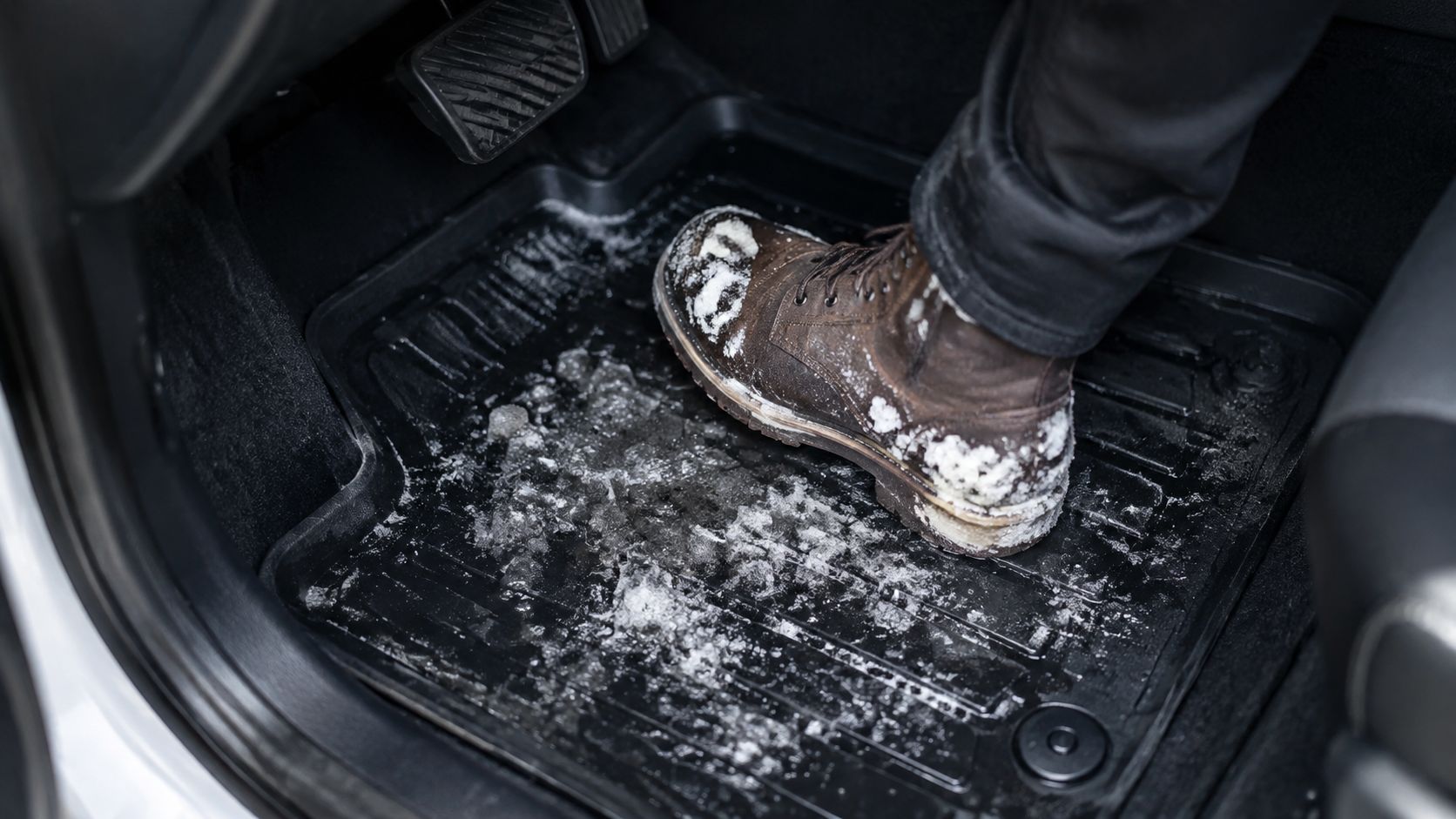
That salty puddle on the floor mat starts with a normal GTA commute. Snow sticks to your boots, melts against the heater, and leaves white residue along the mat edges and carpet seams. If you leave it there, the salt dries into a crust, then dissolves again every time more moisture enters the cabin. The same cycle affects leather surfaces, seat rails, lower door trims, and the areas beneath removable mats.
Ontario's exterior environment is even less forgiving. The province spreads roughly 1.5 to 3 million tonnes of road salt each winter, and vehicles can remain exposed for five to six months of the year, as documented in this overview of Ontario road salt and vehicle corrosion. Chloride-rich slush settles on brake lines, frame rails, suspension components, rocker panels, and other areas that drivers rarely inspect.
Why the underside matters more than the shine
A clean hood can create false confidence. The most important winter rinse may be aimed nowhere near the paint. Wheel wells collect wet grit, underbody panels hold slush against metal, and seams can stay damp after the road appears dry. Repeated freeze-thaw cycles keep reactivating residue in those hidden areas.
Road salt also explains why winter washing in Ontario isn't merely cosmetic. Canadian maintenance guidance commonly recommends removing salt every 7 to 10 days during active salt season, with weekly undercarriage cleaning treated as a practical benchmark. Some guidance warns that exposed metal can begin corroding within 48 hours of contact, which is why the Canadian guidance on washing salt from vehicles frames wash frequency as prevention, not vanity.
Practical rule: If your car has driven through wet, salty slush, clean the places you can't see, not just the panels you can photograph.
Interior care belongs in the same conversation. Ontario detailing guidance notes that interiors can be cleaned year-round, and recommends repeat attention to mats, carpet edges, and lower-contact areas during salt season. A useful winter routine combines frequent exterior rinsing with interior extraction before salt hardens into the fibres.
Exterior Defence and Underbody Salt Removal
The winter wash should begin by loosening contamination, not rubbing it into the clear coat. A pre-rinse followed by foam helps soften the film of salt, sand, and oily road grime on the lower panels. Contact washing a heavily coated surface too early can drag abrasive grit across the paint, especially around sills and wheel arches.
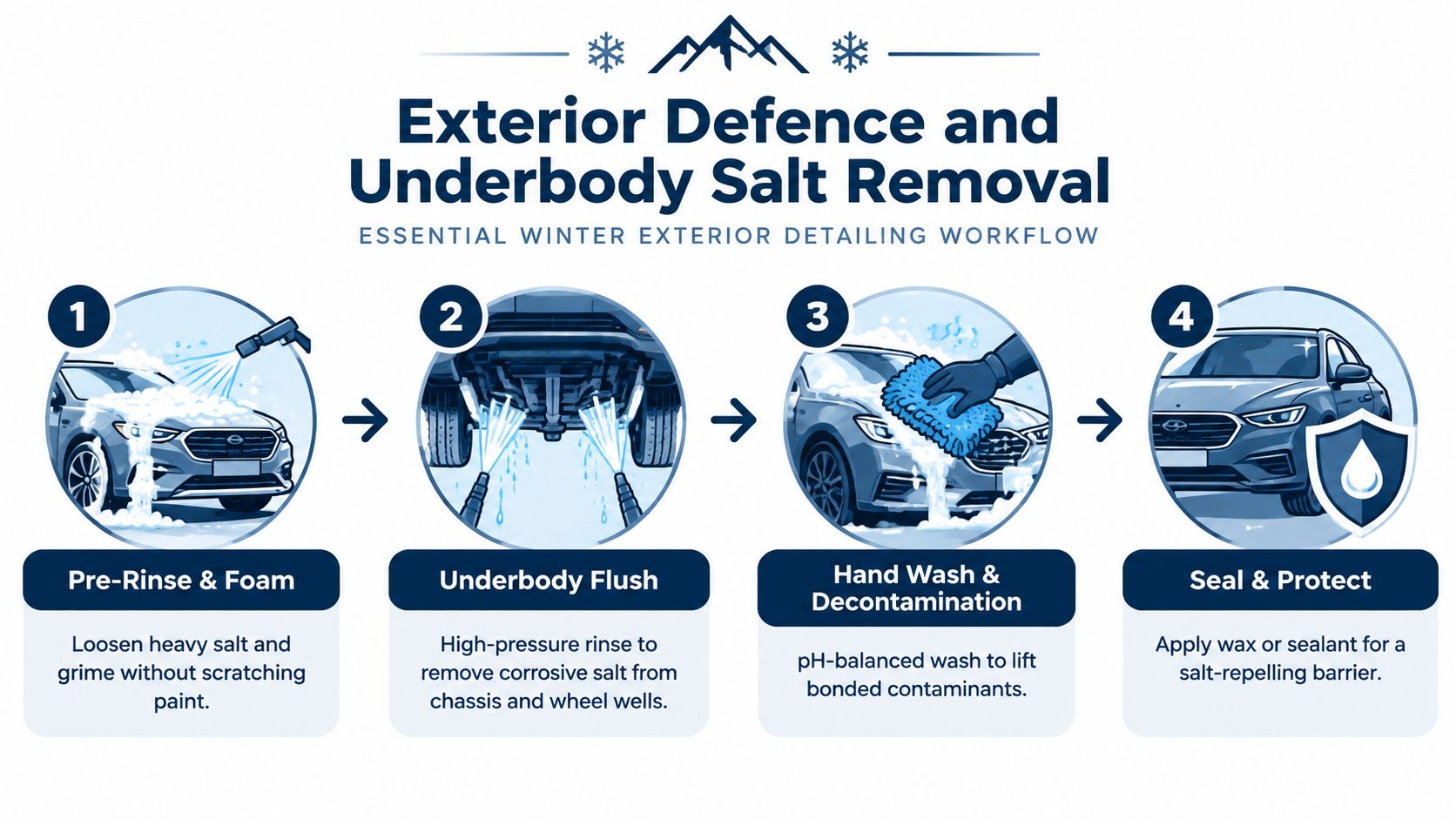
The underbody rinse is the part many drivers rush. Direct water into the wheel wells, behind the tyres, along rocker panels, and across accessible chassis areas. A quick pass over the lower doors won't remove salt trapped behind liners or packed into suspension spaces. Use enough rinse time to flush, rather than just wet, those surfaces.
A wash method that protects rather than spreads grime
Use 100% fresh water where the service provides it. Fresh water helps prevent the wash process from returning concentrated minerals and chlorides to the vehicle. Nanak Car Wash states that its washes use 100% fresh water, and its express services can include underbody washing, drying agents, triple foam wax, hot wax, sealer wax, and lava foam.
Foam and wax aren't substitutes for rinsing. A triple foam wax or hot wax sealer can add a water-repelling barrier, but it can't make a layer of salt harmless. Remove the contamination first, then apply protection to a clean surface. The same principle applies to a hand wash at home. Work from cleaner upper panels toward dirtier lower sections, and keep separate attention on the wheels and arches.
Drying is where many winter washes fail. Water left in door jambs, mirror housings, handles, and weather seals can freeze and create annoying problems on the next cold start. Air blowers help clear those pockets, while a second drying pass or drying agent reduces the water left on exposed surfaces. Don't force a frozen door or scrape aggressively around a seal. Clear and dry the vulnerable edges before the vehicle sits outside.
What works: a touchless pre-rinse, thorough underbody flushing, careful contact washing, fresh water, and deliberate drying.
What doesn't: a fast body rinse followed by wax while salty moisture remains packed underneath.
If temperatures are severe, choose an indoor or professional wash environment where drying can be completed properly. The point isn't to avoid winter washing. It's to avoid leaving fresh water trapped in the same cavities you're trying to clean.
Rescuing Your Interior from Slush and Stains
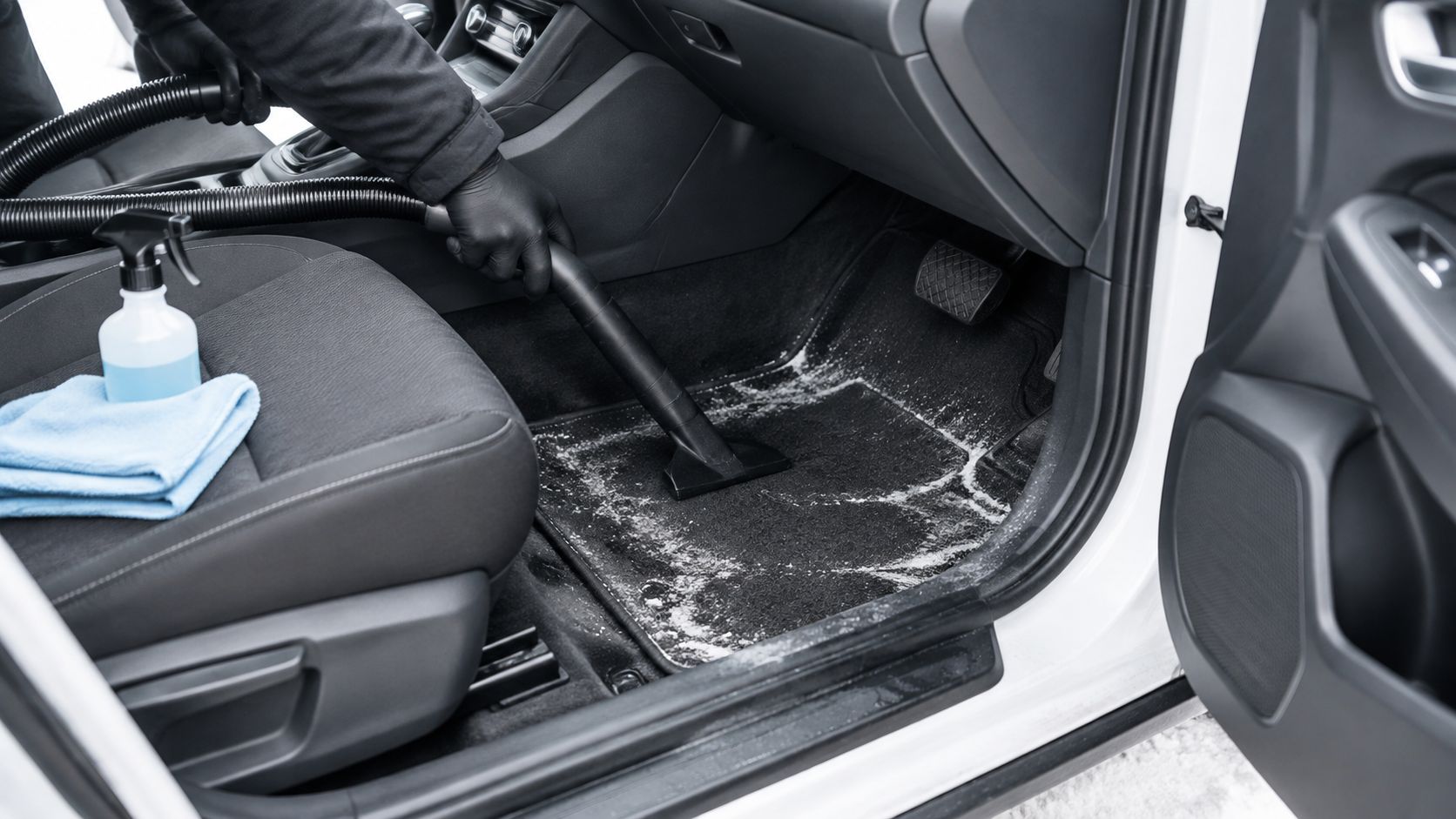
The cabin usually shows winter damage in stages. Rubber mats collect the obvious sludge first. Then salt works into carpet edges, seat tracks, stitching, and the lower portions of door panels. By the time white marks appear on upholstery, the residue may already be embedded below the surface.
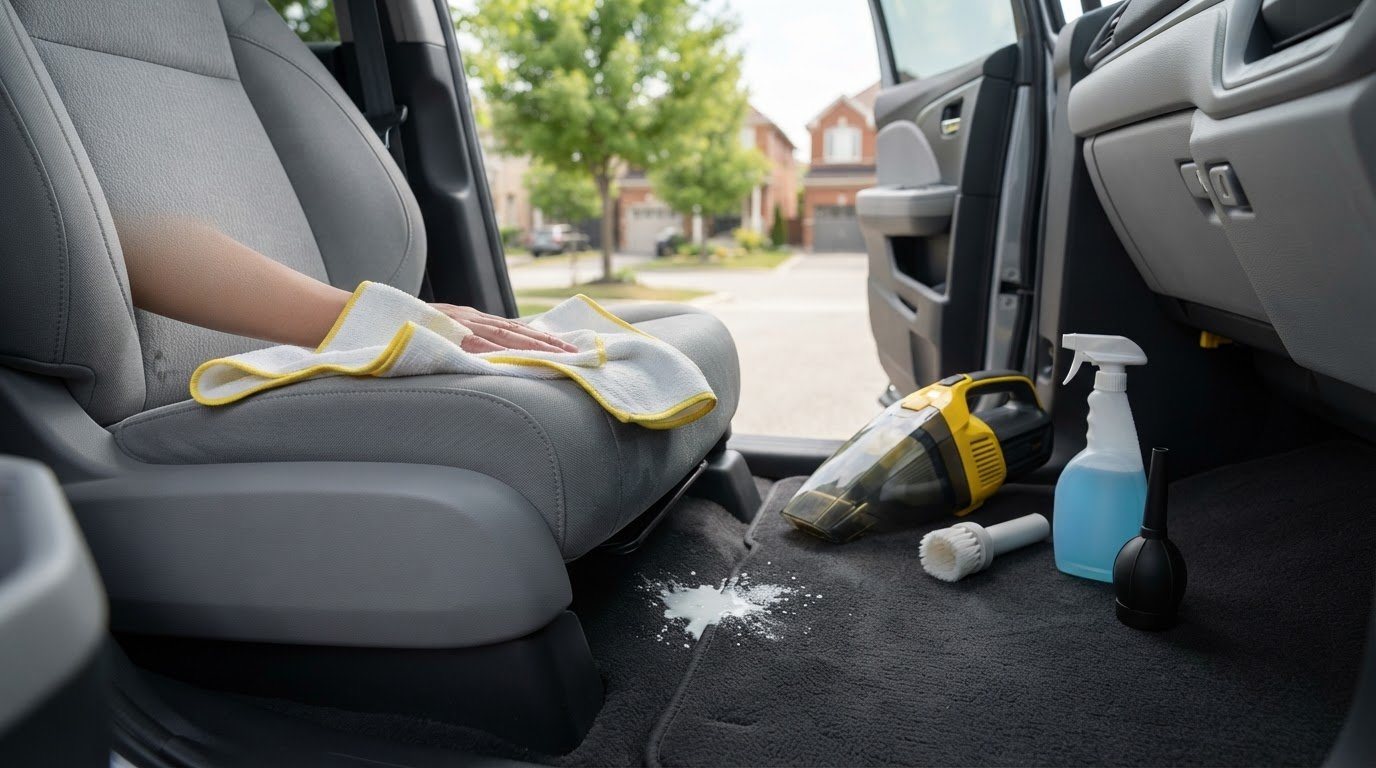
Start with removal, not perfume. Take out the mats and vacuum the cabin thoroughly, including seat rails, carpet seams, under-seat areas, and the narrow gap beside the centre console. A crevice tool and compressed-air blowout can dislodge grit from places a standard vacuum head can't reach. Blow debris outward before vacuuming again, rather than driving it deeper into the carpet.
Extraction beats wiping
Surface wiping removes loose residue from vinyl and plastic, but it doesn't solve a wet carpet problem. Carpet and seat shampooing followed by extraction pulls dissolved salt, dirty water, and organic debris out of the material. The technician then needs to manage drying carefully. A cabin that smells clean but remains damp can develop persistent odours.
Interior detailing is particularly useful after repeated slush exposure. Professional services can combine deep vacuuming, carpet and seat shampooing, salt and stain removal, vent and crevice cleaning, and controlled drying. That combination addresses both the stain you see and the moisture reservoir beneath it.
Leather needs a different approach. Salt residue should be lifted with a suitable leather cleaner rather than scrubbed aggressively. After cleaning, conditioning helps keep the surface supple during dry winter cabin conditions. Concentrate on seat bolsters, steering-wheel contact areas, and lower door sections, where wet clothing and salty gloves transfer residue repeatedly.
A realistic cabin cadence
Interior cleaning doesn't need to happen after every drive, but waiting until spring can make the job harder. Ontario detailing guidance recommends washing every one to two weeks during salt season with underbody attention, while another Ontario source considers an exterior wash every three to four weeks worthwhile in winter. Those references point to a useful distinction: exterior salt removal should be frequent during active exposure, while interior cleaning should respond to visible slush, dampness, crusting, and odour.
A practical routine looks like this:
- After heavy slush: Empty and rinse rubber mats, then dry them before reinstalling.
- When residue appears: Vacuum first, then clean carpet edges and lower trims instead of spreading the salt with a wet cloth.
- When the cabin stays damp: Book extraction and allow the interior to dry fully.
- For leather: Clean salt marks promptly and condition the surface after residue has been removed.
The cabin is part of winter vehicle protection. Clean mats improve daily comfort, but proper extraction also keeps moisture and chloride residue from sitting against materials for weeks.
Choosing the Right Wash and Detailing Package
The cheapest wash is useful when the car needs a rinse today. It becomes poor value when you use it to handle a cabin full of salt stains or an undercarriage that hasn't been properly flushed. The right package depends on the vehicle's exposure, not on the name printed above the service bay.
| Service Tier | Best Used For | Key Winter Upgrades |
|---|---|---|
| Express exterior wash | Frequent maintenance after ordinary commuting | Underbody wash, air blowers, drying agent, foam, wax, or sealer |
| Full-service car wash | Vehicles needing exterior cleaning plus basic cabin attention | Hand dry, interior vacuuming, dashboard and window cleaning, door panels, consoles, cup holders, and tyre dressing |
| Interior and exterior detail | Embedded salt, stains, odours, leather neglect, or seasonal reset | Carpet and seat shampooing, extraction, vent and crevice blowout, leather deep cleaning, machine buff and polish |
An express wash works well as the repeat service in a winter routine. Choose the underbody option when the car has travelled through wet slush, and don't skip drying features. Presoak soap and foam loosen the film, but the value comes from the complete combination of rinse, underbody coverage, and moisture removal.
When a full-service wash earns its place
A full-service package suits a vehicle that is dirty inside but doesn't need restoration. It can handle loose debris, dusty dashboards, dirty glass, and accessible door areas. This is often enough for a commuter who keeps mats under control and cleans the cabin before residue hardens.
The service menu should tell you what you're buying. Look for hand-dried door panels, interior vacuuming, lower trim cleaning, and wheel or tyre attention. A package that only adds a glossy exterior finish won't address tracked-in salt.
When to book a complete detail
Book a deeper appointment when stains have settled into fabric, odours remain after vacuuming, or leather has accumulated visible residue. Machine buffing and polishing are appropriate when winter grime and automatic-wash marks have affected the paint, but polishing should follow decontamination and proper washing. It shouldn't be used to hide an underbody problem.
SUVs, vans, pickups, pet-ha2026ir-heavy interiors, and high-mileage vehicles often need more labour because they carry more dirt into more spaces. A staged approach usually makes sense: frequent express washes for salt control, occasional full-service cleaning for cabin upkeep, and a full, restorative detail when the vehicle needs recovery rather than maintenance.
Rust Proofing and Your Seasonal Maintenance Cadence
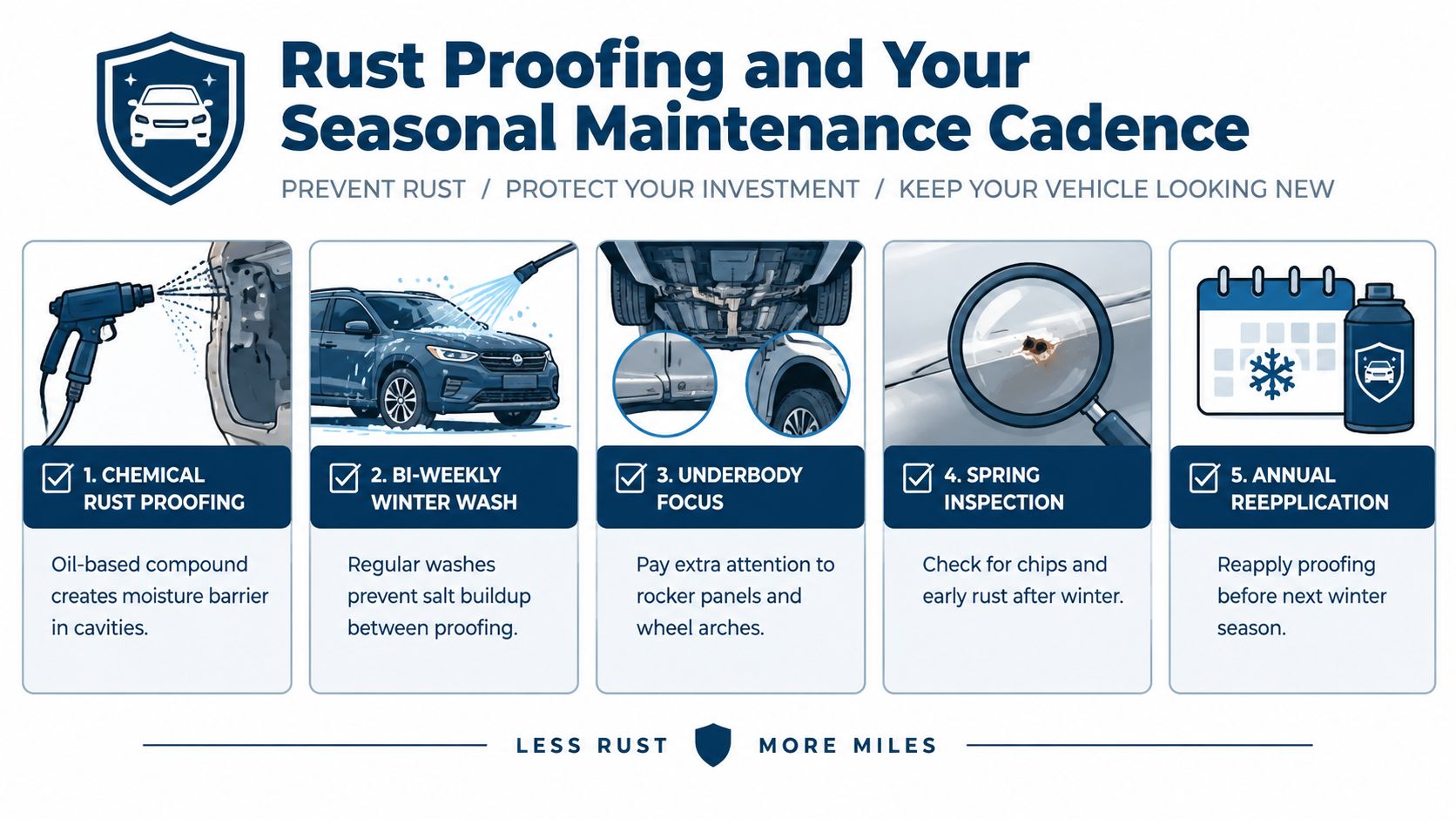
A car can leave a wash looking clean while chloride residue remains inside rocker panels, wheel arches, seams, and underbody cavities. Washing removes the corrosive material. Rust proofing protects vulnerable surfaces between washes. These services address different risks, so one cannot replace the other.
The practical sequence is simple: clean and dry the vehicle, inspect exposed areas, then apply a corrosion barrier before winter exposure reaches its peak. Coatings and chemical compounds belong on reasonably intact surfaces. Applying protection over salt film can trap moisture and chloride against metal, hiding corrosion beneath the barrier.
Prepare the surface before protection
Inspect rocker panels, wheel arches, seams, frame areas, and paint chips. Bare metal and damaged paint require separate attention because rust proofing will not repair the defect. After washing, dry door bottoms, liftgate seams, fuel-door areas, fasteners, and other cavities where water can sit.
A University of Windsor engineering study, summarized by an Ontario rust-proofing provider, reported untreated vehicles with 6.8 times more visible body rust and 3.6 times more underbody corrosion than treated vehicles, as described in this Ontario rust-proofing overview. The useful takeaway is practical: protection works best as part of a clean-surface maintenance routine, not as a one-time cover over neglected salt and existing damage.
Build the calendar around exposure
During active salt season, plan a wash every 7 to 10 days, following the Canadian winter-washing guidance cited earlier. That cadence can be relaxed if the vehicle stays off treated roads. After a week of wet highway driving, however, an underbody rinse is more useful than waiting for a full detailing appointment.
Use this schedule:
- Before salt exposure peaks: Wash, dry, inspect, and apply rust protection to clean surfaces.
- Throughout salt season: Repeat exterior and underbody washing on the 7-to-10-day cadence.
- After visible damage: Repair chips and exposed metal rather than coating over them.
- After winter: Check wheel arches, rocker panels, seams, and underbody areas for early corrosion.
- Before the next season: Review the barrier and reapply protection according to the product and vehicle condition.
Rust proofing does not remove salt. Regular washing flushes tracked-in slush and chloride residue from the hidden areas where corrosion starts, while the barrier adds protection between those washes.
Maximizing Value with Memberships and Bundles
Frequent washing can seem excessive until you account for months of GTA salt exposure. Waiting for the vehicle to look terrible often means salt and chloride residue have stayed wet in wheel wells, rocker panels, seams, and other hidden areas. A predictable wash routine addresses that contamination before it becomes a larger repair problem.
An unlimited wash membership changes the question from “Does the car look dirty enough today?” to “Did it drive through salted slush?” If the answer is yes, a convenient wash with underbody coverage is easier to choose when the monthly cost is predictable. The value comes from maintaining a cadence, not from collecting visits you will not use.
Match the plan to the way you drive
A ride-hailing driver, delivery driver, contractor, or fleet vehicle receives more winter exposure than a car used for occasional errands. An unlimited plan can make repeat exterior and underbody washing practical for those vehicles. A prepaid multi-wash bundle may suit a household vehicle that needs regular cleaning but does not require visits every week.
Check these details before joining:
- Wash access: Confirm that the plan includes the exterior features you need, especially underbody rinsing and drying.
- Interior support: Discounted interior cleaning can help remove salt from mats and carpets before residue hardens.
- Convenience: Free vacuums at participating locations help clear grit between deeper appointments.
- Payment terms: Review electronic payment arrangements, activation, cancellation, and contract conditions.
- Vehicle fit: Larger vehicles may have different service requirements or pricing, so ask before choosing a package.
A membership does not replace a full interior and exterior detail. It handles recurring contamination from winter roads. A seasonal detail addresses embedded stains, leather care, extraction, and paint correction. Combining both services is more practical than expecting one visit to handle routine salt removal and neglected interior or paint work.
For GTA drivers who want one provider for repeat washing, interior cleaning, detailing, and rust proofing, Nanak Car Wash offers express and full-service washes, detailing appointments, rust-proofing applications, prepaid wash options, and monthly Unlimited Wash Club passes. Choose according to the vehicle's exposure, then keep the schedule consistent.
Use a membership for frequent road exposure and a bundle for planned visits. Either option works best when underbody rinsing and interior salt removal are included in the routine, rather than postponed until spring.



 6600 Finch Ave W, Etobicoke, ON M9V 3Z6
 647-703-8515
 MON – SUN 8 AM to 7 PM