
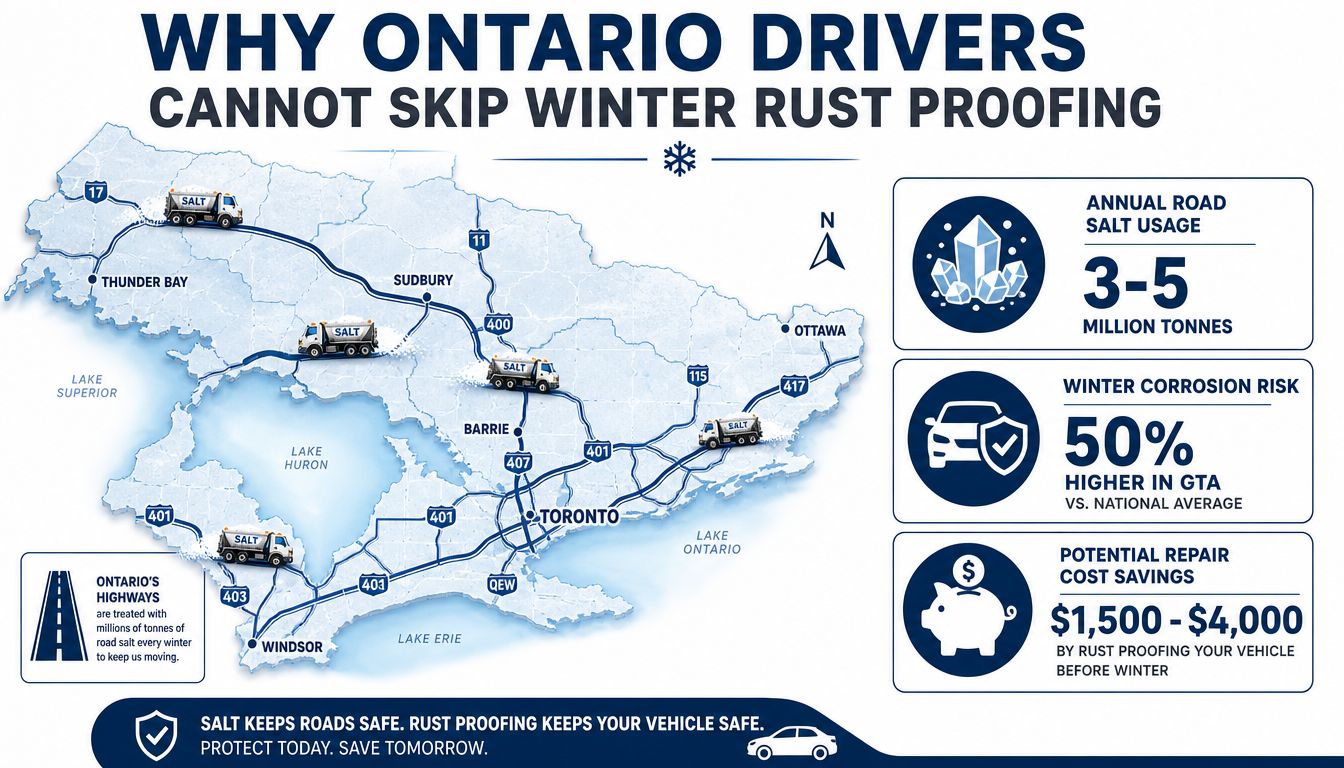
About 50% of vehicle corrosion can be attributed to road salts, according to a Canadian research summary, and Ontario applies roughly 3 to 5 million tonnes of road salt each winter. Canadian research summary That combination makes winter rust proofing more than a cosmetic upgrade for GTA drivers. Salt-laden slush reaches brake lines, suspension components, frame rails, wheel wells, body seams, and hidden cavities every winter, then stays active through repeated wetting and drying.
A good treatment helps, but it can't rescue a neglected underbody or compensate for poor washing habits. The results depend on three things: when you apply the product, how carefully you prepare the vehicle, and whether you remove salt throughout the season.
Table of Contents
- Why Ontario Drivers Cannot Skip Winter Rust Proofing
- Preparing Your Vehicle for Rust Proofing Application
- Choosing the Right Rust Proofing Method for Your Vehicle
- Timing Your Rust Proofing Around Ontario Weather Patterns
- Maintaining Protection Through the Winter Season
- Nanak Car Wash Rust Proofing Services and Pricing
Why Ontario Drivers Cannot Skip Winter Rust Proofing
A University of Windsor engineering study, summarized by Ontario rust-proofing research, found that untreated vehicles had 6.8 times more visible body rust than treated vehicles. Their untreated underbodies also showed 3.6 times more corrosion than treated underbodies. Those figures don't mean every treated vehicle will remain rust-free. They do show that prevention can produce a substantial difference in the places where Ontario vehicles commonly fail cosmetically and mechanically.
Salt turns winter driving into a corrosion cycle
Ontario's road maintenance system keeps roads usable in snow and ice, but chloride-based salt creates a chemically aggressive environment for steel. The material mixes with water, clings to the vehicle, and travels into seams and joints that a quick exterior wash won't reach. GTA traffic makes the exposure worse in practical terms, because daily commuters repeatedly drive through spray from other vehicles, wet slush, and brine left behind after ploughing.
The problem isn't limited to visible orange spots. Corrosion can begin around brake lines, suspension mounts, underbody seams, fasteners, and frame sections long before a driver notices bubbling paint. A historical Transport Canada estimate from 1975 placed average corrosion damage at about $200 per vehicle owner per year, and modern commentary notes that the equivalent cost would be higher in current dollars. Ontario corrosion background
Practical rule: Treat rust proofing as damage prevention, not paint correction. Once metal has lost material, a coating can slow the problem, but it can't rebuild the part.
Decide based on exposure, not showroom age
A newer vehicle may have strong factory coatings, sealed cavities, and corrosion-resistant materials. That doesn't make it immune to salt. A 2018 Canadian study reported no significant statistical difference in corrosion between treated and untreated vehicles until about age six, which gives newer owners a reason to think carefully rather than blindly buy or reject treatment. Canadian vehicle-maintenance research
A short-term lease driver who keeps the vehicle clean and returns it before serious corrosion develops has a different decision from a GTA commuter planning to keep a vehicle for years. High-kilometre drivers, owners of work trucks, and people who park outdoors in wet conditions face more repeated exposure. For them, early treatment and regular underbody rinsing make more sense than waiting for the first rust blister.
Preparing Your Vehicle for Rust Proofing Application
The product isn't the first step. Preparation determines whether the treatment reaches clean metal or seals salt and moisture against the vehicle. Spraying a dirty undercarriage may make it look protected while leaving the most corrosive material exactly where you don't want it.
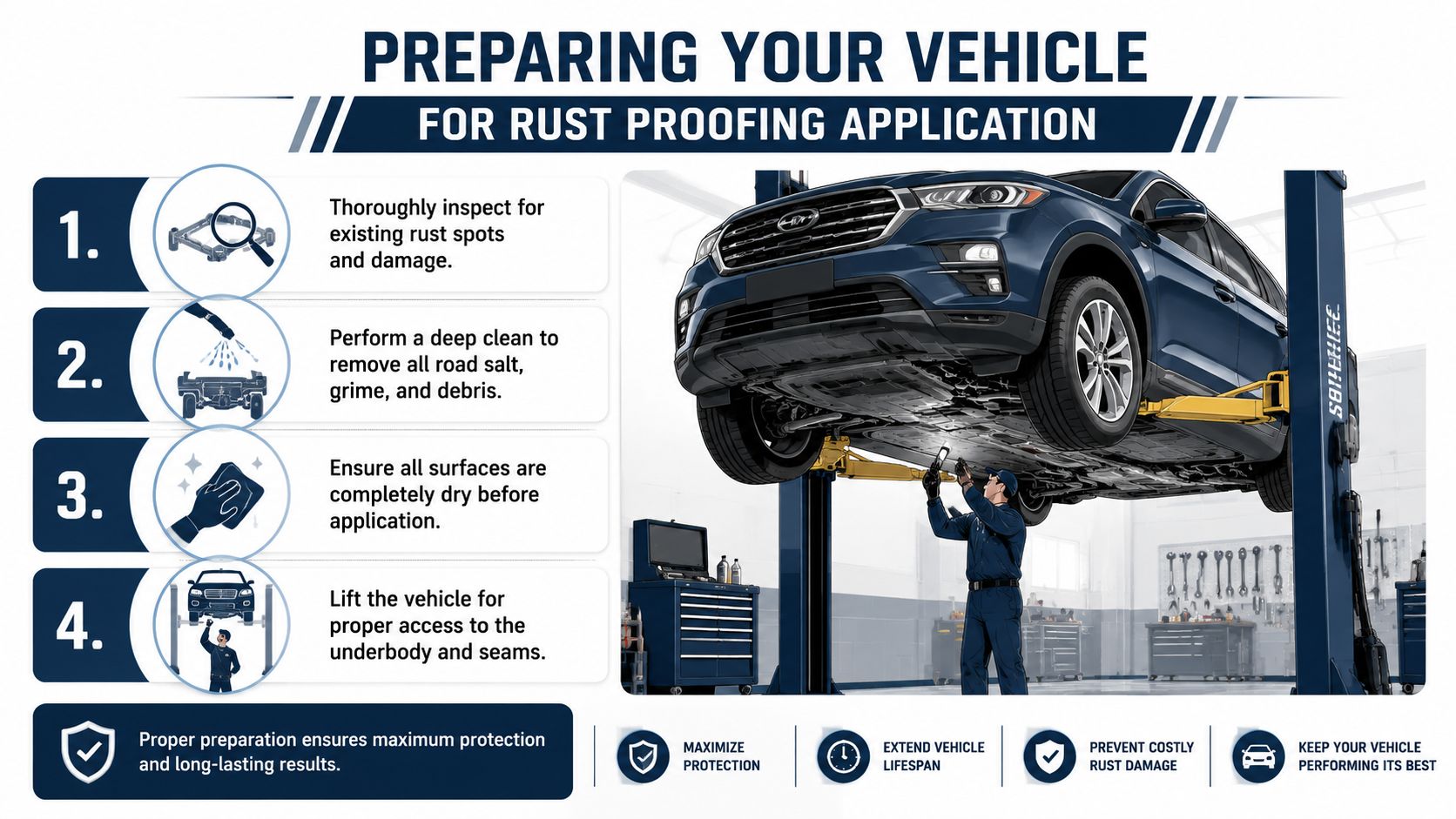
Start with a proper inspection, ideally on a lift. A driveway inspection with a flashlight can reveal obvious trouble, but it won't give you reliable access to the frame rails, inner wheel wells, crossmembers, and seams behind shields.
Inspect before applying anything
Look for loose scale, bubbling seams, flaking brackets, damaged factory coating, and wet salt deposits. Pay particular attention to the front and rear wheel wells, frame rails, brake-line routes, suspension mounting points, rocker seams, and rear trailing edges. Those areas receive direct spray and often retain debris after the body appears clean.
A little surface oxidation isn't automatically a reason to abandon treatment. Deep perforation, compromised brake lines, severe structural scaling, or rust around suspension attachments needs assessment and repair first. A coating over structural damage can hide a worsening condition and make later inspection more difficult.
Use this inspection checklist:
- Look for loose material: Remove or professionally address flaking rust and failing coatings before treatment.
- Check trapped debris: Clear packed mud, salt crust, gravel, and wet leaves from wheel wells and seams.
- Protect service components: Keep product away from brake friction surfaces, exhaust components, belts, electrical connectors, and moving parts.
- Photograph problem areas: Before-and-after photos make it easier to monitor whether corrosion is progressing.
- Ask for access: A reputable shop should explain which panels, shields, and cavities it can reach.
Clean, rinse, and dry completely
The underbody needs a deep wash that removes road salt, oily grime, and loose debris. A pressure washer can help, but careless pressure near electrical connectors, boots, seals, and damaged coatings can create new problems. The operator should work methodically through the wheel wells, underside, seams, and rear-facing surfaces rather than spraying the centre of the floor pan.
Drying matters just as much. Water hidden behind shields or inside seams can remain after the visible surface looks dry, so allow sufficient air movement and inspection time before application. Applying an oil or wax product to a damp surface may displace some water, but it isn't a substitute for a clean, dry starting point.
Before you book: Ask whether the service includes inspection, underbody cleaning, drying, and access to hidden cavities. A low price for spraying over contamination isn't a bargain.
Choosing the Right Rust Proofing Method for Your Vehicle
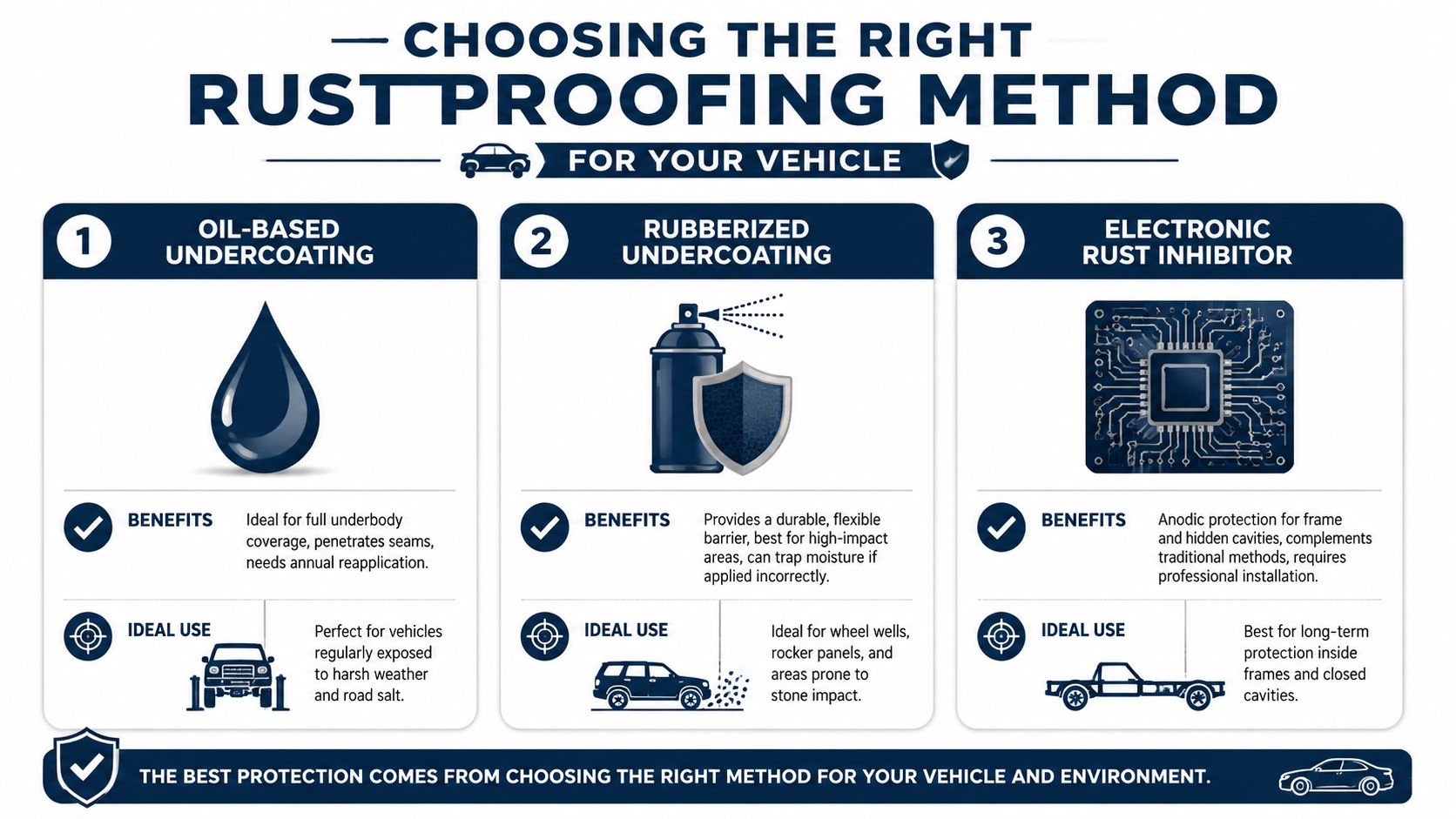
There isn't one universal rust-proofing method. The right choice depends on coverage, reapplication habits, vehicle use, and the condition of the underbody. A flexible product that creeps into seams can suit a daily commuter, while a hard barrier may make sense in selected high-impact areas on a clean, newer work vehicle.
Match the method to the job
| Method | What it does well | Main trade-off |
|---|---|---|
| Oil-based treatment | Covers broad underbody areas and penetrates seams | Usually needs regular renewal and may remain wet or attract grime |
| Rubberized undercoating | Creates a flexible barrier in exposed, high-impact areas | Can trap moisture if applied over rust or a damp surface |
| Electronic inhibitor | Can complement physical protection in frame and hidden-cavity areas | Requires professional installation and shouldn't replace cleaning or washing |
Oil-based products are practical for vehicles that see salted roads every winter and can return for inspection or reapplication. Their ability to stay mobile helps them reach seams and joints that rigid coatings may miss. The downside is maintenance. A treatment that needs attention isn't a failure, but owners must schedule that attention.
Rubberized products are better suited to clean, properly prepared surfaces, especially where stones and slush strike repeatedly. They can provide a durable layer, but they make inspection harder and create a serious risk if an installer covers loose rust or trapped moisture. I wouldn't use a hard coating to conceal a questionable frame.
Electronic systems are best viewed as a supplementary approach. They don't wash salt away, repair existing rust, or physically seal every exposed surface. If someone presents electronics as a complete replacement for sound preparation and underbody cleaning, the recommendation is incomplete.
Use the ownership horizon as the filter
For a newer vehicle, the decision depends less on odometer age alone and more on how long you intend to keep it and how severely you use it. A lightly driven vehicle stored indoors has a different risk profile from a daily GTA commuter that spends winter mornings on wet, salted highways.
Long-term owners usually benefit from a repeatable plan: inspect early, apply to a clean and dry vehicle, then maintain the underbody. Short-hold owners should weigh the treatment against their remaining ownership period and manufacturer corrosion coverage, while still recognising that factory protection doesn't remove salt from exposed components.
Timing Your Rust Proofing Around Ontario Weather Patterns
Calendar dates are useful, but road conditions matter more. The practical target is late fall, before sustained salt accumulation and before sub-zero conditions make washing and drying difficult. Ontario rust research recommends applying treatment in late fall to a clean, fully dried vehicle, followed by weekly or biweekly underbody rinses during the salt season. Ontario corrosion measurement and rust-proofing workflow
Build the appointment around preparation
Book early enough to leave room for inspection, cleaning, and drying. If a vehicle arrives coated in salt film after the first major storm, the shop has more work to do before the product can perform properly. Applying after rust has appeared may slow further progression, but it won't reverse the damage already present.
A GTA-friendly workflow looks like this:
- Late fall inspection: Check the underbody, wheel wells, seams, brake lines, and suspension areas before winter exposure builds.
- Deep underbody wash: Remove salt, mud, and debris from the areas the treatment must reach.
- Complete drying: Don't rush from a wash bay straight into application while moisture remains in cavities.
- Treatment application: Cover exposed metal, seams, and appropriate hidden areas while avoiding brakes, exhaust parts, and moving components.
- Seasonal rinsing: Schedule underbody cleaning weekly or biweekly when road salt is active.
Work with GTA freeze-thaw conditions
Wash when temperatures rise above freezing and the facility can dry the vehicle properly. Washing during a severe cold snap can leave water frozen around door seals, latches, wheel wells, and other vulnerable areas. Waiting for a mild window is sensible, but don't use cold weather as a reason to leave heavy salt on the car for an extended period.
A TAC investigation found standard road-salt exposure produced an average rebar weight loss of 0.2433%, the highest result among the tested formulations, while treated Ontario-market sodium chloride produced 0.2117%. TAC road-salt corrosivity study The exact test conditions aren't a forecast for one vehicle, but they reinforce the operational point: chloride exposure is harsh, and rinsing remains necessary even after treatment.
Maintaining Protection Through the Winter Season
A treated vehicle still needs washing. I've seen underbodies with a decent coating fail at the edges because packed salt and wet grit stayed in wheel wells, behind splash shields, and along rear-facing seams. The coating didn't create the problem. The maintenance routine allowed contamination to remain in contact with the metal.
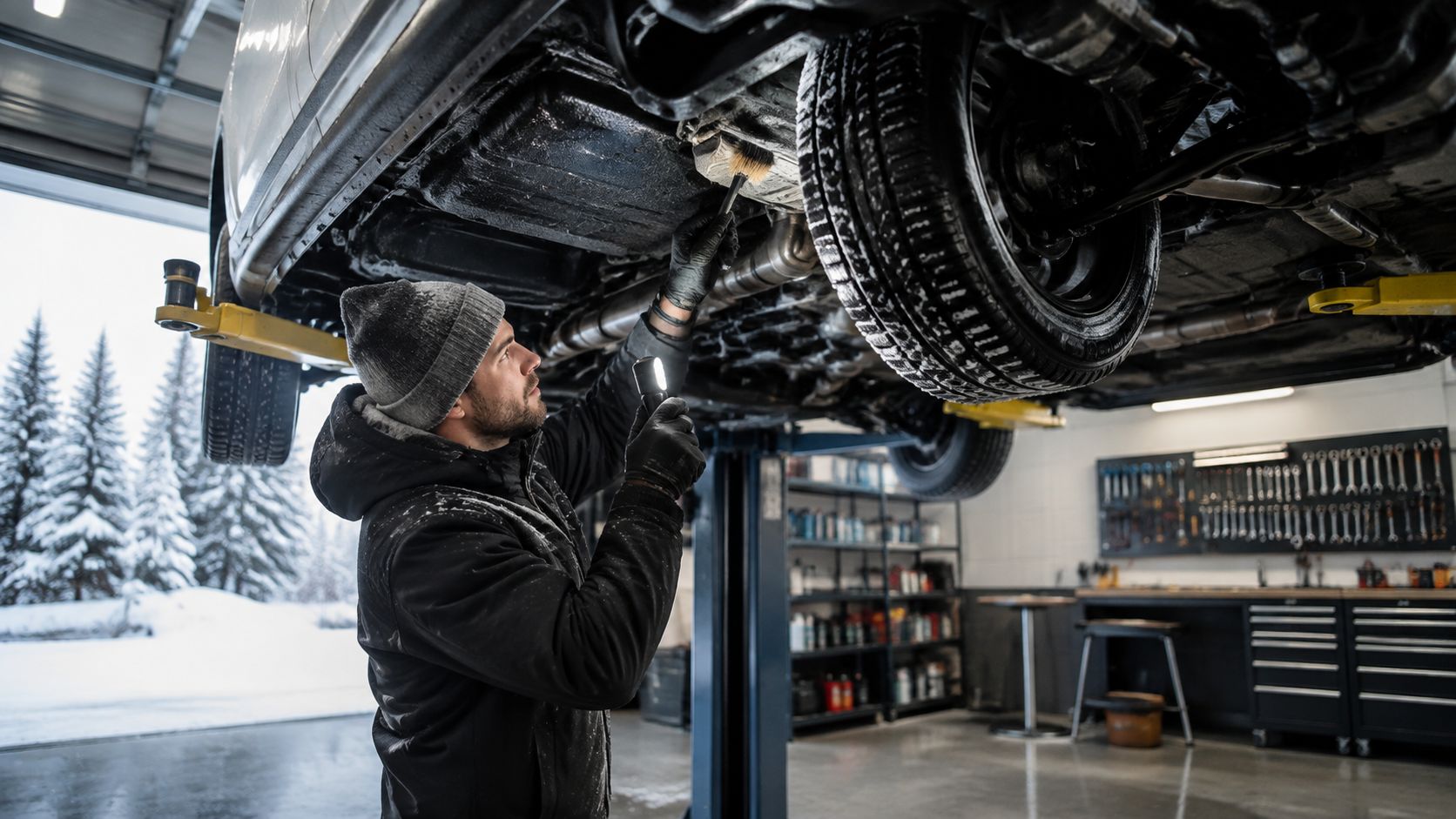
Make rinsing part of the treatment
A driver who commutes daily through wet GTA traffic should prioritise frequent underbody rinsing. A less-used vehicle may need fewer visits, but it shouldn't be ignored after a salty storm followed by thawing weather. Focus the rinse on wheel wells, the front underside, frame rails, suspension areas, and the rear surfaces that collect spray.
During January through March, weekly wheel-well checks are practical guidance for Ontario drivers, particularly those who drive often on treated roads. TAC road-salt corrosivity guidance Don't use a coating as permission to skip washing. Salt and moisture can remain active in crevices and re-enter those areas during every freeze-thaw cycle.
Watch for breakthrough
Inspect after washing and again when the weather moderates. Look for fresh orange staining, lifted coating, swollen seams, loose clips, flaking brackets, and damaged wheel-well liners. A small area that needs touch-up is easier to address than a widespread section hidden beneath a failing layer.
For example, a delivery vehicle that spends most days in stop-and-go traffic receives repeated spray and braking heat, while a weekend-use SUV may accumulate a heavy deposit during fewer trips. The first needs a frequent rinse habit. The second may need careful inspection after each salty period. Both need clean drain paths and a spring inspection once the roads are wet but the worst salt exposure has passed.
A coating is a layer of protection, not a maintenance exemption. Clean the salt off the vehicle, then inspect what the wash reveals.
Nanak Car Wash Rust Proofing Services and Pricing
For GTA owners who want cleaning and treatment completed in one visit, Nanak Car Wash offers rust proofing with a dedicated chemical compound, with vehicle-size pricing listed at approximately $119.95 to $149.95 plus tax. Nanak Car Wash rust proofing information The size-based structure suits passenger cars differently from SUVs, vans, and pickups, whose larger underbodies require wider coverage.
A professional appointment should include preparation, not only product application. Ask how the vehicle will be inspected, whether the underbody will be washed and dried first, and which areas technicians will avoid. Nanak also offers underbody wash upgrades, exterior washes, full-service cleaning, and detailing, allowing owners to address salt contamination and winter grime through one provider.
Choose the maintenance plan you'll commit to
One-time rust proofing suits owners who want a seasonal application and can handle rinsing independently. Prepaid wash bundles help budget for repeat cleaning, while the Unlimited Wash Club is intended for drivers who need frequent winter visits. Availability, included services, and promotions vary by location, so confirm current terms before booking.
Nanak serves GTA-area communities through locations including Etobicoke, Brampton, Concord, Oshawa, Sheppard and North York, Burlington, Cambridge, and Guelph. Nanak Car Wash services Location matters for commuters, delivery drivers, and small fleet operators because a maintenance routine must fit real driving schedules.
The practical plan is simple: apply protection before heavy exposure, begin with a clean and dry vehicle, choose a method suited to the vehicle's age and ownership horizon, then keep salt off the underbody through regular washing. A professional service reduces preparation and application work, while ongoing care preserves the result.
Nanak Car Wash provides vehicle-size rust proofing, underbody wash options, exterior washing, detailing, memberships, and prepaid bundles for GTA drivers managing Ontario salt exposure. Review the available services and arrange a clean, dry, properly prepared vehicle before the next serious salting period.

 6600 Finch Ave W, Etobicoke, ON M9V 3Z6
 647-703-8515
 MON – SUN 8 AM to 7 PM