

You're scraping a white crust from the wheel wells in February, and it keeps coming back before the next snowfall. The car looks dirty, but the primary concern is underneath: salt film in the rocker panels, wheel arches, drain paths, and seams where a quick rinse rarely reaches.
That's why Toronto mobile car detailing should be treated as more than a convenience service. Done properly, it's part of a winter maintenance routine for vehicles parked on streets, in open lots, and in condo garages. Toronto's vehicle base is substantial, with about 1,314,000 vehicles in Toronto and 5,714,000 across the GTHA, while Toronto apartment households alone account for 506,000 vehicles, according to the Toronto Metropolitan Area vehicle ownership forecast update.
The useful question isn't just which package shines the paint. It's whether the crew can access your parking spot, remove winter contamination, protect vulnerable surfaces, and return often enough to make a difference.
Table of Contents
- Why Mobile Detailing in Toronto Is a Winter Decision
- What a Mobile Detailing Visit Actually Includes
- How to Vet a Toronto Mobile Detailing Provider
- Toronto Mobile Detailing Pricing and Add-Ons Explained
- Your Pre-Appointment Prep Checklist
- Seasonal Strategy for Salt, Slush, and Corrosion
- Choosing a Plan and Timing Your Next Booking
Why Mobile Detailing in Toronto Is a Winter Decision
A February car in Toronto tells a familiar story. The lower doors are grey, the mats carry a week of slush, and a ridge of salt has hardened behind each fender liner. You can wash the visible panels and still leave the worst contamination sitting underneath.
Ontario's road-salt environment gives that residue plenty of opportunity to cause trouble. One Canadian summary attributes about 50% of vehicle corrosion to road salt and reports that Ontario applies roughly 3 to 5 million tonnes of road salt each winter. The same source cites a historical Transport Canada estimate from 1975 that placed average corrosion damage at about $200 per vehicle owner per year. Those figures come from the Canadian car wash and auto detailing statistics summary, and they explain why salt management deserves its own service conversation.
The vehicle matters more than the shine
Salt-laden water reaches brake lines, underbody hardware, welds, rocker panels, wheel arches, and door seams. Freeze-thaw conditions repeatedly turn that contamination into wet brine, then freeze it into pockets that are difficult to reach with a normal bucket wash. A vehicle parked outdoors or used for frequent city driving generally needs more attention than one kept inside and driven occasionally.
A mobile crew has one practical advantage here. They come to the vehicle, which makes it easier to schedule a winter rinse at home, work, or another permitted location when you don't have a hose or heated garage. That convenience matters, but it only has value if the service includes the areas where salt collects.
Practical rule: In Toronto winter, ask about underbody and wheel-well flushing before asking about gloss.
The rest of the booking decision follows that principle. You need to know what the appointment includes, whether the provider can work legally at your condo or on the street, which add-ons address corrosion, and how often the vehicle should return. A one-off full detail can reset the car, but recurring removal of salt residue usually makes more sense for high-exposure vehicles.
What a Mobile Detailing Visit Actually Includes
A proper appointment follows a sequence. The crew shouldn't start by dragging a mitt across dry, salty paint, because grit can create scratches before the cleaning work has even begun.
Exterior work starts below the beltline
The first stage is an exterior pre-rinse, with attention to the underbody, wheel wells, rocker panels, and drain paths. Foam or a dedicated pre-wash solution loosens the salt film before a contact wash. The detailer then uses a two-bucket hand-wash method, ideally with a grit guard, rather than recycling dirty water through the paint.
Wheels need separate tools. A good appointment includes barrel and face cleaning, wheel-well agitation, tyre cleaning, and a controlled tyre dressing. Brake dust and road film often need a chemical iron remover, while tar remover is useful on lower panels and rocker areas. These products shouldn't be sprayed indiscriminately across every surface. Product choice and dwell time matter.
Paint protection comes after the surface is clean. Depending on the package, that may mean a spray sealant, hand-applied wax, or a ceramic topper. Glass cleaning and trim dressing finish the exterior, although trim dressing shouldn't be used to disguise faded or damaged plastic.

Interior cleaning is a separate workflow
Interior work starts with removal of loose debris, followed by vacuuming and compressed air through seat rails, vents, seams, and console gaps. Seats and carpets may receive steam cleaning or hot-water extraction, but the method should match the material and the level of moisture the vehicle can safely handle.
Leather needs cleaning before conditioning. A conditioner spread over dirty leather leaves residue behind and can make the surface greasy. The dashboard, door cards, cup holders, and touch points then receive a suitable interior cleaner, followed by interior glass cleaning and, where appropriate, a deodorising pass.
Ask what isn't included before you approve the quote. Pet-hair extraction, severe odour treatment, mould remediation, headliner cleaning, stain correction, engine-bay work, paint correction, dent repair, and permanent ceramic coating are often separate services. A mobile detailer may also exclude heavily damaged surfaces or refuse work in unsafe weather and parking conditions.
How to Vet a Toronto Mobile Detailing Provider
The biggest quality gap in mobile detailing usually appears before the first wash. A polished booking page doesn't tell you whether the provider can operate in your building, carry suitable insurance, or dispose of wash water responsibly.
Start with business legitimacy. Look for a registered Ontario or federal business, a working business email, clear terms, and an itemised quote. An Instagram account can be useful for examples, but it shouldn't be the only way to contact the operator.
Insurance matters even more at a condo or office site. Ask whether the provider carries commercial general liability and whether that coverage applies to work performed at client properties. Your building manager may request proof before allowing a van, generator, or water tank into a parking area.
Five credentials worth checking
| Credential | What to Ask For | Red Flag |
|---|---|---|
| Business legitimacy | Registered business details, written quote, working email | Only a social-media handle and verbal pricing |
| Insurance | Proof of commercial general liability and coverage at client sites | “We've never had a problem” instead of documentation |
| Equipment | Generator or onboard power, water tank, and a plan for restricted hose access | The crew assumes your condo will provide everything |
| Training and products | Chemicals used, surface compatibility, microfibre standards, and dilution practices | One harsh product used on paint, glass, plastic, and leather |
| Water and waste handling | Biodegradable soaps and a clear plan for runoff or captured wash water | Dirty water left to flow into an unsuitable drain |
Equipment is a practical test, not a technicality. Some underground garages restrict generators, water use, vehicle height, or exhaust. A provider that asks about ceiling clearance, water access, electrical outlets, drainage, and building rules before accepting the booking is thinking like an operator.
Training and product transparency also reveal professionalism. You don't need a chemistry lecture, but the detailer should explain whether an iron remover is safe for your wheels, how they protect delicate trim, and what they use on leather. “We use the same package on every car” usually means the service is built around speed rather than condition.
Finally, ask how the crew handles wastewater. Toronto drivers should not assume that any parking spot is automatically suitable for a wet wash. Condo rules, municipal parking restrictions, surface drainage, and property-manager instructions can determine whether mobile service is feasible.
Toronto Mobile Detailing Pricing and Add-Ons Explained
Toronto detailers generally price by vehicle size, condition, service depth, and access. A small sedan in an open driveway is a different job from a salt-caked SUV in a tight underground parkade, even when both are sold as a “full detail.”
The most useful way to compare quotes is to ignore the package name and inspect the work.
| Service Tier / Add-On | Typical Toronto Price | What You Actually Get |
|---|---|---|
| Express exterior wash | Varies by provider and vehicle size | Pre-rinse, wash, rinse, dry, and selected protection or underbody options |
| Full-service interior and exterior | Varies by provider and condition | Exterior wash plus vacuuming, interior surfaces, windows, and targeted stain work |
| Full detail with paint correction | Varies substantially by condition and vehicle size | Deep interior work plus machine polishing to improve paint defects |
| Underbody wash | Often an additional charge | Focused flushing of salt and residue from the underside and wheel wells |
| Pet-hair extraction | Additional charge | Mechanical and vacuum work beyond a routine interior clean |
| SUV or three-row surcharge | Additional charge | More surface area, seats, cargo space, and labour |
| Leather conditioning | Additional charge or package inclusion | Cleaning and conditioning suited to leather surfaces |
| Headliner shampooing | Additional charge | Controlled cleaning of overhead fabric, with moisture risk managed |
| Engine-bay cleaning | Additional charge | Degreasing and controlled rinsing where appropriate |
| Ceramic topper | Additional charge | Shorter-term slickness and protection, not a permanent coating |
These are qualitative Toronto pricing categories, not fixed market rates. A provider should give the actual total after asking about the vehicle, condition, location, and required equipment. The Toronto mobile car detailing guidance from Nanak Car Wash also stresses that timing matters for salt removal, with independent Canadian guidance recommending removal within 48 to 72 hours to materially reduce corrosion initiation risk.
Spend on the problem, not the sales script
An underbody rinse during salt season can be more valuable than another layer of cosmetic dressing. Interior salt removal is also practical, especially when slush has dried into carpets and floor mats. Rust-proofing deserves a separate conversation because it targets preservation rather than appearance.
Other add-ons depend on your use. Pet-hair removal is worthwhile if ordinary vacuuming leaves fur in the upholstery. Paint correction makes sense when scratches and oxidation matter, but polishing won't stop salt from entering a neglected wheel arch. A ceramic topper won't replace washing, and engine-bay cleaning isn't essential for every daily driver.
Fleet bookings, condo days, prepaid bundles, and recurring plans may reduce the effective cost per vehicle, but only if the service specification stays clear. A cheaper repeat wash that skips the underbody may not solve the reason you booked it.
Your Pre-Appointment Prep Checklist
A mobile appointment can lose time before the crew opens a door. Snow piles block access, visitor parking expires, and underground garages turn out to have less ceiling clearance than the service van needs.
Prepare the location first
Clear snow and ice from around the vehicle before the appointment. The crew needs safe footing, room to open doors, and enough working space to move hoses, vacuums, and drying equipment. If the car is in a condo garage, confirm the height limit for the equipment vehicle and ask whether generators, water use, or wet work are allowed.
For curbside work, sort out street permit parking and check whether the location permits washing. Toronto parking rules and condo bylaws can restrict where water may be used, how runoff is handled, and how long a vehicle or service van can occupy a space. Don't leave that conversation until the crew arrives.
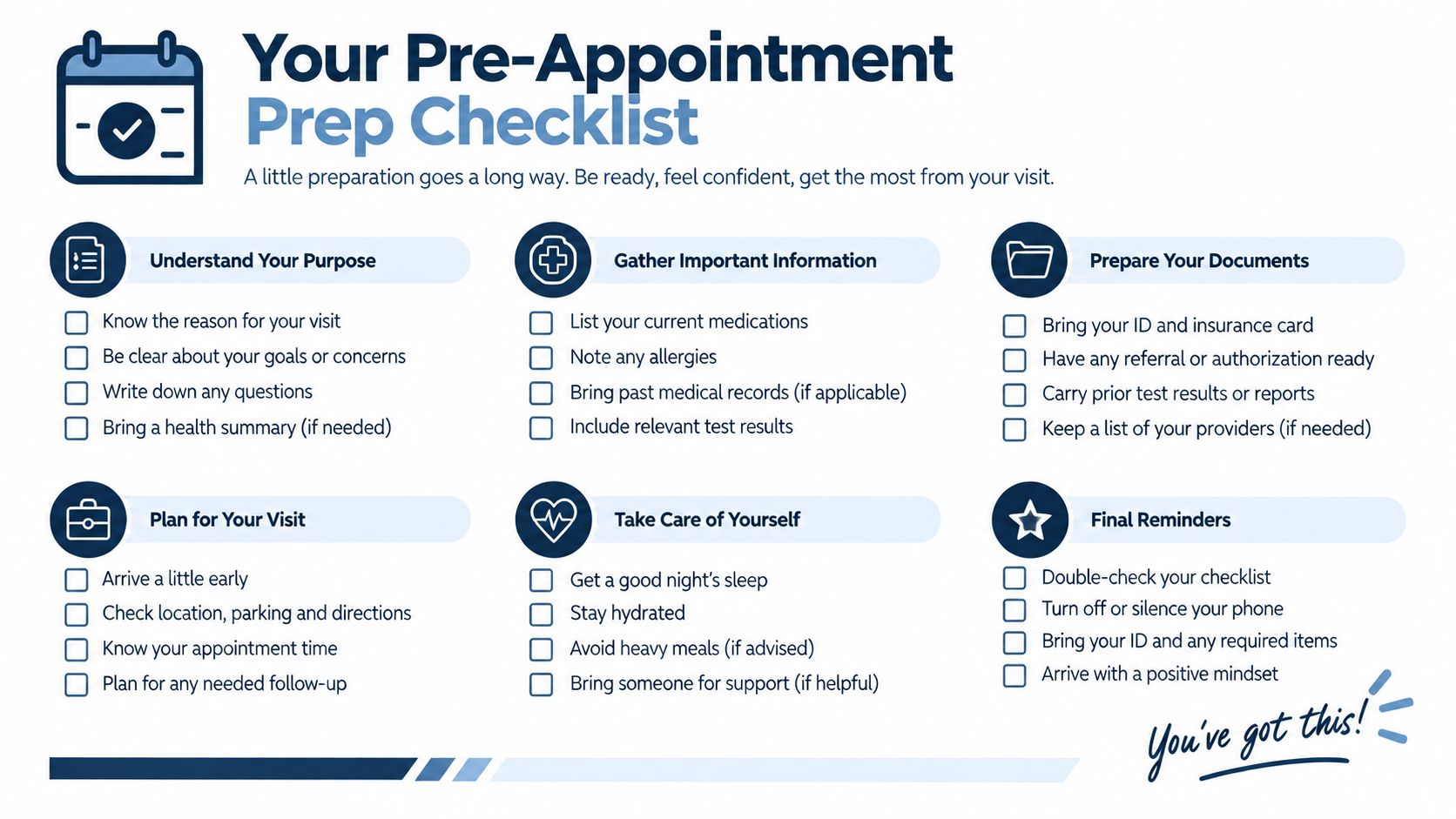
Use this short booking-day checklist
- Clear the cabin: Remove valuables, documents, rubbish, child seats, and loose personal items. Tell the detailer if a child seat must remain installed.
- Confirm utilities: Ask whether the crew brings its own water and power. If not, arrange a suitable outlet and water connection in advance.
- Check the parking geometry: Confirm hose reach, door clearance, garage height, elevator access, and a safe place for the van.
- Document special conditions: Mention pet hair, stains, odours, salt buildup, warning lights, damaged trim, or aftermarket electronics.
- Protect the appointment window: Keep the vehicle accessible and avoid moving it while wet work is underway.
Dash cams, motion sensors, and alarms can complicate interior work. Disable what you can safely disable, and tell the crew about anything that may activate when doors open or power is interrupted.
The best providers will ask these questions themselves. If nobody checks the location, weather, utilities, or condition notes, the booking may be priced too low because the operator hasn't identified the actual job.
Seasonal Strategy for Salt, Slush, and Corrosion
The return from detailing in Toronto isn't a glossy bonnet. It's reducing how long salt and brine remain trapped against the vehicle.
A strong winter routine begins with a pre-salt clean and protection appointment. Clean paint is easier to protect, and a fresh sealant or wax gives the exterior a sacrificial layer. The underbody still needs rinsing, because paint protection on the upper panels doesn't reach brake lines, suspension components, welds, rocker interiors, or wheel-arch pockets.
Build the routine around contamination
During salt season, recurring underbody rinses are more important than occasional showroom-style details. Toronto-focused winter guidance recommends regular underbody rinsing and a complete decontamination detail after thaw events or in spring, as described in this Ontario winter detailing workflow.
A practical cadence looks like this:
- Before sustained salt use: Remove existing film, clean the wheels and wheel wells, decontaminate the paint, and apply fresh protection.
- During active winter exposure: Book maintenance washes after major salt events, with emphasis on the underside, rocker panels, wheel wells, and drain paths.
- After the thaw: Inspect the lower body, flush remaining residue, and complete a spring decontamination detail.
- Before summer correction work: Correct paint defects only after the winter contamination has been removed.
A conventional touchless tunnel can be useful for a quick rinse, but it won't necessarily deliver the same attention to seams, pockets, drain routes, or interior salt deposits. Hand access and proper agitation still matter.
The cheapest wash is not always the cheapest maintenance. Leaving brine in a rocker seam saves time today and creates a more expensive inspection later.
Rust proofing can complement washing, but it isn't a substitute for removing salt. A coating or oil-based treatment applied over contamination doesn't magically clean the surface underneath. The order matters: rinse, clean, dry where possible, then protect.
Nanak Car Wash offers washing, detailing, and automotive rust proofing, including underbody-related wash options and appointment-based interior and exterior work. Those services can suit drivers who prefer to combine cleaning and rust protection, although the right choice still depends on the vehicle's condition, parking setup, and exposure.
Choosing a Plan and Timing Your Next Booking
Choose the plan from your driving pattern, not from the biggest package on the menu. A low-mileage vehicle stored indoors can usually use pay-per-visit detailing, while a street-parked SUV that carries children, tools, or pets may benefit more from regular maintenance washes and occasional deep cleaning.
Match the booking to the vehicle
| Driver Profile | Recommended Cadence | Best Plan Type | Peak Season Focus |
|---|---|---|---|
| Garage-kept commuter | Book when contamination becomes visible or before seasonal changes | Pay per visit | Pre-winter protection and spring reset |
| Street-parked daily driver | Recurring maintenance during salt exposure | Monthly or bundled service | Wheel wells, underside, and lower panels |
| SUV or three-row family vehicle | Frequent exterior maintenance with periodic interior deep cleaning | Recurring plan with size-aware pricing | Salt, mats, cargo area, and child-related mess |
| Ride-hailing or delivery driver | Regular short maintenance visits and targeted interior work | Membership or prepaid bundle | Fast salt removal and high-touch interior surfaces |
| Small business fleet | Organised group scheduling | Fleet account | Consistent wash specification and downtime control |
| Condo resident without driveway | Confirm building feasibility first, then choose cadence | Condo booking or approved off-site plan | Garage rules, water access, runoff, and equipment clearance |
Book around trigger moments rather than waiting for the car to look abandoned. The first sustained snowfall is a sensible time to start winter maintenance. The salt-laden aftermath of the March thaw is a strong point for a reset, and warmer spring conditions create a better window for paint correction and longer-lasting exterior protection.
For SUV and three-row owners, compare two approaches. One full detail may restore the vehicle, but a biweekly express routine can be more sensible if the car racks up kilometres and stays outdoors. If it spends most of its time in a garage and sees light use, the deeper appointment may be the better occasional choice.
Before buying a subscription, answer one operational question: Can the provider legally and safely work where the vehicle is parked? Confirm condo approval, drainage, power, water, height restrictions, and weather limitations. If the answer is unclear, start with a location that supports the equipment and build the plan from there.
If your vehicle is carrying Toronto salt and slush, visit Nanak Car Wash to compare wash, detailing, rust-proofing, bundle, and membership options. Choose the service that matches your parking exposure and book before the next major salt event, rather than waiting for the residue to harden into the seams.


 6600 Finch Ave W, Etobicoke, ON M9V 3Z6
 647-703-8515
 MON – SUN 8 AM to 7 PM