
You've just driven through another Guelph winter mess. The white paint is grey, the wheel wells are packed with gritty slush, and a pale crust of salt has settled around the doors, rocker panels, and rear hatch. A quick rinse improves the appearance, but it may leave the most vulnerable parts of the vehicle untouched.
That's why auto detailing in Guelph, Ontario should be treated as vehicle maintenance, not a luxury reserved for special occasions. The right service removes contaminated residue from the areas you can't easily see, manages interior salt and moisture, and uses a controlled wastewater process instead of sending dirty runoff down the street.
Table of Contents
- Why Auto Detailing in Guelph Is a Necessity
- Comparing Express and Full-Service Detailing Packages
- Navigating Vehicle Size Surcharges and Interior Challenges
- The Critical Role of Rust Proofing and Underbody Care
- Maximizing Value with Memberships and Prepaid Bundles
- Environmental Compliance and Professional Wastewater Handling
- Booking Your Appointment and Preparing Your Vehicle
- Quick Reference Guide to Guelph Auto Detailing Services
Why Auto Detailing in Guelph Is a Necessity
A Guelph driver can wash a vehicle on Saturday and see salt film return by Monday. Freeze-thaw weather loosens road grime, wet slush carries chloride into seams and crevices, and daily driving pushes contaminated water into the underside. The body may look merely dull, but the hidden surfaces are dealing with a much harsher environment.
Guelph's own road salt and source-water guidance explains that salt works best only between 0 and -10 degrees Celsius and warns that excessive application on roads, parking areas, driveways, and sidewalks can raise sodium and chloride levels in groundwater aquifers. That matters to vehicle owners because the same de-icing environment that affects local water also leaves salt residue on brake components, suspension parts, fasteners, seams, and underbody panels.
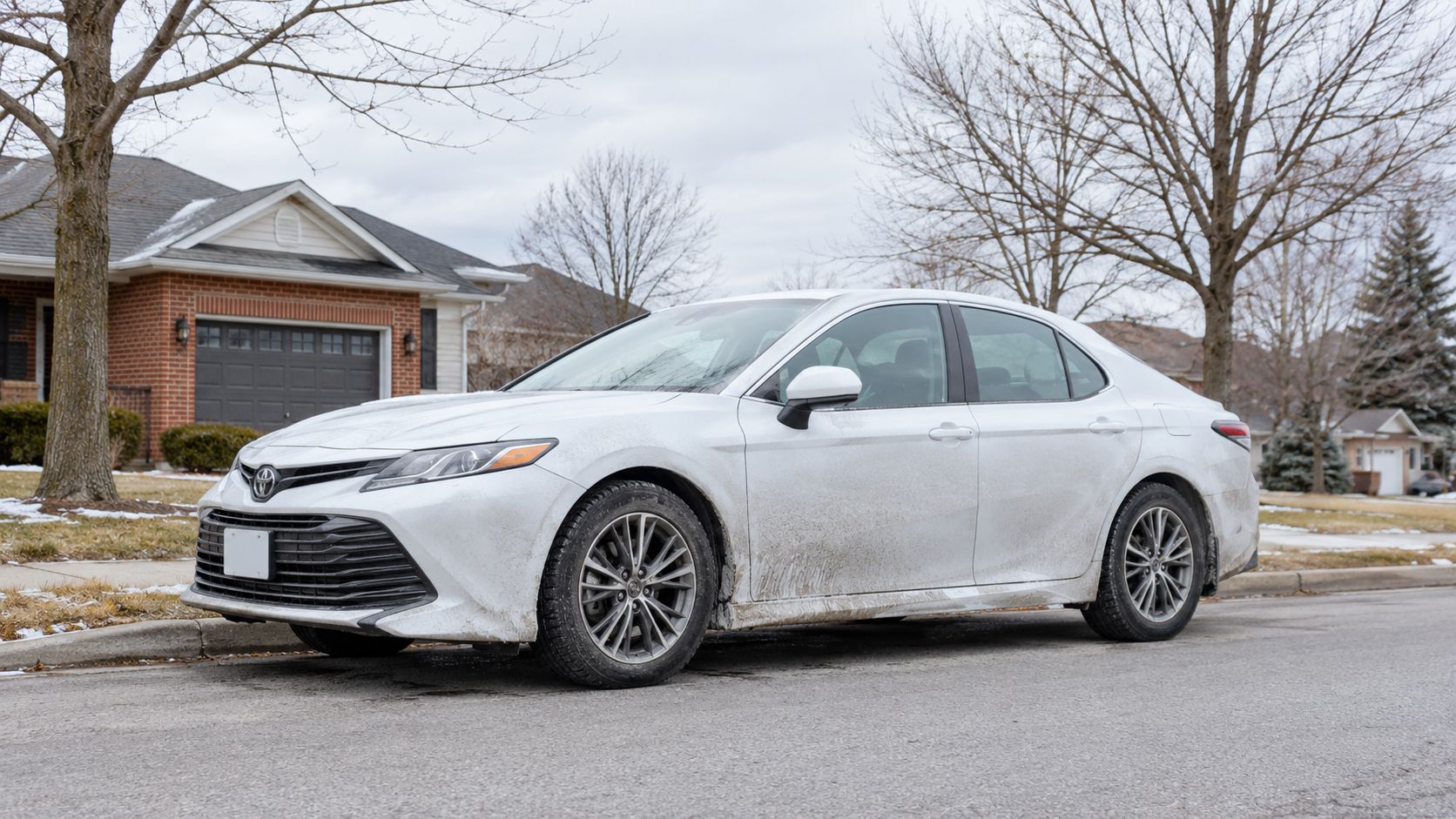
A rinse cleans the obvious surfaces
A driveway hose can remove loose dirt from the bonnet and glass. It usually can't deliver consistent pressure and coverage to the undercarriage, and it doesn't provide the controlled drainage needed for contaminated wash water. Salt lodged behind splash guards or around suspension mounts can remain even after the vehicle looks presentable.
Professional detailing also gives the operator a chance to inspect the condition of rubber seals, trim, wheel arches, floor mats, and upholstery. Salt tracked into the cabin attracts moisture and creates a gritty abrasive layer under mats and around seat rails. That contamination isn't just unpleasant. It can accelerate wear on carpets, stitching, and hard interior surfaces.
Local rule: If your vehicle spends winter on Guelph, Cambridge, or GTA roads, schedule cleaning around salt exposure, not around how dirty the paint looks.
Maintenance protects more than appearance
Ontario's road-salt burden is substantial. Public-road use is commonly estimated at 1.5 to 3 million tonnes per winter, and one Ontario corrosion summary says untreated vehicles can show visible rust within 2 to 3 winters, with structural rust risk emerging in 8 to 12 years of year-round winter driving. Those figures are documented in this Ontario road-salt corrosion overview.
A detailer can't reverse structural corrosion with a wash. They can, however, remove contaminants before they remain trapped, rinse the underside, clean the cabin properly, and apply a dedicated protective compound when the vehicle is suitable for it. For a commuter, family vehicle, delivery car, or work truck, that is a sensible maintenance decision.
Comparing Express and Full-Service Detailing Packages
Not every dirty vehicle needs a full interior restoration. A lightly soiled commuter may need a controlled exterior wash and underbody rinse, while a family SUV with winter mats, spilled drinks, and embedded salt needs substantially more labour. Choose the package based on contamination and usage, not on the most expensive option presented at the counter.
Express exterior service
An express wash is the right tool for frequent maintenance. Typical components include presoak soap, a foam bath, rinsing, drying agents, and air blowers. Depending on the package, upgrades may add an underbody wash, additional drying agent, triple foam wax, hot wax, sealer wax, or lava foam.
These upgrades have different purposes. The underbody wash targets salt and loose road film below the doors. Wax and sealant options add a temporary barrier to painted surfaces and can make subsequent washing easier. They don't replace rust proofing, and they won't remove embedded contamination from carpets or fabric seats.
Use an express service when:
- The interior is already orderly: There are no deep stains, odours, pet hair, or salt-crusted mats.
- The exterior needs regular maintenance: You're removing fresh road film before it hardens.
- Time matters: A quick visit suits drivers who wash frequently rather than waiting for months.
- The vehicle has no neglected areas: If wheel wells, door jambs, or the underbody have been ignored, choose a more thorough service first.
Full-service cleaning
Full-service packages combine exterior washing with hand drying and interior attention such as vacuuming, dashboard and window cleaning, door panels, consoles, cup holders, and tire dressing. Appointment-based detailing goes further with carpet and seat shampooing, salt and stain removal, vent and crevice blowout, leather deep cleaning, and machine buffing or polishing.
The difference isn't branding. It's labour and access. A vacuum nozzle removes loose debris, but a crevice blowout can dislodge grit from seat rails, vents, switches, and console seams. Shampooing addresses contamination that a surface wipe leaves behind. Machine polishing can improve paint clarity, but it should only be recommended after the vehicle has been washed and assessed.
Detailing package comparison matrix
| Package Tier | Core Services Included | Ideal For |
|---|---|---|
| Express exterior | Presoak soap, foam bath, rinse, drying agent, air blowers, with optional protection and underbody upgrades | Frequent commuters and clean interiors |
| Full-service wash | Exterior wash, hand drying, vacuuming, dashboard and window cleaning, with higher-tier interior and tire-care additions | Family cars and vehicles with regular interior use |
| Interior and exterior detailing | Shampooing, salt and stain removal, vent and crevice blowout, leather cleaning, machine buffing and polishing | Neglected vehicles, seasonal resets, resale preparation |
| Rust-focused service | Underbody preparation and dedicated protective compound | Ontario vehicles exposed to repeated winter salt |
A basic wash is maintenance. Full detailing is recovery work. Don't pay for recovery work if a consistent express routine is keeping the vehicle under control, but don't expect an express pass to solve embedded stains or neglected underbody contamination.
Navigating Vehicle Size Surcharges and Interior Challenges
A larger vehicle costs more to detail because it takes longer to reach every surface. An SUV has more carpet, more plastic trim, a larger cargo area, deeper wheel wells, and more roof and glass area than a compact sedan. A pickup adds a large exterior footprint and often brings work-site dirt into the cabin.
That difference affects more than the amount of soap used. Staff need additional vacuum passes, drying time, brush work, extraction, and inspection. Larger cargo areas also collect loose grit and salt in corners that are easy to overlook during a rushed clean.
Ask what the size category includes
Before booking, describe the vehicle accurately. Tell the operator whether it's a sedan, crossover, three-row SUV, van, or pickup. If the vehicle has a roof rack, unusually dirty cargo area, child seats, or removable liners, mention those details before the appointment.
A clear quote should identify:
- The vehicle category: Confirm whether the service treats it as a car, SUV, van, or truck.
- The included surfaces: Ask whether cargo areas, mats, door jambs, and third-row seating are covered.
- The condition adjustment: Explain whether heavy mud, salt buildup, stains, or odours trigger additional labour.
- The protection options: Separate cleaning from wax, sealant, leather treatment, or rust protection.
- The expected handoff time: A large vehicle in poor condition won't move through the process like a lightly soiled sedan.
Pet hair needs a separate assessment
Pet hair is one of the most labour-intensive interior problems because it embeds in fabric, carpet loops, seat seams, and ventilation areas. A standard vacuum can collect loose fur, but it won't reliably remove hair worked deep into upholstery.
Detailers may use rubber brushes, compressed air, crevice tools, specialised vacuum heads, and repeated extraction passes. The process can also expose hidden odours that require separate treatment. That's why pet hair surcharges are reasonable when they reflect added labour rather than serving as an unexplained fee.
Practical booking advice: Send a few photos of the seats, floor, cargo area, and pet-hair buildup before you arrive. Accurate information produces a more useful quote and avoids a surprise inspection at drop-off.
Remove personal belongings before the appointment. Detailers need access to the surfaces you want cleaned, and loose items can slow the work or prevent staff from reaching the carpet beneath them.
The Critical Role of Rust Proofing and Underbody Care
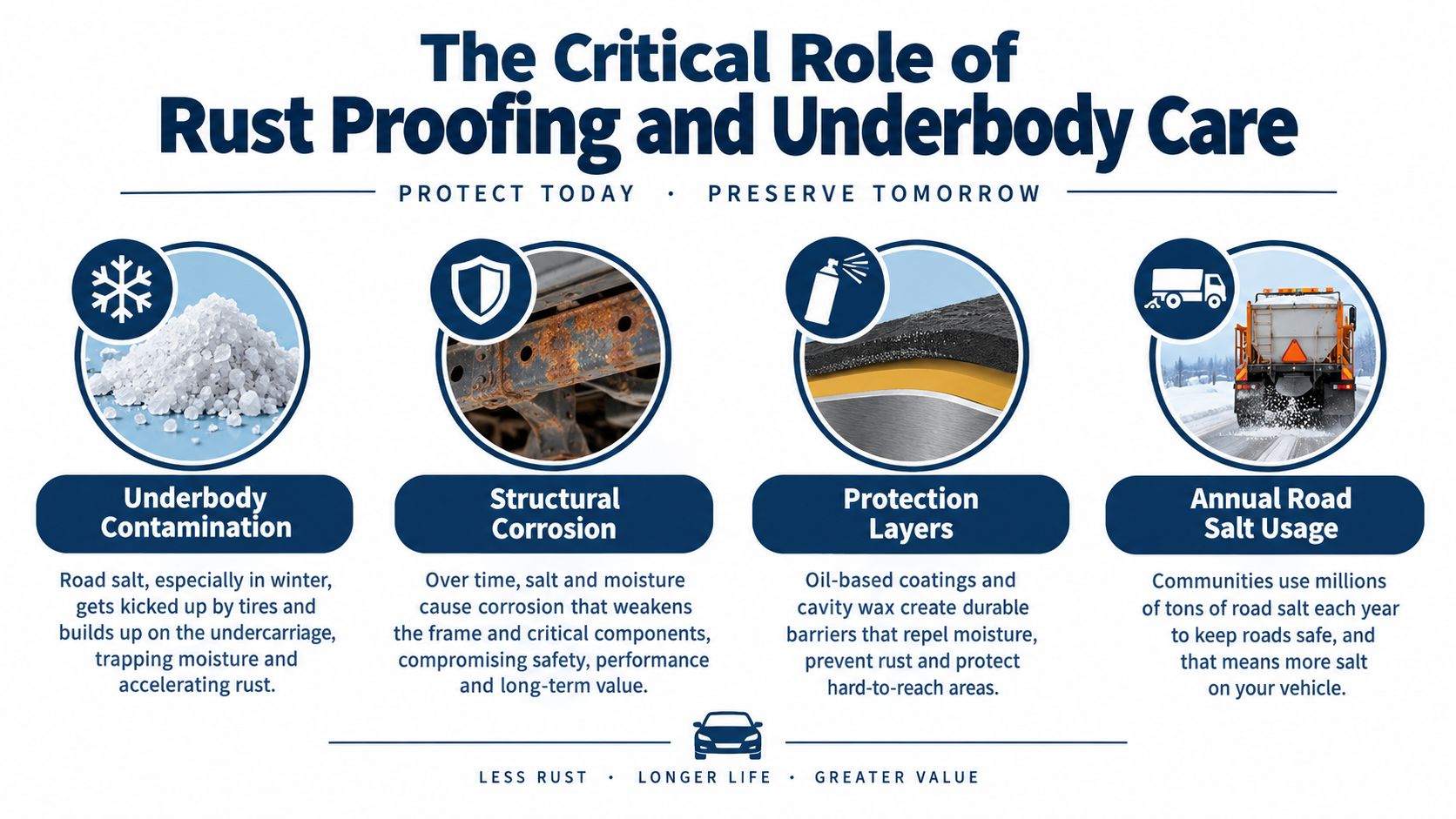
A clean exterior can hide a dirty and vulnerable underside. Salt water reaches brake lines, suspension mounts, frame seams, fasteners, exhaust components, and body cavities long before rust becomes obvious on a door or fender. A paint-safe wash won't automatically protect those parts.
A Canadian corrosion summary attributes about 50% of vehicle corrosion to road salts and describes Ontario's winter road-salt use as roughly 3 to 5 million tonnes. The figures and the related explanation of hidden corrosion points are outlined in this winter rust-proofing guide. The exact totals vary by source and accounting method, but the maintenance conclusion is straightforward. Salt exposure deserves deliberate underbody care.
Rinsing and rust proofing do different jobs
An underbody rinse removes loose salt, mud, and suspended grit. It is a cleaning step. Rust proofing applies a dedicated chemical compound to create a barrier on appropriate metal surfaces and inside selected cavities. It is a protection step.
Neither service makes a corroded frame new again. Rust proofing also shouldn't be sprayed blindly over heavily contaminated or damaged areas. The technician should assess the underside, clean it appropriately, identify sensitive components, and apply the product where it is designed to work.
Oil-based compounds can creep into seams and displace moisture. Cavity waxes can protect enclosed areas where a thicker coating is appropriate. The correct material depends on the component, the condition of the surface, and the application method. A cheap, indiscriminate spray is not equivalent to a properly prepared treatment.
What Guelph drivers should protect first
Prioritise areas that trap salt and remain difficult to inspect:
- Brake and fuel lines: Surface corrosion can progress while the vehicle still drives normally.
- Suspension mounts: These areas collect wet grit and are exposed to spray from the wheels.
- Frame seams and fasteners: Seams hold moisture, while fasteners can corrode and become difficult to service.
- Wheel arches and rocker panels: These receive direct impact from salty slush.
- Door and body cavities: Drainage paths and seams need to remain clear and protected.
A rust-proofing quote should vary by vehicle size because application time and surface area vary. Ask whether the price includes preparation, which compound is used, and whether the technician avoids brakes, exhaust heat shields, belts, and other components that shouldn't receive the product.
The right order: Clean the underside first, let it drain and dry appropriately, inspect vulnerable areas, then apply protection. Spraying over a layer of salt defeats the purpose.
Maximizing Value with Memberships and Prepaid Bundles
Frequent drivers should stop treating every wash as an isolated purchase. A commuter, ride-hailing driver, delivery operator, or small fleet manager is maintaining an asset that experiences repeated salt, slush, dust, food spills, and passenger traffic. The useful comparison is the cost of a consistent cleaning routine against the cost of letting contamination accumulate.
Canada had 26.8 million registered road motor vehicles in 2024, including 24.6 million light-duty vehicles, according to the market background cited by OxMotive's Canadian mobile detailing overview. The same source estimates the Canadian car wash and auto detailing market at about $2.1 billion in 2026 and reports 12.0% growth in 2026. Those figures point to a large recurring-use market, but they don't prove that every driver needs a membership.
Choose a membership when visits are predictable
An unlimited wash club makes sense when you regularly use the service often enough to justify the recurring payment. High-mileage drivers benefit most because exterior contamination arrives faster and waiting for a visibly dirty vehicle means allowing more residue to dry and settle.
Evaluate the plan against your actual routine:
- Regular route exposure: If your vehicle sees salted roads most days, repeated exterior maintenance has a clear practical purpose.
- Interior workload: Look for member discounts on interior cleaning, not just unlimited exterior access.
- Contract terms: Confirm whether there are activation, cancellation, or long-term contract requirements.
- Location convenience: A membership only works if the wash site fits your daily route.
- Vehicle type: Larger vehicles and work trucks may need occasional detailing beyond the club's standard service.
Memberships are not a substitute for shampooing, leather cleaning, pet-hair removal, polishing, or rust proofing. They handle repeat surface maintenance. Book the deeper service when the condition requires it.
Use prepaid bundles when your schedule changes
Prepaid multi-wash tickets and combo deals suit drivers who want predictable visits without a monthly commitment. They can work well for seasonal use, a second vehicle, a family that shares one car, or a contractor whose driving volume changes throughout the year.
The financial test is simple. Estimate how often you realistically wash, compare the total commitment with individual visits, and include the cost of occasional interior work. If you won't use the included visits, the apparent discount isn't a saving.
For gig drivers, a clean cabin also protects the working environment. Use washable rubber mats, remove rubbish at the end of each shift, and schedule interior cleaning before odours and staining become difficult to correct. Small repeat actions outperform a dramatic restoration after months of neglect.
Environmental Compliance and Professional Wastewater Handling
A driveway rinse isn't environmentally neutral. Wash water can carry soap, oil, suspended grit, brake dust, and de-icing residue toward a storm drain. A stormwater system isn't designed to receive that mixture, and local source-water protection makes careless runoff a poor choice.
Toronto's automotive best-practices document states that vehicle-washing areas must route wash water through sand-and-grit interceptors before sewer discharge. It also explains that automotive service facilities discharging non-domestic wastewater require oil interceptors sized to code requirements.
The principle applies beyond Toronto. A responsible detailing operation separates wash areas from storm drains, captures wastewater, removes solids and oil, and directs treated discharge through an approved route. That infrastructure is one of the clearest differences between a professional facility and an uncontrolled driveway wash.
What the process should accomplish
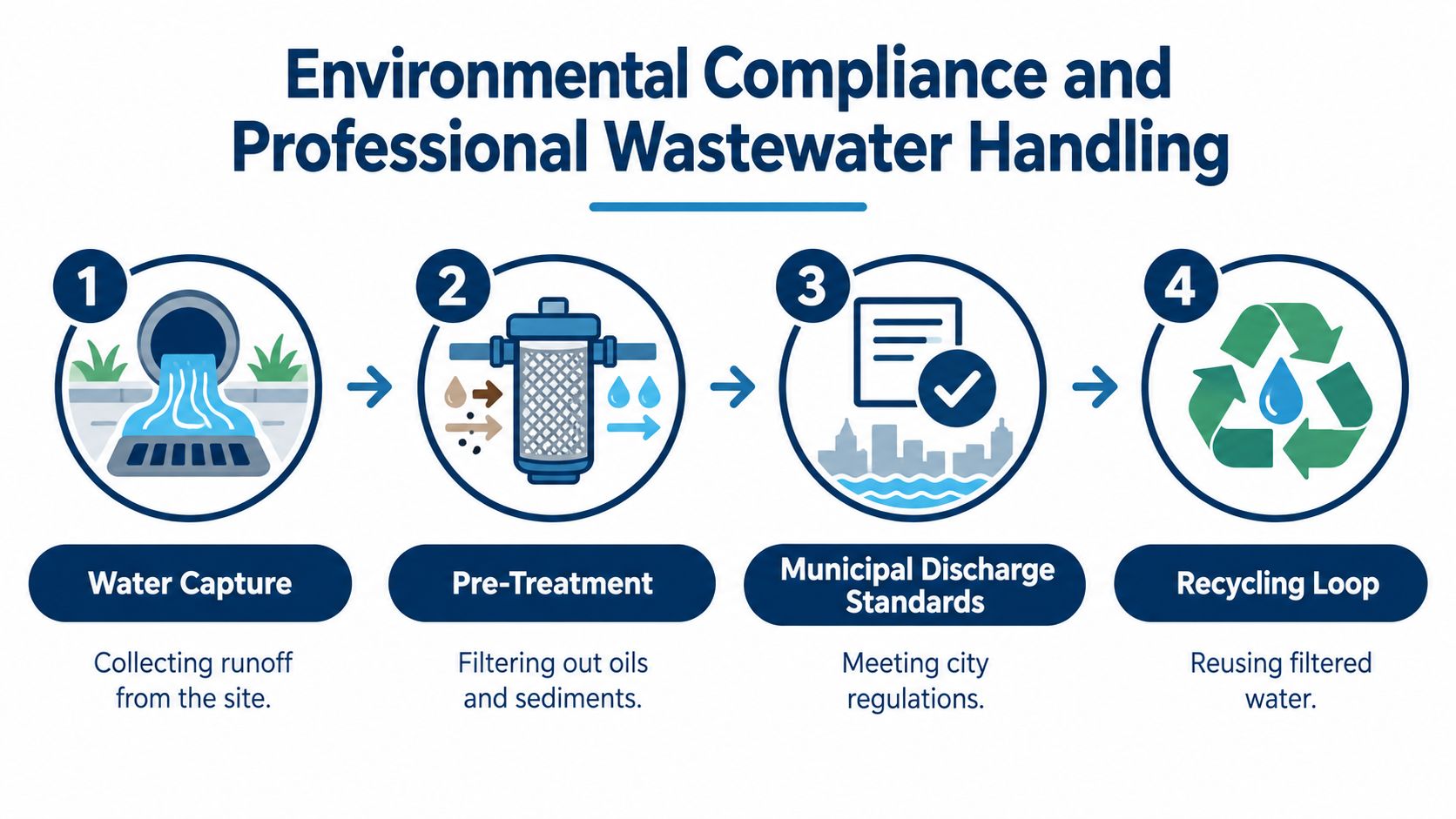
A compliant wash workflow normally follows a practical chain:
- Capture the runoff: The wash bay directs water to a controlled drainage point rather than allowing it to run across pavement.
- Separate grit: Sand, salt residue, and heavier particles settle or pass through a sand-and-grit interceptor.
- Remove oil: An oil interceptor captures petroleum-based contaminants before discharge.
- Meet discharge requirements: The facility manages wastewater according to municipal requirements rather than treating a storm drain as a sewer.
Mobile detailing requires extra care because the operator may work in a driveway, parking area, or commercial lot. Ask how the service contains and removes wastewater. If the answer indicates that the water will run toward the street, the method isn't suitable for contaminated winter cleaning.
Why this affects your choice
Environmental compliance isn't a decorative extra. It indicates that the business has designed its workflow around containment, solids capture, and responsible disposal. A controlled facility can also use high-efficiency rinse methods and equipment that reduces uncontrolled runoff while still cleaning the underside effectively.
Homeowners should avoid washing heavily salted vehicles where runoff can enter catch basins. If a light rinse is unavoidable, use a responsible method that keeps contaminated water away from storm drains, but recognise its limits. For deep cleaning, professional containment is the better choice for the vehicle and the surrounding water system.
Booking Your Appointment and Preparing Your Vehicle
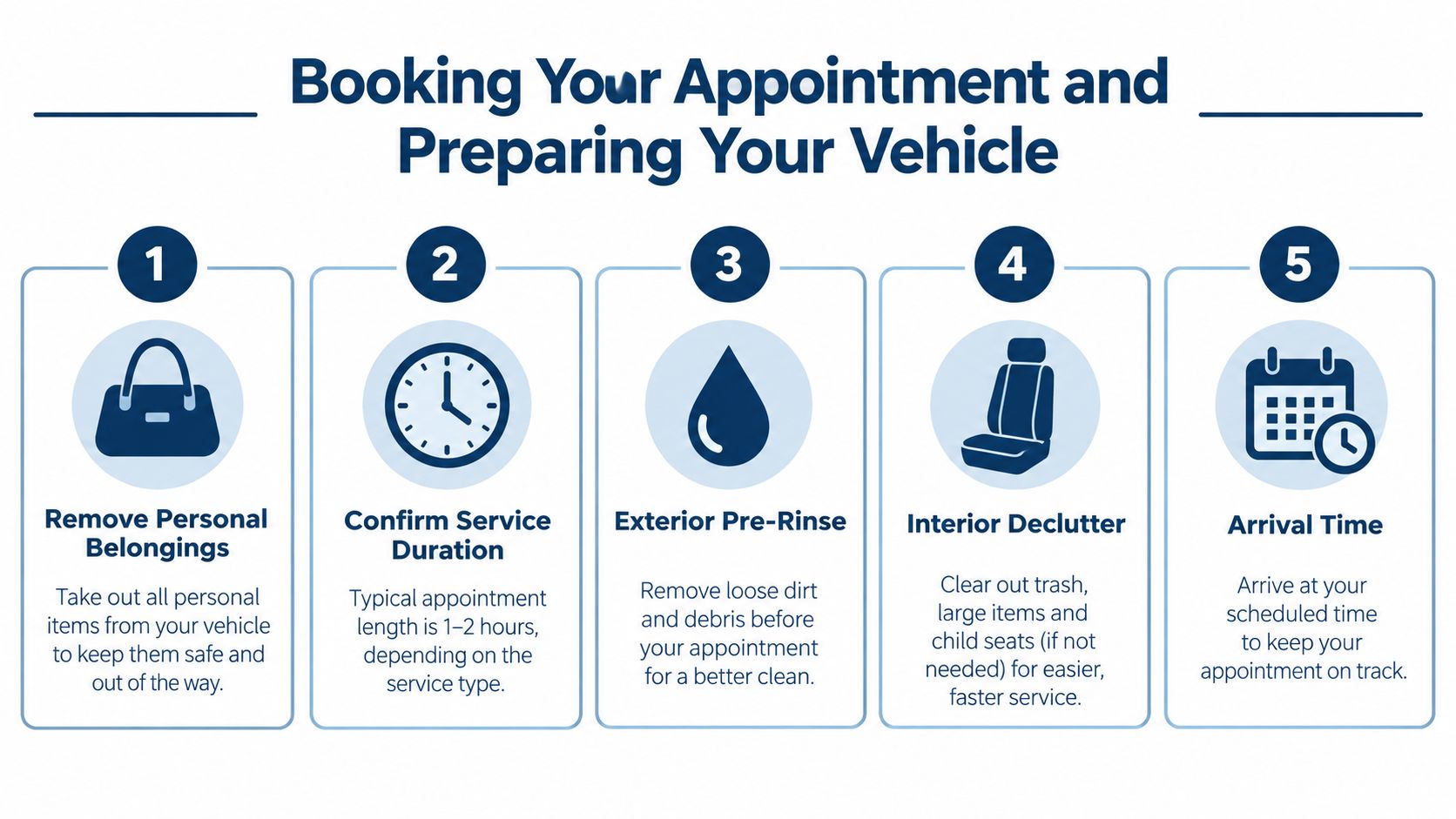
A smooth detailing appointment begins before the vehicle enters the bay. The operator needs an accurate description of the vehicle, its condition, and the result you expect. “Full detail” can mean different things, so ask for the actual inclusions rather than relying on the package name.
Appointment-based interior and exterior detailing typically takes 1 to 4 hours, depending on the selected package and the vehicle's condition. The published service information for the local provider identifies SUV, van, truck, and pet-hair surcharges, so disclose those factors when booking rather than treating them as minor details.
Use this booking sequence
- Describe the vehicle: Give the year, body style, seating layout, and whether it's a work or family vehicle.
- List the problems: Mention salt stains, pet hair, spills, odours, scratched paint, leather dryness, or visible rust.
- Confirm the package: Ask whether it includes mats, cargo space, door jambs, shampooing, polishing, underbody cleaning, or protection.
- Ask about timing: Confirm the estimated completion window and whether you need to leave the vehicle for the full appointment.
- Clarify payment and extras: Check size surcharges, pet-hair charges, cancellation terms, and approval requirements for additional work.
Remove child seats, chargers, rubbish, gym bags, work tools, and personal belongings. Secure valuables yourself. Detailers can clean around fixed equipment, but they can't properly treat covered surfaces or assume responsibility for items left in the cabin.
Prepare the interior and exterior
Vacuuming loose rubbish before arrival isn't mandatory, but clearing the cabin helps the technician reach the carpet and trim. Keep any item you want cleaned, such as rubber mats, available for inspection. Point out stains and odours in person so the operator can set realistic expectations.
Don't apply a greasy dashboard dressing or household cleaner before the appointment. Those products can interfere with professional cleaners and hide the condition of the surface. For winter grime, a light pre-rinse may remove loose material, but don't create uncontrolled runoff in a residential area.
Spring salt removal and pre-winter rust-proofing can become busy periods. Book ahead when possible, especially if you need a longer interior restoration. Businesses that manage many appointments can also reduce missed bookings with a reminder workflow such as ViralRef's no-show solution, which helps customers confirm the time and arrive prepared.
Quick Reference Guide to Guelph Auto Detailing Services
Use this guide to choose the least intensive service that solves the actual problem. A regular express wash is enough for fresh road film on a maintained vehicle. A neglected cabin, embedded salt, pet hair, or visible contamination needs appointment-based labour. Rust proofing deserves a separate decision because it protects areas that ordinary exterior cleaning cannot reach.
Fast service lookup
| Your situation | Best starting point | Add or ask about |
|---|---|---|
| Clean cabin and regular winter road film | Express exterior wash | Underbody wash and surface protection |
| Family vehicle with crumbs and salt on mats | Full-service wash | Interior vacuuming, mats, door panels, and consoles |
| Deep stains, odours, or neglected upholstery | Interior and exterior detailing | Shampooing, extraction, vent and crevice cleaning |
| Pet hair throughout seats and carpet | Full interior assessment | Pet-hair labour and odour treatment |
| SUV, van, or pickup with a large cargo area | Size-specific detailing quote | Cargo cleaning, third-row access, and drying time |
| Frequent commuter or gig driver | Membership or prepaid wash bundle | Discounted interior cleaning and actual visit frequency |
| Vehicle exposed to repeated winter salt | Underbody cleaning | Dedicated rust-proofing assessment |
| Mobile or driveway service | Confirm containment method | Wastewater capture and storm-drain protection |
The details worth confirming
Ask these questions before you approve work:
- What does the package include? Get the surfaces and techniques in writing.
- Is the underbody included? Exterior foam alone doesn't answer that.
- Are size and pet-hair charges separate? Confirm before drop-off.
- How is wastewater handled? A professional operator should explain containment and disposal.
- What can the treatment realistically improve? Stains, odours, scratches, and rust each require different methods.
- When should I return? Set a repeat schedule based on road exposure and interior use.
Vehicle owners in Guelph should prioritise underbody rinsing after heavy salt exposure, interior cleaning when salt and moisture enter the cabin, and rust protection when the vehicle's condition and construction make it appropriate. Don't buy a coating because it sounds premium. Buy the service that addresses the contamination your vehicle faces.
Nanak Car Wash offers express and full-service washes, appointment-based interior and exterior detailing, and automotive rust proofing, with options for memberships and prepaid bundles. Visit Nanak Car Wash to review the available services and arrange the right cleaning or protection for your vehicle in Guelph.

 6600 Finch Ave W, Etobicoke, ON M9V 3Z6
 647-703-8515
 MON – SUN 8 AM to 7 PM