
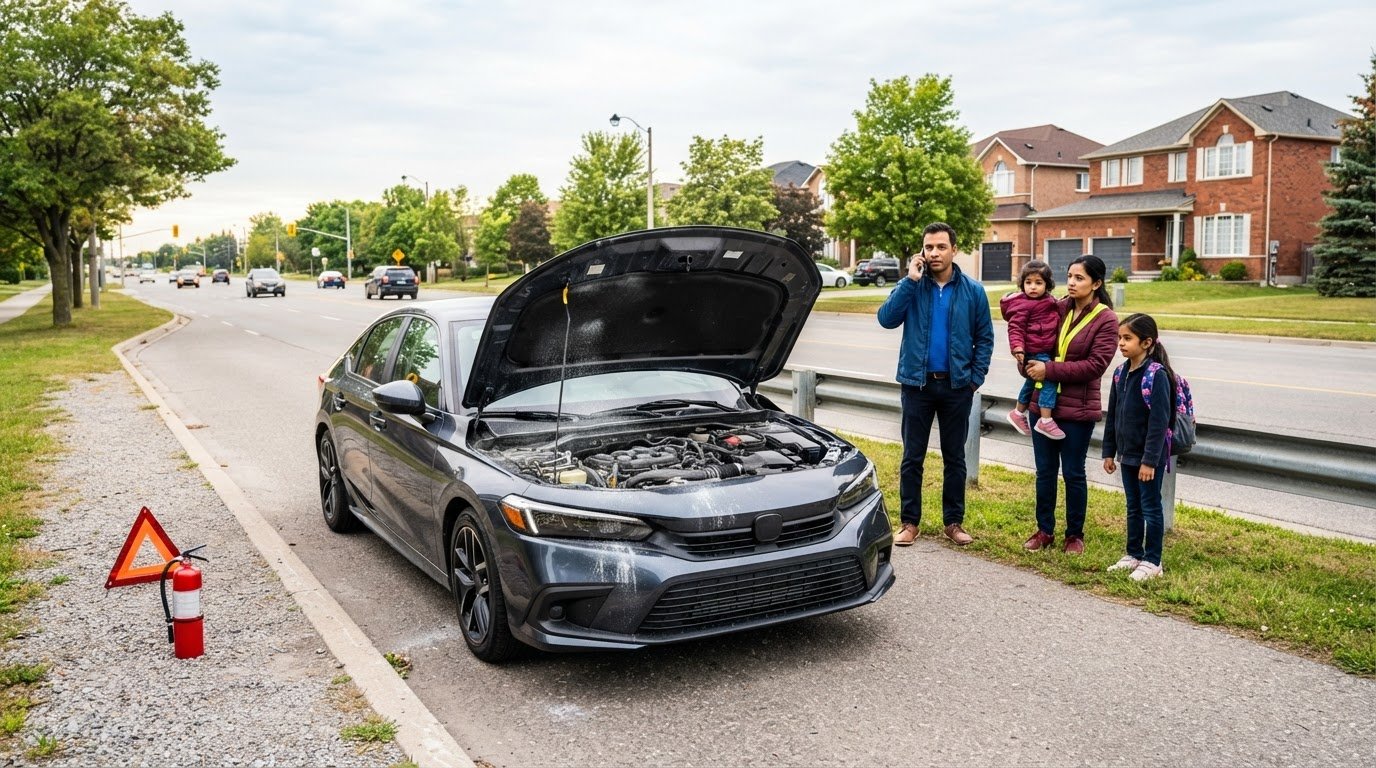
A discharged extinguisher is a reason to stop and reassess, not keep driving. If you’re deciding what to do after a fire extinguisher goes off in a car, pull over safely, turn off the engine, and get everyone out. If flames remain, move away from the vehicle and call emergency services. Only try to fight the fire if it’s small and manageable and you have a clear exit.
It’s natural to want to clear the mess quickly and get back on the road. But the next step depends on whether there’s still a fire, what type of extinguisher discharged, and where its contents landed. Dry chemical powder can be harmful if inhaled or if it gets in your eyes, and it can damage parts of the car.
This guide explains when to stop fighting a car fire, what to do after an extinguisher discharges, and how to approach residue without spreading it. You’ll also learn why prompt cleanup matters and when car detailing can help clean residue from the vehicle’s interior.
Key Takeaways
- Get everyone out and move away from traffic and flames when a car fire is too dangerous to tackle.
- If the extinguisher is empty and the fire is still burning, stop trying to put it out and wait for emergency services.
- Dry chemical powder can be harmful if inhaled or if it gets in your eyes, so avoid stirring it up.
- Remove residue promptly. Learn how to handle larger deposits and why powder left behind can damage parts of your car.
- Once the fire risk is addressed, Nanak Car Wash Car Detailing Packages can help with the vehicle’s interior cleanup.
Signs a car fire is too large to tackle
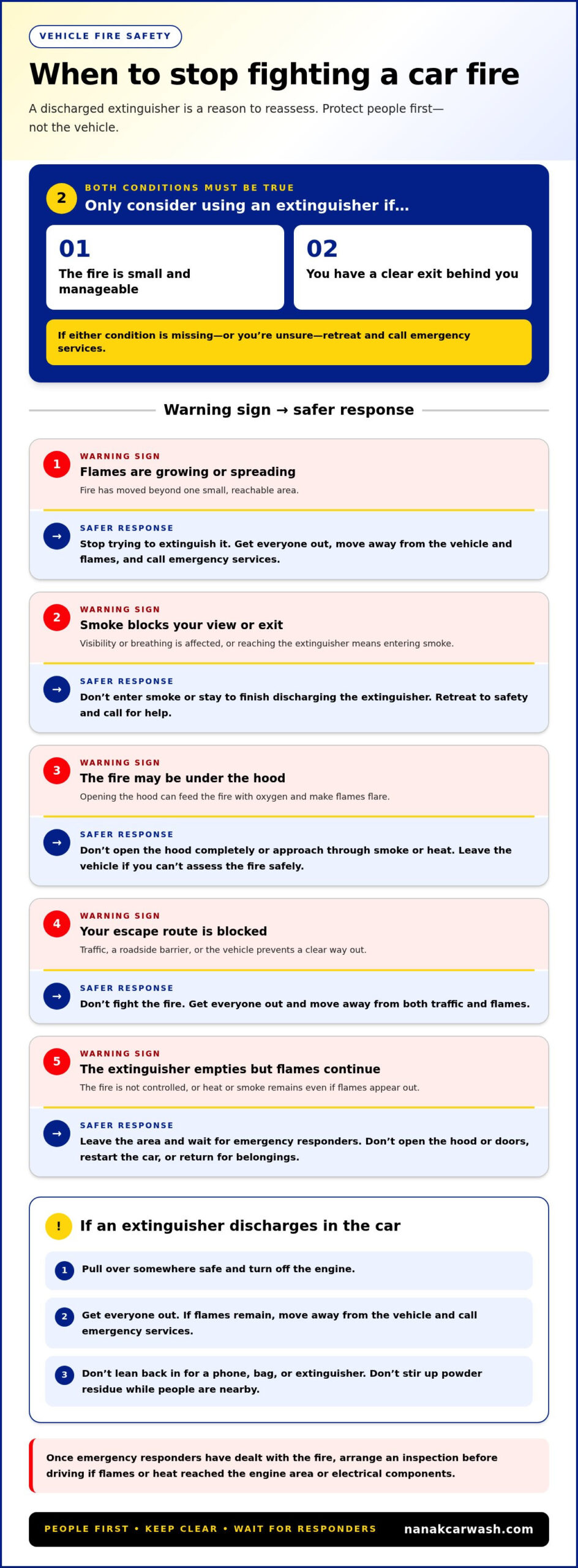
A fire is too large to tackle if flames are spreading, smoke is building, or you can’t keep a clear exit behind you. A small flame isn’t automatically safe: a fire in the engine compartment can flare when the hood opens and feeds it oxygen. If you can’t assess the fire without approaching smoke or heat, leave the vehicle.
Use these signs to decide when to stop. The goal is not to save the car at the risk of becoming trapped beside it.
- Flames are growing or spreading. If fire moves beyond one small, reachable area, get out and move away from the vehicle.
- Smoke blocks your view or exit. Don’t enter smoke to reach an extinguisher or retrieve belongings.
- The fire may be under the hood. Avoid opening the hood completely; added oxygen can make flames flare.
- You have no clear escape route. Don’t fight a fire if traffic, a barrier, or the vehicle blocks your way out.
- The extinguisher can’t control the flames. If it empties and the fire continues, stop trying and wait for emergency services.
If a fire extinguisher goes off inside the car but there are no flames, pull over somewhere safe and turn off the engine. Get everyone out. If the extinguisher is still discharging, stop it only if you can do so safely. Once outside, move away from traffic and the vehicle. Don’t lean back in to retrieve a phone, bag, or extinguisher.
Fire extinguishers contain different agents, including dry chemical powder, carbon dioxide, water, and foam. Check the extinguisher label later to identify what discharged. A gas extinguisher’s recharge status also matters: under these regulations, a gas extinguisher containing less than 90 per cent of its rated full gas capacity must be recharged to its rated full capacity, according to Department of Justice Canada.
How do you clean a car after a CO2 or foam fire extinguisher is used? After the fire is out, remove belongings and ventilate the car. Carbon dioxide evaporates into the atmosphere; remove visible foam residue carefully and follow the extinguisher label’s cleanup guidance.
When should you call poison control or seek medical care after extinguisher exposure in Canada? Contact poison control if powder was inhaled or got into someone’s eyes, and seek medical care if symptoms develop. Avoid stirring up residue while people are nearby.
When should a car be inspected by a mechanic or professional auto detailer after a discharge? Arrange an inspection before driving if flames or heat reached the engine area or electrical components. Arrange professional interior cleaning if residue remains on upholstery, carpets, or other cabin surfaces.
When to stop fighting the fire and wait for emergency services
Fight a vehicle fire only if it’s small and manageable and you have a clear exit. Stop immediately if flames spread, smoke thickens, or heat forces you farther away. A fire under the hood or dashboard can grow beyond what a handheld extinguisher can control. Don’t risk becoming trapped beside the vehicle to protect it.
Once you decide to retreat, focus on people and distance, not belongings. Get everyone out, move away from traffic and the flames, and call emergency services. Don’t return to the car for a phone, bag, or second extinguisher. Tell the dispatcher where the vehicle is and whether anyone may still be inside.
- Flames continue after the extinguisher empties. Leave the area and wait for emergency responders. Don’t approach to inspect the engine or try another tactic.
- The fire spreads beyond a small area. Smoke or flames reaching the passenger compartment are clear reasons to retreat.
- Your escape route is blocked. Traffic, a roadside barrier, or fire between you and safety means you shouldn’t attempt to extinguish it.
- Visibility or breathing is affected. Smoke can prevent you from seeing an exit. Don’t stay to finish discharging the extinguisher.
- The fire appears out but heat or smoke remains. Keep clear and let emergency responders assess the vehicle rather than opening the hood or doors.
If you can use an extinguisher safely, keep your exit behind you and stop if the first attempt doesn’t control the flames. Never move closer if heat or smoke increases. A vehicle fire can change quickly, and the extinguisher may run out before the fire is fully out. If you’re unsure you have a safe exit, retreat and call for help.
Should you replace or service a fire extinguisher after it has discharged? Replace a single-use fire extinguisher after one use. If the model is refillable, have it serviced and recharged before relying on it again. An extinguisher that has discharged may not be ready for another emergency.
What should you do if the fire is still burning or the car may reignite? Move everyone well away from the vehicle and traffic, then wait for emergency services. Don’t restart the car, open the hood, or return for belongings while flames, smoke, or heat remain.
After emergency responders have dealt with the fire and the vehicle is safe to approach, a Full-Service Car Wash can help with routine exterior cleaning. It doesn’t replace fire assessment or specialist residue cleanup.
Both conditions must be met before you try to fight the fire: it must be small and manageable, and you must have a clear exit route. If either condition is missing, leave rather than trying to control the flames. Everyone should get out of a burning vehicle and move well away, clear of traffic and the flames. Focus on people and distance, not the vehicle.
Is fire extinguisher powder in a car toxic or harmful to breathe?
Dry chemical extinguisher powder can be dangerous if inhaled or if it gets in your eyes. Inside a closed car, discharged powder can settle on seats, carpets, vents, and personal items. Don’t treat the residue like ordinary dust or start cleaning while people remain in the cabin. Leave the vehicle and avoid stirring the powder into the air.
The extinguisher label identifies its agent. Some extinguishers contain dry chemical powder, while others use carbon dioxide, water, wet chemical, or foam. This section focuses on powder residue. If you’re unsure what discharged, keep clear of the material until you can read the label safely.
- Inhalation risk: Don’t breathe or deliberately sniff the powder. Move away from the vehicle and avoid actions that spread residue, such as shaking floor mats or sweeping dry powder inside.
- Eye exposure: Don’t rub your eyes if powder may have reached them. Move to clean air and contact poison control or seek medical care for exposure.
- Contact with clothing: Avoid brushing dusty clothing near your face or other people. Keep contaminated items separate from clean belongings until they can be handled without spreading residue.
- Cabin contamination: Keep children and pets out of a vehicle with visible powder. Powder on a seat or floor can become airborne again when disturbed.
For example, opening a car door and shaking out a powder-covered floor mat can send residue back into the breathing space. Keep people clear and leave settled material undisturbed until it can be cleaned carefully. Don’t use a household fan to blow powder around the cabin or start the vehicle to run its ventilation system.
If someone inhaled powder or got it in their eyes, contact poison control in your province or territory for advice. Seek urgent medical care if the person has serious difficulty breathing or significant eye exposure. Tell the responder that a fire extinguisher discharged and, if available, identify the agent from its label. Don’t delay urgent care to find the extinguisher.
Once people are safe, remove belongings only if you can do so without entering a smoky or unsafe area. Keep powder-covered items apart from clean ones. Dry chemical residue can be corrosive and damage a vehicle, so prompt, careful removal matters. The safest cleanup method depends on the extinguisher agent and the affected surfaces.
If you’re deciding what to do after a fire extinguisher goes off in a car, treat airborne powder as a reason to leave the cabin, not as a cue to vacuum immediately. Wait until the fire risk has passed, then clean without creating dust. Never put personal safety ahead of recovering belongings or protecting the interior.
How do you safely clean dry chemical fire extinguisher residue from a car interior?
Start only after the fire risk has passed and the vehicle is safe to approach. Dry chemical powder can be corrosive and dangerous if inhaled or if it gets in your eyes. Keep people away from the cabin while you assess the residue. Check the extinguisher label to identify the discharged agent before choosing a cleanup approach.
Remove belongings only if you can do so without spreading powder. Set dusty items apart from clean ones, and don’t shake out clothing, floor mats, or bags inside the car. Avoid sweeping powder into the air. If the extinguisher discharged across the seats and floor, work carefully rather than rushing from surface to surface.
For larger deposits, use a dustpan and broom to collect the powder, then transfer it into a garbage bag. Keep the broom close to the surface and move slowly to avoid scattering residue. Repeat where visible piles remain. Don’t brush powder toward vents, seat seams, or gaps where it could settle out of sight.
- Clear loose belongings. Remove items individually and keep residue-covered pieces separate.
- Collect visible powder. Sweep larger deposits into a dustpan, then place them in a garbage bag.
- Check hidden areas. Look at floor edges, seat tracks, and the space around the centre console.
- Choose the cleanup method by surface. Don’t apply water across the cabin without considering where it will go.
Some cars or interior areas can be hosed out, but only rinse areas that are suited to it. Avoid directing water into electrical controls, dashboard openings, or other areas that aren’t designed for rinsing. Water may dry, but that doesn’t make every surface safe to soak. Use the vehicle’s materials and the extinguisher label to guide what can be rinsed.
After collecting loose powder, inspect the cabin again in good light. A pale film may remain on upholstery or in carpet fibres after larger deposits are removed. Don’t use a method that blows residue around the cabin. If powder remains in tight seams, vents, or delicate areas, stop before spreading it further and arrange professional interior cleaning.
Prompt removal matters because dry chemical powder can damage a car. Keep the garbage bag closed and away from the passenger area. Before using the vehicle again, check that visible residue is gone from surfaces people touch and areas around the controls. If the discharge reached hidden cabin spaces, include them in the cleanup plan rather than cleaning only the seats and floor.
Can fire extinguisher powder damage car electronics, paint, upholstery, or air-conditioning systems?
Yes. Dry chemical extinguisher powder can damage a car, so remove it promptly. The risk depends on where the residue settled and whether it remains undisturbed or gets spread around. Check the extinguisher label first, since extinguishers can release different agents. This section concerns dry chemical powder, not foam, water, or carbon dioxide.
Once the fire risk has passed, inspect the cabin and exterior methodically. Powder may be visible on a seat, but a thin layer can also settle in less obvious places. Avoid turning on the vehicle’s ventilation system before checking whether residue entered the vents. Air movement can carry loose material into other cabin areas.
- Electronics: Look for visible powder around the dashboard, switches, display, and electrical openings. Don’t brush residue into gaps or operate dusty controls before cleaning.
- Paint: Check the hood, doors, and other painted panels for settled powder. Remove residue promptly and avoid rubbing dry particles across the surface.
- Upholstery: Inspect seats, carpets, and fabric seams. Powder lodged in fibres may remain after larger deposits are removed.
- Air-conditioning and vents: Check vent openings and nearby trim. If powder entered the ventilation path, don’t run the fan to blow it out.
These checks identify where powder landed; they don’t prove that a component has failed. For example, residue beside a dashboard control calls for careful removal and inspection. A warning light, a control that stops responding, or visible powder inside a vent gives you a specific reason to arrange further assessment.
Use a dustpan and broom for larger deposits, then place the collected powder in a garbage bag. Work gently so dry residue doesn’t become airborne or spread across paint and upholstery. Don’t hose the cabin indiscriminately. Water may be suitable only where the vehicle can be safely hosed out, and it shouldn’t be directed into electrical openings or vents.
Prompt removal matters, especially where powder remains in contact with vehicle surfaces or sits in hard-to-reach areas. If residue is trapped around electronics, inside vents, or deep in upholstery, avoid improvised cleaning that could spread it. Arrange an inspection if a control behaves differently or residue remains beyond the surfaces you can safely reach.
For visible powder on seats, carpets, and other cabin surfaces, book professional car detailing after the fire risk is resolved. Keep the vehicle out of service if fire or heat affected its electrical components; cleaning alone doesn’t assess fire damage.
Keep the vehicle out of service if fire or heat affected it. Powder extinguishers can be suitable for Class A, B and C fires, while foam extinguishers are described as suitable for Class A and B fires. Foam- or powder-based extinguishers are recommended for car fires, and liquid-based extinguishers are advised against. CO2 extinguishers are described as suitable for electrical fires. Keeping a fire extinguisher in a vehicle can help people stay safe and minimize vehicle damage during a vehicle fire.
Nanak Car Wash: Car Detailing Packages
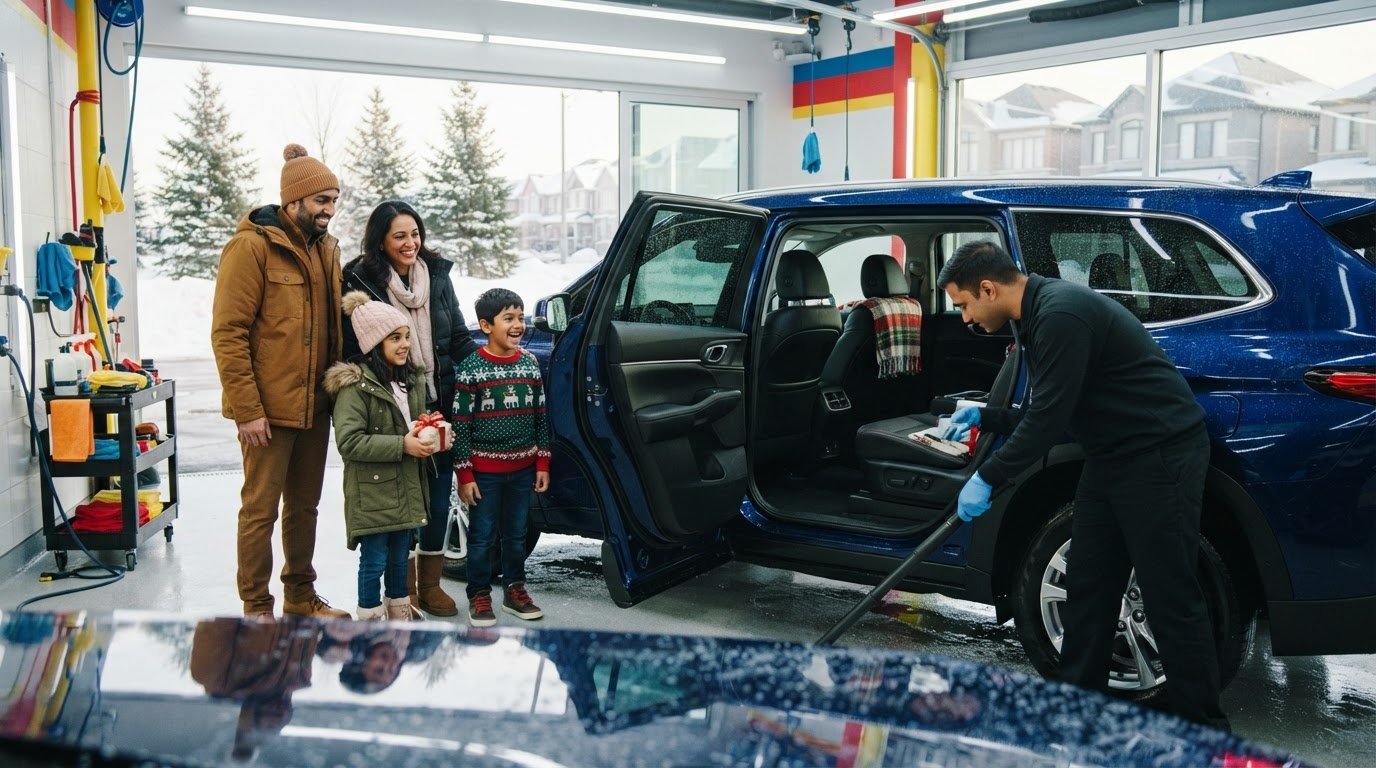
Nanak Car Wash offers Car Detailing Packages for interior cleanup after the fire risk has been addressed. Choose detailing when loose residue has been managed safely and the cabin needs further cleaning. A Full-Service Car Wash can help with routine vehicle cleaning, but it doesn’t replace a fire assessment or cleaning residue from hidden electrical components and ventilation systems.
Choose the next step based on the condition of the vehicle. If powder remains in upholstery or carpets, describe the affected areas when arranging service. Keep the car out of use if fire or heat may have affected its electronics, and have that damage assessed separately before driving.
For vehicle cleaning after the immediate hazard is handled, contact Nanak Car Wash or visit nanakcarwash.com.
Make the Next Step a Safer, Cleaner Drive
Knowing what to do after a fire extinguisher goes off in a car also means deciding what needs attention next. Once the vehicle is safe and fire-related damage has been assessed, note which cabin areas still need cleaning. This gives you a clear starting point for restoring the interior without treating vehicle cleaning as a substitute for safety or mechanical assessment.
Nanak Car Wash offers Car Detailing Packages for interior care, along with Full-Service Car Wash and Express Car Wash options for routine cleaning. Choose based on your car’s condition and the cleaning it needs. These services support vehicle cleanliness, not fire-damage repairs.
Take the next step when you’re ready: contact Nanak Car Wash to discuss vehicle cleaning. A careful plan can help you move forward with greater confidence and get back to enjoying a clean, comfortable car.
Frequently Asked Questions
What should you do immediately after a fire extinguisher discharges inside a car?
Pull over safely, turn off the engine, and get everyone out of the car. If flames remain, move away and call emergency services rather than re-entering the vehicle. If the extinguisher is still discharging, stop it only if you can do so safely. Once the area is safe, identify the extinguisher agent from its label. Replace a single-use extinguisher after one use, and put its safety pin back if possible.

 6600 Finch Ave W, Etobicoke, ON M9V 3Z6

 647-703-8515
 MON – SUN 8 AM to 7 PM