
The cost of professional mold remediation for car interiors in Brampton depends on how far the mold has spread and whether interior materials need more than surface cleaning. Mold is not just an appearance issue: left untreated, it can affect comfort and damage interior materials.
A musty smell or visible spots may leave you wondering whether a quick clean is enough. The key is to find and address the moisture behind the mold, not just treat what you can see. The work can vary depending on how much growth there is and whether carpets, seats, trim, or other areas are affected or damaged.
This guide explains what can affect cleanup costs, which interior surfaces and damaged parts may need attention, and how to reduce the chance of mold returning. It also explains why drying affected areas and addressing the moisture source matter for lasting results.
Key Takeaways
- Cleanup needs depend on how far mold has spread across seats, carpets, trim and other interior areas.
- Learn why removing visible mold alone may not address the moisture that allows it to return.
- Recognize musty odours and visible growth as signs that deserve attention before interior materials are further affected.
- Understand how the extent of contamination and damage can influence whether parts need attention or replacement.
- See where car detailing can help with vehicle cleanliness, and how it differs from addressing mold and its moisture source.
Mold removal from upholstery, carpets, and trim
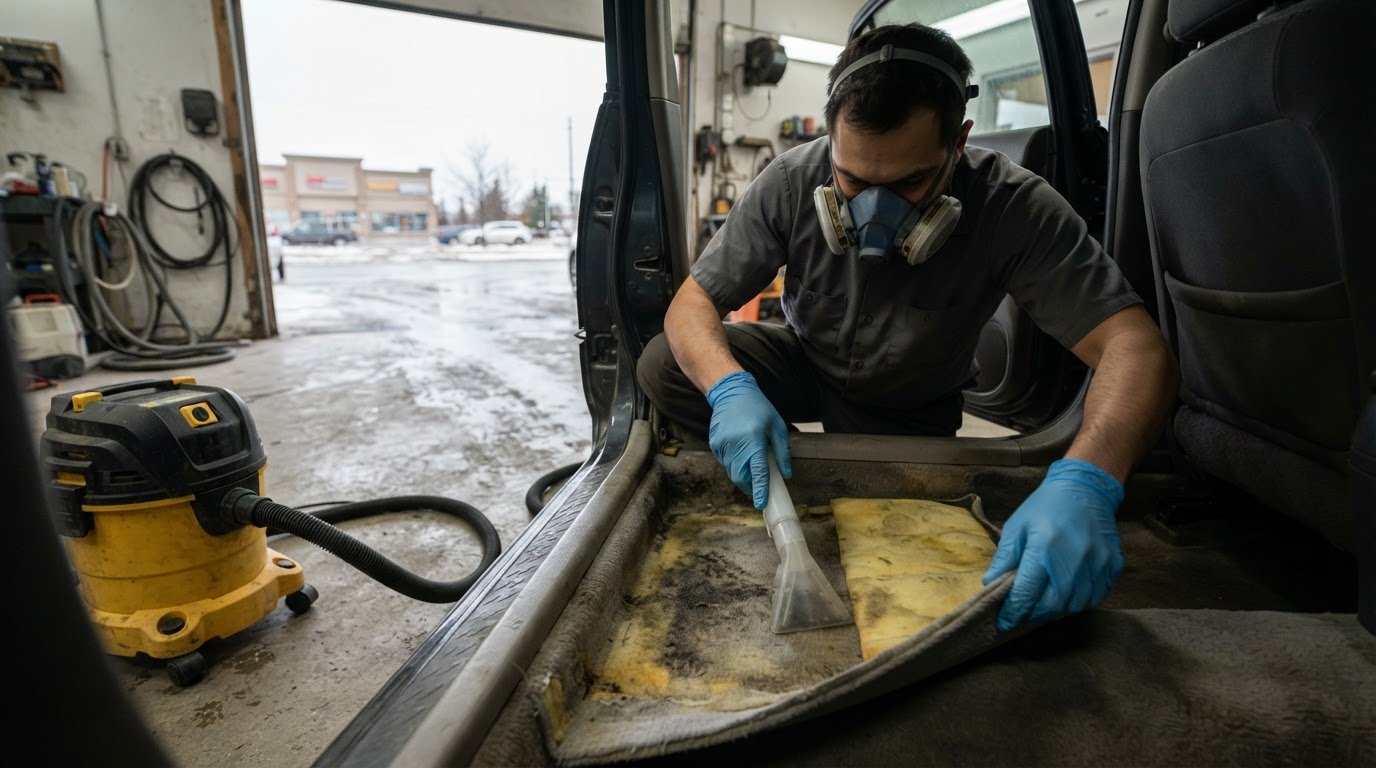
Automotive mold removal should address affected surfaces and the moisture that allowed mold to grow. A careful inspection checks seats, carpets, headliners, trim, and vents, then identifies damp materials or areas that may need access beneath the surface. Products should be suitable for automotive interiors, where fabrics, finishes, and components require appropriate care.
Cleaning should match the affected material. Upholstery and carpets may need targeted treatment and thorough drying, while hard trim needs a compatible cleaning solution. Mold inside vents or beneath carpeting may require access beyond the visible spots. Removing vehicle components is considered when it helps reach concealed contamination or assess moisture underneath, rather than being an automatic step for every car.
Appropriate protective equipment matters during removal. The person doing the work should use equipment suited to the cleanup task and avoid disturbing visible mold while handling affected materials. Keep passengers away from the work area during cleaning, and avoid dry-brushing or ordinary vacuuming over mouldy fabric, which can spread debris through the cabin.
Pricing depends more on the extent of growth, affected materials, and required access than on the vehicle’s nameplate alone. A small surface patch in a compact sedan is different from several damp carpet sections in a three-row SUV. These are general market figures, not a quote for a particular vehicle.
When comparing remediation providers, review the written scope: which surfaces will be treated, whether vents and concealed areas will be assessed, how drying will be handled, and what the work excludes. Consider relevant experience, certifications, review patterns, and warranty terms, but don’t treat a rating alone as proof of a complete cleanup.
Ontario auto insurance coverage for mold remediation depends on the policy wording and what caused the damage. For a claim, keep dated photos, a record of when the moisture or mold appeared, and relevant repair or cleanup documents. The insurer’s claims process determines what information it needs.
For disposal in Brampton, don’t assume every mold-affected carpet or trim piece belongs in household waste. Record what was removed and how it was handled, especially if remediation involves several interior components.
Drying time varies by vehicle. Damp carpet, hidden moisture, and components removed for access can extend the work, and the interior needs to dry fully after cleaning. Before an appointment, remove personal items and note where you first saw mold or moisture. Afterward, follow the drying instructions and address the moisture source. Health Canada advises drying wet areas and fixing the source of the problem to help prevent mold from growing again.
Mold recurrence prevention
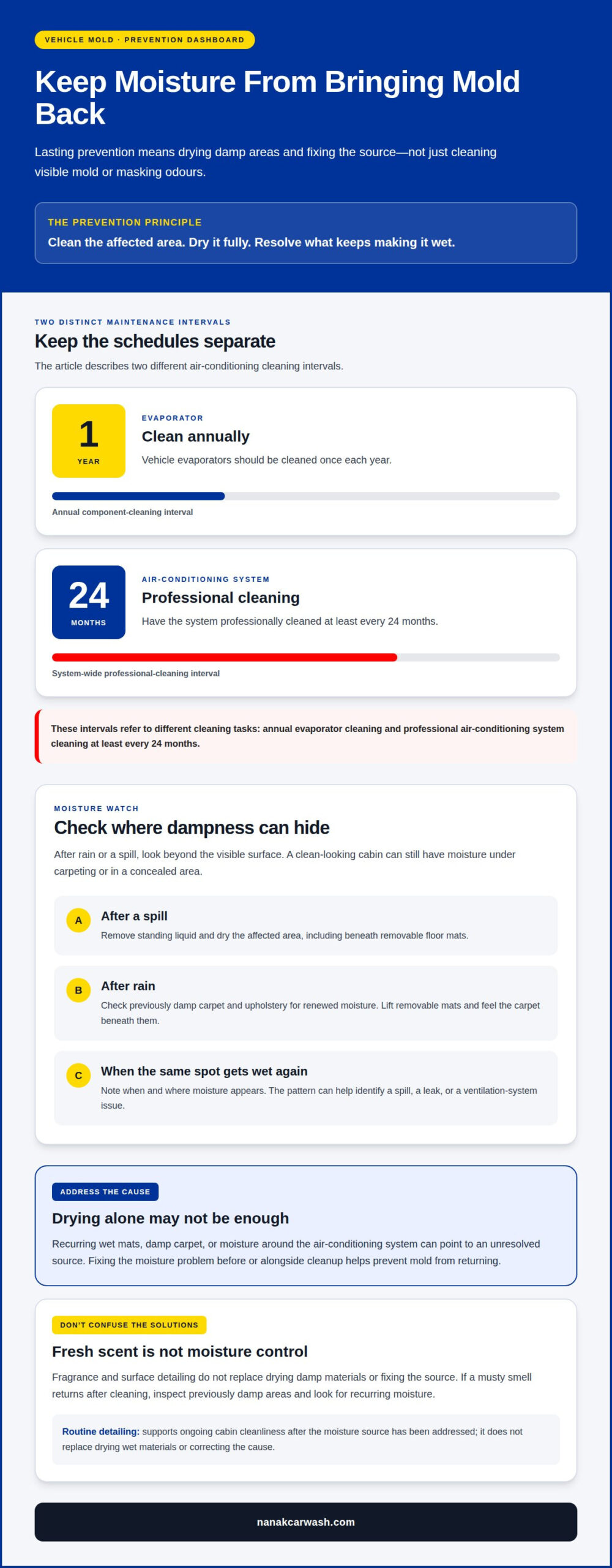
After interior cleanup, preventing mold from returning starts with controlling moisture. Health Canada advises drying damp areas and fixing the source of the problem. In a vehicle, that means looking beyond a cleaned seat or carpet: recurring wet floor mats, damp carpeting, or moisture around the air-conditioning system can point to an unresolved issue. Cleaning removes residue, but it won’t address an ongoing source of water.
Check the cabin after rain or a spill. Lift removable floor mats and feel the carpet underneath, especially in areas where moisture was previously found. Dry wet areas promptly and avoid letting the vehicle’s interior stay damp. If the same spot gets wet again, note when it happens and where the moisture appears. This pattern can help identify whether the cause is a spill, a leak, or the vehicle’s ventilation system.
The air-conditioning system also needs attention as part of a moisture-control routine. Vehicle evaporators should be cleaned annually, and air-conditioning systems should be professionally cleaned at least every 24 months. These are distinct intervals: annual evaporator cleaning addresses that component, while the 24-month interval refers to professional cleaning of the system. A regular schedule can help keep cleaning from being overlooked.
- After a spill, remove standing liquid and dry the affected area, including beneath removable mats.
- After rain, check previously damp carpet and upholstery for renewed moisture.
- Keep track of air-conditioning cleaning so the annual and 24-month intervals aren’t confused.
Don’t treat fragrance or surface detailing as a substitute for fixing dampness. A clean-smelling cabin may still have moisture beneath the carpeting or in a concealed area. If a musty smell returns after cleaning, inspect previously damp areas and look for a recurring moisture source. Drying only the visible surface may not resolve dampness underneath.
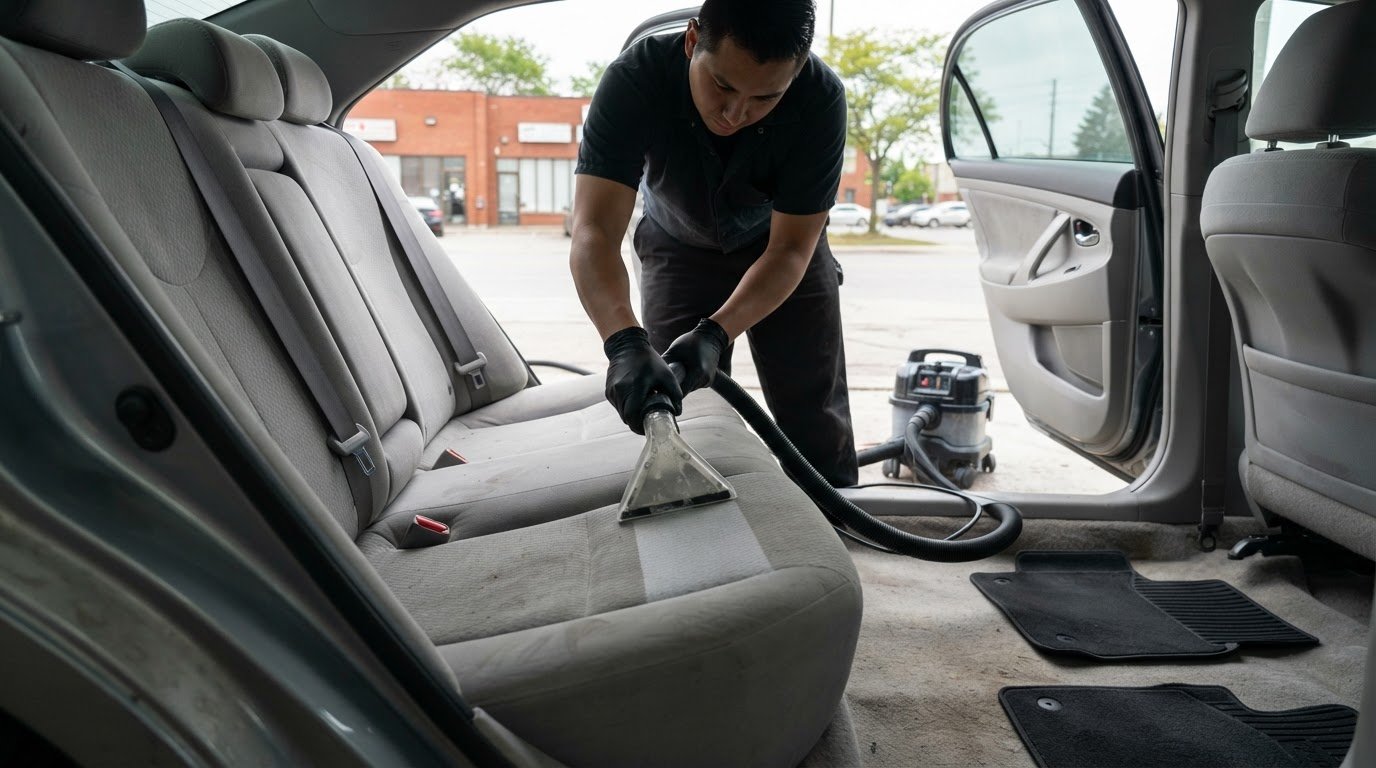
Once the moisture problem is addressed, regular interior care can help keep dirt and spills from building up. For routine cabin cleaning after the source has been fixed, consider car detailing packages. Detailing supports ongoing vehicle cleanliness; it doesn’t replace drying wet materials or correcting the cause of moisture.
Replacing damaged parts and dehumidifying
Some vehicle materials can be cleaned, while others may need to be removed if mold has penetrated them or they remain damp. Carpet backing, seat foam, and insulation beneath the flooring can hold moisture that surface cleaning cannot reach. An inspection should distinguish stained but serviceable fabric from material with persistent dampness, odour, or visible growth. Replacement is not automatic: the condition and accessibility of each affected part matter.
What causes mold in car interiors, and should the moisture source be repaired before remediation? Spills, leaks, and ongoing dampness can create conditions for mold growth. Repairing the moisture source before or alongside cleanup helps prevent the problem from returning. Health Canada advises drying wet areas and fixing the source.
For example, if the carpet feels wet underneath, lifting it can help reveal whether the padding is affected. A technician can assess the carpet, padding, and nearby trim separately. If just one removable section is damaged, replacing that part may be more appropriate than removing unaffected interior materials. If moisture has spread beneath several areas, the amount of removal and drying required can increase.
Dehumidifying supports drying after wet materials are cleaned or removed. Air needs to reach damp surfaces, including concealed spaces exposed during disassembly. Check that materials are dry before reinstalling damp components, since trapping moisture beneath carpet or trim can create conditions for mold to return. The process depends on how much material is wet and how easily the affected area can be accessed.
The cost rises with the number of affected components, the work needed to reach concealed areas, and the extent of cleaning and drying. Isolated carpet damage calls for a different scope from contamination involving upholstery, padding, and trim.
- Assess: Identify affected materials and locate dampness beneath visible surfaces.
- Separate: Keep removable, serviceable parts distinct from materials requiring replacement.
- Dry: Dehumidify exposed areas and verify materials are dry before reassembly.
- Recheck: Look for remaining moisture or returning growth after the work.
Ask for a written scope that names which components will be cleaned, removed, or replaced. It should explain how concealed areas will be accessed and how drying will be handled. Clear documentation helps you see whether the proposed work addresses both the damaged material and the moisture conditions, rather than simply covering visible marks.
Signs and health risks of vehicle mold
Visible growth, a musty odour, or recurring dampness can signal mold inside a vehicle. These clues can help distinguish suspected mold from ordinary dirt or a one-time spill.
Vehicle Mold Warning Signs
Look for patches or spots on carpet, seat fabric, headliners, trim, and around vents. A musty smell that returns after the cabin has been aired out is another clue, especially if the same floor area feels damp again. Note where each sign appears, such as beneath a floor mat or beside a seat, because its location can help identify affected surfaces.
Check beyond the easiest surface to see. Lift removable floor mats and inspect the carpet beneath them, then look at nearby fabric and trim for visible growth or moisture. A clean-looking mat over damp carpet, for example, may conceal a problem. Don’t treat a smell alone as proof; consider it alongside visible spots, recurring dampness, or other signs in the same area.
Record the pattern before deciding what kind of cleaning is needed. Note whether the odour persists, which areas show spots, and whether dampness returns after drying. A single spill with no visible growth differs from repeated moisture and mold-like patches across several materials. This simple inspection can clarify whether the concern is isolated or spread through the cabin.
Health Risks and Remediation Needs
Mold inside a vehicle can affect health and comfort, and untreated growth can damage interior materials. How can you tell whether a car needs professional mold remediation or interior cleaning? Visible mold, a recurring musty odour, or dampness affecting multiple surfaces points toward remediation. A routine interior clean suits ordinary dirt or an isolated spill without signs of mold.
Take suspected growth seriously without assuming every mark is mold. A drink stain, for instance, may need cleaning, while spreading spots paired with persistent dampness call for closer assessment. Mold spores may be present where growth is visible, but appearance alone cannot establish the cause or how far it extends. Avoid disturbing suspicious patches while assessing the affected area.
Consider which materials are involved. A small mark on an accessible hard surface differs from growth appearing on upholstery, carpeting, and trim. If the smell continues after surface cleaning, or dampness returns beneath a floor mat, surface cleaning alone may leave affected areas untreated. The key distinction is the scope: ordinary dirt calls for cleaning, while suspected mold with recurring moisture or spread across materials needs a more thorough response.
For comfort, limit time in a vehicle with persistent mold odour or visible growth while the issue is assessed. Note whether the concern affects one seat or several areas of the cabin. These observations help describe the problem clearly and distinguish routine interior cleaning from remediation that addresses affected materials and moisture.
Which Brampton companies offer professional mold remediation for car interiors?
For Brampton drivers, the key distinction is whether a service addresses mold and moisture or only cleans the cabin. Mold remediation focuses on affected materials and the conditions that allow growth; routine interior cleaning targets dirt, spills, and everyday buildup. A clean surface alone does not show that hidden dampness or affected materials have been addressed.
Look for a clearly described process that covers inspection, treatment of affected areas, and drying. For example, mold visible on a seat and dampness beneath nearby carpet involve more than wiping down the upholstery. The work scope should explain which surfaces are covered and how the moisture source fits into the cleanup plan.
Professional mold remediation for car interiors in Brampton is most relevant when visible growth appears on several surfaces, a musty odour persists, or dampness returns after cleaning. A single spill on an accessible surface may call for ordinary cleaning if there are no signs of mold or recurring moisture. Start with the type of problem, not the vehicle’s make.
Before comparing service descriptions, write down the affected locations: seat fabric, carpet, trim, headliner, or vents. Add specific observations, such as an odour that remains after airing out the cabin or carpet that feels damp beneath a floor mat. These details help distinguish a focused interior clean from work that needs to address suspected mold and moisture.
Use the proposed scope to understand what the service covers. It should distinguish visible surface treatment from access to concealed areas and explain how affected materials will be dried. If a component may need removal or replacement, the scope should identify the material and explain why that step is being considered. This gives you a practical way to assess the work without relying on a broad “deep clean” label.
- Interior cleaning: Targets dirt, debris and ordinary spills on accessible cabin surfaces.
- Mold remediation: Addresses suspected mold-affected areas and considers the moisture behind the issue.
- Component work: May involve assessing concealed materials when visible signs or dampness extend beneath surfaces.
Keep photos and notes showing where you first saw spots or moisture. For example, a dated photo of a damp carpet section can help show whether the same area changes after cleaning. Clear records also help you compare the proposed scope with the condition you observed.
After remediation, routine detailing can support general cabin cleanliness, but it is not a substitute for addressing mold or its moisture source. If the main concern is visible growth, persistent odour, or recurring dampness, focus first on a scope that covers those conditions. Choose an ordinary interior clean for dirt and isolated spills without signs of mold.
Nanak Car Wash
Nanak Car Wash offers Car Detailing Packages and car wash options to help keep your vehicle clean. If mold or recurring dampness is present, address that problem first: routine washing and detailing are not mold remediation and will not fix a moisture source. Once the affected interior has been handled and dried, detailing can support ongoing cabin cleanliness. Choose an Express Car Wash Package or Full-Service Car Wash Package for exterior and general vehicle cleaning, or explore the Unlimited Wash Club if you wash frequently. The right option depends on the cleaning your vehicle needs, not on treating mold growth. For help choosing a cleaning service, contact Nanak Car Wash.
Take the Next Step Toward a Cleaner Interior
Choose your next step based on what your vehicle needs now. If you suspect active mold, focus first on addressing affected materials and the moisture source. Routine washing and detailing can help maintain general cleanliness, but they are not a substitute for mold remediation.
After the mold issue has been addressed, Nanak Car Wash offers Car Detailing Packages, Full-Service Car Wash Packages, and Express Car Wash Packages for ongoing vehicle care. Choose based on whether you need a more thorough interior clean or a general wash.
For professional mold remediation for car interiors in Brampton, keep the goal clear: deal with suspected mold and moisture first, then maintain a clean cabin. Contact Nanak Car Wash to discuss vehicle cleaning options after remediation. Contact Nanak Car Wash, and take a practical next step toward a cleaner, more comfortable vehicle.
Frequently Asked Questions
What does Mold Remediation Cost for a Car?
These figures describe general remediation costs, not Nanak Car Wash service prices. The amount for a particular vehicle depends on the affected materials, the spread of mold, required access, and whether parts need replacement.
What does professional automotive mold remediation in Brampton typically include?
Professional automotive remediation typically assesses affected interior areas, treats mold on surfaces such as seats, carpets, headliners, and vents, and dries cleaned materials. Products should be designed for automotive interiors. For example, damp carpet may need assessment beneath the visible surface, while an isolated mark on trim may call for more focused treatment. Addressing the moisture source is also important to reduce the risk of recurrence.
How much does car interior mold remediation cost in Brampton and the GTA?
There is no single flat Brampton or GTA rate; the cost depends on the vehicle’s condition and the work required. A quote request should account for affected surfaces, concealed moisture, component removal, replacement needs, and drying requirements.
What cleaning methods and equipment do automotive mold remediation companies use?
Methods generally combine cleaning products intended for automotive interiors with treatment of affected fabrics, carpets, trim, or vents, followed by thorough drying. The exact equipment depends on the surfaces and how far moisture has spread. For instance, carpet damp beneath the surface may need access and drying beyond a wipe-down. Don’t assume a fragrance treatment or ordinary interior clean will address mold or hidden damp materials.
What are the health risks of mold in a car interior, and when should occupants avoid driving it?
Mold inside a vehicle can affect health and comfort, and untreated growth can damage interior materials. If visible mold is widespread, a musty odour persists, or dampness keeps returning, limiting time in the cabin while arranging an assessment is a prudent step. Be especially cautious if someone feels unwell in the vehicle. Seek medical advice for health concerns, since symptoms and individual risks vary.
Are there local Brampton rules or disposal requirements for mold-contaminated vehicle materials?
Don’t assume mold-affected carpet or trim belongs in household waste. Record what was removed and how it was handled.
How long does professional mold removal and vehicle drying take?
Drying time varies by vehicle. Damp carpet, hidden moisture, and components removed to reach concealed areas can extend the work. The interior should dry fully before reassembly.


 6600 Finch Ave W, Etobicoke, ON M9V 3Z6

 647-703-8515
 MON – SUN 8 AM to 7 PM