
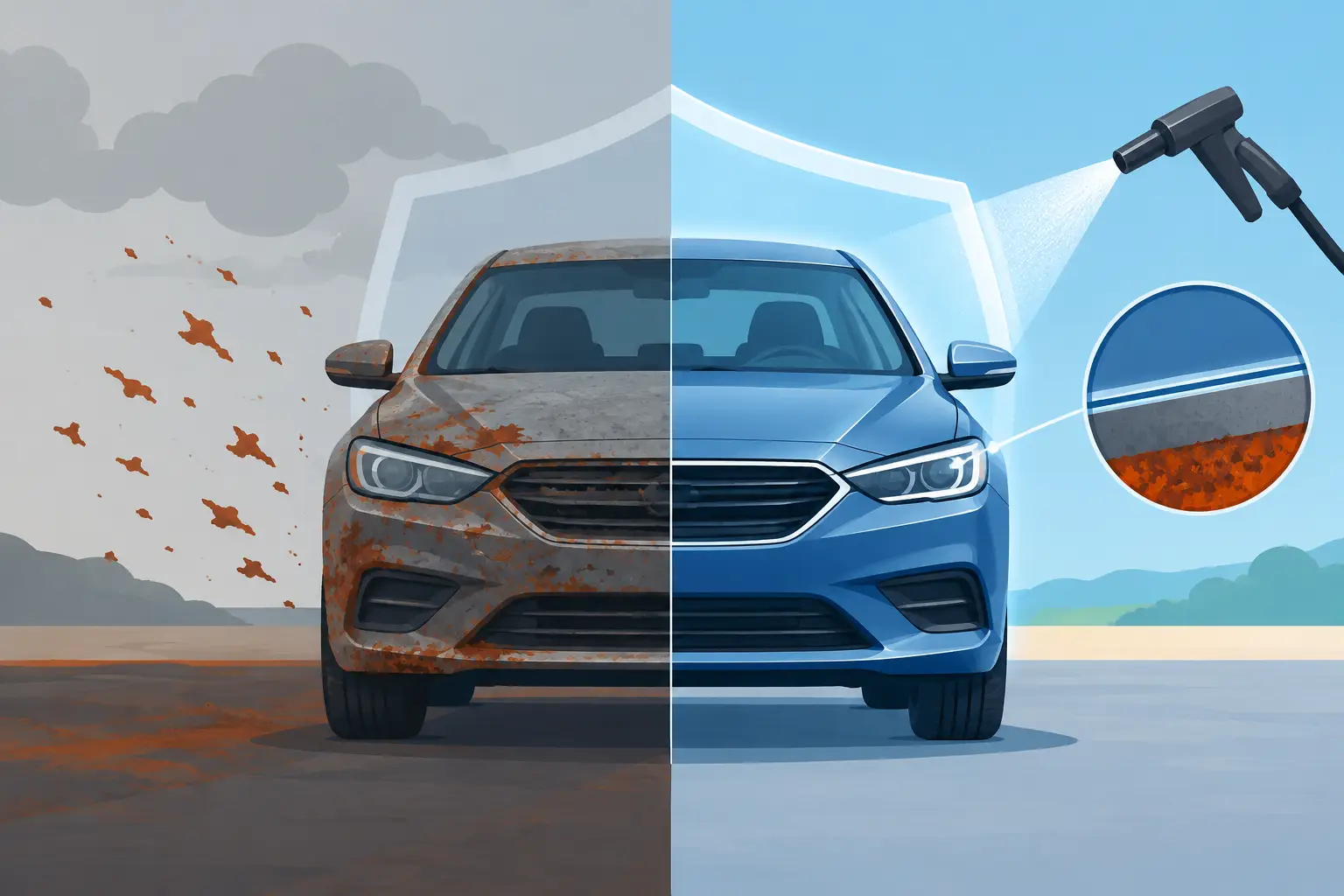
A winter drive can leave far more than slush on your vehicle. Road salt, dirty water, and grime collect underneath the car, inside wheel wells, and around seams where you may never see them. So, can rust proofing prevent corrosion? Yes, it can greatly reduce the chance of corrosion when it is applied properly and paired with regular washing – but it is not a one-time fix that makes a vehicle invincible.
Rust proofing works best as part of a practical maintenance routine. Keep salt off the vehicle, protect the areas that are exposed, and inspect small chips or damage before moisture gets underneath the paint. That approach can help your car stay cleaner, safer, and easier to maintain for years.
Can Rust Proofing Prevent Corrosion? Yes, With the Right Care
Corrosion begins when metal is exposed to moisture and oxygen. Add road salt to the mix, and the process can speed up fast. Salt holds moisture against metal and can work its way into tight places, including door seams, rocker panels, suspension components, brake lines, and the underside of the vehicle.
Rust proofing adds a protective barrier in the areas where water, salt, and debris are most likely to collect. Depending on the product and application, it may coat exposed metal, creep into seams and joints, or create a waxy film that helps block moisture.
The key word is “helps.” Rust proofing is preventive maintenance, not a repair for major rust damage. If a panel is already rusted through, a protective spray will not restore the metal. If corrosion has started in a small area, treating it early may slow it down, but the damaged area should be inspected and repaired correctly.
For drivers dealing with snowy roads, wet weather, or frequent highway travel, rust proofing is a smart value-focused service. It protects parts of the vehicle that are expensive or inconvenient to repair later.
Why Road Salt Is Hard on Vehicles
Road salt makes winter driving safer, but it is rough on cars, trucks, SUVs, and vans. Even after roads look dry, salty residue can remain on the pavement and get thrown up into the undercarriage. A quick rinse after a storm helps, but salt can stay hidden in places a standard exterior wash may not fully reach.
The most vulnerable spots are usually not the shiny painted surfaces you see every day. They are underneath the vehicle and behind trim, liners, and panels. Wheel wells, frame sections, pinch welds, subframes, fuel and brake lines, and the lower edges of doors can all be exposed.
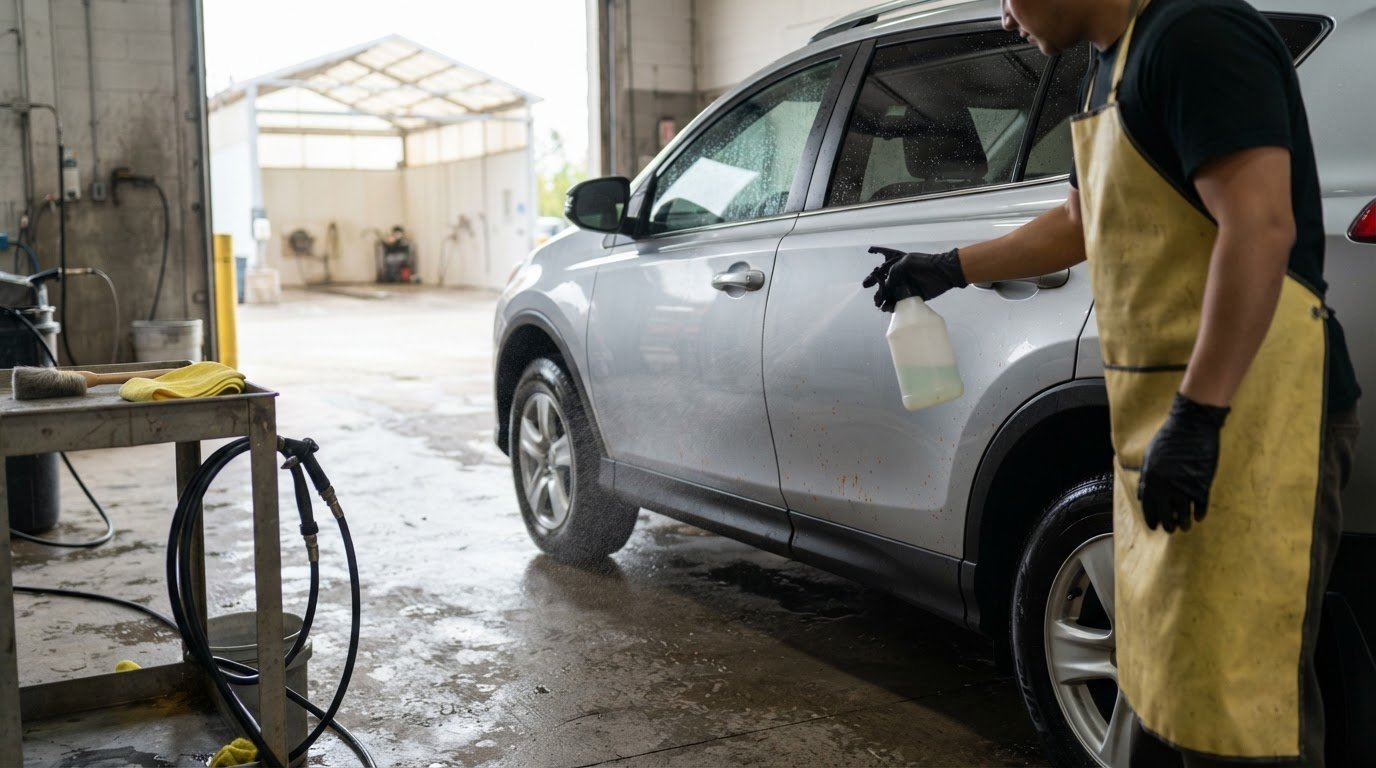
This is why regular vehicle washing matters even in cold weather. A clean car is not just about appearance. Removing grime and salt reduces the material that holds moisture against your vehicle. An undercarriage wash is especially useful after slushy commutes, long highway drives, and periods when roads are heavily treated.
What Rust Proofing Actually Protects
A professional rust proofing treatment focuses on the places that need protection most. The exact process depends on the vehicle, its age, and the type of product used, but the goal is the same: create a barrier between vulnerable metal and corrosive buildup.
A quality application can help protect exposed underbody components, wheel-well areas, seams, joints, door bottoms, rocker panels, and other moisture-prone sections. Some products are designed to creep into tight spaces and seams where water can sit unnoticed. Others provide a thicker coating on exposed lower surfaces.
This does not mean every inch of the car should be covered without care. Certain parts, including brakes, exhaust components, belts, and electrical connections, require proper handling. Professional application matters because the product needs to go in the right places without interfering with vehicle operation or future service.
For newer vehicles, rust proofing is mainly about keeping a good condition vehicle in good condition. For older vehicles, it is about slowing future deterioration and protecting areas that are still solid. In either case, an inspection before treatment is worthwhile.
Rust Proofing Is Not the Same as Paint Protection
Paint protection helps shield visible painted surfaces from contaminants, fading, light scratches, and road grime. Rust proofing is aimed at moisture and corrosion risks, especially underneath the vehicle and inside hidden metal areas.
Both can be useful, but they solve different problems. A waxed hood may look great, while the underside still collects salt. On the other hand, a rust-proofed undercarriage does not replace washing, polishing, or repairing paint chips.
If paint is chipped down to bare metal, deal with it early. Small chips around the hood, doors, fenders, and trunk can become entry points for moisture. Keeping the exterior clean makes these issues easier to spot before they turn into bigger repairs.
When Should You Rust Proof Your Vehicle?
The best time is before corrosion becomes visible. Many drivers choose to rust proof before winter, when salt and slush are about to become part of the daily commute. It can also be done at other times of year, provided the vehicle is clean and reasonably dry before application.
New vehicles are strong candidates because early protection gives you the best chance to prevent buildup in hidden areas. Used vehicles can benefit too, especially if an inspection shows the metal is in good shape or only has minor surface rust that can be addressed first.
How often you need treatment depends on the product, driving habits, where the vehicle is parked, and how much winter exposure it gets. A commuter driving daily through wet, salted roads has different needs than a vehicle that stays parked indoors most of the winter. Ask what maintenance schedule fits the treatment being used instead of assuming every product lasts forever.
Regular Washing Makes Rust Proofing Work Better
Rust proofing and washing work together. The treatment helps protect metal from the moisture and contaminants that reach it. Washing removes a large amount of the salt, mud, and grime before it has time to sit there.
During winter, do not wait until the vehicle looks dirty. Salt buildup is often worse underneath than it is on the body. A regular wash with attention to wheel wells and the undercarriage can make a real difference, especially after major storms or long drives.
At Nanak Car Wash, drivers can combine routine cleaning with rust protection instead of treating car care as an expensive once-a-year project. Keeping up with washes is one of the simplest ways to get more value from a rust proofing service.
Signs Your Vehicle May Already Have Corrosion
Rust does not always start as an obvious orange patch. Look for bubbling paint, flaking metal, stains around seams, rough spots under door edges, or corrosion around wheel wells. Underneath, visible scaling on suspension parts or lines deserves attention from a qualified technician.
Surface rust on certain metal components may be manageable, but structural corrosion is more serious. If you see holes, heavy flaking, weakened mounting points, or damage around brake and fuel lines, have the vehicle inspected promptly. Rust proofing can help prevent future exposure, but safety-related repairs should never be delayed.
Get the Best Value From Rust Protection
The best protection plan is simple: start before rust has a chance to spread, wash salt away consistently, and inspect the vehicle when seasons change. Parking indoors can help, but it does not replace cleaning since salty moisture can remain trapped underneath after a drive.
A rust proofing service is a practical investment for anyone planning to keep their vehicle for years, protect resale value, or avoid surprise repair bills caused by winter road conditions. Keep the underside clean, treat vulnerable metal early, and give your vehicle the steady care it needs to handle the road ahead.

 6600 Finch Ave W, Etobicoke, ON M9V 3Z6

 647-703-8515
 MON – SUN 8 AM to 7 PM