

The best salt remover for cars in the GTA isn't necessarily the strongest shampoo in the bottle. It's the process that gets dissolved salt out of the undercarriage, wheel wells, brake-line areas, and frame rails before trapped moisture turns a dirty winter car into a rust problem.
Ontario applies an estimated 1.5 to 3 million tonnes of road salt on public roads each winter, while Toronto municipal operations have reported using roughly 127,000 to 150,000 tonnes per winter season. That scale makes salt exposure a routine mechanical concern, not a cosmetic inconvenience. Ontario road-salt exposure and Toronto usage explained
| Salt-removal option | What it handles well | Where it falls short | Best use |
|---|---|---|---|
| Garden hose rinse | Loose surface salt and slush | Weak reach under the centre of the vehicle | Quick maintenance after light exposure |
| Dedicated low-pH wash | Salt and de-icing residue on painted surfaces | Won't reach every concealed cavity alone | Regular winter washing |
| Pressure underbody rinse | Wheel wells, suspension areas, frame rails, and underbody buildup | Requires safe access and controlled technique | Priority protection in the GTA |
| Interior salt cleaner | White deposits on mats, carpet, and upholstery | Doesn't protect exterior metal | Cabin maintenance |
| Rust-proofing treatment | Future protection in exposed and enclosed metal areas | Doesn't remove existing salt or repair corrosion | Preventive protection after cleaning |
Table of Contents
- The Hidden Winter Threat in the GTA
- How Road Salt Destroys Your Vehicle
- Comparing DIY Solutions and Professional Washes
- Removing Interior Salt Stains and Buildup
- The Role of Rust Proofing in Salt Protection
- Choosing the Best Salt Removal Strategy for You
The Hidden Winter Threat in the GTA
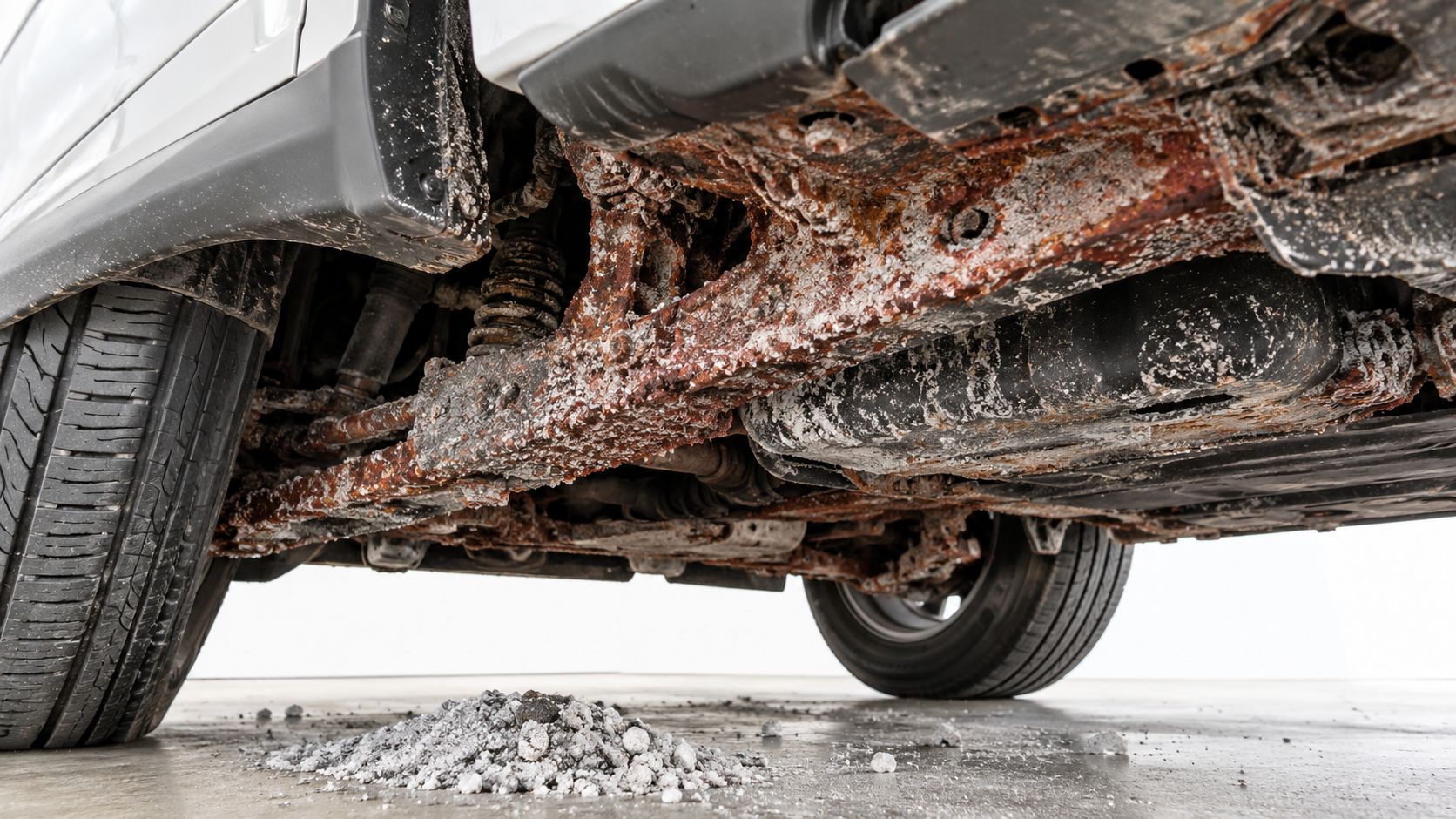
A car can look clean above the beltline while carrying a corrosive load underneath. GTA vehicles regularly arrive with glossy paint, tidy wheels, and underbodies packed with grey salt paste. The owner often says, “I wash it all winter.” The practical question is whether those washes reach the areas where salt and wet grit collect.
Ontario applies an estimated 1.5 to 3 million tonnes of road salt each winter, while Toronto municipal operations report approximately 127,000 to 150,000 tonnes per season. That level of treatment makes underbody contamination a routine mechanical concern, not a cosmetic annoyance. The regional figures are documented in the linked road-salt research cited earlier.
Why clean paint can be misleading
Road spray pushes salt into wheel wells, rocker panels, door seams, brake-line routes, suspension mounts, and frame rails. Underbody shields and crossmembers form ledges where wet grit settles. After drying, the residue may look harmless. The next thaw rehydrates it, returning moisture to the same metal surfaces.
A quick top-surface rinse removes the white film from the bonnet and doors but can leave a concentrated layer below. The vehicle looks presentable during a walk-around, while hidden buildup remains around seams, fasteners, and collection points.
Practical rule: If the wash does not target the underside, it has not addressed the main winter risk.
Canadian guidance recommends washing the underside at least monthly in winter, or every 2 weeks in harsher conditions, especially when salt and slush remain trapped beneath the vehicle. Canadian rust-proofing guidance on underbody washing treats washing frequency as part of the protection plan rather than an occasional detailing extra.
The GTA detailer's inspection
Inspect seams and collection points before judging a winter-driven vehicle by its paint. Crust around suspension hardware, damp grime behind a wheel liner, or a thick deposit along a frame rail reveals more than a clean roof.
Daily commuters, drivers who use salted expressways, and people who park outdoors should expect repeated underbody contamination. SUVs, pickups, delivery vehicles, and rideshare cars often receive heavy road spray because they spend more time moving through slush. A controlled underbody rinse is the first practical response.
How Road Salt Destroys Your Vehicle
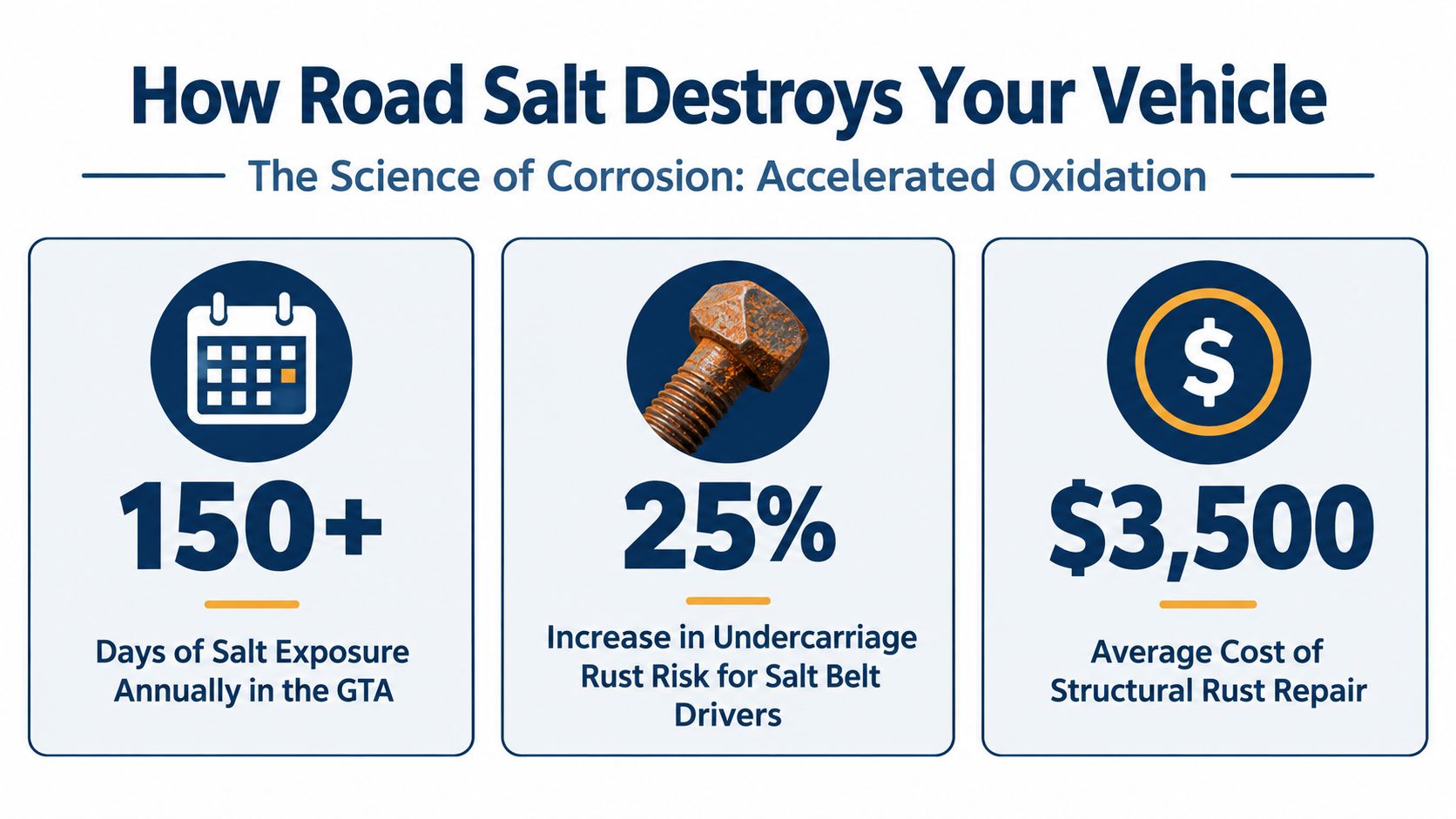
Road salt becomes a corrosion problem when water is present. Dissolved salt creates a conductive solution that helps electrochemical corrosion progress across scratches, seams, fasteners, brake-line surfaces, and unprotected steel. Each wet drive gives that solution more access to exposed metal.
A rinse removes some contamination, but a clean-looking exterior does not confirm that the underside is clear. Salt crystals can dissolve, move into crevices, dry, and become active again when temperatures rise or moisture returns. That repeated wetting is why hidden buildup deserves more attention than a white film on the doors.
Canadian corrosion guidance links about 50% of vehicle corrosion to road salts. The same summary reports untreated vehicles with 6.8 times more visible body rust and 3.6 times more underbody corrosion than treated vehicles. The corrosion and treatment comparisons are summarised by Nanak Car Wash
What the chemistry does
Oxidation removes electrons from metal. Water carries the reaction across the surface, while dissolved salt improves electrical conductivity. Corrosion then advances faster around exposed steel and damaged protective coatings.
Residue also hides early warning signs. Dust and damp grit can cover a paint chip, a swelling seam, or a fastener whose protective finish is failing. Bubbling paint on an exterior panel may appear only after corrosion has already spread behind the surface or underneath the vehicle.
Toronto-specific atmospheric corrosion data referenced in Canadian transportation material reports 5,108 mg/dm² over 19 months. The figure shows how repeatedly exposed metal can corrode in the local environment, even when the damage is not immediately visible.
Why spring can be worse than a cold snap
A frozen, dirty underbody still holds contamination, but thawing makes the residue more active. Salt dissolves into meltwater, moisture travels through seams, and grime keeps it against metal. Delaying the wash until spring can leave the vehicle carrying a reactive film through much of winter.
The best salt remover for cars must do more than brighten the paint. It should dissolve or dislodge residue, flush the underside, and leave the vehicle as dry as practical. Jiova
Comparing DIY Solutions and Professional Washes
DIY maintenance has a place in winter care, but different tools solve different parts of the problem. A spray bottle of cleaner can treat a door sill or floor mat. A bucket wash can remove surface film. Neither automatically gives the underside the coverage of a properly aimed underbody rinse.
| Method | Strength | Limitation | Sensible frequency |
|---|---|---|---|
| Bucket wash | Low-cost paint cleaning and basic salt removal | Limited underside access | Use whenever conditions allow |
| Pressure washer | Better reach around wheel wells and lower panels | Can force water into sensitive areas if used carelessly | Use with controlled distance and angle |
| Low-pH car wash | Helps break up and neutralise salt and de-icing liquids | Product chemistry can't compensate for missed areas | Use as a regular winter wash |
| Professional underbody wash | Consistent coverage of hidden underside zones | Requires a service visit | Prioritise after heavy salt exposure |
| Chemical de-icer | Useful for localised residue and stuck deposits | Not a substitute for flushing contaminated water away | Reserve for targeted areas |
What works at home
A home wash can be effective when you start with the right sequence. Rinse loose grit first, use a vehicle-safe shampoo, clean the lower panels and wheel wells, then rinse thoroughly. A pressure washer adds reach, but keep the nozzle controlled and avoid blasting seals, electrical connectors, or damaged coatings at close range.
For chemistry, a low-pH solution is the stronger technical choice for winter salt. CAA-Québec advises selecting a wash using low-pH solutions because they help break up and neutralise salt and de-icing liquids, while also recommending regular washing with undercarriage cleaning. CAA-Québec's rust-prevention advice supports using chemistry and underbody access together.
What doesn't work well is relying on a strong-smelling product while skipping physical removal. A chemical may loosen residue, but if contaminated liquid remains on the vehicle, the salt hasn't really left. The same applies to a quick drive through an automatic wash without an underbody option.
Where professional washing earns its keep
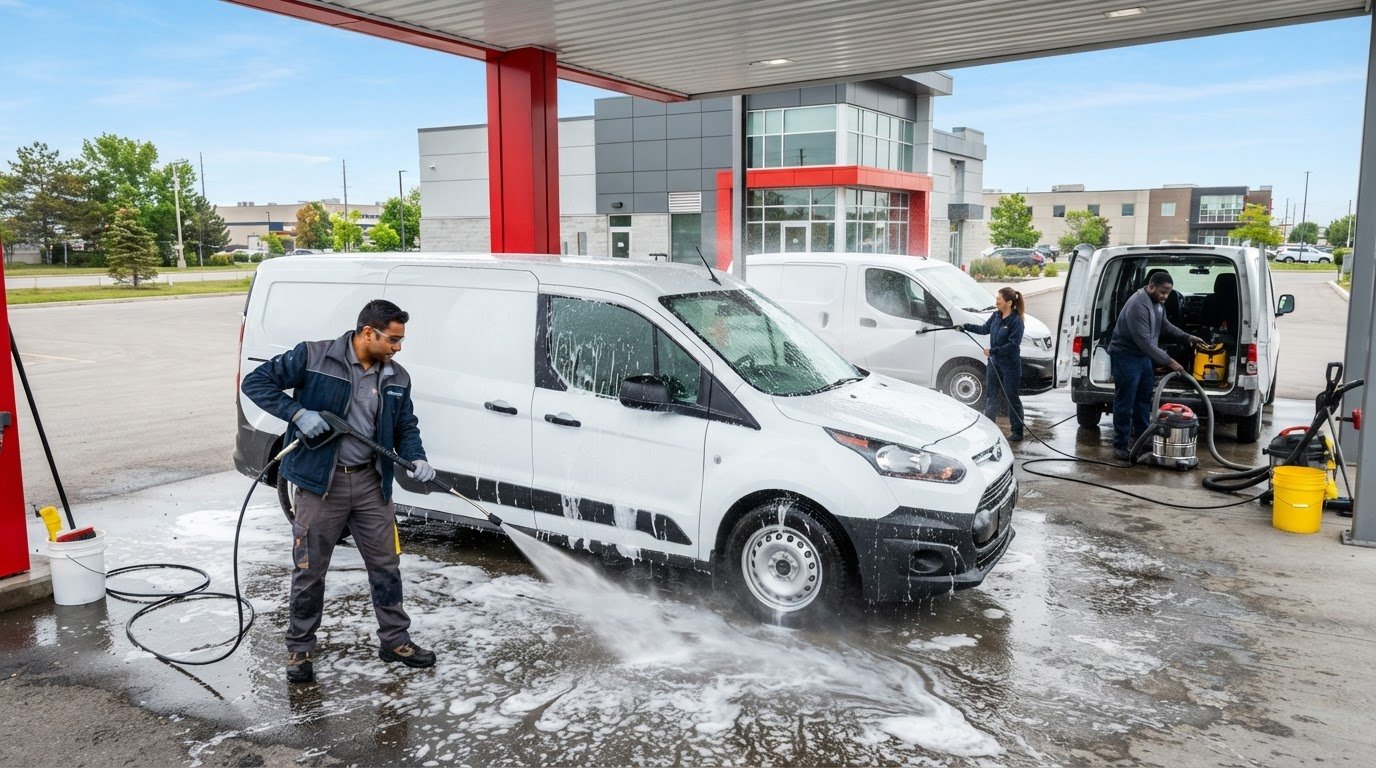
Professional equipment can direct water across areas that are awkward or unsafe to reach on a driveway. A useful service should include an undercarriage rinse, not just a higher price tier for extra foam. Ask whether the package targets the underside, wheel wells, and lower suspension areas.
Nanak Car Wash offers express and full-service washes with an optional underbody wash, along with detailing that includes salt and stain removal. Its rust-proofing service is a separate protective treatment, which matters because washing and corrosion protection perform different jobs.
A wash removes the current contamination. Rust proofing helps limit the next exposure. Don't treat them as interchangeable services.
For a lightly used vehicle with easy access to a safe washing area, DIY care may be enough between professional visits. A daily commuter, work truck, or vehicle with visible underbody buildup benefits from professional attention because missed salt in a frame recess can matter more than a perfect finish on the bonnet.
Removing Interior Salt Stains and Buildup
Interior salt enters on boots, floor mats, and wet clothing. As snow melts, dissolved minerals move into carpet fibres and backing, then crystallise as the cabin dries. Vacuuming removes loose grit, but it will not remove salt already dissolved in the material.
Start with the least aggressive process that will work. Remove the mats, shake or vacuum them outdoors, and inspect the carpet below. If the floor feels damp or clammy, do not cover it with another mat. Remove the dissolved residue, then dry the area fully.
A practical interior process
- Vacuum before adding moisture. Use a crevice tool around seat rails and carpet edges. Dry crystals are easier to remove before they dissolve and spread deeper.
- Apply a dedicated salt and stain cleaner. Emzone Salt & Stain Remover is marketed for road-salt deposits and calcium marks on mats, carpets, seats, and upholstery. The Canadian product specification is available from Prema Canada.
- Allow dwell time. Let the cleaner dissolve the mineral deposit. Hard scrubbing can spread a wet ring instead of lifting the contamination.
- Agitate gently. Use a medium-stiff interior brush on carpet and a softer brush on upholstery. Cover the entire affected area, including the edges of the visible mark.
- Extract or blot thoroughly. A wet-dry vacuum or extractor works better for heavy buildup because it removes the contaminated solution from the backing.
- Dry completely. Leave the doors open in a safe location, use airflow, and do not reinstall damp mats. Remaining moisture allows the white residue to return.
Canadian-market salt-remover sprays commonly use compact aerosol or liquid formats around 400 to 500 mL, with some listings specifying approximately 454 to 473 mL. Choose a format that suits the area being treated and the amount of product required.
Preventing repeat stains
Raised-edge all-weather mats limit slush reaching the carpet, but they still need to be removed and rinsed. A dirty rubber mat can release salt again whenever it warms inside the cabin.
Avoid random household cleaners. High-alkaline products can leave their own residue, while excessive water may drive dissolved salt into the padding. If the carpet remains damp after cleaning or white marks keep returning, professional extraction is usually more reliable than another light spray-and-scrub pass.
The Role of Rust Proofing in Salt Protection
Salt removal and rust proofing answer two different questions. Washing asks, “How do I get the current contamination off?” Rust proofing asks, “How do I reduce the effect of the next exposure?” A vehicle that receives one without the other may still have a weak winter protection routine.
Rust-proofing products work by creating a barrier or coating on vulnerable metal surfaces and by entering selected cavities, seams, and joins. The exact performance depends on preparation, coverage, product chemistry, and the condition of the metal. Applying a treatment over thick salt and wet grime is poor practice because the contamination remains underneath.
Why the combination matters
The strongest evidence points to a package rather than a miracle cleaner. A historical Canadian corrosion study found inhibitor-based treatments reduced autobody steel corrosion by 10.5% to 77% in field tests, while a Transportation Research Board estimate suggested inhibitors might reduce total vehicle corrosion by about 25% if roughly half of corrosion is salt-related. The original corrosion proceedings provide the treatment context
Those findings don't mean every rust-proofing appointment produces the same result. They show why the question “What is the best salt remover?” is incomplete. A cleaner removes salt. A rinse removes contaminated liquid from hidden zones. A protective treatment can reduce future contact between moisture, salt, and metal.
Sequence matters: Clean and dry first, inspect second, protect third.
What to ask before treatment
A credible rust-proofing appointment should begin with an inspection, not an automatic spray. Ask whether the technician removes loose buildup, identifies existing corrosion, and explains which areas will receive coverage. The underside, wheel wells, seams, and cavities may require different application approaches.
Don't confuse rust proofing with rust repair. A coating can help protect sound or lightly affected metal, but it won't restore structural material that corrosion has already removed. If a technician finds flaking scale, perforation, or serious damage near brake lines and mounting points, have the vehicle assessed before applying a cosmetic layer.
For GTA vehicles, the sensible timing is after the underside has been cleaned and before repeated exposure builds another heavy layer. Continue washing afterward. Protection isn't a permission slip to leave salt sitting underneath for the rest of the season.
Choosing the Best Salt Removal Strategy for You
The right winter plan depends on how much salt your vehicle sees and how much of the maintenance you can perform consistently. A low-mileage car stored indoors needs a different routine from a delivery vehicle travelling through GTA slush every day. The common mistake is choosing a product first and a maintenance schedule second.
Match the method to the exposure
Occasional driver: Use a low-pH wash when the vehicle is visibly salted, and choose an underbody rinse after substantial slush or highway exposure. Keep floor mats clean so dissolved salt doesn't reach the carpet.
Daily commuter: Build regular washing into the winter routine. Make the undercarriage a required part of the visit, not an upgrade you select only when the paint looks dirty.
Work truck, SUV, or fleet vehicle: Inspect the underside more deliberately. These vehicles often carry heavier grime around wheel wells, suspension components, and frame areas, so a professional rinse and scheduled rust protection make more sense than repeated surface-only washes.
Older vehicle with existing rust: Wash carefully, then have the underside inspected. Rust proofing may help preserve remaining sound metal, but it won't reverse corrosion that has already weakened a component.
The routine I'd recommend
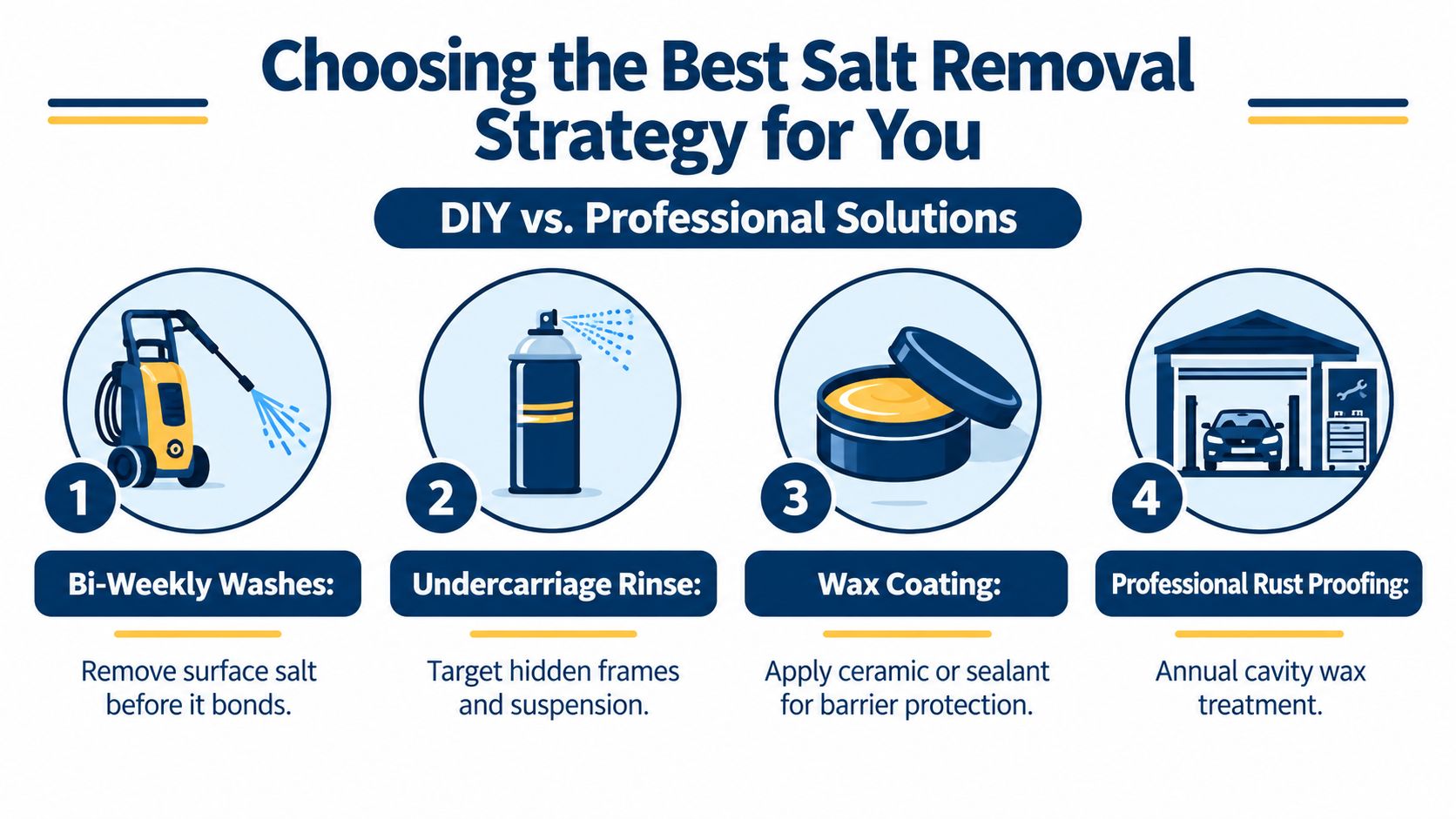
- Remove loose contamination first. Rinse the body and wheels before contact washing so grit doesn't drag across the paint.
- Use suitable chemistry. Choose a vehicle-safe, low-pH winter wash for salt and de-icing residue rather than assuming more foam means better neutralisation.
- Target the underside. Direct attention to wheel wells, lower suspension areas, frame rails, and the underside of the rocker panels.
- Clean the cabin at the same time. Vacuum dry salt, treat visible deposits, extract where necessary, and dry mats before reinstalling them.
- Protect after cleaning. Apply a paint sealant or wax to the exterior as appropriate, and schedule rust proofing when the metal is clean and dry.
- Inspect when conditions change. A spring wash is useful because thawing moisture can reactivate residue left behind during winter.
The best salt remover for cars is therefore a combined maintenance strategy, not a single bottle. DIY washing can handle routine surface contamination, but professional underbody rinsing is the better choice when you lack safe access, when buildup is severe, or when the vehicle's underside is too valuable to treat casually.
If you're in the GTA, Nanak Car Wash offers express and full-service washes with underbody options, interior salt and stain removal, detailing, and automotive rust proofing. Visit Nanak Car Wash to choose a wash or protection service that fits your vehicle's winter exposure, then make underbody cleaning part of your regular salt-season routine.

 6600 Finch Ave W, Etobicoke, ON M9V 3Z6
 647-703-8515
 MON – SUN 8 AM to 7 PM