
A typical Toronto detailing visit for a sedan starts with a hand wash, wheel and wheel-well cleaning, interior vacuuming, glass cleaning, and basic protection, with realistic entry pricing around $60 to $120 CAD. A deeper interior-and-exterior service usually falls around $150 to $300 CAD, while paint correction and ceramic coating sit in a much higher category.
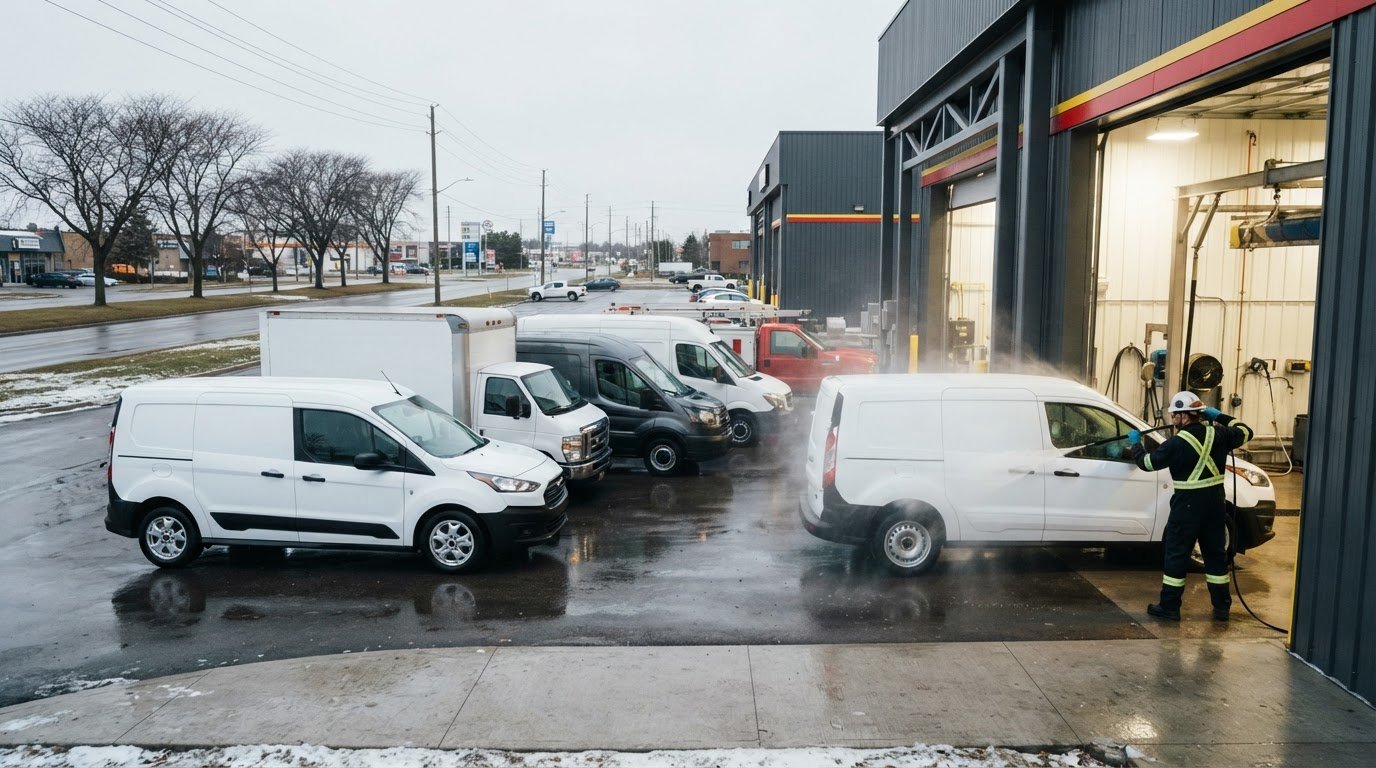
It's a mid-March morning on the Gardiner. Slush kicked up by transport trucks has painted the sides of your car grey, and the brine dripping from the underbody after parking near Queen's Quay has dried into a gritty film. The car looks dirty, but the bigger problem is underneath. Salt water has found the wheel wells, door seams, suspension hardware, brake components, and exhaust.
That's why car detailing in Toronto is corrosion prevention disguised as a clean car. Ontario spreads roughly 1.5 to 3 million tonnes of road salt each winter, and salty moisture can remain on vehicle undersides for about five to six months a year, according to this Ontario rust-proofing overview. The freeze-thaw cycle keeps re-wetting surfaces instead of letting them stay dry.
You don't need the shiniest package on the menu. You need the right combination of underbody rinsing, interior salt removal, paint protection, and rust prevention for how you drive. A downtown street parker, a suburban commuter, a rideshare driver, and a weekend-owned sports car shouldn't buy the same service.
Table of Contents
- Why Detailing Matters More in Toronto Than You Think
- What Car Detailing Includes in the GTA
- Detailing Packages and What Toronto Drivers Really Pay
- Rust Proofing and Winter-Season Detailing in Ontario
- How to Choose the Right Car Detailing Shop in Toronto
- Unlimited Wash Clubs, Prepaid Bundles, and Other Ways to Save
- What to Expect During Your Detailing Appointment
- Toronto Detailing FAQs and Your Next Move
Why Detailing Matters More in Toronto Than You Think
Toronto's winter damage starts before the car looks neglected. A vehicle can appear reasonably clean above the beltline while salt-laden moisture sits inside wheel wells and along seams below it. Chloride exposure and repeated thawing attack exposed metal, which is why local drivers benefit from pairing exterior cleaning with underbody rinses, waxes, sealants, and rust protection, as explained in this Ontario road-salt damage guide.
A car driven daily between Etobicoke and downtown takes a different beating from one parked indoors in Oakville or used only for weekend errands in Barrie. Stop-and-go traffic keeps grime circulating around brakes and lower panels. Construction zones add abrasive dust, while summer brings tree sap, bird droppings, heat, and ultraviolet exposure.
The expensive mistake is treating the surface only
A spring clean-up can make a neglected vehicle look dramatically better, but it can't undo every season of corrosion. If rust has already spread through an exhaust hanger, suspension component, rocker seam, or underbody fastener, polishing the bonnet won't solve the underlying problem.
The better sequence is simple:
- Before winter: Clean bonded contaminants, apply paint protection, and book rust-proofing where the vehicle and ownership plan justify it.
- During winter: Rinse salt from the underbody, wheel wells, door jambs, and lower body panels instead of waiting for spring.
- After winter: Remove embedded salt and grime from paint, carpets, mats, and crevices before warm weather keeps moisture trapped.
Practical rule: An underbody rinse before salt season and repeated winter cleaning can protect more than an expensive spring correction performed after contamination has sat for months.
Toronto drivers also deal with pothole spray, road-film buildup, and tight urban parking. That combination makes detailing a maintenance decision, not a vanity purchase. If you own the vehicle long-term, protecting metal and seams matters. If you're preparing a leased vehicle for return, a thorough interior and exterior reset can matter more than a correction package that adds gloss but doesn't address daily wear.
What Car Detailing Includes in the GTA
A routine wash handles loose dirt on accessible surfaces. Professional detailing reaches neglected areas, removes bonded contamination, and adds protection that lasts longer. In Toronto, that work supports corrosion prevention as much as appearance, especially through the salt cycle.
A credible GTA detailer should explain each included step instead of relying on labels such as “premium” or “diamond.”

Exterior work has several distinct jobs
The process starts with a safe wash, usually including a pre-rinse, proper shampoo, wheel cleaning, and controlled drying. A careful technician keeps wheel tools separate from paint tools because brake dust and grit can scratch the finish.
After washing, an iron remover or clay bar can lift bonded contamination that ordinary soap leaves behind. Polishing addresses oxidation, haze, and some surface defects. Wax or sealant adds a sacrificial layer, but it does not replace paint correction or remove every defect.
Interior detailing is more than vacuuming
A proper interior service can include:
- Vacuuming: Seats, carpets, mats, trunk areas, rails, and hard-to-reach crevices.
- Shampoo or extraction: Fabric seats, floor mats, and carpets with embedded salt or stains.
- Steam cleaning: Selected hard surfaces, vents, seams, and high-contact areas.
- Leather care: Cleaning followed by suitable conditioning, without leaving a greasy finish.
- Trim and glass: Dashboard, door panels, consoles, screens, and interior windows.
- Odour treatment: A targeted add-on when spills, smoke, mildew, or pet contamination needs more than surface wiping.
Engine-bay cleaning is usually separate because it involves controlled degreasing around electrical components. Ask whether the quoted service includes it, and define “full detail” before booking. One shop's full package may be another shop's express clean with a better label. Choose services based on how you drive, where salt collects, and whether you need ongoing protection or a one-time reset.
Detailing Packages and What Toronto Drivers Really Pay
Toronto pricing makes more sense when you stop comparing names and compare labour. An express service is designed to restore order quickly. A full-service detail spends more time on stains, contamination, and protection. Paint correction and ceramic coating are restoration and long-term protection work, not upgraded car washes.
The following ranges are useful planning bands for sedans. Vehicle size, condition, pet hair, excessive soil, and requested add-ons can move the final quote.
Package comparison
| Package Tier | What's Included | Sedan Price Range (CAD) | SUV / Minivan Add-On |
|---|---|---|---|
| Express or maintenance detail | Hand wash, wheel cleaning, vacuum, windows, quick spray wax | $60 to $120 | Usually $30 to $80 more |
| Full-service interior and exterior detail | Shampoo, leather wipe-down, trim dressing, decontamination, wax or sealant | $150 to $300 | Usually $30 to $80 more |
| Paint correction and ceramic coating | Machine polishing, defect reduction, preparation, and coating application | $600 to $1,800 or more | Quoted by size and condition |
These are not interchangeable purchases. The first tier suits a car that is maintained regularly and needs a reset. The second makes sense after a salt-heavy season, a messy family stretch, or a lease-return preparation. The third is for owners who care about paint condition and accept that correction requires skilled labour, inspection, and careful preparation.
Watch the add-on list
Pet hair, headliner shampoo, engine-bay cleaning, stain extraction, odour treatment, and heavy sand removal are commonly charged separately. Ask for a written scope before handing over the keys. If a shop can't tell you whether clay treatment, leather conditioning, or tire dressing is included, the package description isn't complete enough.
Don't buy ceramic coating because the word sounds premium. Buy it if you want a more durable protection system and are willing to maintain it properly. A neglected coating still collects salt and road film, and it doesn't repair stone chips, deep scratches, or existing rust.
Rust Proofing and Winter-Season Detailing in Ontario
Ontario's salt cycle deserves its own service plan. A Canadian corrosion research summary attributes roughly 50% of vehicle corrosion to road salts, while an older Toronto corrosion study placed the city among high atmospheric-corrosion locations, as outlined by the Canadian corrosion research record.
That doesn't mean every car needs the most expensive rust package. It means you should understand what you're buying and where the product goes.
Three winter services earn their place
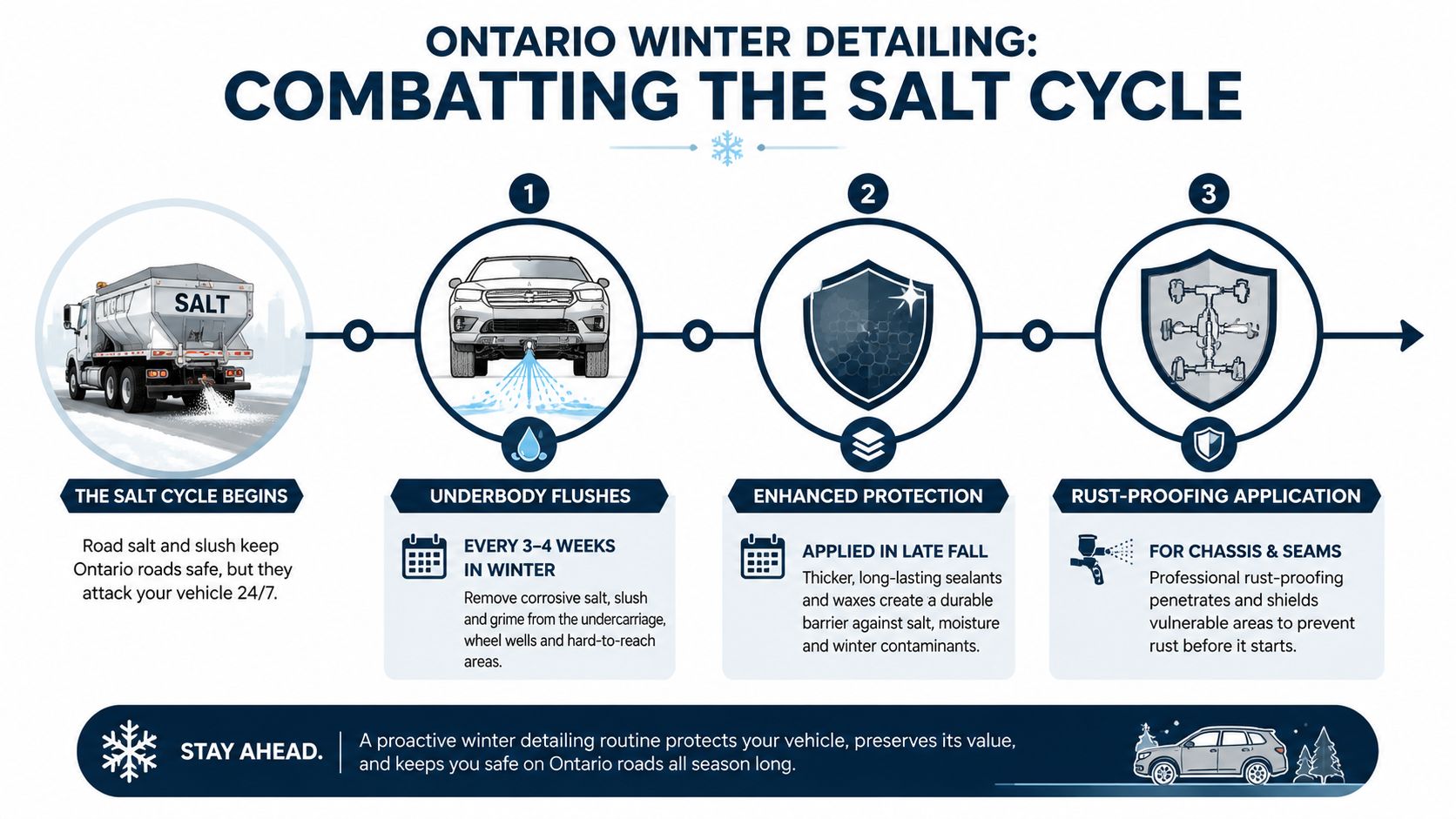
Underbody flushes remove wet salt from the chassis, wheel wells, suspension areas, and lower seams. They're the practical choice for daily commuters and street parkers, especially after messy slush conditions.
Thicker wax or sealant protection helps shield painted surfaces from salt, road film, and seasonal contamination. It won't stop structural rust, but it makes the exterior easier to clean and reduces direct exposure.
Rust-proofing applications place a dedicated protective compound on vulnerable chassis areas and seams. Oil-based products can creep into joints and displace moisture. Rubberized sprays create a thicker barrier but can be a poor choice if they trap contamination or cover existing rust. Electronic modules are marketed differently and shouldn't be treated as a substitute for cleaning and physical protection.
Late fall, before sustained snowfall, is the sensible booking window for a new vehicle or a daily driver. Once a vehicle is beyond its factory warranty period and you plan to keep it, annual inspection and re-treatment deserve serious consideration.
Who should pay for it
A long-term owner who drives highways through winter gets the strongest case. A leased car may benefit if you want to preserve its condition, but you should confirm whether the product or drilling process affects lease-return expectations. EVs still need underbody attention even when some components use aluminium or composite materials, because fasteners, brackets, exposed steel, brake hardware, and body seams can remain vulnerable.
Rust-proofing is overkill for a lightly used, indoor-stored vehicle that rarely sees salted roads. Skipping it is harder to justify for a street-parked commuter that stays wet and dirty through repeated freeze-thaw cycles.
How to Choose the Right Car Detailing Shop in Toronto
The best shop isn't the one with the loudest package names. It's the one that gives you a precise scope, uses the right process for your vehicle, and explains limitations before charging you.
Start with these questions:
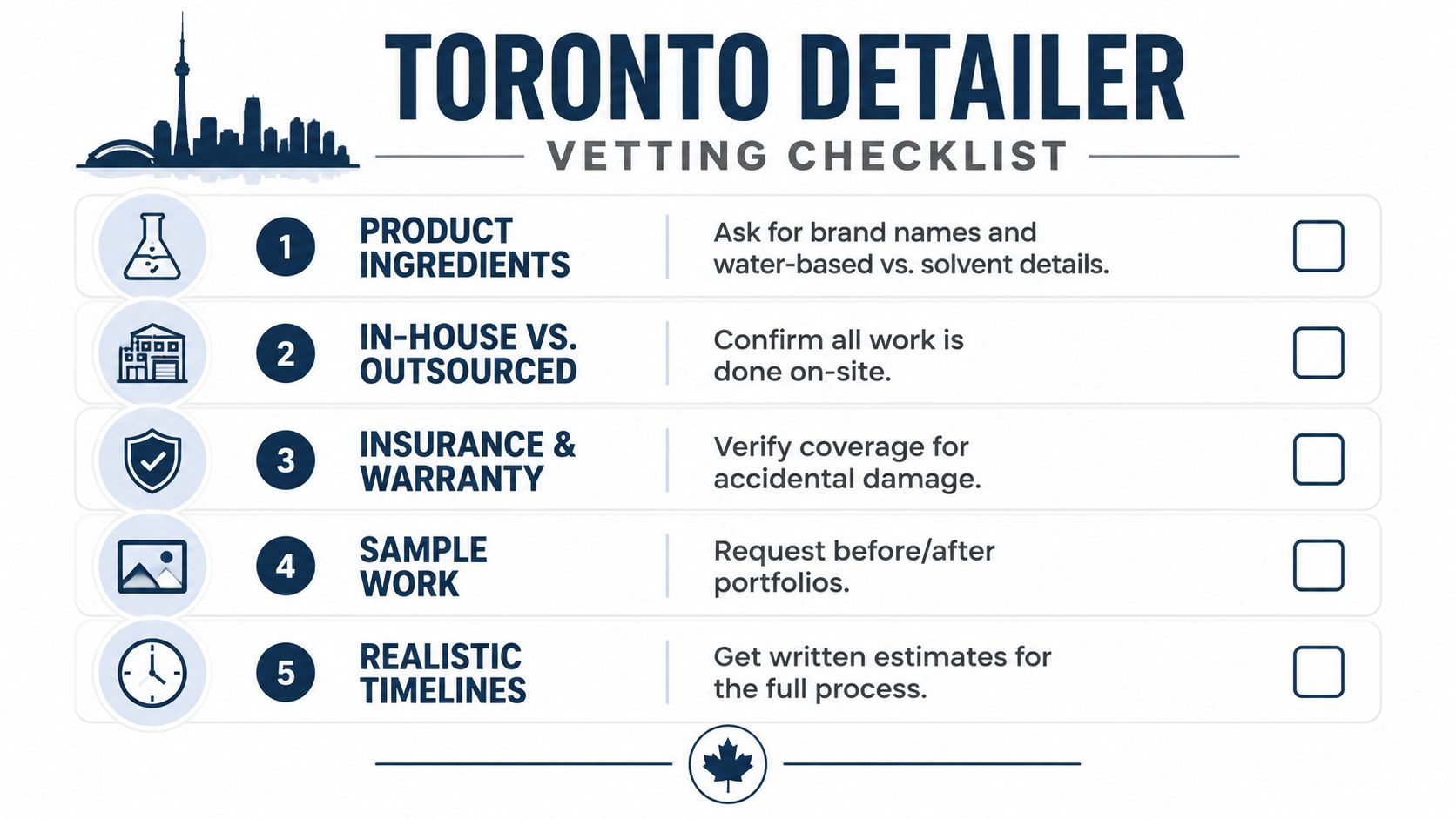
- Ask about products: Request brand names, intended surfaces, and whether cleaners are water-based, solvent-based, acidic, or alkaline.
- Confirm who performs the work: Find out whether the service is completed in-house or passed to another operator.
- Check water handling: Ask how the shop manages runoff, drainage, and local water-reclaim requirements.
- Verify coverage: For machine polishing, coating, or rust-proofing, ask whether the business carries liability insurance.
- Request documentation: Get the package, exclusions, vehicle-size surcharge, expected completion time, and any warranty terms in writing.
Mobile and fixed-location shops solve different problems
Mobile detailing is convenient for interiors and maintenance work, particularly when you have a suitable condo garage or driveway. Exterior work depends on temperature, lighting, drainage, water access, and building rules. A driveway can be perfectly adequate for a wash, but it isn't automatically a suitable paint-correction environment.
A fixed shop usually has stronger lighting, controlled drainage, stable equipment, and better conditions for polishing or coating. That matters when a technician must inspect paint defects from several angles and control dust during finishing.
Match the business category to the job
- Independent specialists: Best for correction, coatings, bespoke interiors, and detailed consultations.
- Dealership add-ons: Convenient at purchase or service time, but ask exactly which product and preparation steps are included.
- Express wash chains: Useful for frequent maintenance, underbody rinsing, and basic interior work, not necessarily multi-stage correction.
Read reviews for repeated complaints about missed areas, surprise charges, damage, or poor communication. A star average tells you less than several detailed comments describing the actual service.
Walk away if the operator pressures you to commit immediately, refuses to provide a written scope, promises ceramic coating will eliminate all maintenance, or undercuts every comparable quote without explaining why. Cheap labour often means skipped preparation.
Unlimited Wash Clubs, Prepaid Bundles, and Other Ways to Save
Recurring plans work when your vehicle needs recurring visits. They don't automatically save money just because the word “unlimited” appears on the sign.
An unlimited wash club suits a driver who passes the same location often and wants quick removal of salt and road film. It can also suit rideshare, delivery, and fleet vehicles that accumulate grime faster than a privately used weekend car. The plan fails financially when you pay through low-use months and still book occasional full details separately.
Choose by driving pattern, not enthusiasm
A useful decision framework looks like this:
- Frequent highway commuter: Consider a wash club if you can use it regularly and the service includes the underbody options you need.
- Downtown street parker: Frequent rinsing can be valuable because exposure is high, but verify location convenience and whether the plan covers only express service.
- Garage-kept suburban owner: Pay as you go may be smarter if the car stays clean and dry between occasional trips.
- Long-term owner: Combine regular maintenance washes with seasonal full detailing and targeted rust protection.
- Lease or low-use vehicle: Choose a prepaid bundle only if the visits fit your expected schedule. Unused tickets aren't savings.
Prepaid tickets reduce the friction of booking each visit and may lower the per-service cost, but they tie up money and can expire under the shop's terms. Pay-as-you-go costs more per visit in some cases, yet it gives low-frequency drivers control.
Look for quiet savings
Ask about corporate fleet pricing, CAA or Costco partnerships, referral credits, and seasonal promotions around Black Friday or spring demand. Nanak Car Wash offers express and full-service washes, appointment-based interior and exterior detailing, rust-proofing, prepaid options, and monthly wash memberships across GTA locations, so it represents the kind of consolidated provider worth comparing with independent studios.
The break-even test: Divide the monthly club price by the normal single-wash price. If your realistic visits don't exceed that threshold, the club is a convenience purchase, not a saving.
Also check the fine print. “Unlimited” may exclude interior cleaning, specialty vehicles, certain locations, or services needed after heavy winter contamination. Buy the plan that covers your actual maintenance routine, not the one that sounds most generous.
What to Expect During Your Detailing Appointment
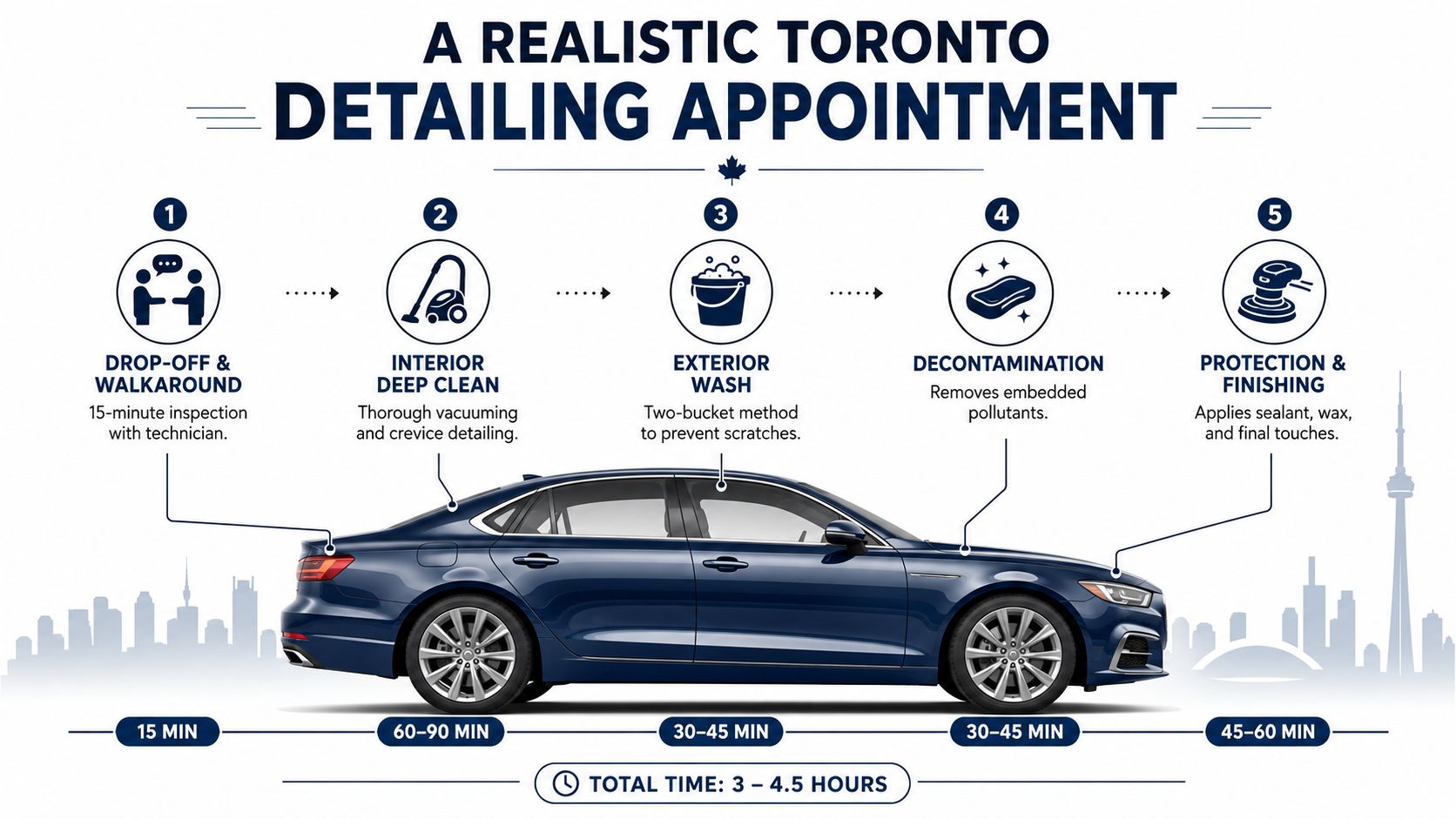
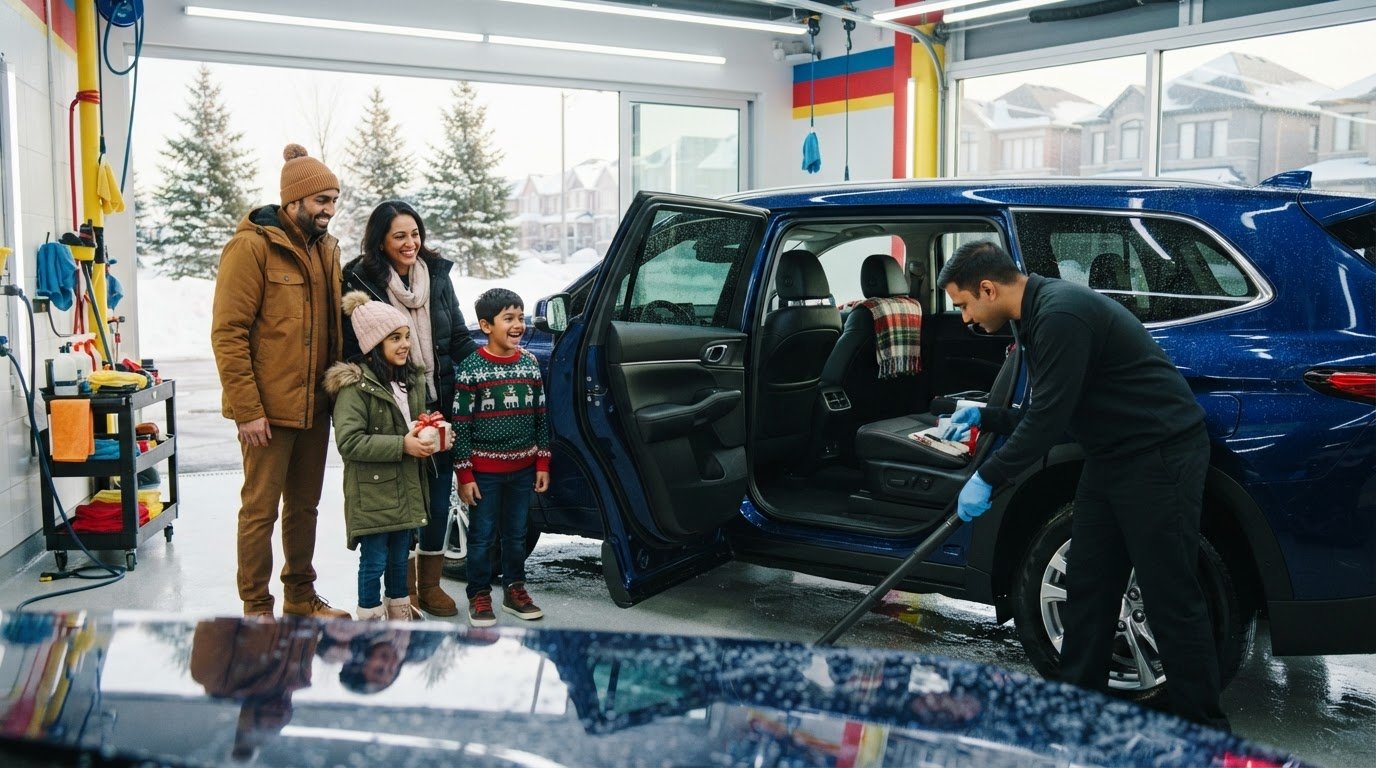
A well-run appointment starts before the vacuum turns on. At drop-off, expect a walkaround with the technician, documentation of existing scratches and stains, and a discussion of what you want restored rather than a vague promise that the car will look “like new.”
The work may then move through interior vacuuming and crevice cleaning, a two-bucket exterior wash, wheel and tire treatment, paint decontamination, polishing where requested, and wax or sealant application. Glass finishing comes near the end because clean windows reveal missed residue and smears.
Prepare the car properly
Remove personal items, child seats, loose change, garage remotes, and anything hidden in door pockets. If you want engine-bay work, ask how the technician handles heat, moisture, and sensitive components before approving the add-on.
Give the shop a clear list of stains, odours, scratches, and areas you're worried about. Ask for photographs of problem spots before work begins. That protects both sides and prevents a disagreement over whether a mark was present already.
An express detail may take 60 to 90 minutes, while a full correction can take four to eight hours, depending on the agreed scope and vehicle condition. Treat those as planning ranges, not promises. A heavily contaminated SUV won't receive the same process as a lightly used sedan in the same time.
Good shops send progress updates, show before-and-after photographs, and explain upsells in plain English. They won't turn a basic booking into a pressure sale. Your preparation helps too, because a clear cabin and honest condition report lets the technician spend more time on the work that matters.
Toronto Detailing FAQs and Your Next Move
How often should a Toronto commuter book a full detail? Most drivers benefit from a seasonal rhythm, with a substantial clean after winter and another protective service before the next salt cycle. High-mileage commuters, families, pet owners, and rideshare operators need more interior maintenance than a garage-kept weekend vehicle.
Is paint correction worthwhile on an older car? It can be, but only when the paint has enough remaining clear coat and the owner plans to keep the vehicle. Ask for a paint inspection and a limited correction option before approving aggressive polishing. Deep scratches, stone chips, and rust won't disappear because the surface becomes glossier.
Is ceramic coating better than wax for Toronto? Ceramic coating offers a longer-term protection approach, but it still needs proper washing and inspection. Traditional wax or sealant costs less and is easier to renew, making it sensible for short-term ownership or drivers who don't want a preparation-heavy coating appointment.
Are wash clubs worthwhile for downtown street parking? They can be, especially when frequent salt removal is your priority. The plan only makes sense if your real visit pattern reaches the break-even point and the participating location fits your commute.
How should you handle salt stains on floor mats? Remove mats, vacuum loose grit, clean the residue with a suitable fabric or rubber-safe product, and dry everything fully. Don't leave damp salt-laden material pressed against carpet, because trapped moisture creates a bigger interior problem than a dirty mat.
Your practical action plan
- Identify the pattern: Choose from garage-kept suburban driver, downtown commuter, rideshare operator, weekend driver, or long-term owner.
- Pick the baseline: Use express maintenance for an already-cared-for car, full service for seasonal recovery, or correction and coating when the paint condition and ownership horizon justify it.
- Add winter protection: Schedule an underbody flush and consider rust-proofing before sustained snowfall.
- Set the maintenance rhythm: Put a reminder in your calendar every four to six months, then adjust it for street parking, pets, highway use, and winter exposure.
- Compare the written scope: Select the shop that clearly states products, inclusions, exclusions, timing, and damage-handling procedures.
The cheapest package is rarely the best value when it skips the underbody, ignores embedded contamination, or leaves you paying for surprise add-ons. Match frequency, product quality, and shop reputation to the way your car lives in the GTA.
For a practical starting point, visit Nanak Car Wash to compare express washes, full-service cleaning, detailing, rust-proofing, prepaid bundles, and membership options. Choose the service that fits your driving pattern, then book the winter protection your vehicle needs instead of paying for shine alone.

 6600 Finch Ave W, Etobicoke, ON M9V 3Z6
 647-703-8515
 MON – SUN 8 AM to 7 PM