
You open the driver's door and see a cabin that looks reasonably tidy. Then the details appear: crumbs wedged beside the seat, road salt drying on the mats, a cloudy film on the inside of the windshield, and an odour that seems to live beneath the upholstery. A quick spray of air freshener won't solve that combination.
The most effective car interior cleaning tips are less about buying another product and more about following the right order. Remove dry debris first, match the treatment to the material and contamination, then bring in deeper cleaning when routine maintenance no longer keeps up. That approach matters particularly in the GTA, where daily commuting, rideshare work, family trips, pets, and winter slush all put different demands on a cabin.
The eight steps below create a practical maintenance system. You'll start with vacuuming, then work through vents, fabrics, leather, salt, touchpoints, glass, and odours. If your vehicle needs a faster reset or more intensive treatment, Nanak Car Wash offers full-service packages and appointment-based detailing options across GTA communities.
Table of Contents
- 1. Regular Vacuuming and Debris Removal
- 2. Dashboard and Vent Cleaning
- 3. Carpet and Upholstery Shampooing
- 4. Leather Seat Deep Cleaning and Conditioning
- 5. Stain and Salt Removal Treatment
- 6. Door Panel and Console Cleaning
- 7. Window and Glass Cleaning
- 8. Odour Elimination and Air Freshening
- 8-Point Car Interior Cleaning Comparison
- Turn Eight Tips Into a Maintenance Rhythm
1. Regular Vacuuming and Debris Removal
Vacuuming is the unglamorous step that makes every other cleaning job work better. Loose grit, crumbs, dust, and pet hair sit on top of the surfaces before they become embedded in carpet fibres or pushed deeper into seat seams. If you spray first, you turn dry debris into damp grime and make extraction harder.
Ontario drivers also have a seasonal reason to be consistent. The province is one of Canada's heaviest road-salt regions, with roughly 1.5 to 3 million tonnes of road salt applied each winter, while Toronto uses about 130,000 to 150,000 tonnes annually, according to Ontario winter car protection guidance from Nanak Car Wash. Salt tracked in on boots dries into fine residue across mats, carpets, seat tracks, and the edges beneath the pedals.
Use the vacuum in the right order
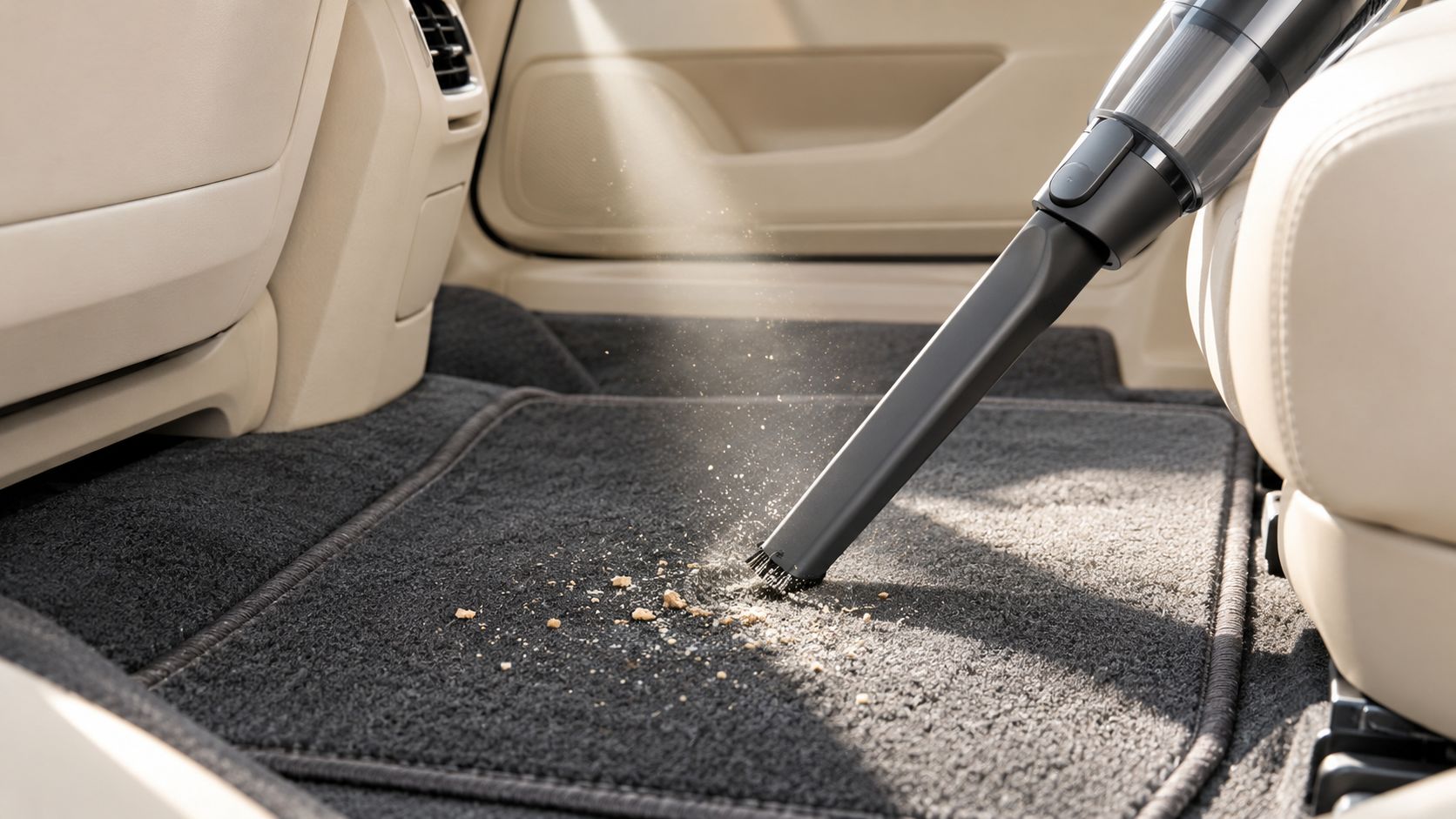
Remove the mats completely before you start. Shake them out away from the vehicle, vacuum both sides, and leave rubber mats to dry fully after washing. Then work from the upper cabin downward, finishing with the floor so falling dust doesn't undo earlier work.
Focus on the areas people skip:
- Seat seams: Run a crevice tool along cushion edges and between the backrest and seat base.
- Seat tracks: Slide seats forward and back to expose trapped grit and salt.
- Cup holders and storage pockets: Use a small brush attachment before wiping sticky residue.
- Vents: Use a soft brush or narrow attachment without forcing debris into the duct.
- Pet hair: A rubberized or pet-hair attachment works better than repeated passes with a smooth nozzle.
A regular driver should vacuum at least weekly. A rideshare vehicle, family SUV, or work truck may need attention more often, especially during salt season. Participating Nanak Car Wash locations offer free vacuums, and vacuuming is included in full-service packages starting at $29.99 plus tax, as listed in the full-service car wash options.
Practical rule: Dry debris comes out before moisture, brushes, shampoo, or odour treatment enter the cabin.
2. Dashboard and Vent Cleaning
A dashboard can look clean while its vents hold dust, pollen, hair, and fine road residue. Every time the HVAC system runs, some of that material can move through the cabin. Surface wiping helps, but it won't reach the air path or the narrow fins where buildup collects.
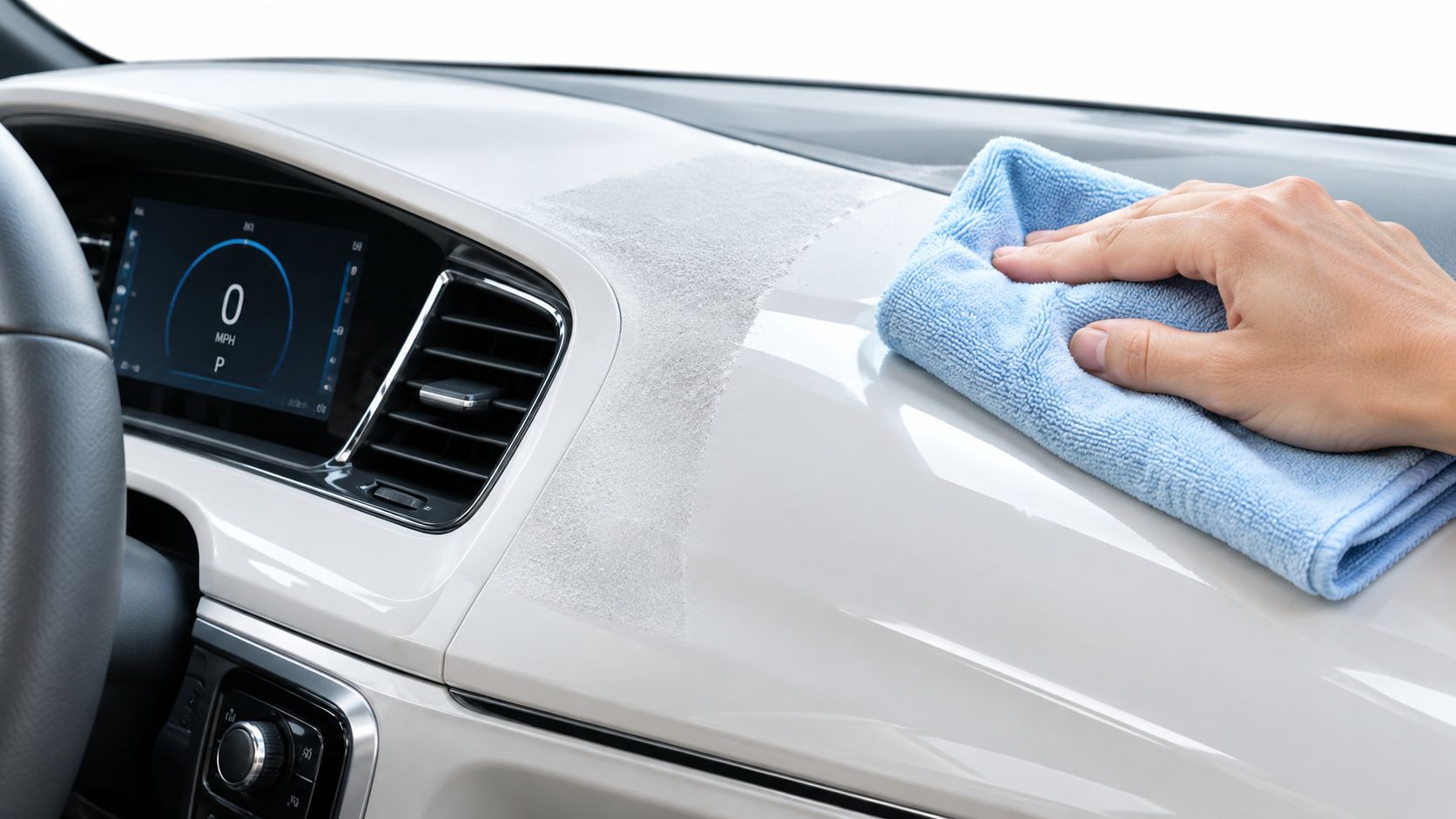
Start with a clean, dry microfiber cloth. Fold it into a manageable pad and lift dust rather than pushing it across the dash. For vents, use a soft detailing brush, vent brush, or controlled compressed air. Hold a vacuum nozzle nearby when brushing so loosened particles do not settle on another surface.
Protect plastics, screens, and trim
Different materials need different levels of moisture. A lightly damp cloth is usually enough for hard plastic and vinyl, while leather-trimmed sections need a product intended for finished leather. Keep liquid away from switchgear, instrument clusters, speakers, and infotainment screens. Spray the cloth, never the electronics.
Use a separate cloth for the screen and buff it gently. Abrasive towels and household glass products can leave scratches, haze, or unwanted residue. A glossy dashboard dressing may look impressive briefly, but it can create glare on the windshield and leave a slippery film that attracts dust.
Canadian automotive guidance from CAA North & East Ontario's interior cleaning guide recommends vacuum attachments for seat crevices and cup holders, along with microfiber tools for vents and high-touch surfaces. That broader approach is more useful than treating the dashboard as a single flat panel.
Delivery drivers and rideshare operators should inspect vents regularly because the cabin is effectively a working environment. Pet owners may also need a vent blowout when surface cleaning no longer removes the dusty or animal-related smell. Nanak's appointment-based detailing includes vent and crevice blowout for interiors that need more than a quick wipe.
3. Carpet and Upholstery Shampooing
Vacuuming removes what sits loose. Shampooing deals with what has travelled into the fibres. Fabric seats and carpets gradually collect spilled coffee, wet boot residue, food oils, mud, and odour-causing material that a household vacuum can't lift on its own.
The timing matters. Treat a fresh spill as soon as possible by blotting it with a clean cloth. Rubbing spreads the liquid and drives it deeper. Before a professional appointment, vacuum thoroughly and identify the affected area, the likely source, and whether the problem includes an odour as well as a visible mark.
Match the treatment to the vehicle's use
A pet owner's vehicle may need hair removal before shampooing, because hair can clog tools and prevent the solution from reaching the fabric. A rideshare vehicle may have several small drink marks across the rear cabin rather than one dramatic stain. A fleet or rental vehicle may need consistent treatment between users so the result is repeatable rather than improvised.
Deep cleaning also requires patience after the work is finished. Upholstery needs adequate drying time, and the vehicle should be ventilated before it returns to regular use. Closing a damp vehicle in a garage or leaving wet carpets under floor mats can create a new musty smell.
Nanak Car Wash offers carpet and seat shampooing through appointment-based detailing. The service is particularly useful when stains have survived careful DIY treatment, when salt has worked into carpet fibres, or when a cabin needs a full reset before a sale or handover. The Nanak detailing service also combines shampooing with salt and stain removal, leather care, and other interior treatments.
Shampoo is a restorative step, not a substitute for vacuuming. If loose grit stays in the carpet, wet cleaning turns it into a more stubborn mixture.
Use a material-safe cleaner and test it in an inconspicuous place first. Too much product and too much water can leave residues, flatten fabric, or lengthen drying time. Professional extraction makes more sense when the contamination is widespread or the vehicle has a tight turnaround.
4. Leather Seat Deep Cleaning and Conditioning
Leather seats need a different routine from cloth upholstery. Dirt gathers in perforations, stitching, bolsters, and the crease where the seat meets the backrest. Winter salt and denim transfer can leave a dull surface, while repeated friction wears the finish on high-contact bolsters.
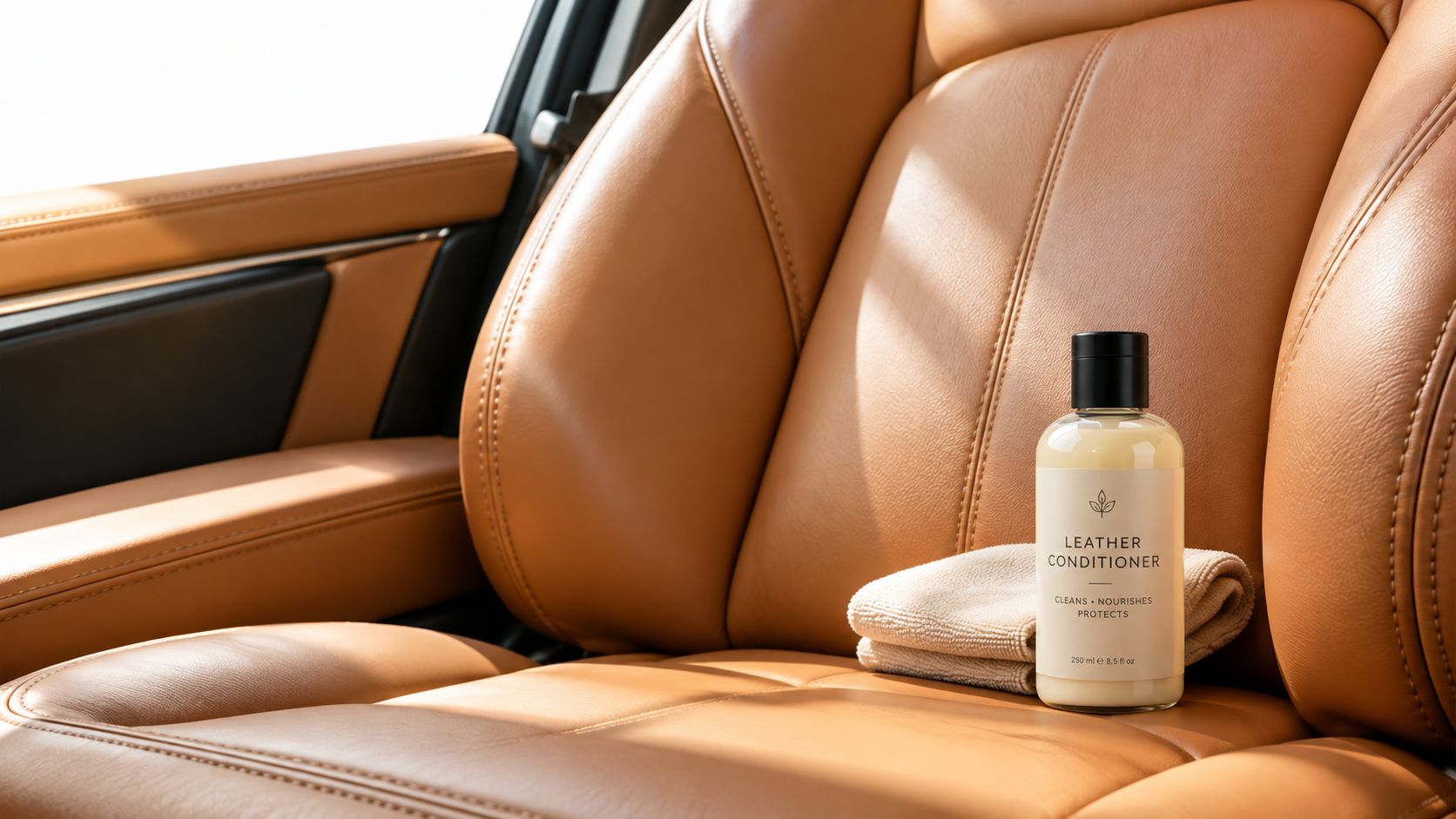
Begin by vacuuming with a soft brush attachment. Then use a cleaner designed for automotive leather, applied sparingly to a cloth or soft brush. Work in small sections and remove loosened residue before it dries. A conditioner can follow when the product and leather finish call for it, but more conditioner isn't automatically better. Excess product can leave a greasy surface that attracts dust and makes the wheel or seat feel slippery.
Watch the high-wear areas
The driver's outer bolster usually needs more attention than the centre of the seat. Inspect:
- Entry bolsters: Watch for dark transfer, scuffing, and surface wear from repeated entry and exit.
- Perforations: Keep liquids controlled so they don't collect beneath the surface.
- Stitching: Brush gently along seams where salt and grit lodge.
- Child-seat contact areas: Check for trapped crumbs and pressure marks after removing the seat.
- Steering wheel and armrests: These may need more frequent wiping than the seat itself.
Harsh degreasers, abrasive sponges, and household solvents can damage the finish. A product that works on a hard plastic console may strip or dull leather. UV exposure also affects colour, so parking habits and an appropriate protectant can matter as much as the cleaning product.
Luxury vehicles, trucks, and SUVs used through Ontario winters benefit from material-specific care rather than a single all-purpose spray. Nanak's appointment-based detailing includes leather deep cleaning, and technicians can combine it with fabric shampooing when a vehicle has mixed upholstery.
Leather care is condition-based. Book a deeper service when the surface remains dull after cleaning, when stains have set, or when the finish feels dry and uneven. Regular light cleaning is safer than waiting until contamination needs aggressive correction.
5. Stain and Salt Removal Treatment
A coffee spill, muddy boot, and winter salt mark may all look like “dirty carpet,” but they need different responses. Coffee can leave colour and sugar residue. Mud usually needs to dry enough for loose material to be removed before wet treatment. Salt leaves a pale crust or ring that can spread when someone uses too little water and too much scrubbing.
Start by identifying the contamination. Blot liquid spills, lift solid material with a dull edge, and vacuum dry residue before applying a cleaner. Test any product in a hidden area, particularly on dyed carpet, fabric trim, or older upholstery. Apply only enough solution to work the spot, then blot or extract rather than flooding the area.
Winter salt deserves prompt attention
Salt and slush repeatedly enter the cabin during freeze-thaw weather. Floor mats help, but they don't stop residue from reaching the carpet edges, seat rails, and the area beneath the pedals. If a white mark returns after cleaning, the residue may still be in the fibre or underlayer rather than on the surface.
Nanak's salt and stain removal service is designed for winter-worn interiors and can be booked as part of a deeper detailing visit. Professional treatment makes sense when a mark has spread, returned after DIY cleaning, or appears alongside a persistent smell.
Rubbing is a common mistake. It can enlarge the stain, roughen fibres, and push contamination into the backing. Use a clean section of cloth as you blot so you're lifting material instead of redepositing it.
For daily drivers, keep an absorbent towel and a small pack of interior-safe wipes in the vehicle. That won't replace extraction, but it can prevent a fresh spill from becoming a permanent appointment. Rubber or all-weather mats also reduce how much winter contamination reaches the carpet in the first place.
6. Door Panel and Console Cleaning
Door panels and consoles collect the evidence of daily driving. Fingers touch handles, arms rest on panels, children spill drinks into cup holders, and coins, receipts, and grit settle in storage compartments. These areas often make a vehicle feel dirty even after the carpets have been vacuumed.
Use a dry microfiber cloth first, then a lightly damp cloth with a material-safe cleaner. Work around buttons and switches without allowing liquid to pool. For textured plastic, a soft detailing brush can lift residue from the grain. A narrow brush also helps around window switches, seat controls, shifter surrounds, and the seams around removable cup-holder inserts.
Give high-touch areas a separate rhythm
A family car may need weekly attention on handles, armrests, and cup holders. A rideshare vehicle should inspect passenger-facing surfaces more often, especially the rear door pulls and seat-back pockets. A contractor's van may need stronger debris removal in the front storage areas, while a dealership vehicle needs a consistent presentation across every touchpoint.
A useful short routine looks like this:
- Empty compartments: Remove wrappers, receipts, bottles, and loose change before wiping.
- Brush crevices: Dislodge grit around switches and seams, then vacuum it up.
- Lift sticky residue: Use a suitable interior cleaner in small amounts instead of scraping hard.
- Finish with a dry cloth: Remove remaining moisture and prevent streaks.
Don't use a glossy dressing on the steering wheel, pedals, or gear selector. A shiny finish isn't worth reduced grip. Nanak's higher-tier full-service packages and professional detailing include door panels, consoles, and cup holders, which can be useful when grime has collected in places a quick service can't reach.
This is also the stage where you should wipe seat-belt buckles and the accessible belt surface carefully. Avoid soaking the webbing, and let any cleaned area dry before repeated use.
7. Window and Glass Cleaning
Interior glass develops a film that becomes obvious when low winter sun hits the windshield. Fingerprints, dashboard vapour, dust, and residue from previous products can make glare worse and reduce confidence at night or in wet traffic. Cleaning the outside glass won't fix a film on the inside.
Use a clean microfiber glass cloth and a glass cleaner suitable for automotive interiors and window tint. Spray the product onto the cloth rather than directly onto the glass, especially near the dashboard, defroster vents, screens, and electronics. Wipe from the top down, then use a second dry cloth to buff the surface.
Find the film before it finds you
Lower the side window slightly so you can clean the hidden top edge. On the windshield, work in sections and change the cloth when it becomes loaded with residue. A crosshatch motion can help you identify whether streaks remain, while a final dry pass brings the finish clear.
Avoid using the same cloth for dashboard dressing and glass. Residue from protectants can create streaks that look like a dirty windshield. Household products containing ammonia may also be unsuitable for some tinted surfaces, so read the label before use.
A commuter should inspect the interior windshield monthly and more often when the cabin is dusty or humid. Rideshare drivers have another reason to keep glass clear: passengers notice smears immediately, and a clean side window makes the entire vehicle feel better maintained.
Nanak includes window cleaning in full-service packages starting at $29.99 plus tax, alongside interior vacuuming and dashboard cleaning. If you're doing the job yourself, window-cleaning cloth guidance from Aloha Window Bros offers useful advice on choosing cloths and avoiding streaks. Treat visibility as a safety-related maintenance task, not just a finishing touch.
8. Odour Elimination and Air Freshening
Air freshener is often used as a cover-up. If the smell comes from spilled milk, damp carpet, pet accidents, smoke residue, or a contaminated cabin filter, adding fragrance only creates two smells competing in the same small space.
Find the source before choosing the remedy. Check beneath floor mats, under seats, inside cargo areas, around the spare-wheel well, and along the carpet edges. Feel for dampness, but don't pull up fitted carpet or trim aggressively. Moisture that remains under the surface can continue producing a musty smell and may require professional inspection.
Clean the source and the air path
Pet accidents need an enzymatic cleaner intended for that type of contamination. General-purpose spray may make the spot look better without breaking down what remains below it. Smoke odour may require repeated cleaning of hard surfaces, fabric extraction, and attention to the headliner, where aggressive scrubbing can damage the material.
Ventilation helps after cleaning, but only when the cabin is fully dry. Leave doors or windows open safely when conditions allow, and don't return wet mats or seats to a closed vehicle. Replace the cabin air filter according to the vehicle manufacturer's maintenance guidance, particularly if odours seem to return whenever the fan runs.
Canadian Tire and Best Buy Canada have both highlighted car air purifiers using HEPA or activated-carbon filtration for dust, allergens, and odours. These devices can be useful for commuters, pet owners, and rideshare drivers, but they won't fix a wet carpet, dirty vent, or soiled seat. Use filtration as support, not as a substitute for source removal.
Nanak addresses odours through treatments such as carpet shampooing, salt and stain removal, vent cleaning, and appointment-based detailing. Book professional help when the smell persists after the source has been cleaned, when mould is suspected, or when the vehicle needs a complete interior reset.
8-Point Car Interior Cleaning Comparison
| Cleaning Method | 🔄 Implementation Complexity | ⚡ Resource Requirements & Speed | ⭐ Expected Outcomes | Ideal Use Cases | 💡 Key Advantages |
|---|---|---|---|---|---|
| Regular Vacuuming and Debris Removal | Low; simple routine maintenance | Basic vacuum and attachments; quick to perform weekly or more often | 📊 Removes loose dirt, dust, crumbs, and allergens; helps prevent embedded debris | Daily drivers, ride-hailing vehicles, fleets, and routine upkeep | Cost-effective, accessible, protects upholstery, and reduces odour sources |
| Dashboard and Vent Cleaning | Low to moderate; requires careful dust control | Microfiber cloths, vent brushes, or compressed air; generally quick | 📊 Improves cabin air quality and restores dashboard appearance | High-pollen seasons, ride-hailing vehicles, and dusty interiors | ⚡ Fast, improves hygiene, and reaches vents and crevices |
| Carpet and Upholstery Shampooing | High; requires pre-treatment, extraction, and drying | Professional equipment and solutions; typically 1–4 hours plus drying time | 📊 Removes embedded dirt, stains, and odours; restores fabric condition | Pet owners, high-use vehicles, fleets, and pre-sale preparation | ⭐ Deep restoration, odour reduction, and potential resale-value improvement |
| Leather Seat Deep Cleaning and Conditioning | Moderate to high; requires material-specific products and expertise | Leather cleaners, conditioners, and professional tools; appointment-based | 📊 Removes contaminants, prevents cracking, and preserves leather appearance | Luxury vehicles, dealerships, and vehicles exposed to winter salt or UV | ⭐ Extends leather lifespan and protects high-value interiors |
| Stain and Salt Removal Treatment | Moderate to high; treatment depends on stain type and severity | Targeted cleaning solutions and professional expertise; may require multiple treatments | 📊 Reduces stains, salt damage, and permanent discoloration | Ontario winter driving, commercial fleets, spills, mud, and seasonal detailing | Effective preventive care and protection against long-term interior damage |
| Door Panel and Console Cleaning | Moderate; requires attention to materials and tight spaces | Microfiber cloths, detailing brushes, and suitable cleaners; relatively quick | 📊 Removes grime, fingerprints, residue, and buildup from high-touch areas | Families, ride-hailing vehicles, fleets, and upgraded full-service cleaning | Improves perceived hygiene and covers commonly neglected surfaces |
| Window and Glass Cleaning | Low; requires streak-free technique | Glass cleaner and microfiber cloths; quick express-service task | 📊 Improves visibility, clarity, and interior appearance | Daily commuters, fleets, ride-hailing vehicles, and routine servicing | ⚡ Fast, safety-related, affordable, and commonly bundled with full-service washes |
| Odour Elimination and Air Freshening | High; requires identifying and treating the odour source | Enzymatic cleaners, deodorization products, ventilation, and possible shampooing | 📊 Reduces persistent odours and improves cabin comfort and air quality | Pet accidents, smoking residue, mould, damp vehicles, and used-car preparation | ⭐ Treats root causes more effectively than fragrance-only products |
Turn Eight Tips Into a Maintenance Rhythm
A clean cabin doesn't require the same level of work every visit. The practical system is to separate routine maintenance, prompt spot treatment, and condition-based detailing. That keeps small jobs small and prevents a seasonal mess from becoming a full restoration project.
Start with the dry work. Remove rubbish, take out the mats, and vacuum carpets, seats, tracks, cup holders, and crevices. Regular drivers should build vacuuming into a weekly routine, while rideshare drivers, families, pet owners, and commercial users should adjust the frequency to the amount of traffic and debris the vehicle sees.
Then handle the surfaces people touch and the glass they look through. Wipe the steering wheel, door handles, armrests, console, shifter, and cup holders as buildup appears. Clean vents with a brush and controlled air, and keep the interior windshield free of film. CAA North & East Ontario's guidance supports this combination of full-interior vacuuming, crevice attention, vent cleaning, and microfiber work rather than a dashboard-only clean.
Treat spills and winter contamination immediately. Blot liquid, remove solids, and deal with salt before repeated wet boots and freeze-thaw cycles push it deeper into carpet. Use floor mats as a barrier, but still inspect the carpet around their edges and under the pedals. A persistent stain, returning salt mark, or damp patch is a signal to stop scrubbing and choose a material-specific treatment.
Reserve deeper services for problems routine cleaning can't solve:
- Shampooing: Choose it for embedded dirt, set-in stains, widespread spills, or fabric odours.
- Leather care: Use it when leather has visible transfer, dullness, dryness, or wear in high-contact areas.
- Odour treatment: Book it after locating the source, especially for pet accidents, smoke, moisture, or mould concerns.
- Vent blowout: Consider it when dust or allergens persist around the HVAC system despite surface cleaning.
- Full reset: Choose professional detailing when pet hair is extensive, several materials need different treatments, or the vehicle is being prepared for sale or handover.
Nanak Car Wash offers full-service packages with interior vacuuming, dashboard cleaning, and window cleaning. Its appointment-based detailing includes carpet and seat shampooing, salt and stain removal, vent and crevice blowout, and leather deep cleaning. Participating locations also provide free vacuums, while memberships include interior-cleaning discounts that can make repeat maintenance easier for GTA drivers.
The right routine depends on how the vehicle is used, not on a rigid calendar. A lightly used commuter may need simple upkeep and occasional seasonal attention. A rideshare vehicle, pet-filled SUV, or work fleet needs faster cycles and earlier intervention. Keep the order consistent, remove debris before moisture, treat the material rather than guessing, and escalate when cleaning only masks the problem.
Nanak Car Wash provides full-service interior cleaning, participating-location vacuums, and appointment-based detailing for shampooing, salt and stain removal, vent cleaning, leather care, and odour-related resets. Visit Nanak Car Wash to choose a practical service for your vehicle's current condition and keep your GTA cabin cleaner between appointments.


 6600 Finch Ave W, Etobicoke, ON M9V 3Z6
 647-703-8515
 MON – SUN 8 AM to 7 PM