

You pull into the driveway after another run down the 401. The car looks merely dirty, but the problem is underneath: wet salt packed around the suspension, slush drying along the rocker panels, and grime sitting in every seam you can't see from standing height. By spring, that “winter dirt” can become corrosion that costs far more to address than a sensible winter car protection routine.
For GTA drivers, protection is an ROI decision, not a beauty contest. A daily commuter, ride-hail vehicle, work van, and garage-kept weekend car don't face the same exposure, so they shouldn't receive the same treatment. The practical plan is simple: remove salt promptly, rinse the underside, protect vulnerable surfaces, and spend more only where your driving pattern justifies it.
Table of Contents
- Why Ontario Winters Are Brutal on Your Vehicle
- Building Your Exterior Wash and Wax Routine
- Deciding Whether Rust Proofing Is Worth It for Your Vehicle
- Protecting Your Interior from Salt and Winter Grime
- Choosing Between Memberships and Pay-Per-Visit Options
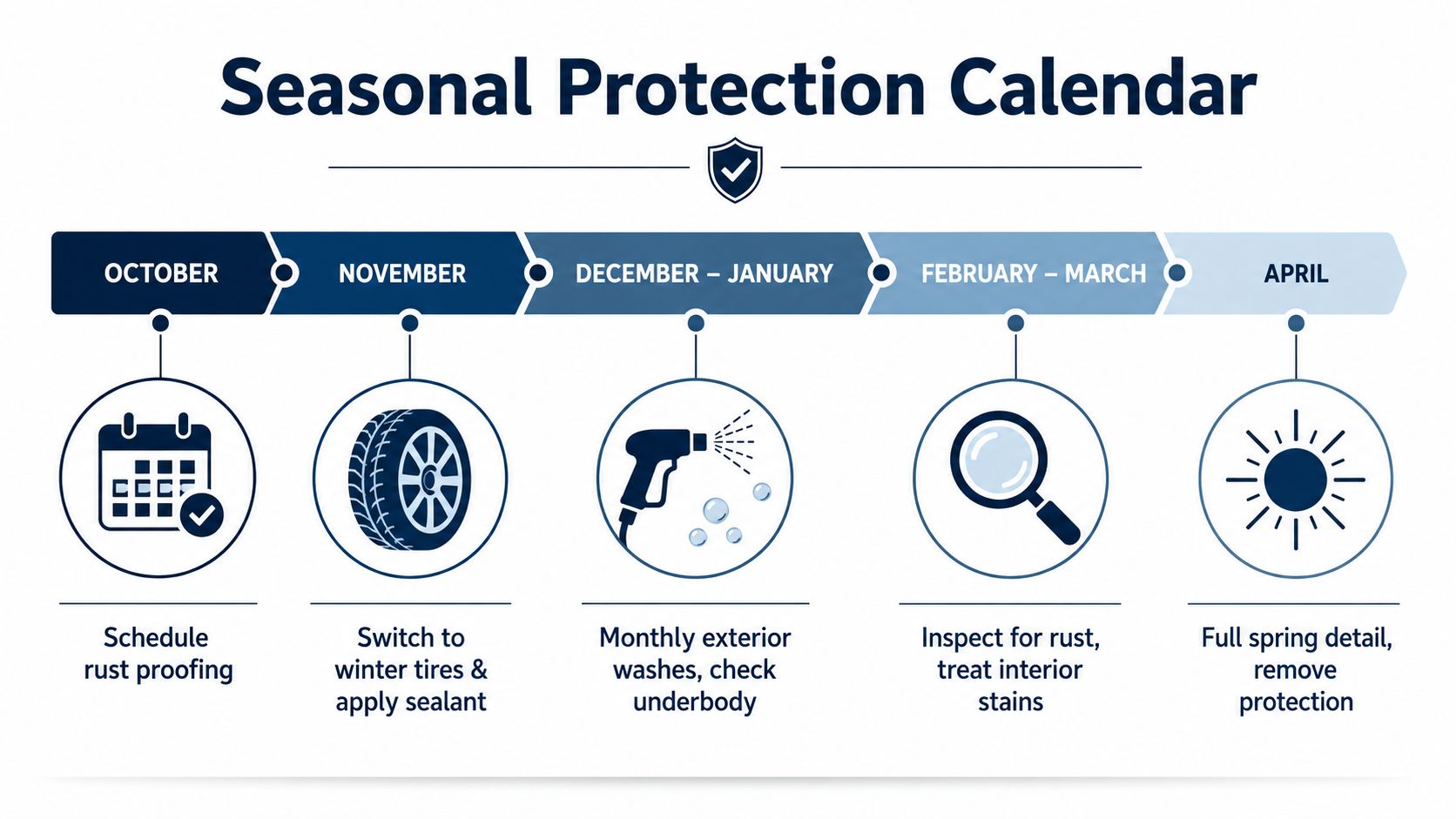
- Your Month-by-Month Winter Protection Calendar
Why Ontario Winters Are Brutal on Your Vehicle
A Toronto winter gives corrosion everything it needs. The temperature rises above freezing, slush splashes into the underbody, then the temperature drops and moisture freezes in place. The next day, road crews add more salt, traffic throws the brine into wheel wells and door sills, and the cycle starts again.
Ontario's road-salt burden is unusually severe. Independent Ontario summaries estimate that roughly 1.5 to 3 million tonnes of road salt are applied each winter, while Toronto alone uses about 130,000 to 150,000 tonnes annually. Those figures and the connection between salt and vehicle damage are documented in Ontario rust-proofing guidance for GTA vehicles.
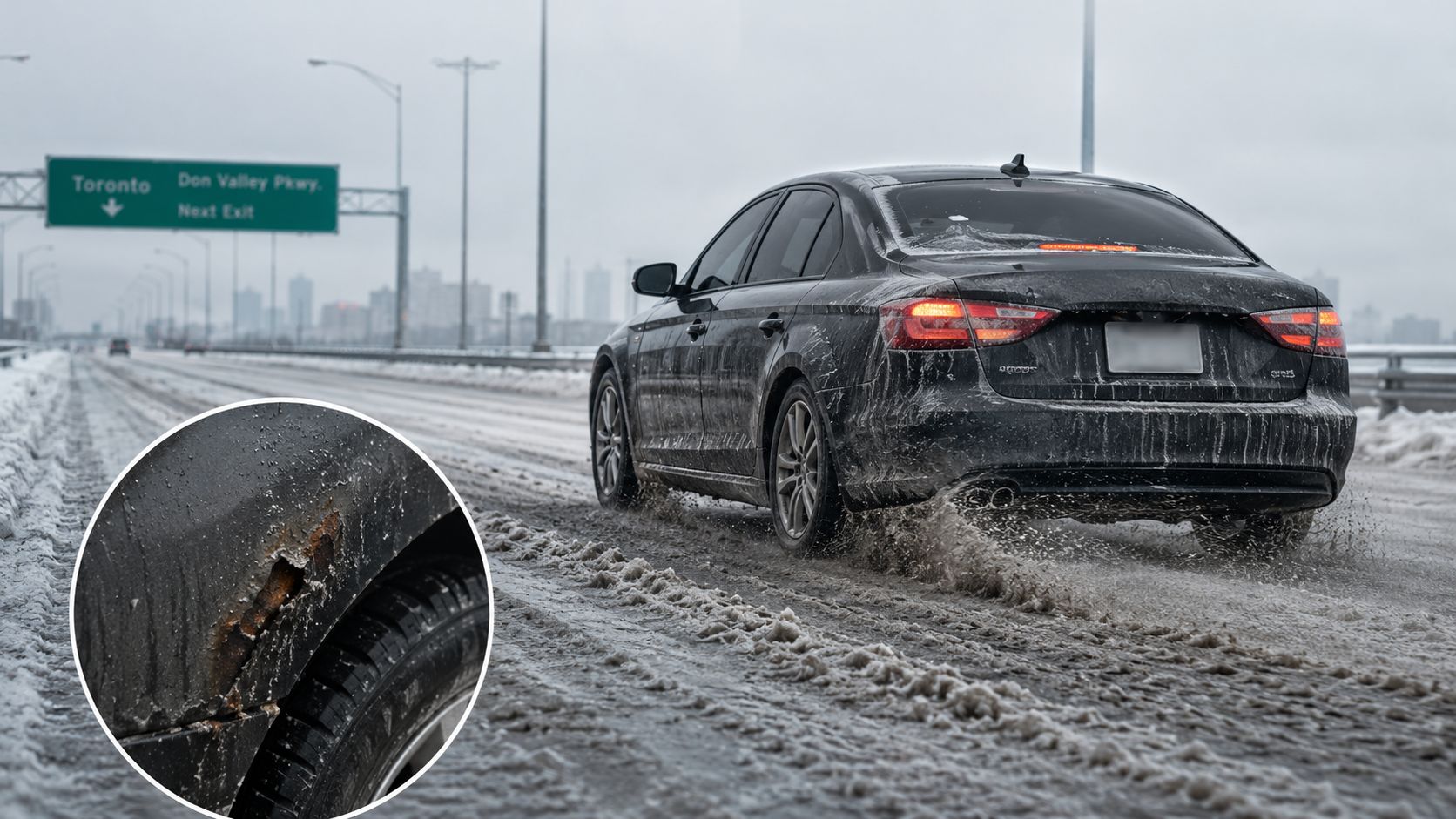
The damage starts below eye level
A clean-looking hood doesn't tell you much. Saltwater reaches brake and fuel lines, fasteners, subframes, suspension mounts, rocker seams, and the folds behind wheel arches. The corrosion guidance above cites a Canadian research summary that attributes about 50% of vehicle corrosion to road salts.
Chrome and other exposed metal surfaces need attention too. If you want a useful explanation of how corrosion affects brightwork and why surface protection matters, review Galhor Inc.'s chrome bumper corrosion advice.
Drivers often notice the cosmetic signs first, a bubbling wheel arch, orange staining on a seam, or a rough-looking exhaust component. By then, the underside may have been taking abuse for several seasons. One Ontario-based summary says untreated vehicles can develop visible undercarriage rust within 2 to 3 winters, with structural rust risk appearing in roughly 8 to 12 years of year-round driving. Those estimates come from this Ontario road-salt and vehicle-rust analysis.
Practical rule: If you drive salted GTA roads regularly, winter protection is maintenance. It isn't a cosmetic upgrade.
Skipping one wash won't destroy a healthy vehicle. Repeating that decision through every freeze-thaw spell is different. Salt residue keeps returning to the same trapped areas, and a vehicle that spends all winter on the highway receives a much heavier dose than one parked indoors and driven occasionally. That difference should determine where you put your money.
Building Your Exterior Wash and Wax Routine
The most important exterior habit is also the one drivers postpone: wash the car soon after substantial salt or brine exposure. Ontario winter-care guidance recommends washing within 24 hours of heavy salt or brine exposure, with special attention to the underbody, as outlined in this Ontario winter rust-proofing workflow.
Use this order every time
Remove the loose contamination first. Choose a wash that uses presoak and foam to soften road film before contact. Don't grind dry salt into the paint with a dirty mitt or brush.
Make the underbody rinse essential. The underside carries the material most likely to remain wet and trapped. Ask for underbody coverage that reaches wheel wells, frame areas, suspension components, and seams.
Rinse thoroughly. A quick exterior pass that leaves brine behind isn't a complete winter wash. Pay attention to rocker panels, lower doors, liftgate edges, and the back of the wheel arches.
Add a protective layer. Triple foam wax, hot wax, sealer wax, or a comparable paint sealant helps reduce direct contact between the finish and winter contamination. These layers won't replace washing, but they make the surface easier to clean and give the paint another line of defence.
Dry before parking for the night. Drying agents, air blowers, and hand-drying help limit water left around handles, mirrors, door edges, and trim. If possible, don't seal a saturated vehicle inside a cold garage immediately after washing.
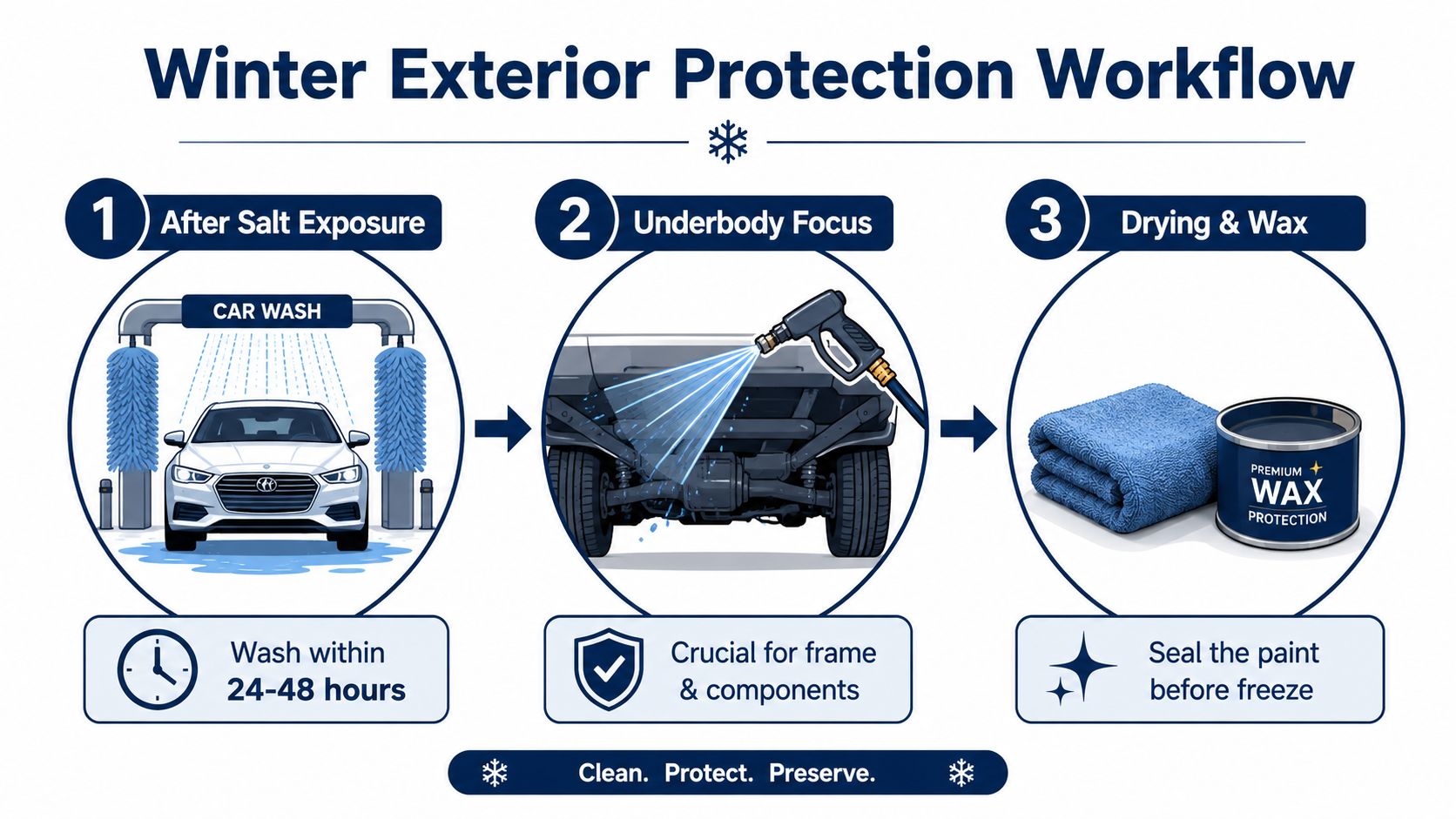
Match the wash to exposure
A suburban driver who mostly uses local roads can use an express exterior wash when the vehicle has light buildup, provided the underbody option is included. A driver travelling daily on the 400-series highways should choose the stronger rinse and protective add-ons more consistently because salt spray reaches the underside and lower panels repeatedly.
Full-service washing makes sense when you need the cabin handled at the same time. Nanak Car Wash lists express exterior packages, full-service washes, detailing, underbody rinsing, wax and sealant upgrades, and rust-proofing applications among its service options. Treat that as a convenient service model, not a substitute for choosing the correct level of protection.
Don't wait for April. Spring cleaning removes old residue, but it can't undo metal that has already started corroding. During active winter, wash whenever the vehicle receives heavy salt, and use a regular schedule that reflects how many days you spend on treated roads.
Deciding Whether Rust Proofing Is Worth It for Your Vehicle
Newer vehicles deserve a more intelligent answer than “factory protection means you're covered” or “every car needs the same treatment.” Modern coatings and galvanized components can reduce vulnerability in some areas, but they don't eliminate exposure at seams, cavities, fasteners, suspension points, or the underside.
Ontario's corrosivity makes the decision more serious. A technical investigation measured Toronto atmospheric corrosion at 5,108 mg/dm² over a 19-month period, and its laboratory work found that standard road salt produced the highest steel weight loss among the tested materials, while treated alternatives reduced corrosion. See the road-salt and steel-corrosivity investigation for the underlying technical reference.
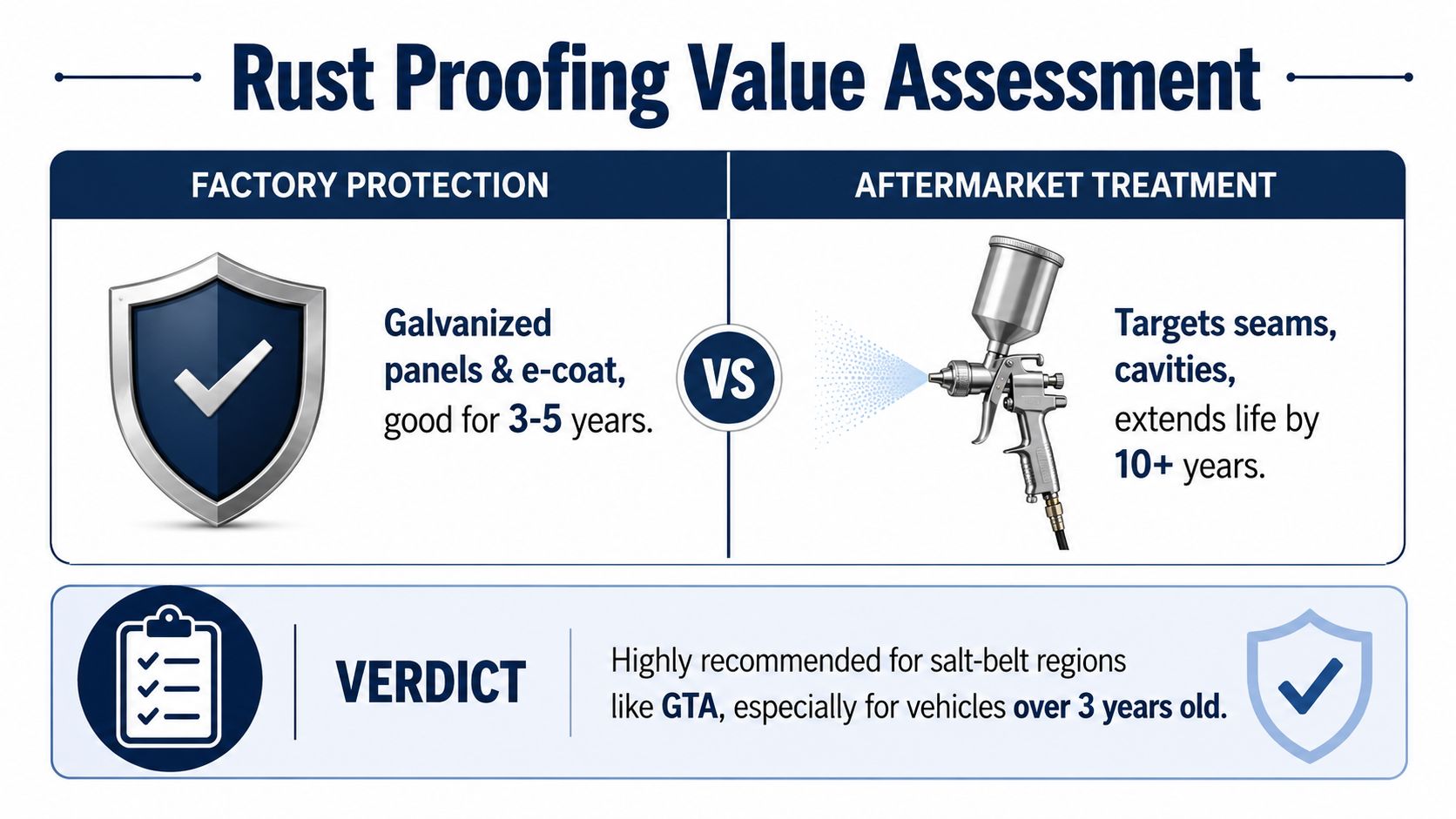
The Ontario result that matters
A University of Windsor engineering study, summarized in regional rust-protection coverage, reported that treated vehicles had 6.8 times less visible body rust and 3.6 times less underbody corrosion than untreated vehicles. That evidence doesn't mean every vehicle needs the same product or frequency. It does show why washing alone isn't a complete corrosion strategy when the underside receives constant salt exposure.
Professional rust proofing uses a dedicated compound designed to reach areas a wash can't protect. The valuable coverage is around seams, cavities, suspension points, door sills, and drainage areas where chloride brine can remain after the visible panels look clean.
Who gets the strongest return
Daily GTA commuters should consider rust proofing if their vehicle spends most winter weekdays on salted roads, especially highway routes. The benefit is less compelling for a low-mileage vehicle that stays in a dry garage and sees occasional winter use.
Ride-hail and delivery drivers face a stronger case. More road time means more repeated contamination, and stopping for a wash alone doesn't create a protective barrier in hidden metal areas.
Fleet owners should think beyond the appearance of each vehicle. Vans, pickups, SUVs, and contractor vehicles often work through poor conditions and accumulate exposure in exactly the areas that are expensive to repair later. Consistent treatment and documented inspections are more sensible than waiting for visible rust across an entire fleet.
The right question isn't whether rustproofing works in the abstract. It's whether your vehicle spends enough time in Ontario's corrosive environment to justify another protection layer.
Don't pay for a blanket package without asking what it covers. Confirm whether the application includes the underbody, seams, cavities, and suspension-related areas, and ask how the provider prepares the vehicle before spraying. Dirt and trapped salt should not be sealed under a treatment.
Protecting Your Interior from Salt and Winter Grime
The cabin takes a beating from the same winter that attacks the underside. Boots bring in salt, slush, sand, and moisture. Rubber mats catch the first wave, but wet footwear still transfers residue to carpet edges, pedals, seat bases, and door openings.
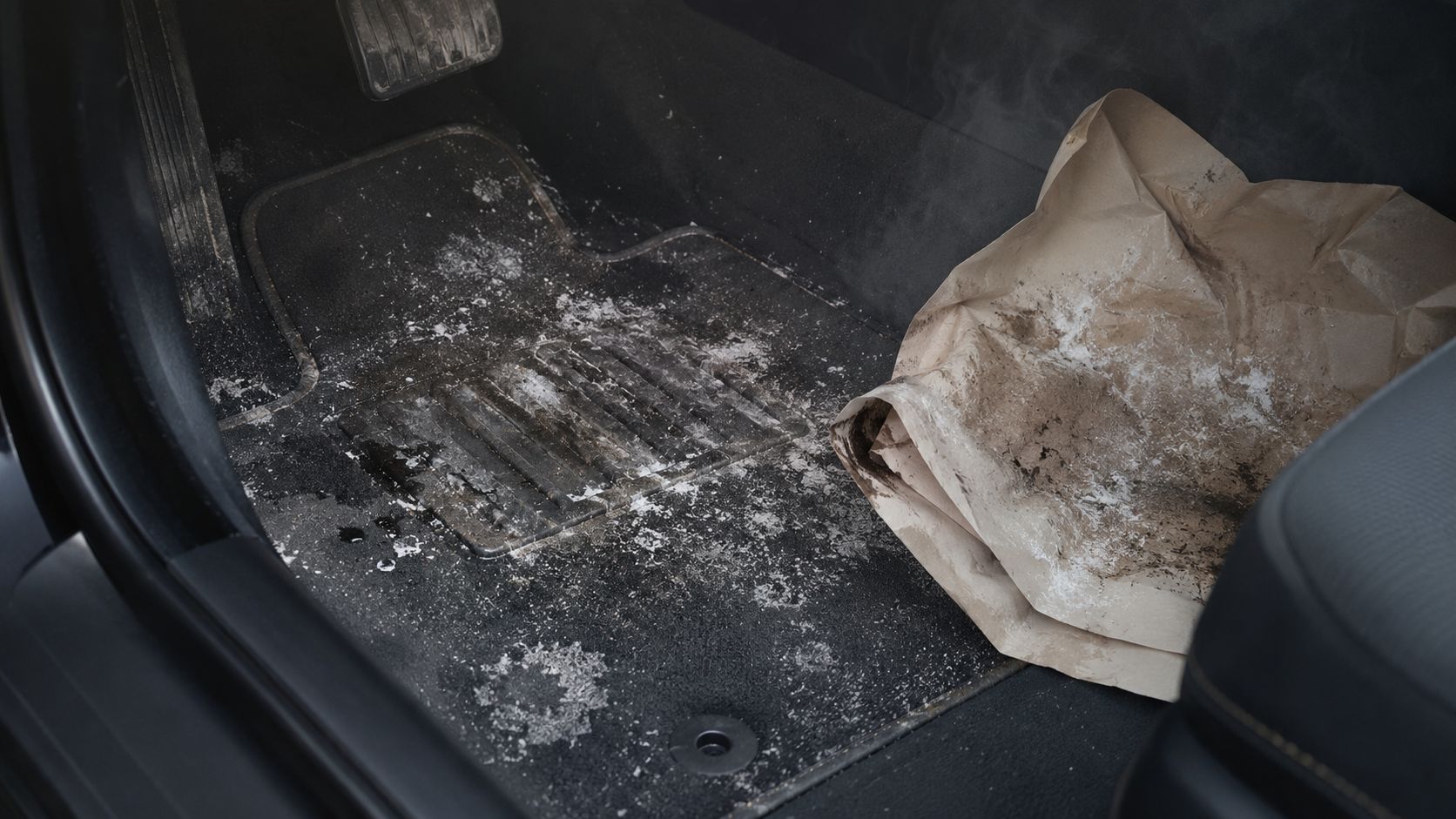
Stop the salt before it spreads
Shake out and vacuum mats regularly. If you use removable rubber mats, take them out, rinse away salt residue, and dry them before reinstalling. For carpeted areas, vacuum first, then use a suitable cleaner sparingly. Soaking an already damp carpet can leave moisture trapped below the surface.
Clean the entry points first. Door sills and lower door panels collect the grime passengers drag inside. Wipe them before the residue transfers to clothing and upholstery.
Keep the glass and controls clear. A clean dashboard, steering wheel, console, and interior glass improve visibility and reduce the greasy film that builds up during closed-window driving.
Manage moisture instead of masking it. Use the vehicle's defroster and ventilation system to clear condensation, and remove wet items rather than leaving them in the cabin. Odour sprays cover symptoms. They don't remove the damp source.
Leather needs a different approach from fabric. Wipe winter residue away with a compatible leather cleaner, then use an appropriate conditioner if the surface requires it. Avoid household products that can leave a slick film on steering wheels or pedals.
Know when a detail is justified
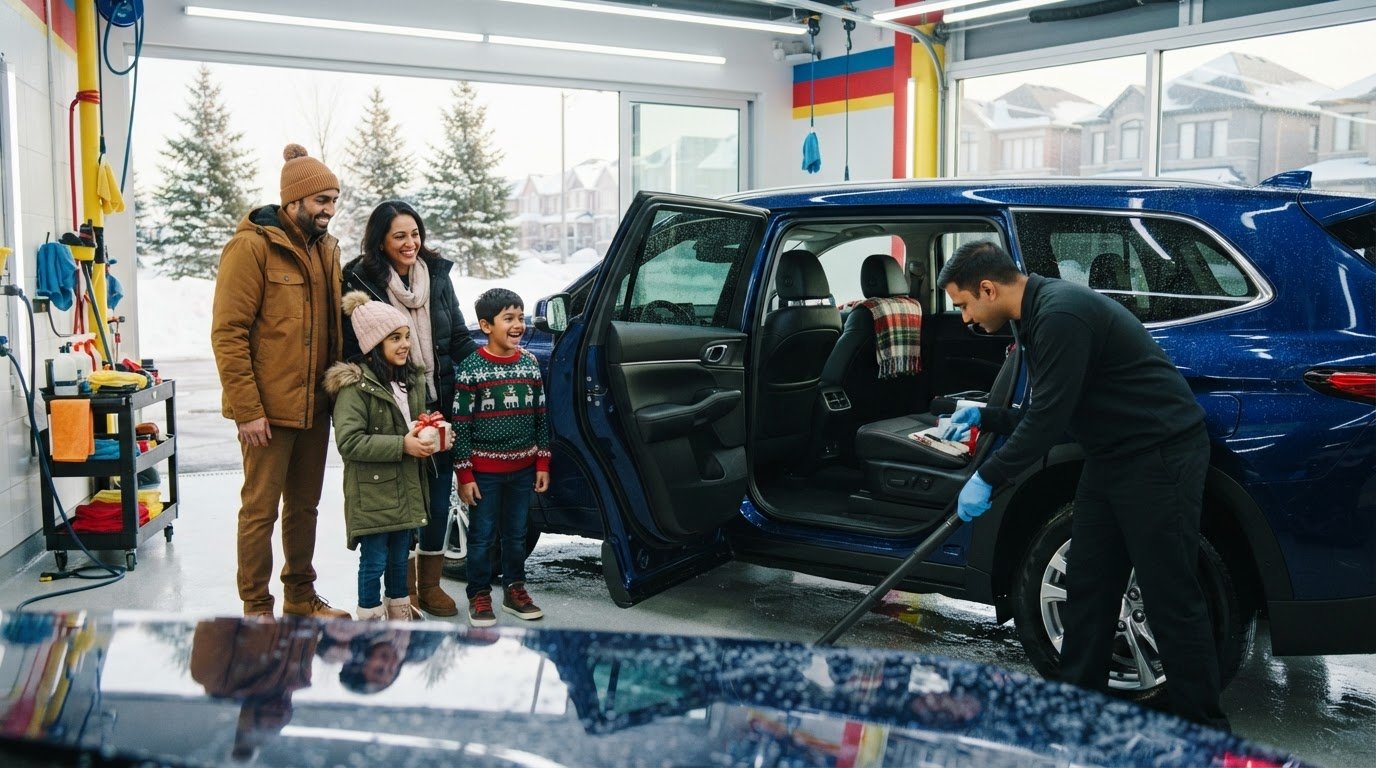
Book professional interior detailing when salt stains have worked into carpet fibres, odours persist after routine cleaning, or winter grime has reached vents and crevices. A full appointment may include vacuuming, carpet and seat shampooing, salt and stain removal, vent blowout, crevice cleaning, and leather deep cleaning.
Pet hair and heavily soiled SUVs, vans, and trucks may carry additional charges, so ask for a vehicle-specific quote before booking. For a ride-hail driver, regular light cleaning protects the cabin's working condition. For a family vehicle, a deeper clean after the winter season is usually more practical than trying to restore every stain during the worst weather.
Choosing Between Memberships and Pay-Per-Visit Options
A daily commuter can burn through a wash budget quickly on salted GTA roads. A weekend vehicle may sit clean in a garage while a monthly pass continues charging. Choose the payment model from your actual winter mileage, not from the advertised discount.
Nanak Car Wash lists monthly Unlimited Wash Club passes, prepaid multi-wash tickets, combo options, and one-time washes. Its service lineup includes express exterior washes from $9.99 plus tax and full-service washes from $29.99 plus tax. Confirm the current pass fee and terms before comparing totals.
Use this break-even rule: divide the monthly membership price by the price of the wash you would otherwise buy. If the result is three washes or fewer, the pass suits a daily commuter. Ride-hail drivers should target five or more washes per month because their usage must justify the recurring charge. Fleet owners should compare the combined monthly volume, vehicle downtime, and service mix before enrolling every unit.
| Driver Profile | Washes Per Month | Pay-Per-Visit Cost | Unlimited Pass Value |
|---|---|---|---|
| Daily commuter | Frequent | Adds up quickly with repeated visits | Worth it at 3+ washes per month |
| Ride-hail or delivery driver | Very frequent | Can become the most expensive option | Worth it at 5+ washes per month |
| Fleet vehicle | Frequent and organised | Depends on volume and service mix | Worth it when fleet volume beats the monthly fees |
| Suburban family vehicle | Occasional to regular | Predictable and easy to control | Worth it only with consistent monthly visits |
| Weekend vehicle | Infrequent | Usually the simplest choice | Usually skip the pass |
Make the choice by behaviour
An unlimited pass makes sense when repeated winter washes cost more than the recurring fee. Use the included access consistently, and check whether member benefits, such as discounted interior cleaning where offered, fit your routine.
Prepaid tickets suit drivers who wash regularly but reject a monthly commitment. They also fit seasonal vehicles whose winter and summer use differ sharply. Set a reminder to use the tickets before they expire if the provider applies an expiry term.
Pay per visit suits a garage-kept car that leaves home occasionally. You avoid paying for unused access and can select an underbody rinse or wax when road conditions demand it.
Nanak Car Wash advertises first-month-free promotions, no long-term contracts, and no activation or cancellation fees for memberships. Offers and participating locations can change, so check the current terms before joining. Free vacuum access is available at participating locations, which helps with a quick interior reset after a salty commute.
Your Month-by-Month Winter Protection Calendar
A winter plan works when each task has a place on the calendar. Waiting until the car looks neglected usually means the most vulnerable areas have already spent weeks carrying salt residue.
October and November
In October, inspect the underside, wheel arches, door sills, and drainage points. Schedule rust proofing before sustained salt exposure, and ask the provider to clean the vehicle properly before application.
In November, switch to winter tires when conditions require it, apply a paint sealant or wax, and make the first underbody-focused wash part of your routine. Keep a simple note in your phone showing the date of each wash and treatment.
December through March
December and January bring repeated salt exposure and freeze-thaw conditions. Wash promptly after heavy brine exposure, insist on the underbody rinse, and renew the exterior protection layer when water no longer behaves as it should on the paint.
February and March are inspection months. Look for bubbling paint, orange seams, loose underbody coatings, and salt stains inside the cabin. Treat interior marks before they become embedded, and arrange a deeper cleaning if routine vacuuming and wiping no longer restore the surfaces.
April
Spring is the cleanup deadline, not the beginning of winter care. Remove the season's accumulated salt with a thorough exterior and underbody wash, then inspect the vehicle while the metal is clean and accessible. A full interior detail can remove trapped grime, moisture-related odours, and stains that survived the winter.
Daily commuters, ride-hail drivers, and fleet operators should keep the schedule tighter than low-mileage owners. The more time a vehicle spends on salted roads, the more valuable consistent protection becomes.
If your GTA vehicle has been carrying a season of salt, book an underbody-focused wash, exterior protection, or professional rust-proofing assessment with Nanak Car Wash. Choose the service level that fits your mileage, vehicle type, and winter exposure, then make the next visit before the salt has another chance to dry into the seams.


 6600 Finch Ave W, Etobicoke, ON M9V 3Z6
 647-703-8515
 MON – SUN 8 AM to 7 PM