
You open the car door after a wet Toronto week, and there it is again. Not a dramatic, movie-scene stink. Just that stubborn sour smell that says something in the cabin is still wrong, even though you already hung a freshener, wiped the dash, and cracked the windows.
That's the part that's frustrating. The smell seems gone for a day or two, then it comes back like it pays rent.
Real car interior odor removal usually has very little to do with perfume. It's almost always a moisture problem, a residue problem, or both. Spills sink below the fabric. Salty slush soaks carpet backing. Smoke sticks to the headliner and vents. Pet mess settles into seams and padding. Then the cabin heats up, the blower runs, and your “clean” car starts telling on itself.
A lot of modern car smell is also chemical, not just dirty. A 2024 environmental-chamber study found total VOC concentration measured shortly after delivery was about 14 mg/m³, described as well above the recommended 300 µg/m³ guideline. That's a useful benchmark for why odour work often starts with reducing off-gassing and trapped volatile compounds, not just covering them up with scent (study reference).
Table of Contents
- Why Your Car Still Smells After Air Fresheners
- Find the Source Before You Spray Anything
- The Deep Clean That Actually Removes Odor
- Matching the Fix to Smoke Mildew Pet and Food Smells
- When to Book Professional Odor Removal in the GTA
- Keep Your Car Fresh Between Details
Why Your Car Still Smells After Air Fresheners
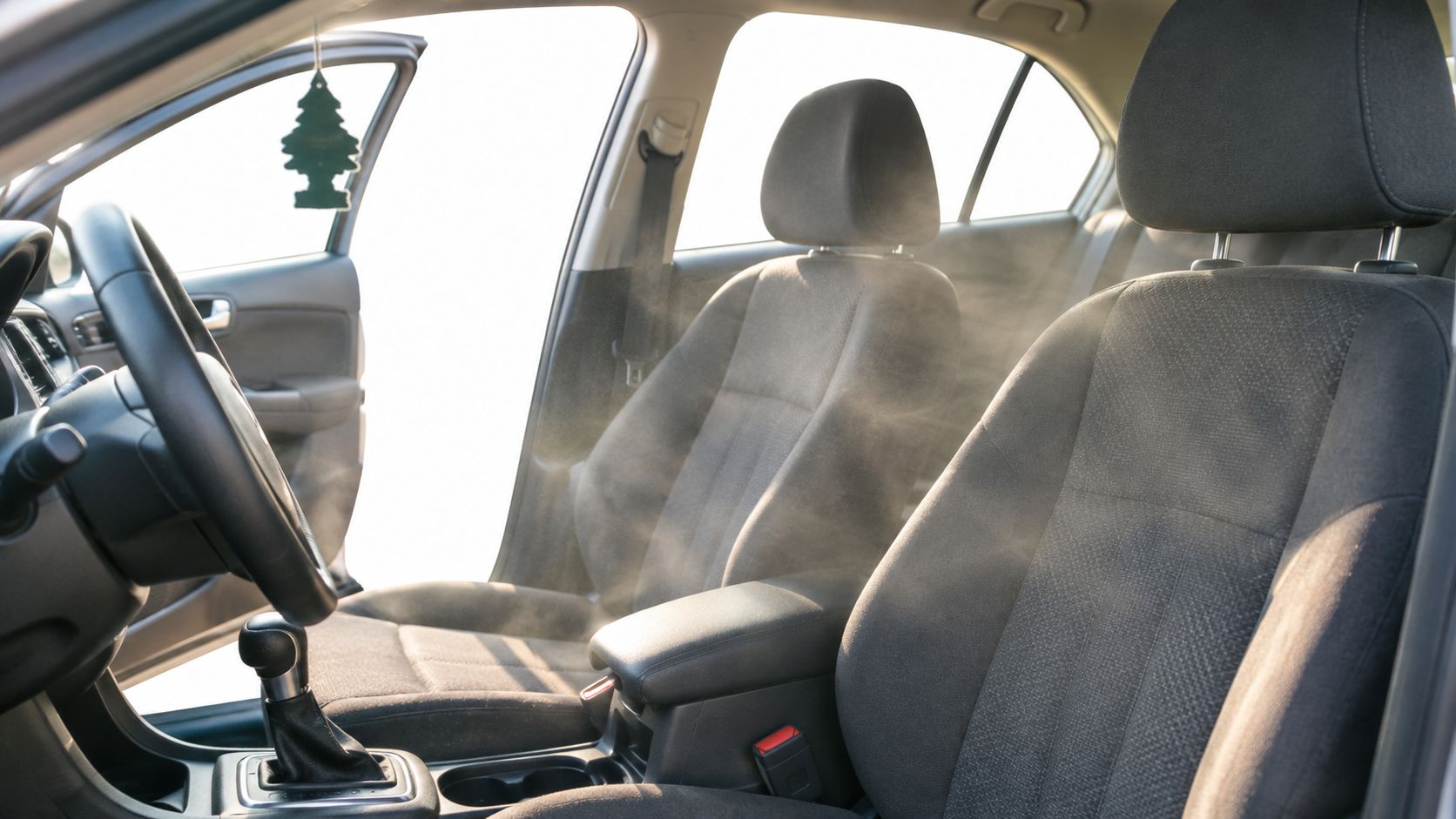
The classic setup goes like this. Someone grabs a vent clip, a hanging tree, maybe one of those aerosol “new car” bombs, and gives the interior a quick once-over. The cabin smells better for the drive home. By the next morning, the freshener has mixed with the original stink and created a new problem. Now the car smells like vanilla mildew. Nobody asked for that.
Odor lives in materials, not just in the air
Bad smells don't float politely in the cabin waiting to be scented over. They settle into carpet fibres, seat foam, under-mat padding, headliners, seat tracks, cup holders, trunk liners, and HVAC pathways. If the source is still sitting there, the cabin keeps reloading the smell every time heat, humidity, or airflow wakes it up.
Ontario makes this worse. Winter slush gets dragged in and trapped under rubber mats. Spring and autumn bring dampness. Summer heat cooks whatever residue was left behind. That cycle is why a car can seem fine one week and funky the next.
Practical rule: If the smell disappears only when a fragrance is strongest, you didn't remove the odour. You just crowded it out for a bit.
The GTA climate makes “quick fixes” fail
A lot of interiors don't need more scent. They need to dry properly.
A Canadian source discussing mildew in vehicles points to Health Canada guidance that indoor relative humidity should stay below 50% in summer and 30% in winter, which matters in Ontario's wet, freeze-thaw conditions where mats, trunk wells, and carpet padding can stay damp long enough for mildew to return (guidance context). That's why the nose test alone isn't enough. A car can smell “not too bad” while still holding damp material underneath.
If you're also trying to cut down on scent-heavy products at home and in the car, it helps to find safer home products instead of piling synthetic fragrance onto an enclosed space.
What actually changes the result
Lasting results come from a boring but effective sequence:
- Find the source: Wet carpet, vent funk, smoke film, old food, pet residue.
- Remove the contamination: Vacuuming, agitation, extraction, wipe-downs, vent cleaning.
- Dry the interior fully: No shortcuts here.
- Use deodorizing tools last: Not first.
That's the difference between “smells nice today” and “doesn't embarrass you next week.”
Find the Source Before You Spray Anything
If you spray first, you blindfold yourself. Every fragrance product muddies the evidence, and then you're guessing whether the smell is coming from the vents, the carpet, the trunk, or that mystery spill your kid swore never happened.
Start with a quiet car and an unscented nose. No joke. Don't inspect right after driving with the heat blasting or after someone's blasted body spray in the cabin.
Do a drying diagnostic first
The most overlooked part of car interior odor removal is checking for hidden moisture before you touch a cleaner. Canadian guidance on vehicle off-gassing also points to the first six months of ownership as a critical period for ventilation, with IQAir Canada advising owners to keep car interiors well ventilated during that window (IQAir Canada guidance). For newer vehicles, that means some smell may be chemistry and trapped cabin air. For older daily drivers, it often means moisture and residue are stacking on top of that.
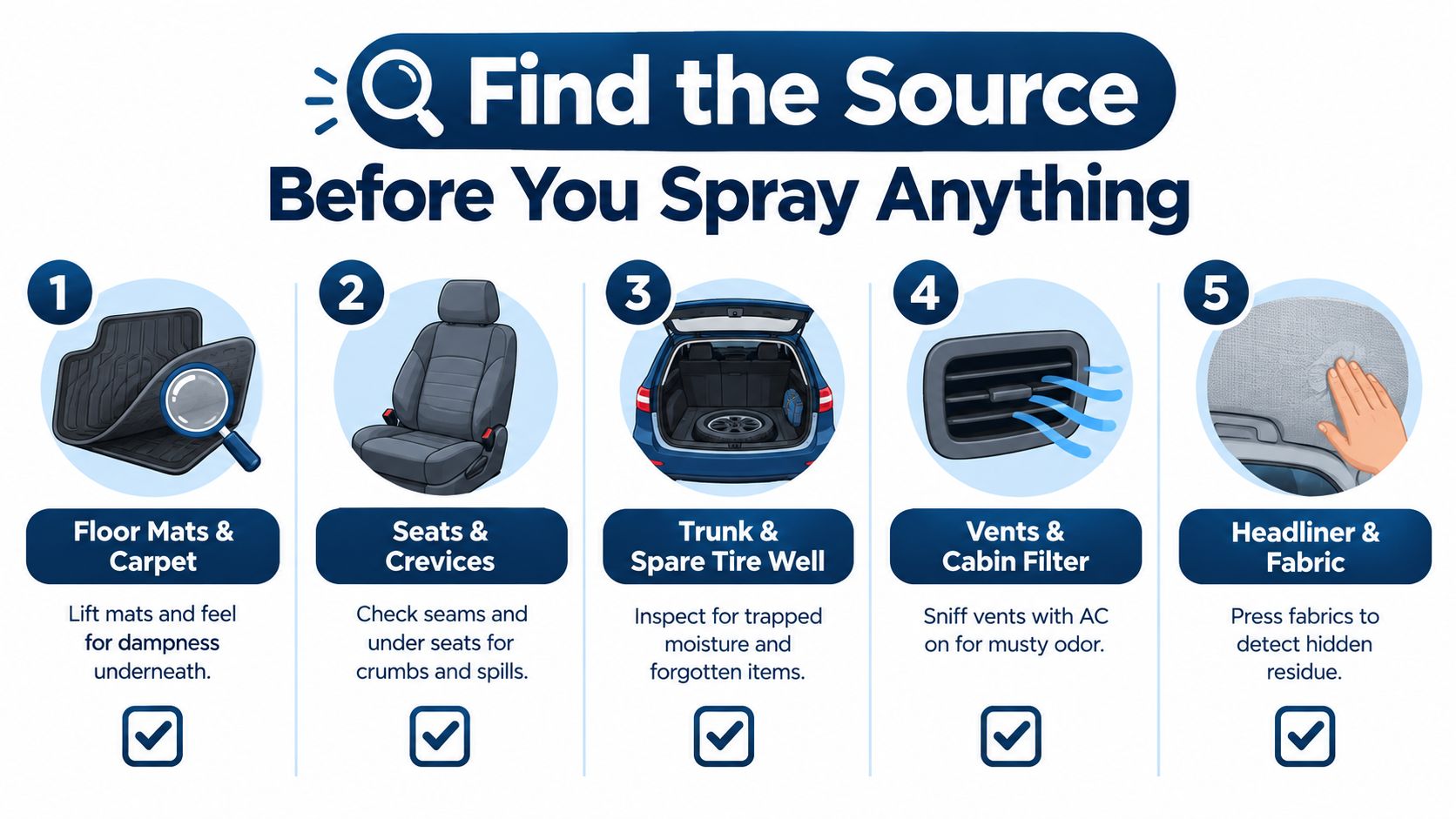
Run this quick sweep:
- Lift the mats: Feel underneath, not just the top. Rubber mats hide wet carpet very well.
- Press the carpet with your knuckles: Especially front footwells and rear floor humps.
- Check under the seats: Old fries, leaked coffee, pet accidents, damp socks. The usual hall of shame.
- Open the trunk and spare-tire well: This area holds water and mildew.
- Touch fabric, then smell your hand: Headliners and seat edges tell the truth fast.
Use the fan-on fan-off sniff test
Turn the car on. Leave the cabin closed for a minute.
Then test in two phases:
- Fan off: Smell the cabin air as-is.
- Fan on with A/C, then heat: If the smell gets stronger through the vents, the HVAC path is involved.
A musty vent smell usually hits fast and feels sharper. Spill-related odours often sit lower in the cabin and get stronger when you lean near the floor, seat base, or trunk liner.
If the smell appears only when the blower runs, don't waste your first hour shampooing the entire interior. Check the cabin filter area and vent path.
Build a source map, not a shopping cart
Buying products too early is a common mistake. Better move is to decide what kind of smell you have and where it lives.
A simple source map looks like this:
| Area | What you notice | What it suggests |
|---|---|---|
| Driver footwell | Damp under mat | Tracked-in moisture or leak |
| Rear seat crease | Sour spill smell | Drink or food residue |
| Vents | Musty burst on startup | HVAC contamination |
| Trunk well | Mildew or stale dampness | Water intrusion or trapped wet items |
| Headliner | Smoke or sweet stale smell | Residue embedded overhead |
Once you know where the odour starts, the cleaning makes sense. Before that, spraying anything is just expensive optimism.
The Deep Clean That Actually Removes Odor
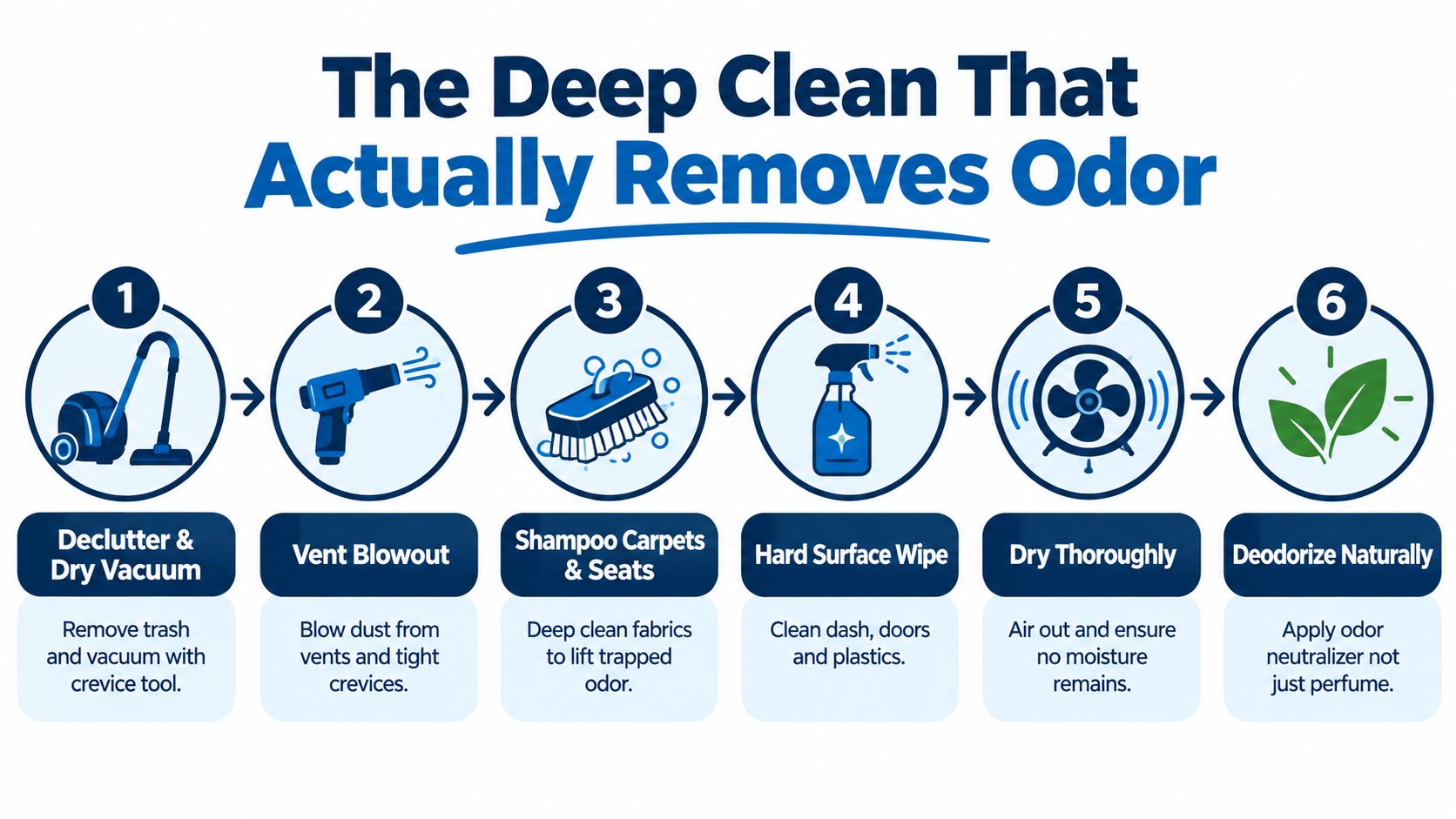
A proper odour job is less glamorous than people expect. It's not one miracle bottle. It's a sequence. Remove loose soil. Open tight areas. Clean the surfaces that hold residue. Extract what soaked in. Dry everything thoroughly. Then, and only then, use a neutralizer if it still needs one.
That order matters because trapped dirt and moisture block everything you apply after.
Start dry before anything wet
The first move is decluttering and dry vacuuming with a crevice tool and soft brush. Get every crumb, pet hair tuft, salt chunk, and loose dirt particle out before shampoo ever shows up. Wet-cleaning over loose debris turns the interior into soup.
Compressed air or a detailing blower helps pop debris out of vents, seat rails, stitching, cup-holder seams, and that cursed gap between the seat and centre console where all snacks go to die.
Use this sequence:
- Clear the cabin fully: Remove mats, trash, bottles, receipts, and child-seat crumbs.
- Vacuum in passes: Front to back, then side to side, then crevices.
- Blow out tight spots: Vents, seams, seat rails, console edges, buckle anchors.
Extraction beats wiping every time
For cloth seats and carpet, the goal is to lift and remove the contamination, not just spread cleaner around. A dedicated upholstery shampoo or interior fabric cleaner works well when agitated with a soft or medium brush, followed by extraction.
Don't flood the foam underneath. That's where DIY jobs go wrong. Too much water leaves the pad damp, and then the smell returns with interest.
Good practice looks like this:
- Apply cleaner lightly: Enough to work the fabric, not soak the cushion.
- Let it dwell briefly: Give the product a moment to break residue.
- Agitate where needed: Seat seams, armrests, entry points, and stained carpet patches.
- Extract promptly: Pull out the moisture and suspended grime before it sinks deeper.
Drying is part of cleaning. If the seat or carpet stays damp, the job isn't finished.
Hard surfaces and leather need their own approach
Smoke film, food grease, and body oils don't only live in fabric. They cling to dash plastics, steering wheels, shifters, door pulls, leather seats, and touchpoints.
Use an interior all-purpose cleaner suited for automotive surfaces on plastics and vinyl. For leather, use a proper leather cleaner with a soft brush or microfibre applicator, then wipe dry. The point is to strip the residue without leaving the surface sticky.
Pay extra attention to:
- Steering wheel and shifter: Often the grimiest touchpoints.
- Cup holders and console lids: Hidden sticky residue factories.
- Door armrests and handles: High-contact areas that hold odour.
- Headliner edges: Light cleaning only. Don't soak them.
If you want extra reading on source-first cleanup in enclosed spaces, some broad odor remediation tips are useful because they reinforce the same principle. Remove the contamination before trying to neutralize the smell.
Drying and air management decide whether it lasts
Once the interior is cleaned, drying becomes the make-or-break stage. Open doors if weather allows. Use airflow. Remove mats to dry separately. Don't trap moisture back inside with the windows up right away.
The cabin-air filter also deserves a look when smells persist through the vents. A filthy filter or contaminated vent path can keep recirculating stale air into a freshly cleaned cabin.
One local option for this kind of work is Nanak Car Wash, which offers appointment detailing that can include interior shampooing, vent and crevice blowout, leather deep cleaning, and related interior cleaning steps. That's useful when the smell is tied to salt, wet carpets, or a rideshare interior that hasn't had a proper reset in a while.
Matching the Fix to Smoke Mildew Pet and Food Smells
Not all bad smells deserve the same treatment. Smoke isn't mildew. Wet-dog odour isn't spilled milk. If you use the wrong fix, you either waste time or make the cabin smell like a confused candle shop.
Which fix fits your smell
| Odor Type | Likely Source | Targeted Fix | Common Mistake to Avoid |
|---|---|---|---|
| Smoke | Residue on headliner, plastics, seats, vents, cabin filter area | Full residue cleaning, fabric treatment, HVAC check, targeted deodorizing after cleaning | Using ozone first on a dirty interior |
| Mildew | Damp carpet, trunk well, under-mat padding, leak-related moisture, vent dampness | Find and stop moisture source, sanitize affected materials, dry thoroughly, inspect HVAC path | Spraying fragrance over wet carpet or ignoring the leak |
| Pet | Hair, dander, saliva, accidents in fabric and seams | Hair removal, enzyme-based treatment where appropriate, extraction of affected areas | Shampooing without removing embedded hair first |
| Food | Spills under seats, grease in fabric, crumbs in crevices, spoiled items in trunk | Spot locate, degrease hard surfaces, shampoo and extract fabric, clean seat tracks and under-seat areas | Cleaning only visible stains and skipping hidden spill paths |
Smoke needs residue removal, not hope
Smoke is one of the most stubborn odours because it leaves a film, not just a smell. It settles overhead, too, which is why the headliner often keeps tattling after everything else looks clean.
A Toronto-area detailing source notes that standalone ozone can suit an otherwise clean vehicle with a light lingering odour, while heavier or long-term smoke odours may need full restoration in the $400 to $950 range, because ozone alone won't clear residue in seats, the headliner, and the A/C system. The same local benchmark also lists standalone ozone pricing at $149, with bundled add-on ozone deodorizing at $50 to $100, and another Toronto source lists standalone ozone at $80 (GTA odour-removal pricing and process context).
That's the big trade-off. Ozone has a place. Dirty residue does not care.
Mildew is a moisture problem wearing an odour costume
Mildew smell often fools people because it can fade during a dry spell. Then rain, snow, or a humid stretch wakes it up again.
Focus on the cause:
- Wet mats and carpet backing
- Trunk or spare-tire well moisture
- Door or window seal issues
- Vent-related damp smell
If the source stays wet, the smell usually returns. No spray can argue with a hidden puddle.
A mildew smell that keeps returning after “deep cleaning” usually means the cleaning was real, but the drying or leak diagnosis wasn't.
Pet and food smells need physical removal first
Pet odour often rides in with hair, dander, and accidents. If there's loads of embedded fur, remove that before applying cleaners or you'll gum everything up. For readers dealing with the fur side of the problem, this guide to pet hair cleanup for car interiors is handy because it focuses on the tedious part many skip.
Food smells are more specific. Sour dairy, coffee, takeout grease, and sugary drinks all behave differently, but they share one rule. You have to find the spill path. The visible stain on top is often the least important part. The smell may be in the seat seam, under the seat bracket, or pooled under the carpet edge.
When to Book Professional Odor Removal in the GTA
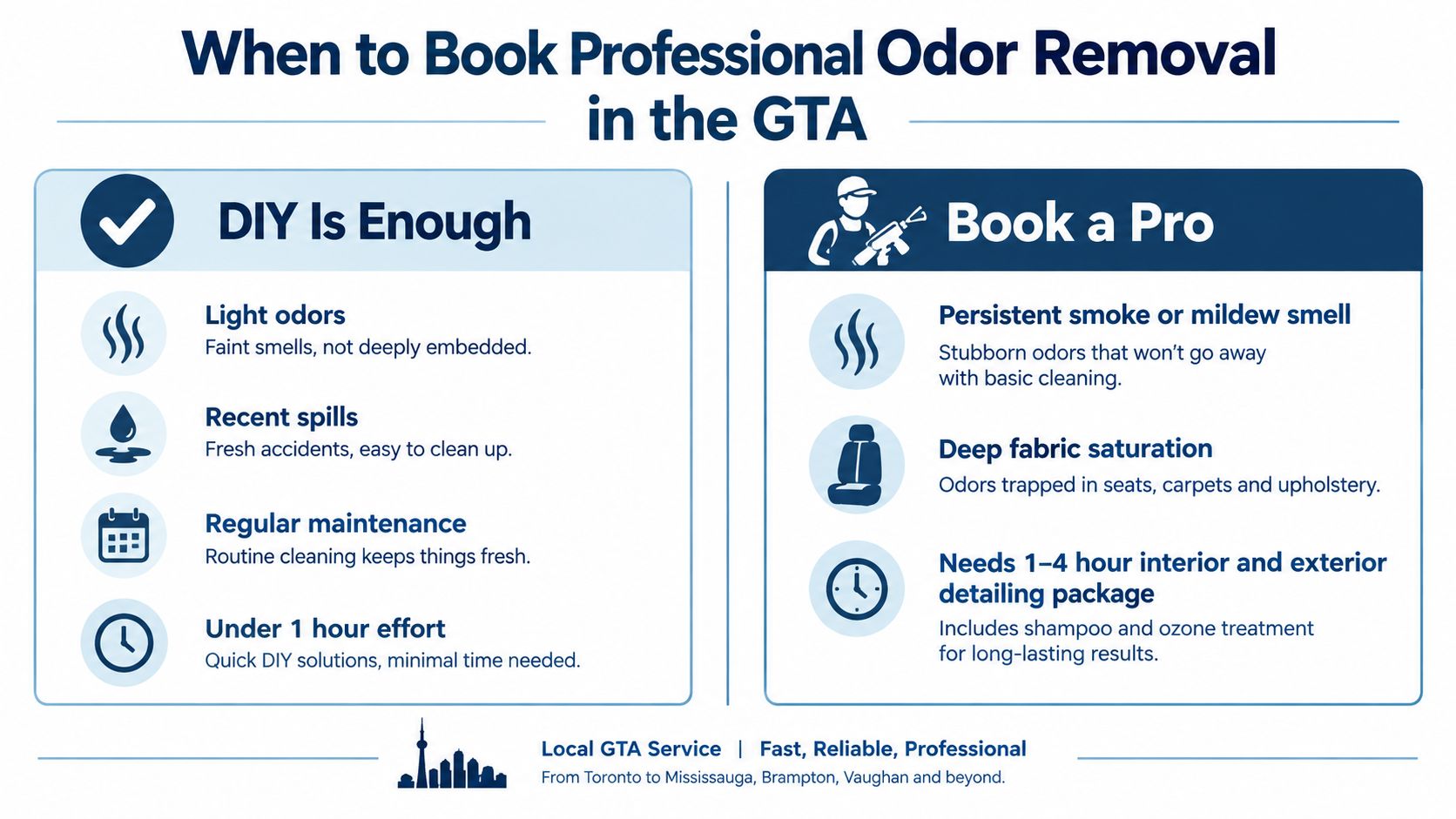
DIY works when the smell is light, recent, and easy to locate. If you know a coffee spilled yesterday, or the dog ride left a mild smell in an otherwise clean cabin, you can often sort it out yourself with vacuuming, fabric cleaning, and proper drying.
The line gets crossed when the odour is persistent, spread through multiple materials, or tied to moisture you can't fully access. That's when a pro saves time and usually avoids the “I cleaned it twice and somehow made it worse” stage.
DIY is enough when the problem is still shallow
You're still in DIY territory if most of these are true:
- The smell started recently: A fresh spill or one bad weather week.
- You can point to the source: One seat, one mat area, one trunk issue.
- The vents smell normal: No musty blast when the fan kicks on.
- The fabric isn't saturated: Dampness is minor and manageable.
In those cases, a careful interior reset can do the trick. Vacuum, agitate, extract lightly, and dry thoroughly.
Book a pro when the smell keeps coming back
A professional job makes more sense when:
- The odour returns after cleaning
- Smoke has lived in the car for a long time
- Mildew points to a leak or hidden wet padding
- The HVAC system seems involved
- The car is a rideshare or delivery vehicle that can't sit apart for trial-and-error cleaning
Local package structure matters here. Nanak Car Wash's appointment detailing covers interior and exterior work and typically runs 1 to 4 hours, with services such as carpet and seat shampooing, salt and stain removal, vent and crevice blowout, and leather deep cleaning. That's the kind of package that makes sense when a basic wash and vacuum won't touch what's embedded.
Ozone is a tool, not a shortcut
The common mistake in GTA odour work is treating ozone like a magical first step. It isn't. If the interior is still dirty, or the source is active moisture, ozone won't solve the problem.
Use plain judgment:
- Dirty smoke car: Clean first, then consider odour treatment.
- Wet mildew car: Fix leak and dry materials first.
- Vent-related smell: Inspect filter and airflow path before bombing the cabin with scent.
If you've already tried the obvious and the odour still hangs around, professional car interior odor removal is less about luxury and more about finally tackling the actual source.
Keep Your Car Fresh Between Details
Once the smell is gone, the mission changes. Now you're preventing the cabin from turning back into a damp snack drawer on wheels.
The easiest way to keep a car fresh is not heroic deep cleaning every weekend. It's a few repeatable habits that stop residue and moisture from settling in.
Keep the cabin dry on purpose
Ontario drivers know the routine. Snow, slush, rain, soccer gear, gym bags, wet umbrellas, coffee lids with no loyalty to physics.
Do these consistently:
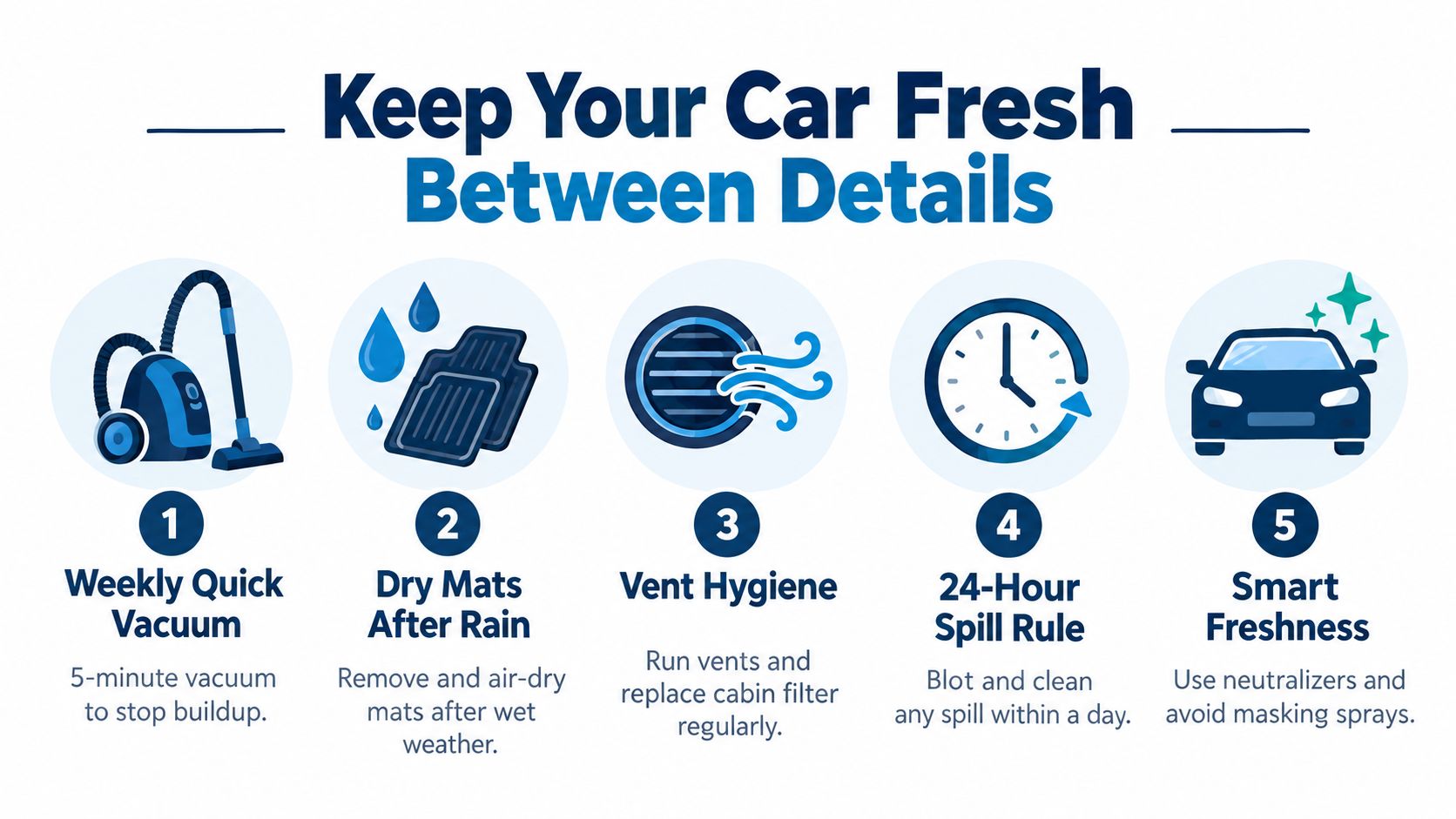
- Pull mats out after wet weather: Let them air-dry instead of trapping moisture over carpet.
- Check the trunk well now and then: Especially after storms or a wash.
- Crack the windows when safe and practical: Ventilation helps when the cabin has been damp.
- Don't leave wet gear overnight: Hockey bags are not decorative.
Small resets beat big rescues
A five-minute vacuum and wipe-down does more than people think when done regularly. It stops crumbs, salts, oils, and pet hair from working their way deeper into fabric and crevices.
A good low-effort routine looks like this:
| Habit | Why it matters |
|---|---|
| Quick vacuum | Stops debris from becoming damp residue |
| Wipe touchpoints | Removes oils and food film from hard surfaces |
| Clean spills within a day | Reduces staining and sour smell buildup |
| Run the vents regularly | Helps keep stale air from sitting in the system |
| Replace or inspect cabin filter when needed | Cuts recirculated stale odour |
The cleanest-smelling cars aren't always detailed more aggressively. Their owners just don't let small messes age.
Fresh is better than fragrant
Try to resist the urge to make the car smell like a tropical dessert. Neutral is better. Clean fabric, dry mats, clear vents, and a residue-free cabin smell better than any hanging accessory ever made.
If you wash often, using memberships, prepaid bundles, or a regular cleaning schedule can help you stay ahead of buildup instead of waiting until the interior becomes a project. That matters even more for rideshare and delivery drivers, where the cabin never really gets a day off.
A fresh car isn't one that smells strongest. It's one that smells like almost nothing at all. That's the win.
If your car still smells damp, smoky, sour, or just plain tired after the usual sprays and wipe-downs, Nanak Car Wash offers interior cleaning and appointment detailing that can tackle culprits like residue in fabric, salt-heavy carpets, vent debris, and hard-to-reach grime. If you want a proper reset instead of another temporary cover-up, book a service or check your nearest location at Nanak Car Wash.

 6600 Finch Ave W, Etobicoke, ON M9V 3Z6
 647-703-8515
 MON – SUN 8 AM to 7 PM