
Car rust proofing paint is a protective barrier coating applied to metal surfaces that blocks moisture and road salt from reaching bare steel. In Ontario, it's considered essential rather than optional because the province's winter salt load keeps vehicles in a corrosion cycle for months at a time.
You can't always see the damage starting. By the time orange bubbles show up around a wheel arch or under a rocker panel, the metal has usually been dealing with chloride spray for a while.
Table of Contents
- Why Ontario Roads Are a Rust Maker's Dream
- How Car Rust Proofing Paint Actually Works
- Comparing Rust Protection Methods for Ontario Conditions
- DIY Rust Proofing vs Professional Application
- Making the Right Choice for Your Ontario Driving Profile
- Protecting Your Vehicle Before the Next Winter
Why Ontario Roads Are a Rust Maker's Dream
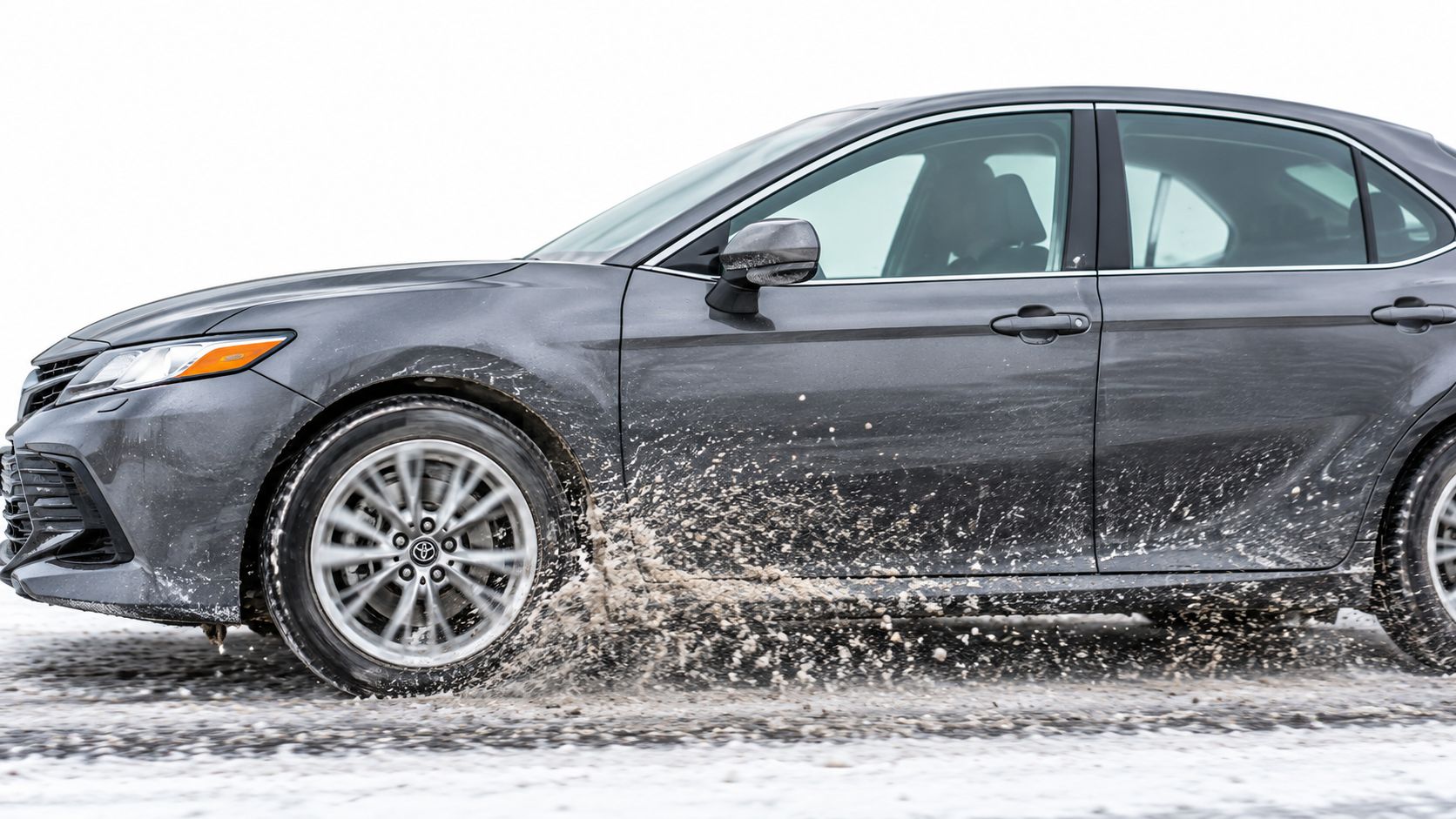
The first sign is usually not a hole, it's the soundtrack. Gravel spits off the wheel wells, slush hisses along the floorpan, and every plow truck leaves a grey-white film that dries on the body, the frame, and the hidden seams underneath. That film is where the problem starts, because Ontario roads don't just get wet in winter, they get salted hard and often.
Ontario applies roughly 1.5 to 3 million tonnes of road salt each winter, and Toronto alone uses about 130,000 to 150,000 tonnes annually (Ontario road-salt and corrosion overview). In a Transportation Research Board corrosion study, Toronto recorded 5,108 mg/dm² of atmospheric corrosion over a 19-month exposure period, placing it among the highest-corrosion locations in the survey (TRB corrosion study). That's not a cosmetic headache, it's a metal-loss problem.
The hidden part of the car takes the beating
The top half of a vehicle gets washed, waxed, and noticed. The bottom half gets sprayed with salty slush, gritty runoff, and meltwater that keeps finding seams, brackets, and fastener edges. That's why rust proofing matters so much in the GTA, the corrosion starts where most owners never look.
Practical rule: if salt can sit there after the drive, rust can start there too.
Ontario's winter pattern makes that worse because the exposure isn't a one-off storm. It repeats for months, which gives chloride more chances to penetrate chips, joints, and worn coatings. In a milder climate, a protection layer can feel like a nice extra. In Ontario, it's a defensive layer against a predictable attack.
Why the rust shows up late
Rust doesn't announce itself where the spray lands first. It shows up later, often around seams, underbody joints, brake-line areas, and panel edges where moisture lingers and salt keeps working after the road has dried. That's why a car can look fine for a while and still be losing metal underneath.
The important lesson is simple. Ontario corrosion is not random, and it's not bad luck. It's a regional maintenance issue created by salt, moisture, and repeated freeze-thaw exposure, which is exactly why car rust proofing paint is treated as a serious ownership decision here instead of a vanity upgrade.
How Car Rust Proofing Paint Actually Works
Rust is not just “metal getting old”. It's an electrochemical process, which means water, oxygen, and salt help steel lose material through a reaction that keeps going as long as the conditions stay wet and conductive. In Ontario winters, chloride from road salt keeps that process easier to start and harder to stop.
A protective coating works by interrupting that chain. The simplest way to think about car rust proofing paint is as a raincoat for the car's metal skeleton. It keeps water and salt from touching bare steel directly, so the reaction has a much harder time getting started.
Barrier protection comes first
Barrier protection is the main job. The coating forms a film over exposed metal, seams, and vulnerable edges, then slows or blocks moisture from reaching the substrate. That matters because the most aggressive corrosion in Ontario happens in splash zones where slush and brine keep getting thrown back onto the car.
A coating does its best work before the first bubble appears, not after.
There's also a second layer of value in good protection systems. Some formulations are designed to stay flexible, so they move with the metal instead of cracking when the vehicle flexes over winter potholes and cold-temperature expansion. That flexibility matters because a brittle skin can fail at the edges, and edges are where corrosion likes to begin.
What it can and can't do
Rust proofing paint can slow the spread of corrosion and reduce new attack on clean metal, but it can't magically erase existing rust. If the steel is already flaking or heavily pitted, the coating has less solid material to bond to. That's why surface prep matters so much.
A proper application usually depends on clean, dry metal, because adhesion is the whole game. If moisture stays trapped underneath, the coating can seal in a problem instead of preventing one. That's why good prep is not a cosmetic detail, it's the difference between protection and false confidence.
The other concept people hear is electrochemical inhibition. In plain language, some products help slow the reaction that turns steel into rust, but they still work best as part of a barrier system. They're not a cure for chloride exposure, they're a way to make the environment around the steel less friendly to corrosion.
Comparing Rust Protection Methods for Ontario Conditions
Ontario drivers usually hear about four broad approaches, and they're not interchangeable. Each one fights rust in a different place, which means the right choice depends on where your vehicle gets hit hardest, how long you plan to keep it, and how much road salt it sees every winter.
| Method | Protection Mechanism | Durability | Best For | Cost Range |
|---|---|---|---|---|
| Rust proofing paint | Forms a barrier on exposed metal and seams | Good when applied and maintained properly | Clean metal, visible panels, lower body areas | Varies by product and application |
| Underbody spray-on sealants | Thick coating for splash zones and the underside | Strong in high-spray areas if coverage is complete | Daily drivers facing salted roads | Varies by vehicle and coverage |
| Cavity wax injections | Creeps into enclosed spaces and sealed cavities | Useful in hidden areas that hold moisture | Frame rails, rocker panels, doors | Varies by access and vehicle design |
| Electronic rust prevention modules | Claims to reduce corrosion through electrical means | Mixed, and hard to verify visually | Drivers curious about low-intervention options | Varies widely |
What works where
Rust proofing paint does its best work where a visible barrier can stay intact. Underbody sealants are more useful for the blast zone under the car, where salt spray and gravel keep hammering the same surfaces. Cavity wax is different again, because it's meant to creep into places hands can't reach, like enclosed sections that trap moisture after a thaw.
Electronic modules are the odd one out. They don't give you the same direct physical barrier that a coating does, so they're harder to judge in real-world Ontario use. If a treatment doesn't keep salt-water off the steel, it has a tougher job to prove.
Matching the method to the vehicle
For a newer car in good shape, a barrier coating plus focused underbody protection makes sense because the goal is prevention. For an older vehicle that already has hidden cavities holding moisture, cavity wax can be a smart add-on. For work vehicles and commuter cars that get blasted every day, underbody coverage usually matters more than a perfect-looking finish on visible panels.
The Canadian corrosion research referenced earlier shows why this matters. Untreated vehicles showed 6.8 times more visible body rust and 3.6 times more underbody corrosion than treated vehicles in the cited research lineage (Canadian rust-proofing summary). That doesn't mean one product fixes everything. It means coverage, preparation, and repeat protection are doing real work.
The strongest setup is the one that reaches the places salt keeps hiding.
DIY Rust Proofing vs Professional Application
A lot of Ontario drivers think the choice is really about saving money. It's more about whether you can prep and cover the car properly. Rust protection fails most often because someone rushed the surface prep, sprayed over damp metal, or missed the areas that matter most.
The DIY route
DIY can work if the vehicle is clean, dry, and simple enough for you to access safely. You need enough time to wash away salt residue, let the underbody dry fully, and get into seams, fastener edges, and other awkward spots without leaving gaps. If you skip that part, you're coating dirt and moisture, not protecting steel.
The skill ceiling shows up fast. Many homeowners can handle visible touch-up areas, but underbody work is messy, awkward, and easy to underdo. Overspray, thin coverage, and missed edges are common mistakes, and each one leaves a weak point for chloride exposure.
What professionals do differently
Professional shops usually bring better access, better spray equipment, and a more thorough prep process. That matters because the best protection is the one that gets into the places your eyes don't naturally inspect, especially under the car and around hidden seams. A trained tech also knows where a coating should be thin, where it should be heavier, and where another treatment type is smarter.
Good prep beats thick product every time.
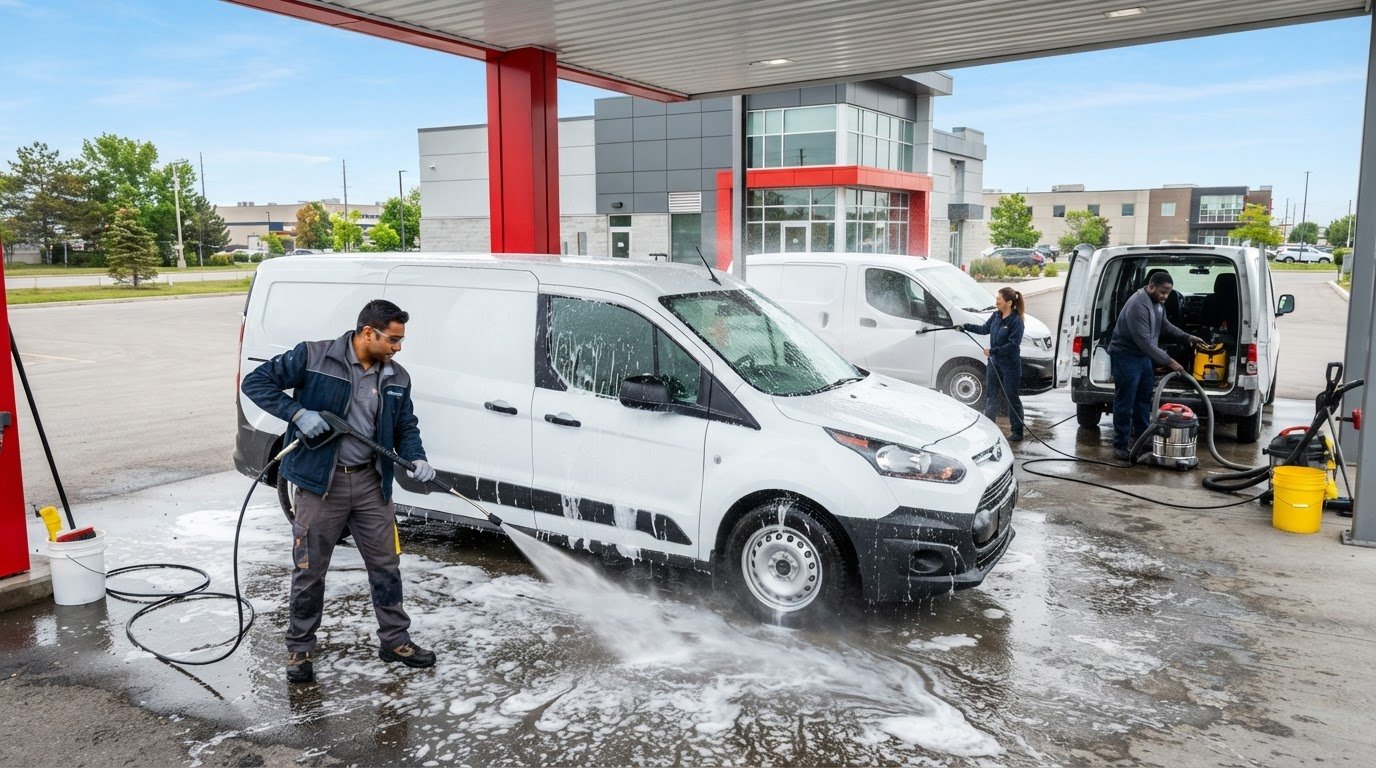
Professional rust proofing is more than a convenience here. It provides controlled application rather than guesswork. For a local example, Nanak Car Wash offers rust proofing as a dedicated service alongside wash and detailing options, which is useful for drivers who want the same place to handle cleaning and protection.
Common mistakes to avoid
- Applying over moisture: trapped water weakens adhesion and can seal corrosion in place.
- Skipping cleaning: salt residue left behind keeps attacking the metal under the film.
- Missing seams and edges: those are the first places corrosion starts to spread.
- Ignoring existing rust: coatings protect best on stable surfaces, not peeling metal.
The practical decision is simple. DIY can be fine for small touch-up work and owners who are patient with prep. Professional application makes more sense if your vehicle sees heavy winter use, already has hidden corrosion risk, or you want coverage you don't have to second-guess.
Making the Right Choice for Your Ontario Driving Profile
Different drivers need different protection, because not every vehicle faces the same kind of abuse. A commuter in the GTA, a delivery driver on salted arterial roads, and a classic-car owner storing a summer-only ride are solving different problems even if the product names sound similar.
Four profiles, four priorities
- GTA daily commuter: Focus on full underbody coverage and a barrier coating on exposed steel. This is the driver who sees constant spray, repeated thawing, and long stretches of winter exposure.
- Delivery or ride-share driver: Prioritise durability and reapplication discipline. High mileage means more road film, more splash, and more chances for salt to stay on the vehicle longer than it should.
- Fleet manager: Standardise the process. The goal is not just protection on one vehicle, but repeatable application across multiple units so corrosion doesn't become a slow budget leak.
- Classic car enthusiast: Choose the least invasive approach that preserves the car's condition and makes future inspection easier. Preservation matters more than appearance alone.
A simple way to decide
Start with two questions. First, how much winter road exposure does the car get. Second, how much do you need to preserve the vehicle's long-term value or structural integrity.
If the answer to both is high, go for protection. If the vehicle is already older but still sound, combine cleaning, inspection, and targeted coating rather than waiting for visible rust to spread. If the car is a low-use collector piece, the plan should protect without creating future headaches for restoration work.
Rust control is really risk control. Toronto and Ontario have already shown that their roads are harsh enough to justify that mindset, and the untreated-versus-treated comparisons make the payoff clear enough for most drivers.
Protecting Your Vehicle Before the Next Winter
The smartest timing is before the next salt season starts, not after you've already seen another winter's worth of slush drying on the underbody. That gives the coating a clean surface to bond to and a full season of protection before chloride exposure ramps up again.
A practical seasonal rhythm looks like this. Inspect in late summer or early autumn, clean and prep before the first major cold snap, apply protection before roads stay salty, and recheck after winter if the car has seen heavy use. If you've already driven a few winters without protection, don't treat that as a reason to wait. It's a reason to inspect sooner.
For readers who also want a sense of how other vehicle surfaces take seasonal abuse, the alloy wheel care guide is a useful companion read because wheels and underbody parts often suffer from the same winter chemistry.
Ontario isn't a place where rust proofing is a luxury purchase. It's a sensible response to a climate that keeps feeding steel chloride and moisture at the same time. If you want a local option that combines wash, detail, and rust protection in one stop, Nanak Car Wash offers that kind of service for GTA drivers who'd rather handle prevention before the next storm hits.
If you want rust protection handled by a local team that understands GTA winter wear, visit Nanak Car Wash for rust proofing, wash, and detailing options. They offer practical services for drivers who want to reduce salt buildup before corrosion gets started.

 6600 Finch Ave W, Etobicoke, ON M9V 3Z6
 647-703-8515
 MON – SUN 8 AM to 7 PM