

Your car looked fine in the driveway. Then the sun hit the lower doors and you saw it: that chalky grey stripe, the crust behind the wheels, the salty grime packed into every seam like winter has claimed permanent tenancy. That's a GTA classic. One run down the 401, a slushy side street in Etobicoke, and your paint, wheel wells, and underbody are wearing half the region's road treatment.
Winter washing isn't about vanity. It's about damage control. Around Toronto, the problem isn't just snow. It's heavy salt use, quick temperature swings, and that nasty mix of grit and black slush that turns a careless wash into a scratch session if you rush it.
If you want to know how to wash car in winter without freezing your doors shut or grinding road grime into the paint, use a plan. Timing matters. Soap choice matters. Drying matters even more than most drivers realise.
Table of Contents
- Your Winter Car Wash Battle Plan
- Washing Without Wrecking Your Paint
- The Post-Wash Lockdown Drying and Freeze-Proofing
- Winter Car Wash Blunders and How to Dodge Them
- Should You Go Pro The Nanak Car Wash Advantage
- Winter Car Washing FAQs
Your Winter Car Wash Battle Plan
Salt does damage long before rust becomes visible. It creeps into the underbody, sticks to the wheel wells, and sits in seams where moisture hangs around. In Southern Ontario, including the GTA, most experts and automotive protection guides recommend washing your car every 10 days during winter to prevent rust and corrosion from road salt buildup, according to Ontario winter car wash guidance from Nanak Car Wash.
Start with the real enemy
A winter wash isn't a beauty treatment. It's a decontamination job.
The dirt you see is only half the problem. The worst of it is the salty sludge you don't notice at first glance: behind the mud flaps, inside the wheel arches, along the rocker panels, and underneath the car where nobody looks until spring reveals the bill.
Practical rule: If the car looks “not that bad” but you've driven through slush, it's probably dirtier underneath than it appears on top.
That's why random washing doesn't cut it. You want a repeatable rhythm, not a guilt-based one. In the GTA, that usually means planning around weather windows so you can remove buildup before it bakes into a crust.
Choose the day before you touch the hose
Good winter washing starts with restraint. Don't wash just because the car is filthy. Wash because conditions are workable.
The safest DIY window is a calm day around freezing, not a brutal cold snap and not a windy afternoon that turns rinse water into instant ice in all the wrong places. A sheltered driveway or garage bay is better than an exposed open lot where water blows back at you and onto the car.
Use this quick pre-wash check:
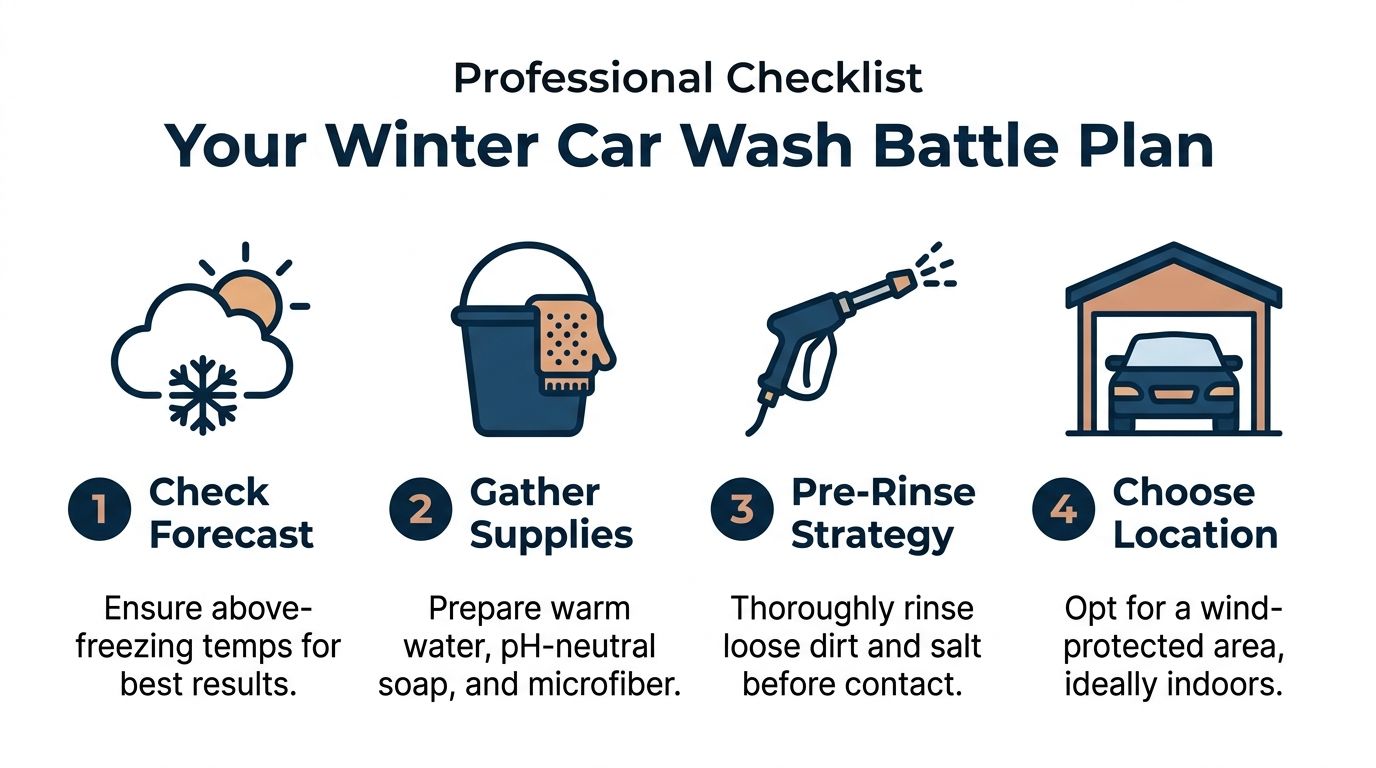
- Check the forecast: Aim for a narrow weather window where you can wash and dry without surfaces icing over immediately.
- Pick a protected spot: Wind makes everything worse. It cools panels faster, chills your hands, and leaves water where you don't want it.
- Know your limits: If you can't dry seals, jambs, and hinges properly, skip the full DIY wash that day.
- Plan the route after: Don't finish with a perfect wash and then blast through a fresh slush lane on the way to groceries.
Build a winter wash kit that actually works
Forget the lazy-bin approach of one old sponge and whatever soap is under the sink. Winter grime is abrasive.
Keep these on hand:
- Two buckets with grit guards: One for shampoo, one for rinse water. This keeps grit from making repeat appearances on your mitt.
- A proper wash mitt: Microfibre or a quality lambswool-style mitt works far better than a tired kitchen sponge.
- pH-balanced car shampoo: Save the chemistry for the next section, but this is essential.
- Dedicated drying towels: Keep separate towels for paint, wheels, and door jambs.
- Wheel tools: A wheel woolly-style brush reaches tight spoke areas better than a flat mitt.
- Rubber gloves and boots: Not glamorous. Very smart.
Washing Without Wrecking Your Paint
Winter paint damage usually happens during the “cleaning” part. Drivers see grime, grab a mitt, and start scrubbing. That's exactly how you grind salt grit into the finish.
Rinse first or regret it later
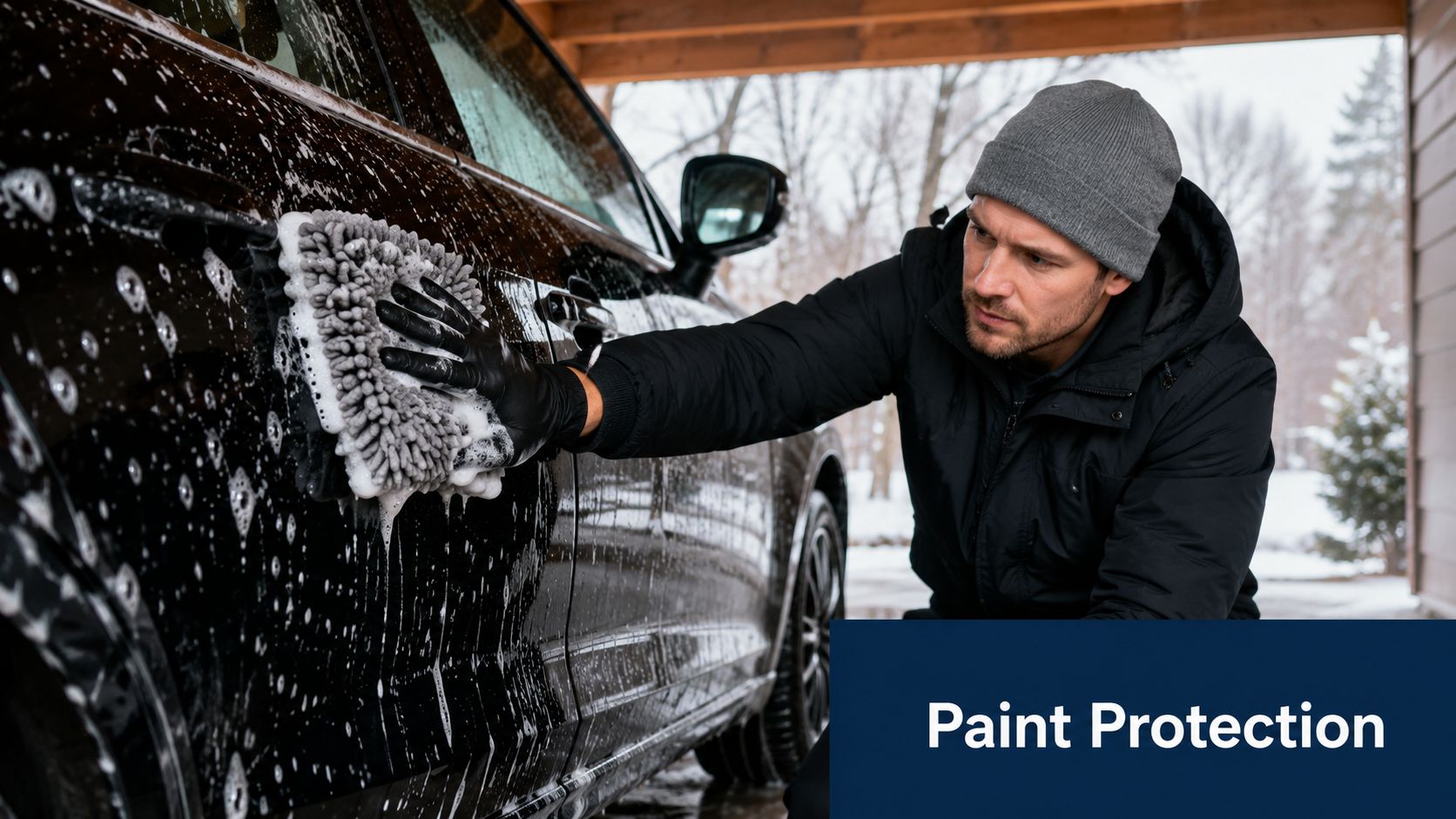
In the GTA, road salt alkalinity is significantly high, so expert methodology calls for a pH-balanced car shampoo in the pH 7 to 8 range to neutralize salt deposits before scrubbing, as noted in Silver Star Car Wash's winter car wash tips for Toronto drivers. That same guidance stresses a high-pressure pre-rinse aimed at the undercarriage, wheel wells, and door sills before any soap touches the paint.
That pre-rinse is where the job is won.
Start low and dirty. Hit the wheel arches, rocker panels, lower bumpers, and behind the wheels first. Then work upward. If you begin on the roof because that feels tidy, you're wasting time while the worst contamination stays packed in the danger zones.
A smart rinse order looks like this:
- Undercarriage first: Flush what you can reach. Even a partial underbody rinse is better than ignoring it.
- Wheel wells and sills: These collect thick, compacted grime.
- Lower body panels: Salt slurry clings here.
- Upper panels last: Usually dirty, rarely the worst.
Don't scrub what you haven't loosened. Winter grit behaves like sandpaper.
Use the right shampoo and the right contact wash
Once the loose contamination is off, mix your shampoo with lukewarm water. Not hot. Not steaming. Just comfortably warm to your hands. Hot water feels like a clever shortcut until it isn't.
Then wash with the two-bucket method. One bucket holds clean shampoo solution. The other is your rinse bucket for unloading grit from the mitt after each panel or two. In winter, I'd rather spend extra minutes rinsing the mitt than spend spring polishing out damage.
A safe contact routine:
- Wash from cleaner to dirtier areas: Roof, glass, bonnet, upper doors, then work down.
- Use straight-line passes: Circular scrubbing only hides the problem until sunlight exposes it.
- Reload the mitt often: If the mitt looks questionable, it is.
- Swap tools when needed: Don't use the same mitt on the lower rocker panels and then the hood.
Wheels and underbody need their own game plan
Wheels are where a lot of winter wash routines fall apart. People give them a quick splash, call it good, and leave salty grit jammed into spoke corners and around lug areas. That grime sits there like it pays rent.
For CA-region winter washing, washing wheels in sections with a wheel woolly brush removes 88% of embedded salt grit versus 55% with standard mitts, according to Canada Drives winter washing advice. The same guidance notes a higher wheel corrosion risk in Ontario's high-salt climate, which is why section-by-section wheel cleaning matters.
Try this wheel routine:
| Area | Best approach | Common mistake |
|---|---|---|
| Face of wheel | Clean one section at a time | Smearing grime across the whole wheel |
| Spokes and barrels | Use a wheel woolly-style brush | Jamming a mitt into tight spaces |
| Tyre sidewall | Separate brush or mitt | Using paint tools on tyres |
| Wheel well lip | Rinse thoroughly before touching | Ignoring packed slush |
If your driveway setup can't deliver a meaningful underbody flush, don't pretend a pretty hood equals a properly washed car. In a GTA winter, the underbody is often the main event.
The Post-Wash Lockdown Drying and Freeze-Proofing
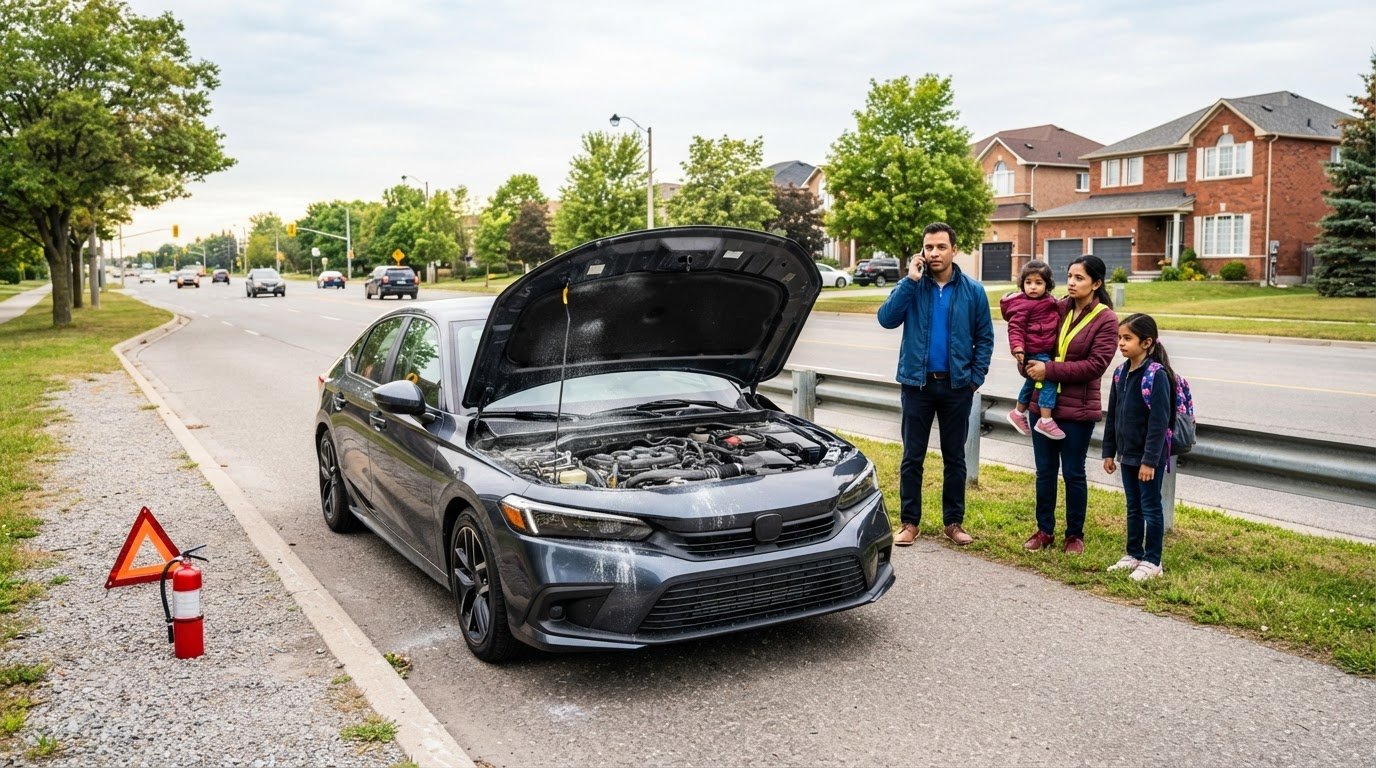
You finish the wash, your paint looks sharp, and by the next morning one rear door is frozen shut and the fuel door will not pop. That is a standard GTA winter mistake. Salt is only half the problem here. The other half is trapped water and a temperature drop that hits faster than people expect.
Dry the places that trap water
The body panels are the easy part. Mirrors, handles, door jambs, weather seals, fuel doors, trunk edges, and latch pockets are where winter wash jobs succeed or fail.
In the GTA, that matters because an afternoon wash can turn into an overnight freeze even if the roads look fine at dinner. Drying has to be deliberate. Use one towel for paint, then switch to a separate towel for jambs and seals. Once a towel touches grime around hinges and lower door edges, keep it off the paint.
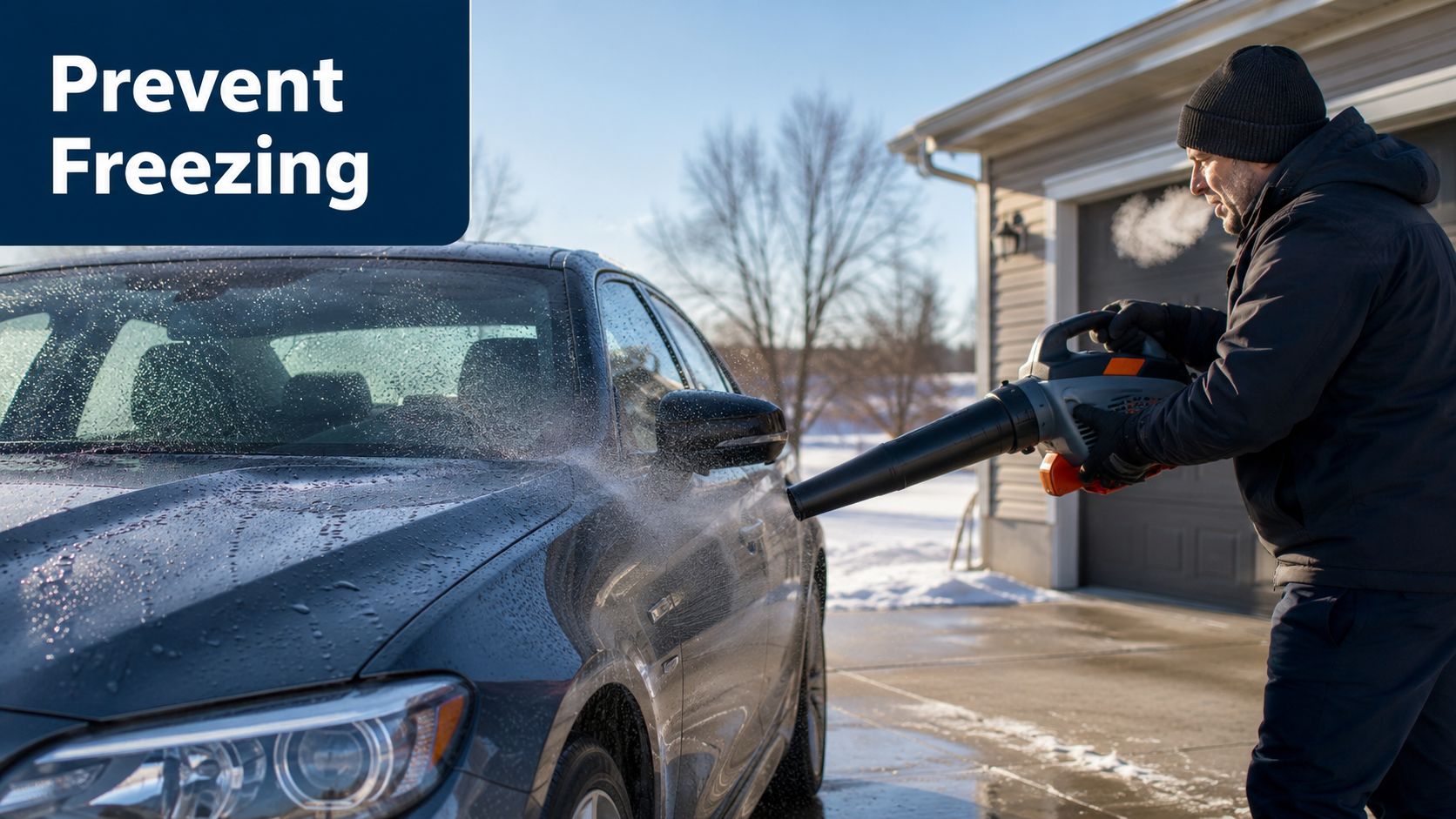
A blower helps a lot here. Push water out of mirror housings, around badges, under handles, and along trim gaps. Those spots drip after you park, and that is exactly when water starts locking things up.
A freeze-proof shutdown routine
Use this order and the car is much less likely to punish you the next morning:
- Open every door, the trunk, and the fuel door right away: Let hidden water show itself before it freezes in place.
- Wipe the full rubber seal on each opening: Get the bottom edge too. That is where water likes to sit.
- Dry the jambs, latch areas, and hinge pockets: Those corners hold more moisture than the outer panels.
- Blow out mirrors, handles, and trim seams: A leaf blower or car dryer works well if you keep it controlled and a sensible distance from the surface.
- Run the cabin heat for a few minutes: Warm airflow helps clear lingering moisture near the upper door seals and glass channels.
- Check the fuel door again before you park it: It is easy to miss, and a frozen fuel door always seems to show up when the tank is low.
One pro move is simple. After drying, open and close each door once. If a seal still feels wet or sticky, wipe it again before you leave the car outside.
If your vehicle has an old-school key cylinder, a de-icer made for automotive locks is the right tool to keep on hand. The CAA winter driving guide recommends carrying lock de-icer and clearing snow and ice from vehicle entry points before they freeze solid. For modern cars, the bigger issue is usually the latch and the seal, not the keyhole.
A clean car that freezes shut was not finished properly.
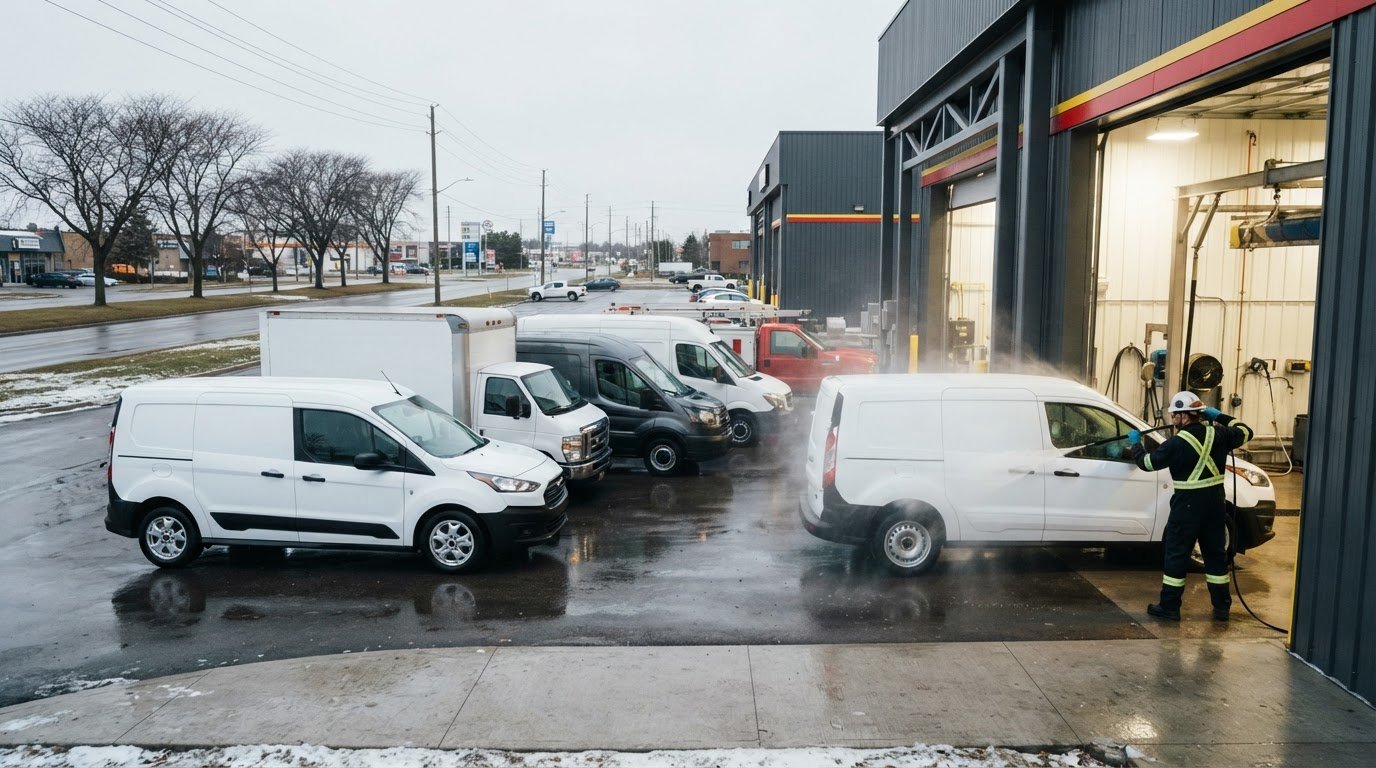
There is a real DIY versus pro decision here too. If the forecast is dropping hard, your driveway has poor drainage, or you cannot dry the underbody and jambs properly, use a professional wash. In a GTA winter, that is often the smarter call. A good shop can clear salt from the undercarriage, dry problem areas faster, and add protection before the next slush cycle starts.
Winter Car Wash Blunders and How to Dodge Them
Winter driving already punishes paint. You don't need to help.
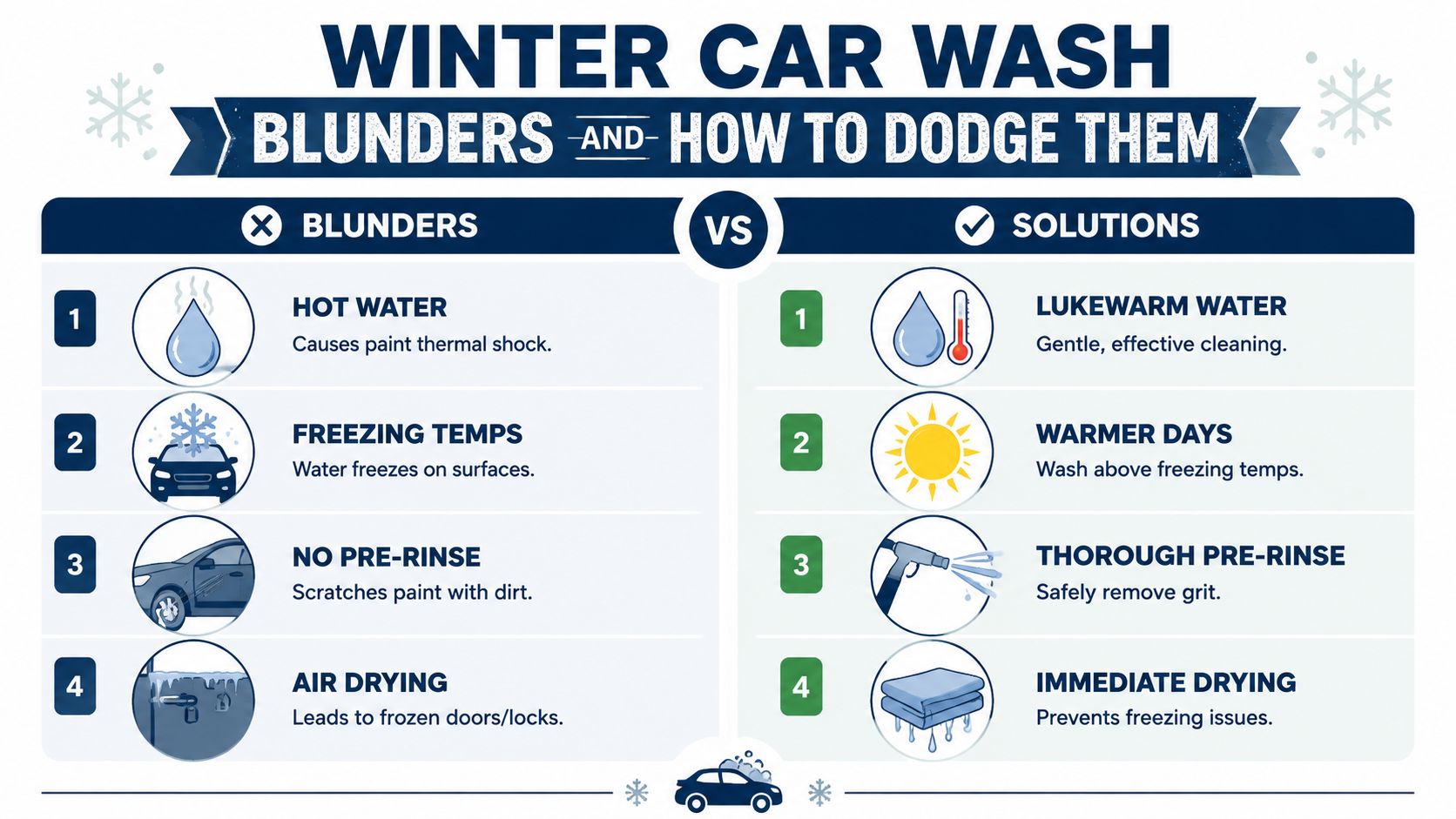
Most winter wash mistakes come from summer habits carried into the wrong season. People use the wrong water temperature, skip the rinse, or let the car air-dry because they're cold and want the job over with. The car pays for that impatience.
Four mistakes that cause most winter wash misery
- Starting with a mitt on a filthy panel: If grit is still sitting on the surface, your wash mitt becomes a grinding pad.
- Using dish soap or harsh household cleaners: They aren't built for automotive finishes or winter contamination.
- Ignoring the underbody: There, the ugliest salt buildup lives.
- Walking away before a proper dry-down: That's how you get frozen doors, locks, and hidden water stains.
One more trap catches a lot of GTA drivers. A bright winter afternoon can fool you into thinking conditions are friendly. Sun helps your mood. It doesn't guarantee your lower panels, seals, and shaded side of the car are staying cooperative.
What works better
The alternative isn't complicated. It's just more disciplined.
Field note: Winter washing rewards boring people. The careful driver with clean towels, a rinse plan, and ten extra minutes usually ends up with the better paint.
Use lukewarm water, not hot. Wash only when you can control drying. Keep wheel tools separate from paint tools. Replace old towels when they start feeling stiff or visibly contaminated. And if conditions are marginal, scale back the job instead of forcing a full wash.
A careful partial clean beats a sloppy “complete” wash every time.
Should You Go Pro The Nanak Car Wash Advantage
DIY has its place. If you've got the tools, a protected spot, and enough patience to wash and dry properly, you can absolutely manage winter maintenance at home.
But not every day is a DIY day in the GTA.

When DIY still makes sense
DIY works well when the car has moderate buildup, the temperature is manageable, and you can finish the dry-down without rushing. It also makes sense for in-between maintenance when you want to stay ahead of the mess rather than rescue a neglected vehicle.
If you're the sort of owner who notices grime building behind the front wheels and does something about it, home washing can be effective.
When a professional wash is the smarter move
There are days when the best answer to how to wash car in winter is simple: don't do it yourself.
Recent developments noted by Diamond Detail's Ontario winter detailing article show a shift toward underbody-only washes during extreme cold, especially for SUVs and trucks, because full washes in those conditions bring extra complications. That tracks with what seasoned winter drivers already know. Sometimes the high-stakes priority isn't shiny paint. It's getting corrosive buildup off the underside without turning the rest of the vehicle into a frozen puzzle.
Professional service is the smarter choice when:
- You need real underbody flushing: Home setups usually struggle here.
- The cold is biting hard: Extreme conditions shrink your margin for error fast.
- The vehicle is larger: SUVs, vans, and pickups trap a lot of winter grime underneath.
- You want rust proofing: That's a specialised task, not a driveway experiment.
- Time is tight: A rushed winter wash is usually a bad one.
There's also a service angle most drivers overlook. The best local businesses make winter maintenance easier because the process is clear, the staff know the pain points, and repeat visits don't feel like guesswork. If you run a wash operation or any local service business, this local business customer service guide is a useful read on building smoother customer experiences.
Winter Car Washing FAQs
Can I wash my car if it's below freezing
The answer depends on the conditions. In the GTA, a driveway wash gets risky fast once temperatures drop below freezing, especially after sunset or on windy days. Water hangs around in mirrors, handles, and door seals, then turns a simple wash into a frozen mess. If it is clearly below zero, skip the full DIY wash and wait for a milder window or use a professional bay that can handle winter runoff properly.
Is a pressure washer safe in winter
Yes, if you use it with some restraint. A pressure washer is useful for knocking salt and grit off lower panels, wheel wells, and the slush shelf behind the tires before you touch the paint.
Keep the nozzle moving. Do not hammer one spot at close range, and do not treat frozen trim or chipped paint like it is indestructible. In winter, the goal is to rinse contamination away, not win a cutting contest with your clear coat.
What if I can't do a full wash
Do a targeted cleanup. The priority is removing salt and corrosive grime from the areas that take the worst beating, especially around wheel arches, rocker panels, lower doors, and whatever underbody areas you can safely reach.
That approach makes sense in a GTA cold snap. If the choice is between a partial rinse today or letting salt bake onto the car for another week, take the partial rinse. Rinseless products can help for light film on upper panels, but they are a short-term fix, not a substitute for a proper wash with underbody attention.
Should I wash after every snowfall
No. Wash based on what was on the road, not just what fell from the sky.
A dry, cold day after light snow is one thing. A sloppy commute on the 401 with brine, salt spray, and dirty meltwater is another. If the car is wearing a white crust along the lower body, rear hatch, and wheel wells, it is time.
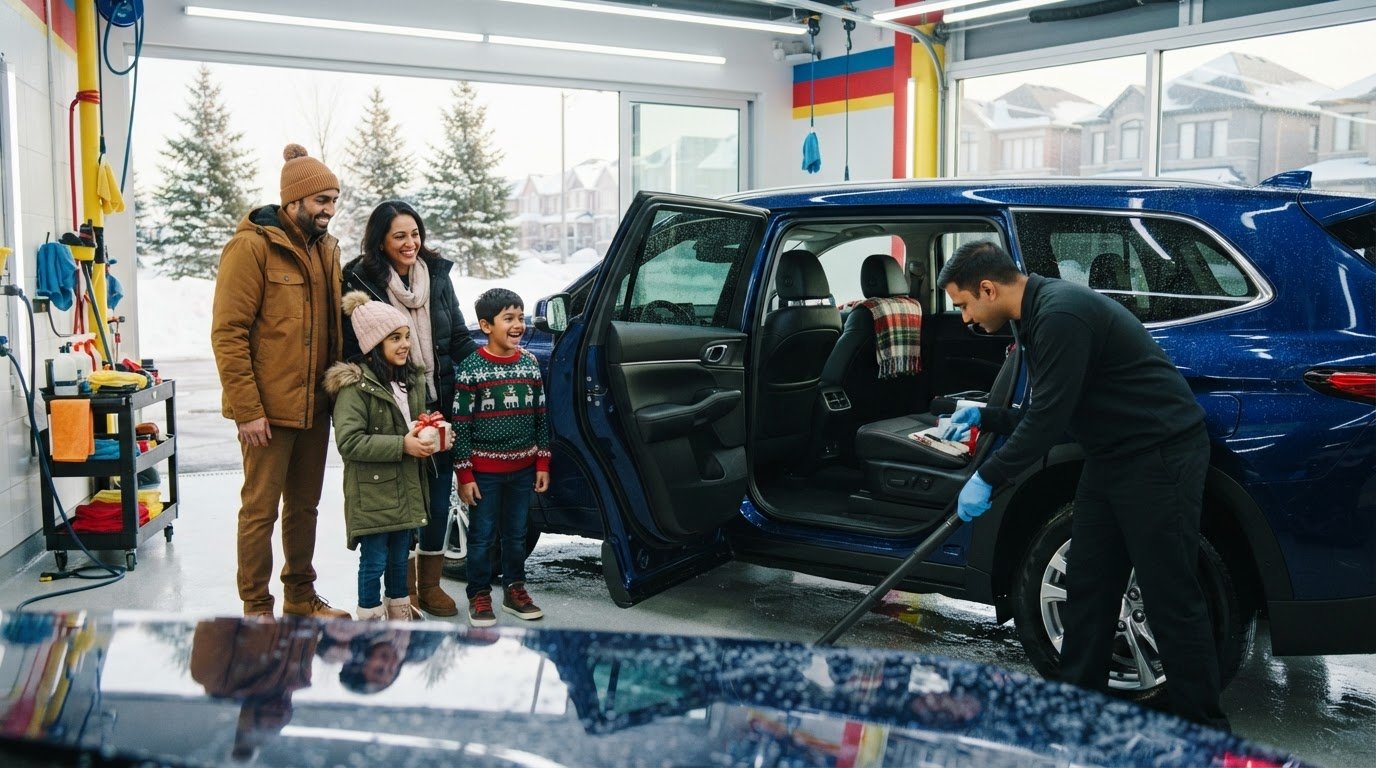
If your car is carrying a week of GTA salt and you do not feel like dealing with frozen locks, stiff seals, and a driveway rinse that misses the underside, book a visit with Nanak Car Wash. Their wash, detailing, and rust proofing options make winter maintenance a lot easier, especially when the weather gives you a tiny safe window and you want the job done right.

 6600 Finch Ave W, Etobicoke, ON M9V 3Z6
 647-703-8515
 MON – SUN 8 AM to 7 PM