
You know the feeling. You open the driver door after a wet GTA commute, drop your bag on the passenger seat, and the cabin smells like old coffee, slush, and road salt that's been ground into the mats for weeks. A quick vacuum makes it look better for a day, but it doesn't deal with the grime living in the carpet edges, vent slots, seat tracks, and door pockets.
That's why interior car cleaning near me isn't really a vanity search in Ontario. In a region where Ontario applies roughly 3 to 5 million tonnes of road salt each winter and Toronto's atmospheric corrosion has been measured at 5,108 mg/dm² over 19 months (Nanak Car Wash winter rust proofing reference), the inside of the car gets abused as hard as the outside. Salt, soot, moisture, and daily traffic grime build up together, and the cabin starts to feel tired even when the paint still looks decent.
Table of Contents
- The Hidden Cost of a Dirty Cabin
- Why Standard Vacuuming Is Not Enough
- DIY Cleaning vs Professional Detailing
- What to Expect During Your Appointment
- How to Choose the Right Local Provider
- Why Nanak Car Wash Stands Out
The Hidden Cost of a Dirty Cabin
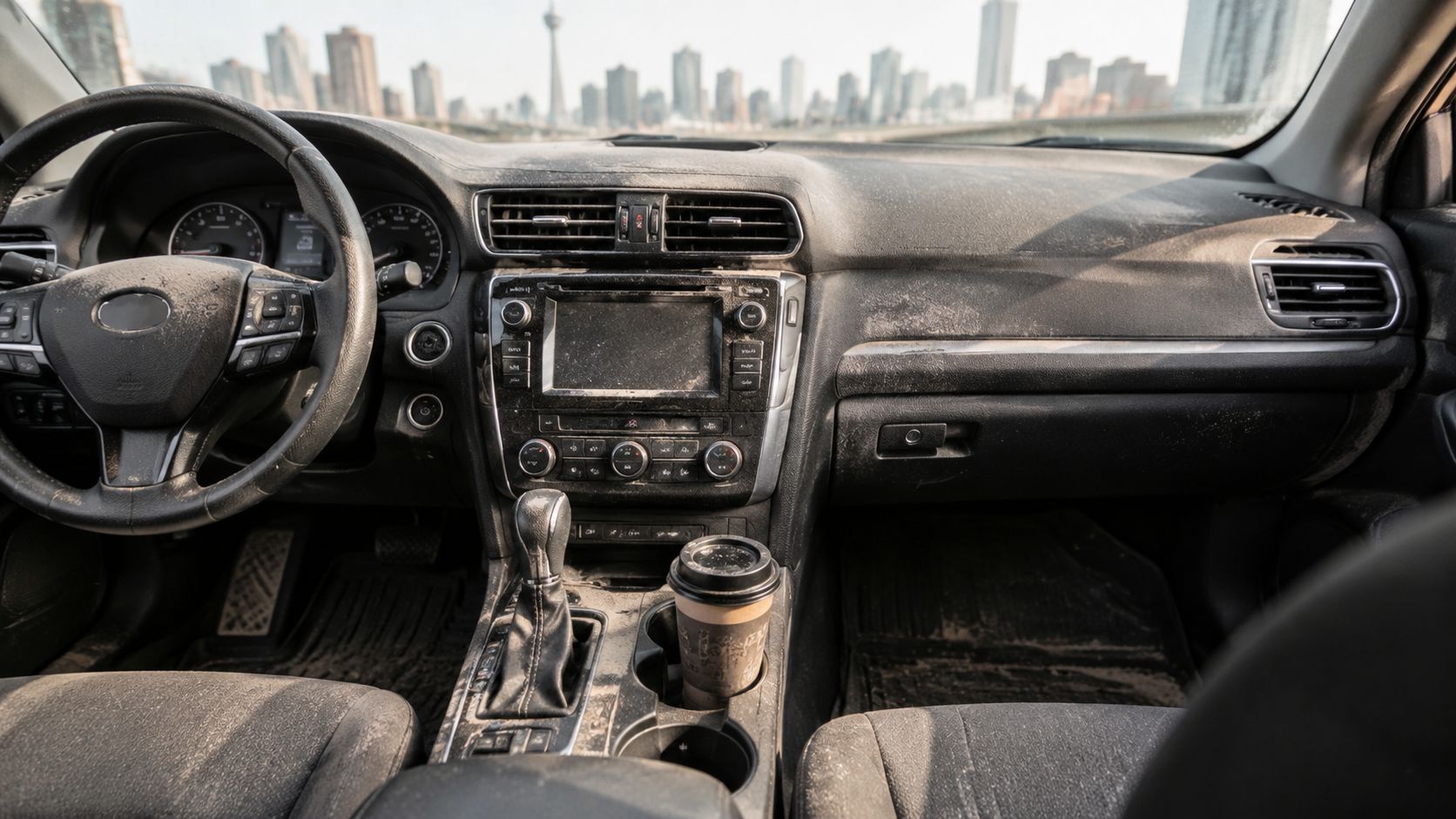
A clean-looking interior can still be carrying winter residue you can't see at first glance. The driver notices it when the windshield keeps fogging, the floor mats feel damp, or that sour smell comes back after every thaw. In Ontario, that's often salt and moisture working their way into fibres, seams, and padding, not just loose dirt sitting on top.
What the cabin is actually holding
Road film doesn't stay on the exterior. It gets carried inside on shoes, gloves, bags, pets, and wet clothing, then settles into carpet pile, seat stitching, and the tiny ledges around centre consoles and cup holders. Once that grit mixes with salt and meltwater, it starts to dry into crusty residue that a household vacuum barely touches.
The hidden cost is wear. Salt crystals and damp grime abrade fabric, dull plastics, and keep re-wetting after every freeze-thaw cycle. That's why a cabin can look “not too bad” while still feeling sticky, dusty, and stale.
Toronto and the broader GTHA make this worse because driving is still normal life for most households. In 2021, 84% of Toronto CMA households owned at least one vehicle, and car-owning households in the GTHA rose from 1.3 million in 1986 to 2.3 million in 2016 (Toronto Metropolitan University reference). That kind of usage means repeated entry, repeated mess, and repeated contamination, not a one-off spill.
Practical rule: if the floor mats keep showing white residue after you “cleaned” them, the job wasn't finished. The salt is still buried somewhere.
Why Standard Vacuuming Is Not Enough
A standard vacuum is good at loose crumbs, sand, and surface dust. It's weak against the stuff Ontario winters throw into a cabin, especially when moisture has already pushed contamination down into padding and fabric backing. Once that happens, vacuuming only skims the top layer and leaves the reservoir underneath.
What gets left behind
A Canadian metropolitan commuter study covering Montreal, Toronto, and Vancouver found that cabin exposure to pollution is strongly route-dependent, with dust, soot, and particulate loading tied to real-world exposure intensity across traffic corridors (ACS Environmental Science and Technology reference). That matters inside the car because the dirt isn't just cosmetic, it's a mix of particulates that keeps circulating every time doors open, fans run, or someone slides in and out of the seat.
Vacuuming also misses the places grime likes most, such as seat rails, belt anchors, carpet edges, and the base of door sills. Those areas hold moisture longer, and moisture is what turns ordinary dirt into odour and staining. Air fresheners can cover the smell, but they don't remove the source.
For pet owners, the same logic applies. If you're sorting out the cabin after dog rides, resources like best seats for dogs in car help prevent some mess, but they don't replace deep cleaning once hair, dander, and mud have already worked into the upholstery.
Pro detailer advice: vacuum first, always. But if the carpet still feels gritty after two passes, the fibres need extraction, not another round of suction.
Why extraction changes the result
Extraction pulls dirty moisture back out of the textile instead of just redistributing it. That matters for salt residue because salt keeps drawing in humidity if it stays embedded, which is why many cars smell worse after a warm-up than they did when cold. Crevice tools, air blowers, and targeted agitation reach what a hand vacuum leaves behind.
The difference is simple. Surface cleaning makes the cabin look presentable. Deep cleaning resets it.
DIY Cleaning vs Professional Detailing
DIY works fine when the mess is light. A damp microfibre cloth, a small brush, and a decent vacuum can handle dust on plastics, crumbs in cup holders, and the odd coffee splash. The trouble starts when the interior has winter buildup, ground-in sand, stubborn stains, or pet hair woven into fabric.
Side-by-side reality
| Factor | DIY Approach | Professional Detailing |
|---|---|---|
| Loose dust and crumbs | Good for quick touch-ups | Good, with faster coverage |
| Salt and winter residue | Often missed in seams and carpet edges | Extracted from textile layers and trim gaps |
| Bonded stains | Requires repeated scrubbing, often with mixed results | Pre-treated with purpose-made cleaners and agitation |
| Pet hair | Can remove some, but leaves embedded strands | Better lift from upholstery and carpet fibres |
| Odour sources | Usually masked, not removed | Reduced by removing the source material |
| Time and effort | Depends on your tools and patience | Handled with purpose-built equipment and process |
What the home kit can't do
The main limitation is equipment. Consumer vacuums don't pull as consistently from thick carpet, and many cheap sprays just move grime around before it dries back into a dull patch. If the cabin has winter salt caked into edges, DIY usually turns into a long session of spot cleaning with uneven results.
Professional detailing is different because it uses stronger extraction, dedicated brushes, and cleaners matched to the material. On leather, vinyl, fabric, and plastic, the right product matters more than aggressive scrubbing. Too much moisture or the wrong chemical leaves streaks, stiff fabric, or shiny trim.
That's also where a durable scent strategy helps. If you want a cabin that smells fresh after the job, find a durable car air freshener after the deep clean, not before it. Fragrance should support a clean interior, not hide a dirty one.
A good detailer doesn't just make the car look cleaner. They remove the grime layer that keeps coming back.
What to Expect During Your Appointment
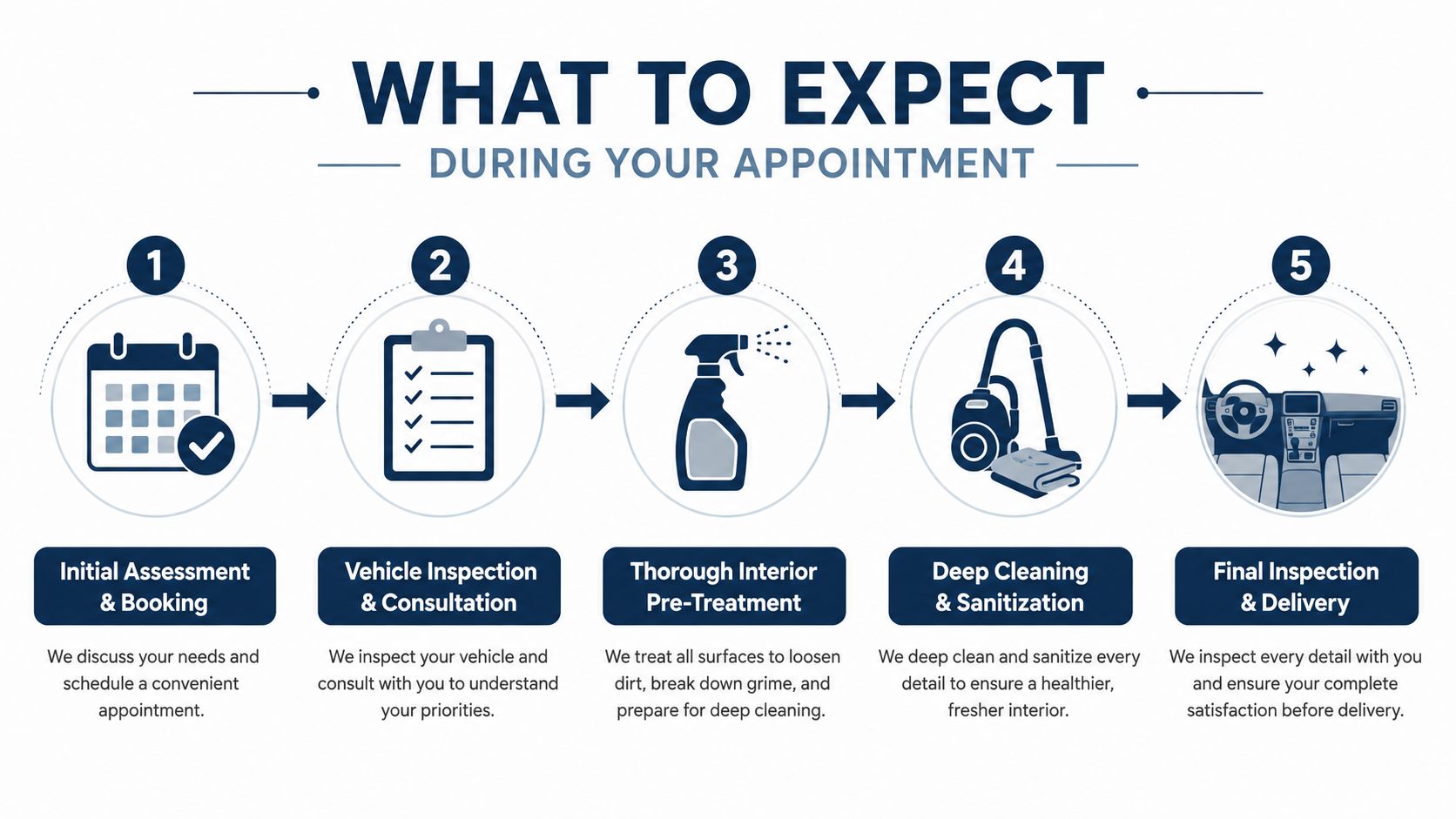
A proper interior appointment starts with the car being looked over, not sprayed blindly. A detailer checks the seats, mats, console, vents, and problem spots first, because different materials need different treatment. That first look also tells the tech whether they're dealing with light dust, winter salt, pet hair, or old stains that need more time.
The usual sequence
- Initial assessment and setup. The tech checks the condition of the cabin and confirms the focus areas, such as salt-heavy mats or stained seats.
- Pre-treatment. Stains, sticky spots, and embedded grime get broken down before agitation starts.
- Deep cleaning. Carpets, seats, door panels, and touchpoints are vacuumed, scrubbed, or extracted as needed.
- Vent and crevice work. Dust and debris are blown out of tight areas where they like to hide.
- Final inspection. The cabin gets a last pass so no residue or streaks are left behind.
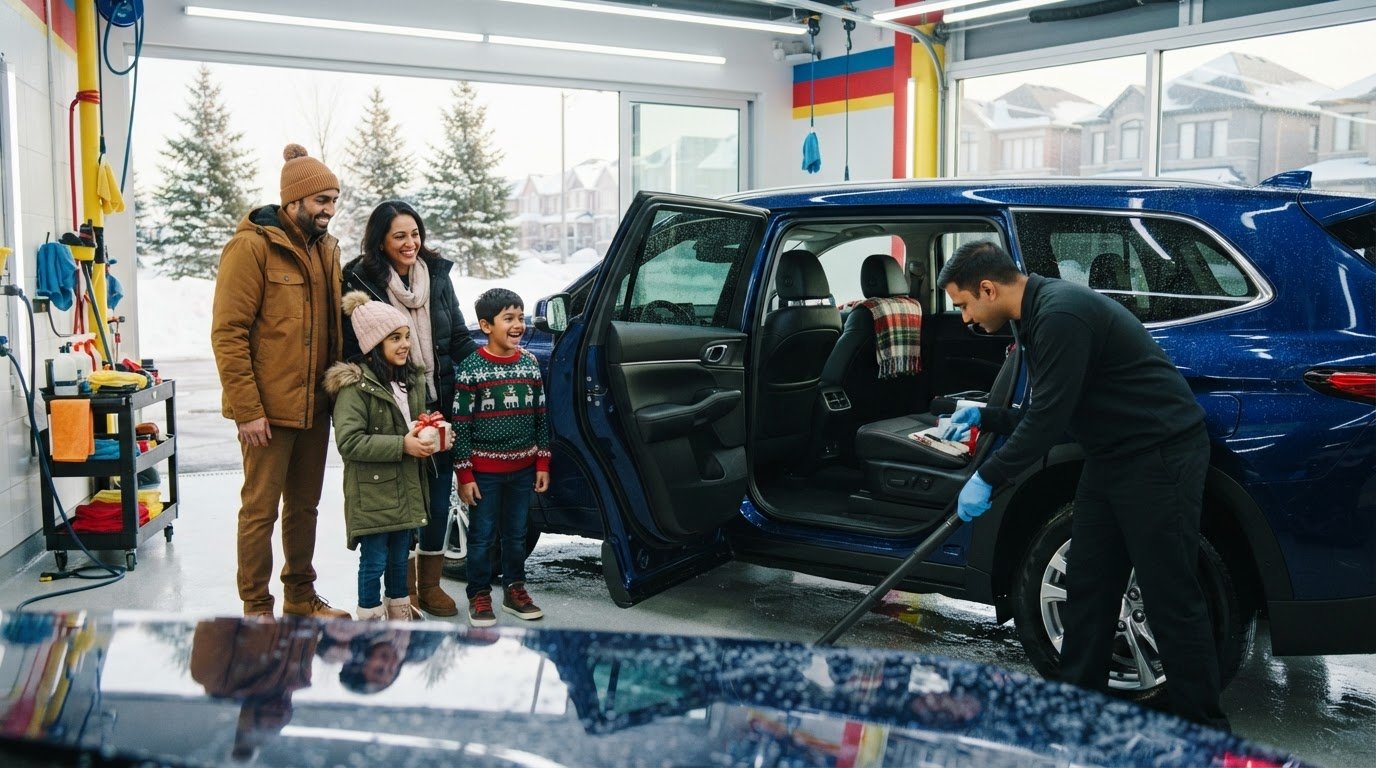
A solid detail usually takes one to four hours, depending on vehicle size and how dirty it is, and that range is part of why appointment-based cleaning works better than a rushed drive-through touch-up. A hatchback with light dust is a very different job from an SUV with winter slush, kid spills, and pet hair. The point is to let the process match the mess.
The prep on your side is simple. Remove valuables, empty obvious trash, and mention any problem smells or stains when you book. That saves time and helps the tech attack the issue instead of guessing.
What good drying looks like
Drying matters as much as cleaning. If the cabin is left damp, salt stains can reappear and fabric can stay musty. A detailer should use airflow and extraction so the interior leaves clean and dry, not just wet and shiny.
How to Choose the Right Local Provider
A good local provider shows its value fast. Winter salt, slush, and grit leave a film that basic vacuuming misses, so the shop should talk through how it handles fabric, leather, vents, and dry time before you hand over the keys.
The checklist that matters
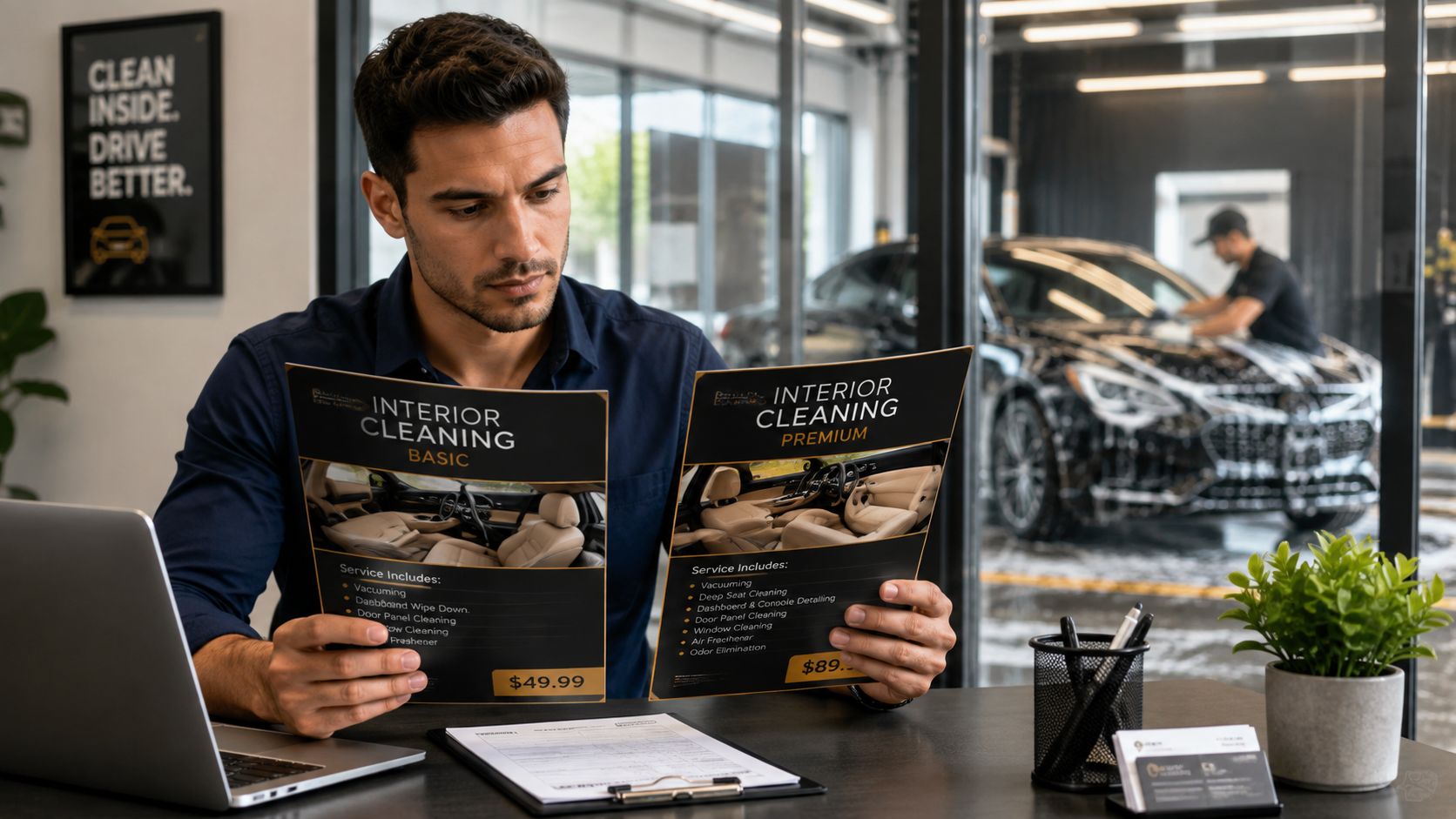
A solid provider should give clear answers, not vague promises. Ask whether they treat salt-heavy mats, stained carpets, touchscreens, and trim with different methods, because one cleaner does not fit every surface.
- Material-specific cleaning: Fabric, leather, vinyl, and infotainment screens need different care.
- Salt-season capability: Mats, crevices, vents, and proper drying matter after Ontario winter driving.
- Service range: A shop that can handle vacuuming, shampooing, detailing, and rust protection in one visit saves time.
- Membership or bundle options: Regular drivers need a plan that fits ongoing maintenance.
- Location convenience: Multiple sites help if you split driving across the GTA.
The local market supports that kind of service. Toronto and the surrounding region have a large base of car-owning households, which is why repeat visits and package pricing make sense for commuters, families, rideshare drivers, and fleet work (Toronto Metropolitan University reference).
If you are comparing shops online, check how clearly they present services, hours, and contact details on Google Maps. A practical guide to improve Google Maps for auto shops helps show why clear listings often reflect a shop that is organized behind the counter too.
One detailer worth mentioning
Nanak Car Wash is one GTA option that combines interior cleaning, detailing, and rust proofing across multiple locations. That matters in a climate where winter grime keeps coming back and the cabin needs more than a quick wipe to stay in good shape.
Why Nanak Car Wash Stands Out
The strongest case for Nanak Car Wash is simple. It's been operating since 2004, which gives it more than two decades of regional experience, and it pairs modern equipment with hand-applied work by trained staff. That combination matters when the job involves winter salt, dirty carpets, and the kind of cabin contamination that needs more than a quick wipe.

Why the service mix works
Their lineup covers the jobs people need. Express washes help with everyday build-up, full-service packages add interior vacuuming and wipe-down work, and appointment-based detailing goes further with shampooing, vent cleaning, salt removal, and leather care. Rust proofing is part of the same ecosystem, which is useful in Ontario because interior cleanliness and corrosion control are tied together by the same winter conditions.
The pricing structure is also built for repeat use. The site shows Unlimited Wash Club options, prepaid ticket bundles, and member benefits that make frequent maintenance easier to budget for. That suits commuters, delivery drivers, and families who don't want to keep paying full price every time the cabin gets grimy again.
Why location coverage matters
Multiple GTA locations reduce the friction of getting the car cleaned. Etobicoke, Brampton, Concord, Oshawa, Sheppard, Burlington, Cambridge, and Guelph give drivers more than one way to fit a clean into the week. When a service is available near the places you already drive, it's far easier to keep winter residue from turning into a long-term problem.
If you're tired of treating the cabin like an afterthought, book a proper reset instead of another half-clean. Visit Nanak Car Wash to see the current interior cleaning, detailing, and wash options, then choose the one that fits how you drive in the GTA.

 6600 Finch Ave W, Etobicoke, ON M9V 3Z6
 647-703-8515
 MON – SUN 8 AM to 7 PM