
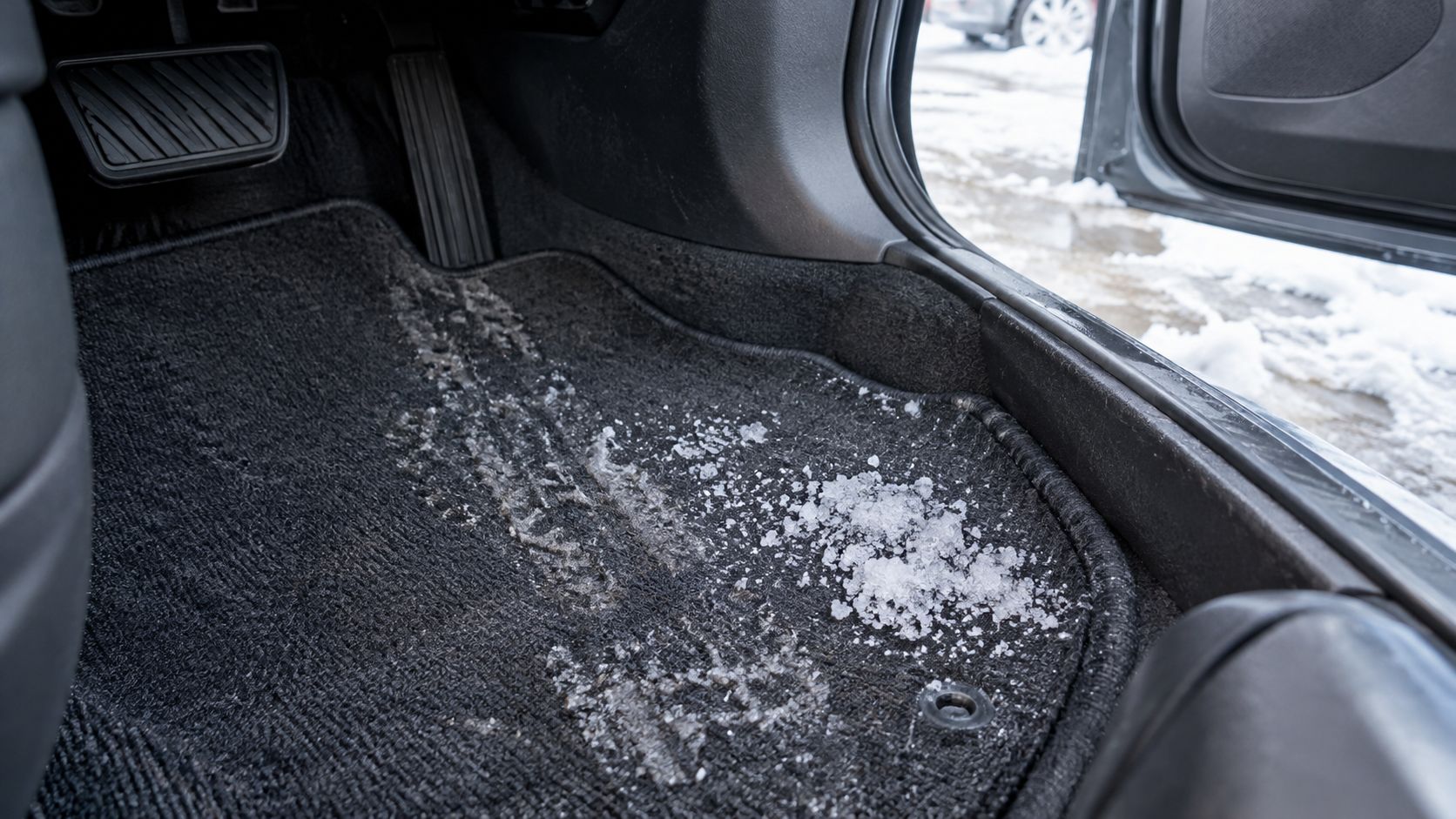
You step into your car after a GTA snowstorm, carrying half the parking lot on your boots. Slush lands on the mat, melts into the carpet, and leaves a pale crust around the pedals. By the time the cabin warms up, the floor feels stiff, smells faintly damp, and looks dirty again even though you vacuumed yesterday.
That frustration makes sense. Interior carpet cleaning is not vacuuming the visible mess. In Ontario, road salt, gritty slush, drink residue, pet hair, and moisture work their way through the carpet surface and into the layers underneath. A quick pass can remove loose debris while leaving the contamination that causes whitening, stiffness, and recurring odour.
This guide treats carpet care as winter decontamination for GTA vehicles, not just tidying. You'll learn how the carpet is built, what vacuuming, shampooing, extraction, steam, and dry methods can do, how often to clean based on your driving habits, and why drying decides whether the result lasts. You'll also get a practical way to choose between DIY work and professional service without over-wetting the floor.
Table of Contents
- Introduction: Why Interior Carpet Cleaning Matters in Winter
- What Interior Carpet Cleaning Really Means for Your Car
- Comparing the Four Main Carpet Cleaning Methods
- How Often to Clean Carpets in the Greater Toronto Area
- What Results to Expect and Why Drying Makes or Breaks Them
- DIY Versus Professional Service and What It Costs
- Choosing Nanak Car Wash Packages and Membership Benefits
Introduction: Why Interior Carpet Cleaning Matters in Winter
A GTA winter commute can leave your carpet looking clean for an hour, then white again by evening. Salt-laden slush, fine grit, and moisture arrive on boots and wet mats. Vacuuming lifts what sits on top, while dissolved residue may remain lower in the pile.
Ontario's road-salt use helps explain why the cycle repeats. Municipalities reported 2,218,609 tonnes of salt use in 2019, while total Ontario salt use under the federal Code of Practice reached 1,679,395 tonnes during winter 2023–2024, as reported by Nanak Car Wash's Ontario winter cleaning guidance. Toronto alone is estimated to use roughly 130,000 to 150,000 tonnes annually, within a provincial winter range of roughly 1.5 to 3 million tonnes, according to the Transportation Research Board study on atmospheric corrosion in Toronto.
These figures describe the conditions around your vehicle, not the exact contamination in every cabin. Slush enters through footwear and damp mats, then dries in a warm, enclosed space. Salt leaves pale marks, while organic debris and spilled sugars can help odours persist.
GTA reality: If a white edge returns after cleaning, dissolved residue may be sitting below the visible surface. The vacuum may not be the problem.
Interior carpet cleaning works like winter salt decontamination. First, remove dry grit so it cannot grind into the fibres. Next, dissolve bonded residue with suitable chemistry or controlled heat. Then extraction pulls out the dirty moisture, and thorough drying limits the chance that salt and odours will wick back as the carpet warms.
The result depends on all four steps, not on a freshly vacuumed appearance.
What Interior Carpet Cleaning Really Means for Your Car
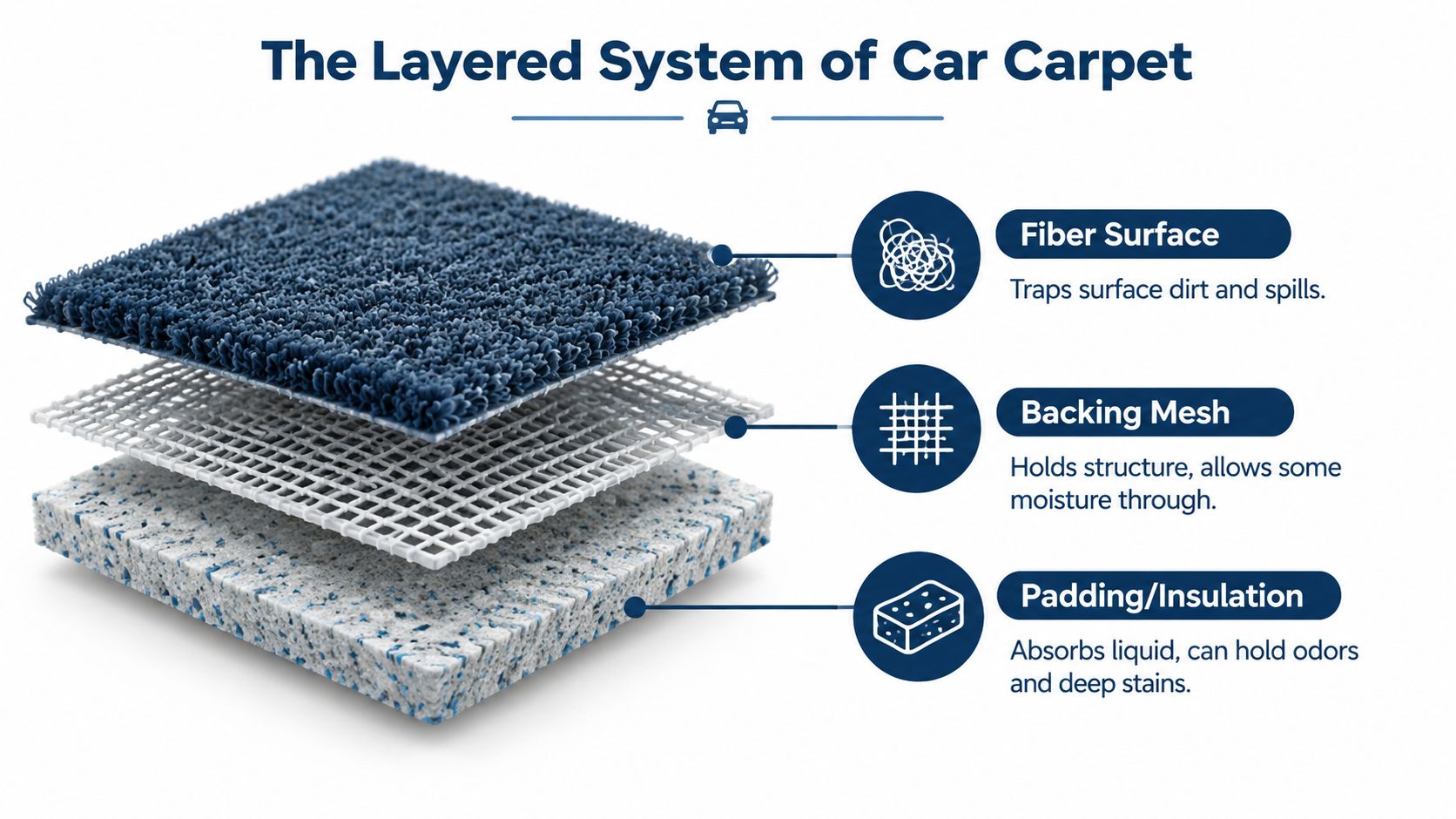
Think of the carpet as a kitchen sponge. Crumbs sit on top, grease clings to the pores, and salty water travels deeper. Wiping the surface removes the crumbs, but it doesn't empty the sponge.
Vehicle carpeting has a similar layered structure. The fibre surface catches loose soil and visible spills. A backing layer gives the carpet shape and lets some moisture move through. Beneath that sits padding or insulation, which can absorb liquid and retain odours long after the upper fibres feel dry.
The three jobs of a proper clean
Dry soil removal comes first. A crevice tool and strong vacuum should lift loose sand, salt crystals, crumbs, pet hair, and grit before liquid touches the carpet. Otherwise, the cleaner turns dry debris into muddy slurry and may push it farther into the pile.
Dissolving comes next. Road salt is water-soluble, while oily marks and drink residue need different treatment. A cleaner must loosen the bond between the contaminant and the fibre. Scrubbing alone can spread the mark, especially when the carpet is already damp.
Extraction finishes the job. The machine must pull out the dirty solution, not merely distribute it. This is why shampooing without effective extraction can leave a carpet looking brighter at first but feeling stiff later.
Why the underside matters
A carpet can feel clean on top while the padding still contains moisture. That trapped moisture carries dissolved minerals and organic residue. As it moves upward during drying, it can leave a new ring or white film on the surface.
The safest mental model is simple: vacuum the loose material, dissolve what is bonded, extract what you dissolved, and control the drying environment. Each part handles a different layer. Skipping one leaves the next step doing work it wasn't designed to do.
Comparing the Four Main Carpet Cleaning Methods
No single method handles every interior. A family SUV with crusted salt needs a different approach from a lightly dusty commuter vehicle. The contamination decides the method.
Vacuuming
Vacuuming is the maintenance tool. It removes loose grit before that grit abrades fibres, and it helps clear dry salt from mats and carpet edges. It won't dissolve salt that has melted into the pile, remove deep drink residue, or pull liquid from the padding.
Use a brush attachment around pedals and seat rails, then follow with a narrow crevice tool. Lift removable mats and vacuum both sides. This is the step people often rush, but it protects every later stage.
Shampoo and extraction
Shampooing loosens bonded soil, while extraction removes the contaminated liquid. Ontario detailing workflows commonly include “Shampoo Carpets & Mats”, and the JWC Auto Detailing interior process notes that drying depends on humidity, airflow, and carpet thickness, with a practical drying range of 4–8 hours.
For salt-heavy GTA carpets, this is usually the most complete general-purpose approach. The operator can vacuum first, apply controlled chemistry, agitate the fibres, flush the residue, and extract repeatedly. The risk comes from over-wetting or returning the vehicle before the backing has dried.
Steam cleaning
Steam uses heat and limited moisture to loosen grime and freshen surfaces. It can suit light contamination, sensitive interiors, or situations where a lower-moisture process is preferred. It isn't automatically a substitute for extraction when salt has reached the padding. Any moisture introduced still needs proper removal and airflow.
Dry compound cleaning
Dry compounds absorb surface soil with little added moisture. This can be useful for quick maintenance or vehicles that must return to service quickly. It has less reach into dissolved salt, wet slush residue, and odour held below the carpet surface.
| Method | Best For | How It Handles Salt and Stains | Moisture and Dry Time |
|---|---|---|---|
| Vacuuming | Loose grit, crumbs, dry salt, pet hair | Removes surface material but doesn't dissolve bonded residue | Minimal added moisture |
| Shampoo and extraction | Salt crusting, drink spills, ground-in grime | Dissolves and flushes residue when extraction is thorough | Requires controlled drying |
| Steam cleaning | Light grime, touch-ups, lower-moisture work | Loosens surface contamination, with limited deep flushing | Lower moisture, but airflow still matters |
| Dry compound cleaning | Fast surface maintenance | Absorbs loose soil but has limited reach into padding | Very low moisture |
For broader operational planning, readers managing shared vehicles or facilities can also review these carpet maintenance contract tips. The useful lesson applies to cars too: define the contamination, required turnaround, inspection standard, and responsibility for recurring care.
How Often to Clean Carpets in the Greater Toronto Area
A GTA vehicle can look clean while its carpet holds weeks of salt, slush, grit, and damp footwear. A rideshare vehicle, delivery van, family crossover, and weekend coupe each receive a different contamination load, so one fixed calendar cannot fit every driver.
Winter needs a prevention rhythm because road treatment arrives repeatedly. As the salt totals in the introduction showed, waiting for one spring appointment lets dissolved salt travel below the visible pile. During winter, vacuum and inspect the carpet about monthly, and check it sooner after repeated slush exposure. The inspection matters as much as the vacuum: look beneath the mats, feel for dampness, and watch for white residue.
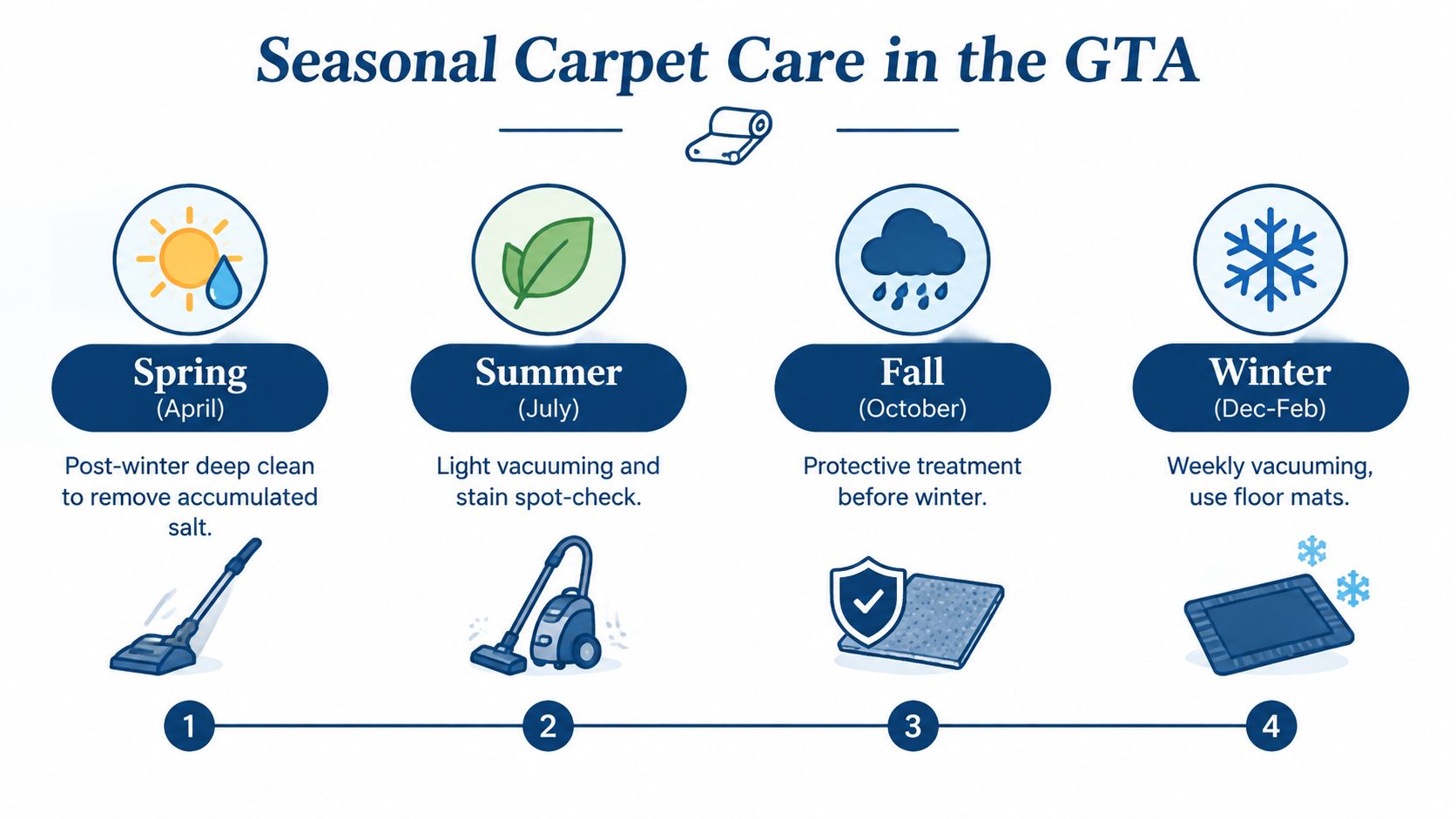
A practical seasonal rhythm
Winter: Shake out mats often, vacuum dry grit, and use raised-edge mats where practical. If the carpet feels damp or develops white crusting, respond before spring. Drying wet mats outside the vehicle limits the moisture reaching the carpet.
Spring: Schedule the main decontamination after winter ends. Extraction can remove salt, slush residue, and fine grit that settled below the mats.
Summer: Keep care light unless spills or pet messes appear. Dry weather makes spot treatment easier, although old residue may return if earlier cleaning did not extract it fully.
Fall: Remove existing dirt before winter begins. Clean, dry carpet gives salt and slush less residue to bind with, while sound floor mats create the first barrier.
Let the carpet tell you
White wicking lines, stiff fibres, a sour or damp smell, and sticky patches show that surface vacuuming has reached its limit. Rideshare and delivery drivers may need checks more often because passengers and repeated stops bring in wet debris. Family vehicles with children or pets should follow the visible load rather than a rigid calendar.
Good rule: Clean before the carpet becomes a crust. Fresh contamination is easier to remove than residue dried into the pile and backing.
What Results to Expect and Why Drying Makes or Breaks Them
A successful clean should improve more than colour. You should notice a softer carpet texture, less visible salt, fewer gritty areas, and an odour that doesn't return when the cabin warms up. The result depends on what the operator removes and what remains underneath.
Wicking creates the frustrating comeback
Wicking happens when dissolved residue travels with moisture toward the surface. Salt and drink sugars may disappear during agitation, then reappear as the carpet dries if the contaminated solution wasn't extracted fully. This is why a carpet can look excellent immediately after cleaning and show a pale ring later.
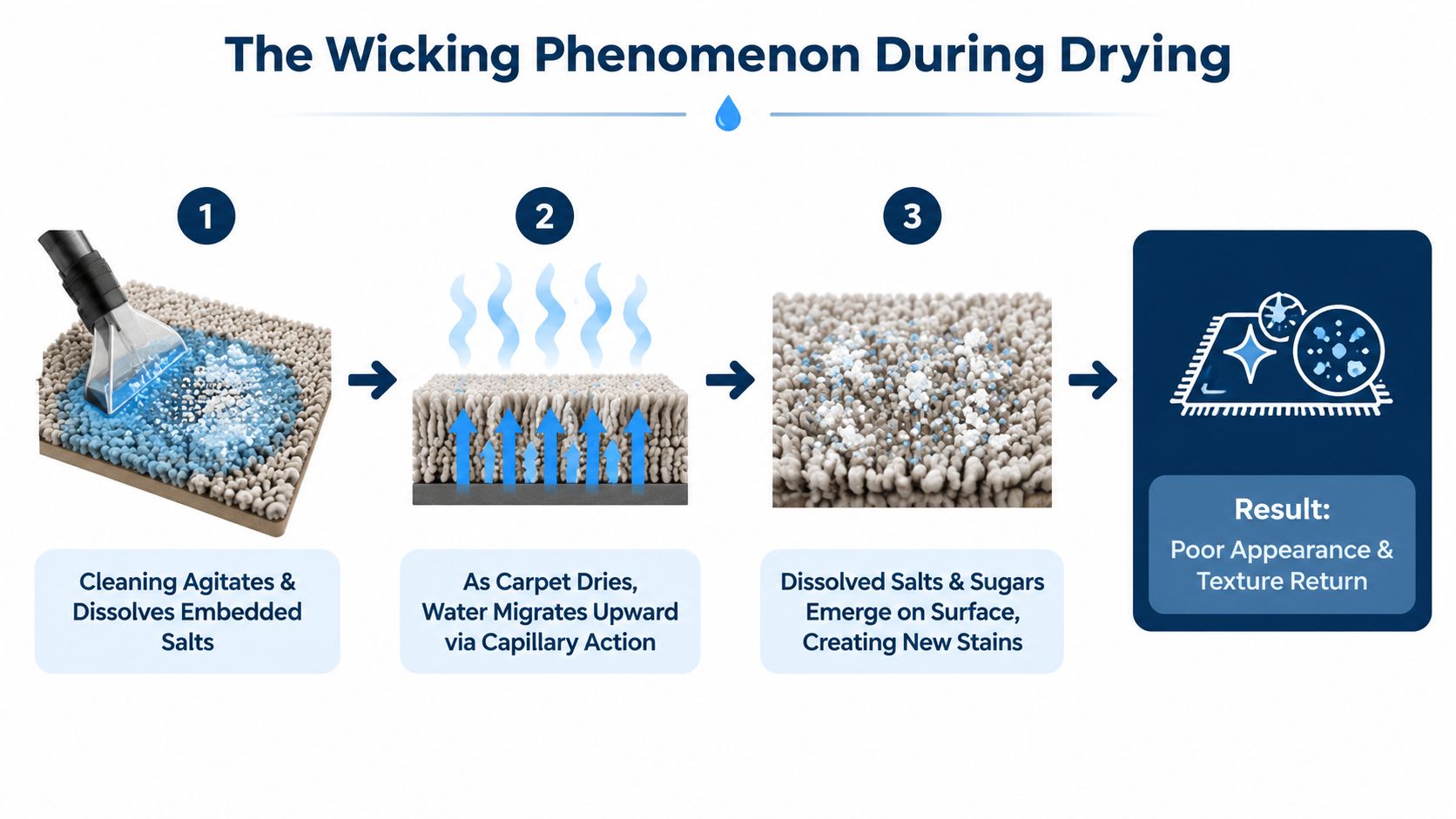
Over-wetting makes the problem worse. It can move minerals from the surface into the backing and padding, where they become harder to remove. The correct sequence is dry vacuuming, controlled dissolving or neutralization, immediate extraction, and complete drying, as described in this Ontario salt-stain removal guide.
Drying is part of the treatment
The cited Canadian detailing guidance gives a practical drying range of 4–8 hours, with timing affected by humidity, airflow, and carpet thickness. High airflow and lower humidity help, while thick pile and moisture trapped beneath the carpet extend the wait.
A good operator shouldn't hand over the keys because the top feels dry. They should inspect seams, mat wells, carpet edges, and areas beneath seats. If the backing remains damp, the cabin may develop recurring odour even after the surface looks clean.
Appearance isn't the same as hygiene
Steam may freshen a surface and reduce heavy chemical use, while extraction can remove more dissolved residue when the carpet is heavily contaminated. Neither method should be described as a universal sanitizing answer. Results depend on the contaminant, material, heat, chemistry, extraction strength, and drying process.
A clean cabin also supports a more comfortable environment for families, rideshare passengers, and delivery staff. Vehicle interiors can hold dust, allergens, organic debris, and moisture-related odours, so carpet care should be judged by residue removal and moisture control, not just the first visual impression.
DIY Versus Professional Service and What It Costs
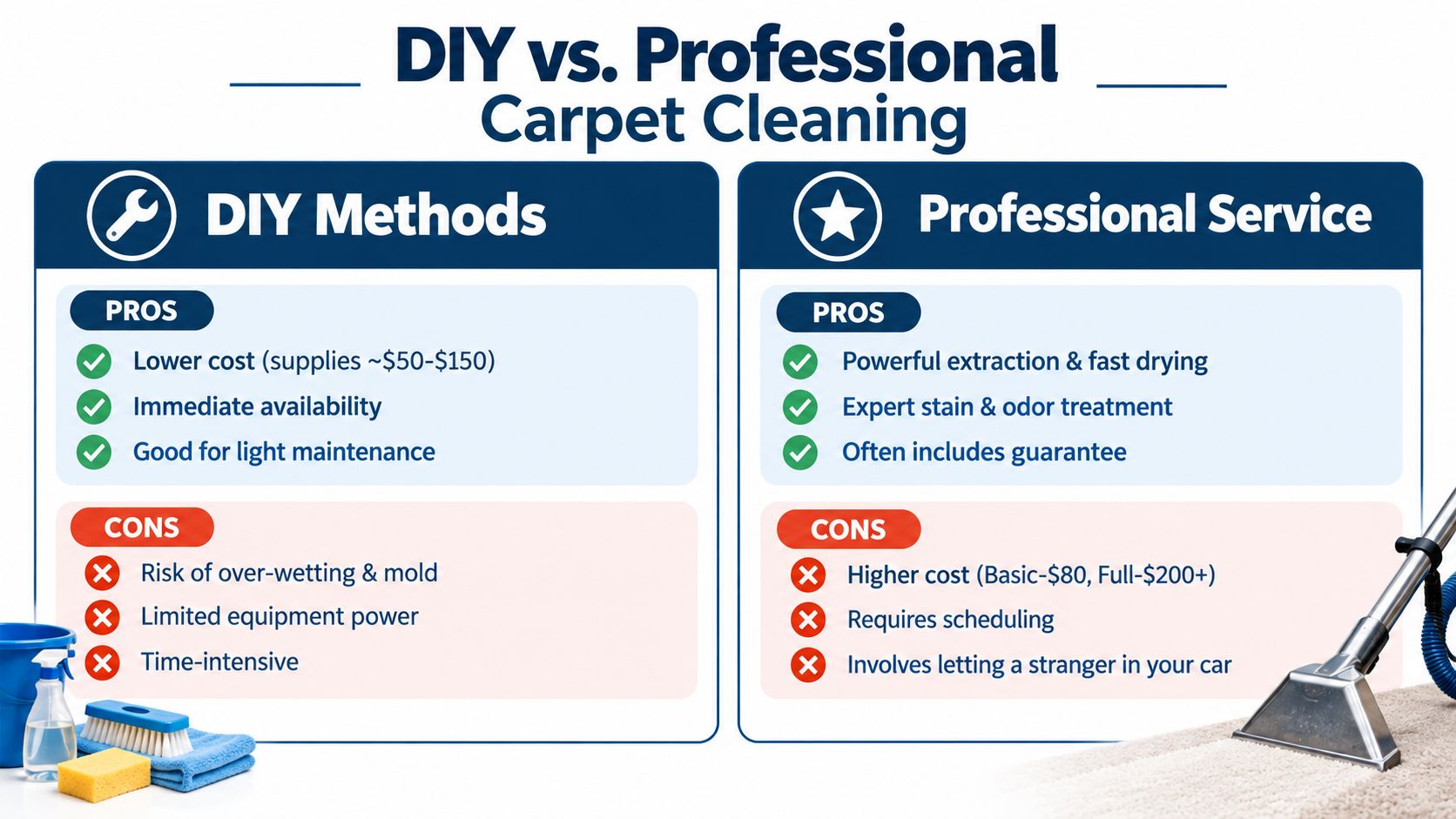
DIY interior carpet cleaning can work when the problem is light and localized. A home vacuum, soft brush, suitable automotive cleaner, microfibre towels, and patience may handle crumbs, loose salt, and a small fresh spill. The risk rises when you soak a large carpet without a reliable extraction and drying plan.
Vinegar-and-water advice appears often in consumer cleaning discussions, but a recipe isn't a complete process. You still need to remove the dissolved salt, avoid saturating the padding, and confirm that the carpet dries fully. A rented extractor may add power, but it can also leave substantial moisture if used too aggressively or emptied too infrequently.
A simple decision matrix
| Situation | Sensible choice | Why |
|---|---|---|
| Dry grit and light dust | DIY vacuuming | Low risk and easy to repeat |
| One recent, small spill | DIY spot treatment | You can limit moisture to the affected area |
| White salt crust across the footwells | Professional extraction | Multiple passes and controlled drying reduce residue return |
| Persistent damp odour | Professional inspection and extraction | The source may sit in backing or padding |
| Pet hair and embedded debris | Professional service or specialist equipment | Hair and soil often need tools beyond a basic vacuum |
| Vehicle needed back quickly | Ask about low-moisture options and forced-air drying | Turnaround depends on the chosen method and material |
What service pricing really means
The supplied service brief describes express vacuuming as a light-maintenance option and professional detailing as a broader service, with package pricing varying by scope, vehicle size, pet hair, and the amount of contamination. It also identifies typical detailing windows of 1–4 hours and notes that starting package prices can range from $80 for basic service to $200 or more for full service, as shown in the provided Nanak service information.
Ask what the quote includes. Confirm whether it covers mats, carpet extraction, salt treatment, stain treatment, odour work, vent cleaning, drying, and any SUV or pet-hair surcharge. A low price for surface vacuuming isn't comparable with a full interior decontamination.
Choosing Nanak Car Wash Packages and Membership Benefits
Nanak Car Wash offers several levels of care for GTA drivers. Express exterior washes start from $9.99 plus tax, while full-service washes start from $29.99 plus tax. Those options suit routine exterior upkeep and basic interior attention, but carpet contamination that includes salt crusting, stains, or odour needs the appointment-based detailing workflow.
The detailing lineup includes carpet and seat shampooing, salt and stain removal, vent and crevice blowout, leather cleaning, and machine buffing and polishing. The supplied service information lists typical appointment durations of 1–4 hours, with possible SUV, van, truck, and pet-hair surcharges. That makes the service more relevant when your floor needs extraction rather than another quick vacuum.
For drivers who wash frequently, the Unlimited Wash Club and prepaid multi-wash tickets provide recurring-care options. Membership information includes discounted interior cleaning, while participating locations also offer free vacuums. Locations listed in the service information include Etobicoke, Brampton, Concord, Oshawa, Sheppard and North York, Burlington, Cambridge, and Guelph.
Nanak has operated since 2004, uses 100% fresh water for washes, and combines equipment with hand-applied steps, according to the supplied publisher information. Choose based on the condition of your carpet: maintain loose debris regularly, then book detailing when salt, moisture, and odour have moved beyond the surface.
If winter salt has left your mats stiff, your footwells white, or your cabin damp-smelling, book an interior detailing service that includes carpet shampooing, salt and stain removal, and controlled extraction. Visit Nanak Car Wash to review available wash, detailing, prepaid, and membership options at a GTA-area location.


 6600 Finch Ave W, Etobicoke, ON M9V 3Z6
 647-703-8515
 MON – SUN 8 AM to 7 PM