
For most GTA drivers who keep their vehicle past 3 winters, an undercarriage wash is worth the few extra dollars per visit because Ontario road salt drives about 50% of vehicle corrosion, and the undercarriage is where that salt does its worst damage. If you drive year-round through salted roads, skipping the rinse is false economy.
You know the scene. You leave a Scarborough parking lot after a wet snowfall, drive through brown slush, and arrive home with a clean-looking hood and a filthy underside. The paint gets the attention because you can see it. The brake lines, subframe, suspension mounts, exhaust hangers, and seams keep holding salt-laced moisture because you can't.
That difference matters across the GTA. Ontario applies roughly 3 to 5 million tonnes of road salt each winter, and Canadian research summaries attribute about 50% of vehicle corrosion to road salts. Ontario corrosion guidance also reports visible undercarriage rust within 3 to 5 years for some year-round GTA vehicles, with structural rust possible within 8 to 12 years.
My verdict is straightforward. A lightly used car stored indoors can dial back the frequency. A daily commuter, rideshare vehicle, delivery van, or small fleet working through every winter should treat undercarriage washing as routine maintenance, not a shiny-car extra.
Table of Contents
- What an Undercarriage Wash Actually Does
- Why Ontario Road Salt Makes the Undercarriage a High-Risk Zone
- Real Benefits and Honest Drawbacks of an Underbody Wash
- Undercarriage Wash Versus a Standard Exterior Wash
- Pairing Undercarriage Washing With Rust Proofing
- Which GTA Driver You Are and What That Means for You
- A Simple Year-Round Schedule for Maximum Protection
What an Undercarriage Wash Actually Does
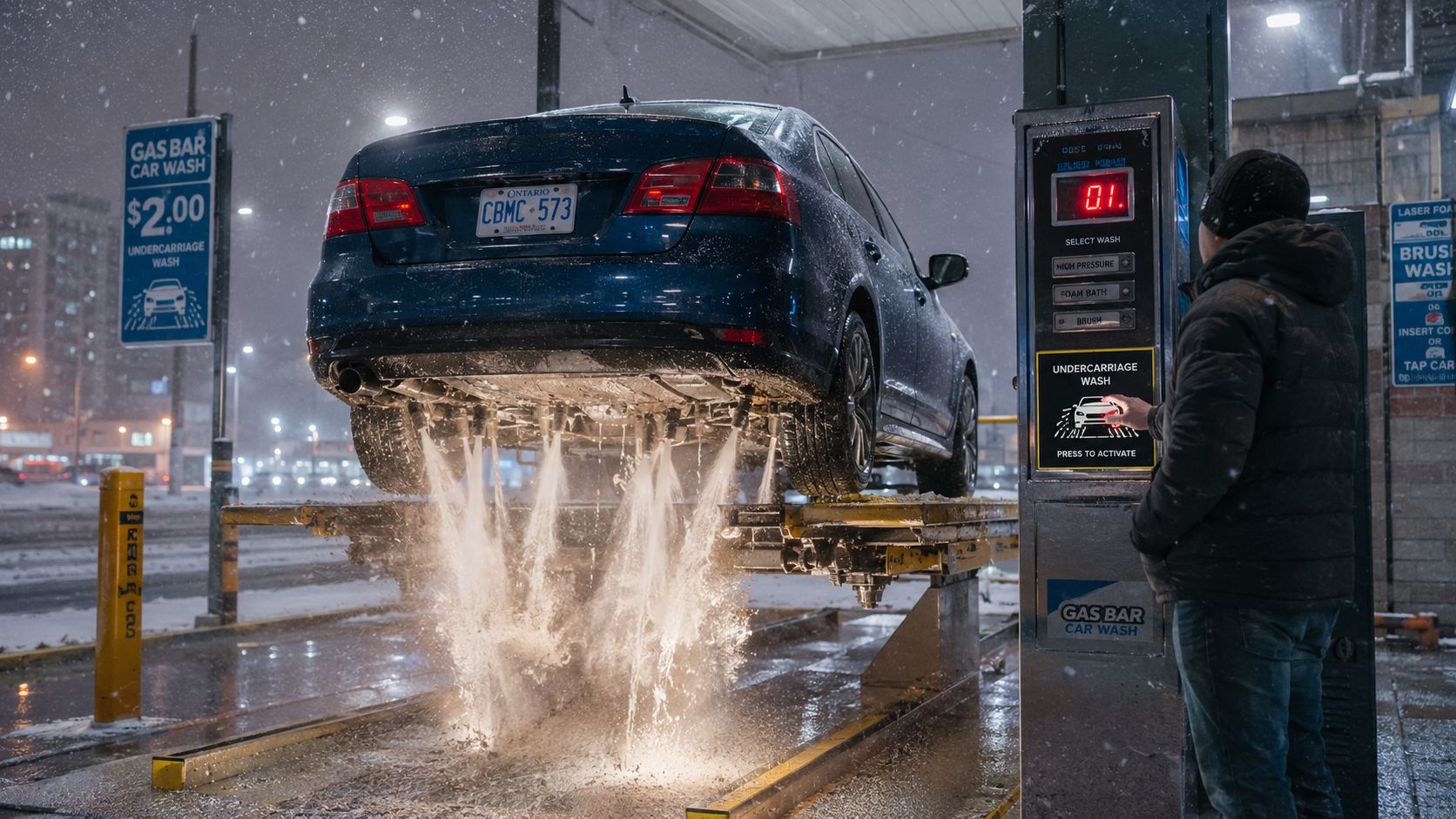
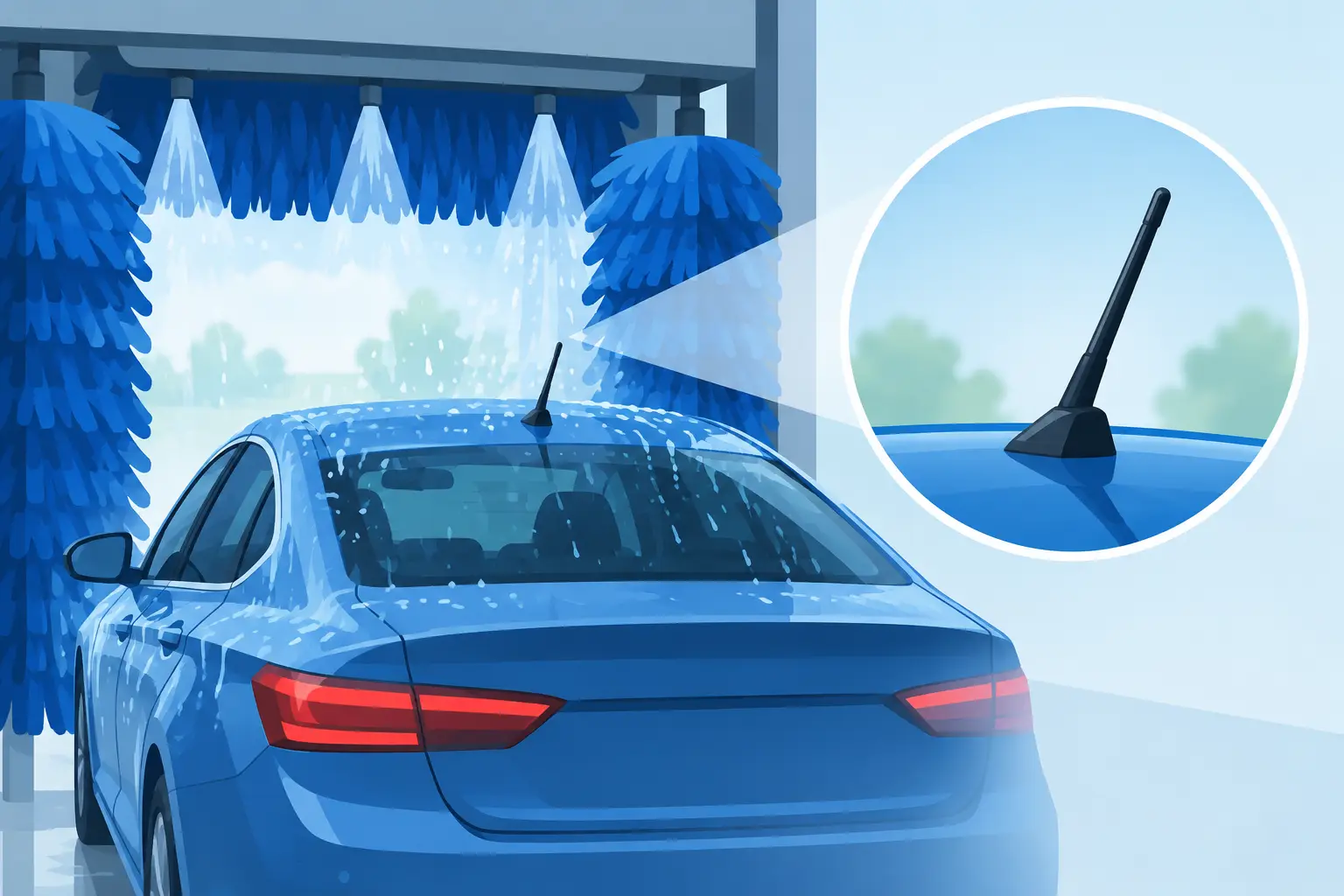
A driver pulls into a Scarborough gas-bar wash, selects the undercarriage option, and hears the spray start beneath the floor. Brown salt sludge runs across the concrete. From above, the car may already look clean. Underneath, the wash is doing the work that the exterior cycle can't reach.
An undercarriage wash is a targeted rinse that directs pressurized water at the vehicle's underside. It aims at the frame, suspension links, exhaust, brake lines, fuel lines, floor pans, wheel wells, subframe, tow hitch, and lower control arms. These parts sit close to the road and collect whatever the tyres throw upward.
What gets cleaned below the doors
A standard tunnel wash concentrates on surfaces at body height. Its arches, brushes, and upper spray bars clean the bonnet, doors, roof, glass, and upper wheel faces. They don't spend enough time or direct enough water at the frame rails and hidden pockets below.
A proper underbody cycle should flush:
- Wheel wells, where packed slush and salt collect behind liners.
- Subframes and mounting points, especially around welds, bolts, and suspension attachments.
- Brake and fuel lines, which run close to the underside and are difficult to inspect from above.
- Exhaust shields and hangers, where grime can cling around warm metal.
- Lower control arms and tow hitches, both common places for road film to remain.
Automatic wash systems use fixed underbody spray bars or angled nozzles. A detailing shop may use a pressure-washer wand and inspect specific areas manually. The second approach can be more targeted, but the basic purpose is the same, remove salt and trapped residue before it sits on exposed metal.
Look for a dedicated underbody cycle, hot water where available, and enough spray time to cover each pass rather than a token splash. If your car never sees salted roads, the rest of this article matters less. If it does, the underside is the part of the vehicle that decides whether the add-on earns its place.
Why Ontario Road Salt Makes the Undercarriage a High-Risk Zone
Road salt doesn't need to look dramatic to cause trouble. A thin film of wet brine can remain in a seam, wheel-well pocket, or fastener recess after the visible slush has disappeared. Salt water conducts electricity, which speeds the electrochemical reactions that turn exposed steel into corrosion.
The undercarriage receives the heaviest combination of spray, impact, and retention. Tyres fling brine directly at frame rails and suspension parts. Welded seams and overlapping metal hold moisture. Brake and fuel lines run through areas that are hard to clean by hand, while exhaust shields and subframe mounts create sheltered surfaces where residue dries and reactivates.
Painted body panels have a better chance of shedding water. They face the weather from above, have smoother surfaces, and are easier to rinse thoroughly. The underside faces the road, catches the spray, and contains more joints, recesses, hardware, and unpainted or differently protected components.
Freeze and thaw keeps restarting the problem
GTA winters rarely deliver one clean, continuous block of frozen conditions. Temperatures move above and below freezing, roads turn wet, and salt becomes mobile again. A thaw can liquefy residue that settled in a frame pocket or bolt hole, allowing brine to travel deeper before the next freeze leaves it sitting against metal.
The scale of Ontario's salt use makes this a routine exposure rather than an unusual event. Ontario-focused corrosion research summarising a University of Windsor engineering study found untreated vehicles had 6.8 times more visible body rust than treated vehicles, while untreated underbodies showed 3.6 times more corrosion than treated underbodies. Those figures support washing as prevention, not decoration.
| Exposure Factor | Body Panels | Undercarriage |
|---|---|---|
| Road-salt contact | Indirect spray and surface film | Direct spray from tyres and traffic |
| Water retention | Usually sheds water quickly | Seams, pockets, shields, and hardware retain brine |
| Cleaning access | Easy to reach during a normal wash | Requires dedicated nozzles or a wand |
| Freeze-thaw effect | Visible residue can be rinsed readily | Thawed brine can move into hidden cavities |
| Corrosion concern | Paint chips and lower edges need attention | Lines, mounts, subframes, fasteners, and structural seams need attention |
Practical rule: If the car spends winter on GTA roads, judge its corrosion exposure from underneath, not from the shine on the doors.
Real Benefits and Honest Drawbacks of an Underbody Wash
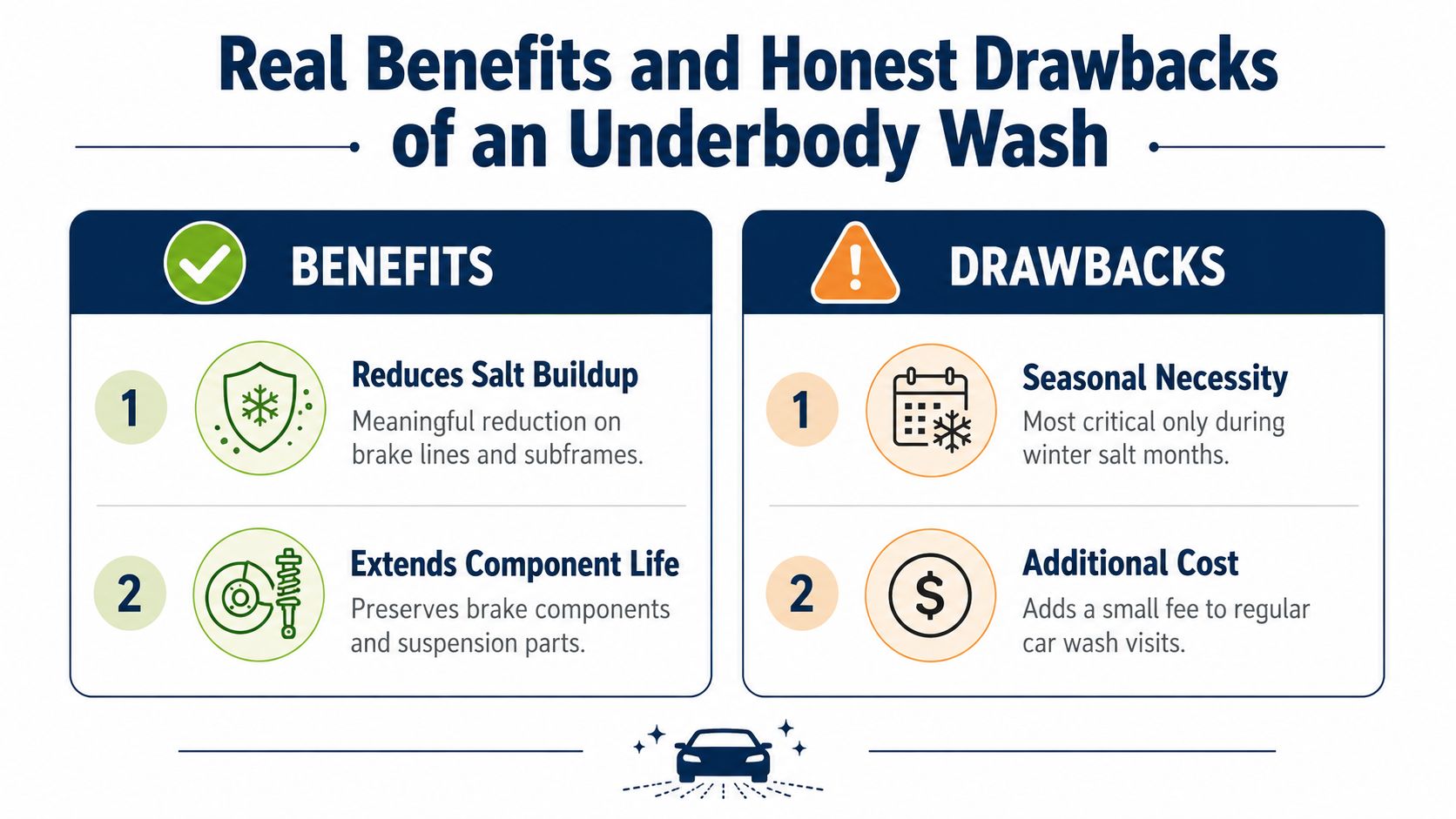
The strongest benefit is simple: an underbody rinse removes salt buildup from places where you can't easily reach or inspect. That can help preserve brake components, suspension hardware, subframes, and structural seams. It also gives you a cleaner surface for an inspection, which matters when a mechanic is checking lines, mounts, or exhaust components.
Rust affects more than appearance. Corroded hardware can make repairs harder, while damaged lines, exhaust parts, or structural areas can turn a small maintenance issue into an expensive one. Ontario drivers also know that a clean underside can matter when they sell or trade a vehicle, because buyers and technicians often look for evidence of neglect below the doors.
What you gain
- Less salt buildup: A high-pressure rinse clears residue from brake lines, subframes, wheel wells, and seams.
- Better component preservation: Clean metal and hardware have less corrosive material sitting against them.
- A stronger resale presentation: An owner who has kept the underside clean has a better maintenance story than one who only polished the paint.
- Earlier problem visibility: Washing removes grime that can hide flaking rust, damaged shields, or leaking components.
What you pay
The add-on costs more than a basic exterior wash, and it takes another step in your routine. If you wash regularly during winter, the extra fee accumulates. Still, the relevant comparison isn't the price of soap against zero. It's the added cleaning cost against the possibility of substantial rust-related repairs, including brake-line, exhaust, frame, or structural work.
The common fear that an undercarriage wash forces water into sealed bearings or drain plugs is overstated. Modern vehicles already travel through rain, puddles, and spray, and their underbodies include drainage paths. A sensible wash doesn't replace an inspection, but normal professional underbody equipment isn't harmful because it uses pressure.
There is one drawback many wash menus don't explain. Repeated hot-water exposure in a shop bay can shorten the life of some aftermarket undercoatings. If you've paid for a wax or rubberised coating, ask about water temperature and the recommended cleaning method before making aggressive hot-bay washing your default.
Undercarriage Wash Versus a Standard Exterior Wash
A standard exterior wash is built to clean what the equipment can see from the sides and above. Soap loosens road film on the paint, brushes or touchless jets work across the body, and dryers remove surface water. That process is useful, but it doesn't mean the underside received a meaningful rinse.
A true undercarriage service adds spray from below. Fixed bars or rotating nozzles direct water at the floor pans, frame rails, suspension, wheel wells, brake-area hardware, exhaust hangers, and lower body edges. The system's effectiveness depends on nozzle coverage, pressure, chemical selection, and whether the spray lasts long enough to dislodge caked-on material.
What the exterior cycle misses
A touchless wash doesn't automatically clean underneath. Its water may reach a small portion of the lower edges, but it isn't designed to dwell around frame rails or flush salt from suspension pockets. A brush wash has the same limitation, and brushes can clean the paint while leaving the most exposed metal below largely untouched.
A driveway rinse is better than nothing, particularly after a muddy drive. But a garden hose usually lacks the reach, angle, and force of a commercial underbody rig. A pressure washer can improve the result, yet getting underneath safely requires proper access, eye protection, care around electrical connections, and enough time to cover both sides of the vehicle.
The useful question isn't whether water touched the underside. It's whether the wash reached the places where salt stayed.
Suppose your exterior wash costs $12 and the undercarriage add-on costs $4 to $8. The add-on buys targeted access to areas the basic cycle doesn't serve. For drivers comparing equipment, package details, or broader maintenance options, this 2026 car and truck services guide offers useful context on how vehicle service categories differ.
Choose the underbody option after salted-road exposure, not because every menu upgrade deserves a yes. The value comes from cleaning hidden corrosion zones, especially when the vehicle will remain in GTA service for years.
Pairing Undercarriage Washing With Rust Proofing
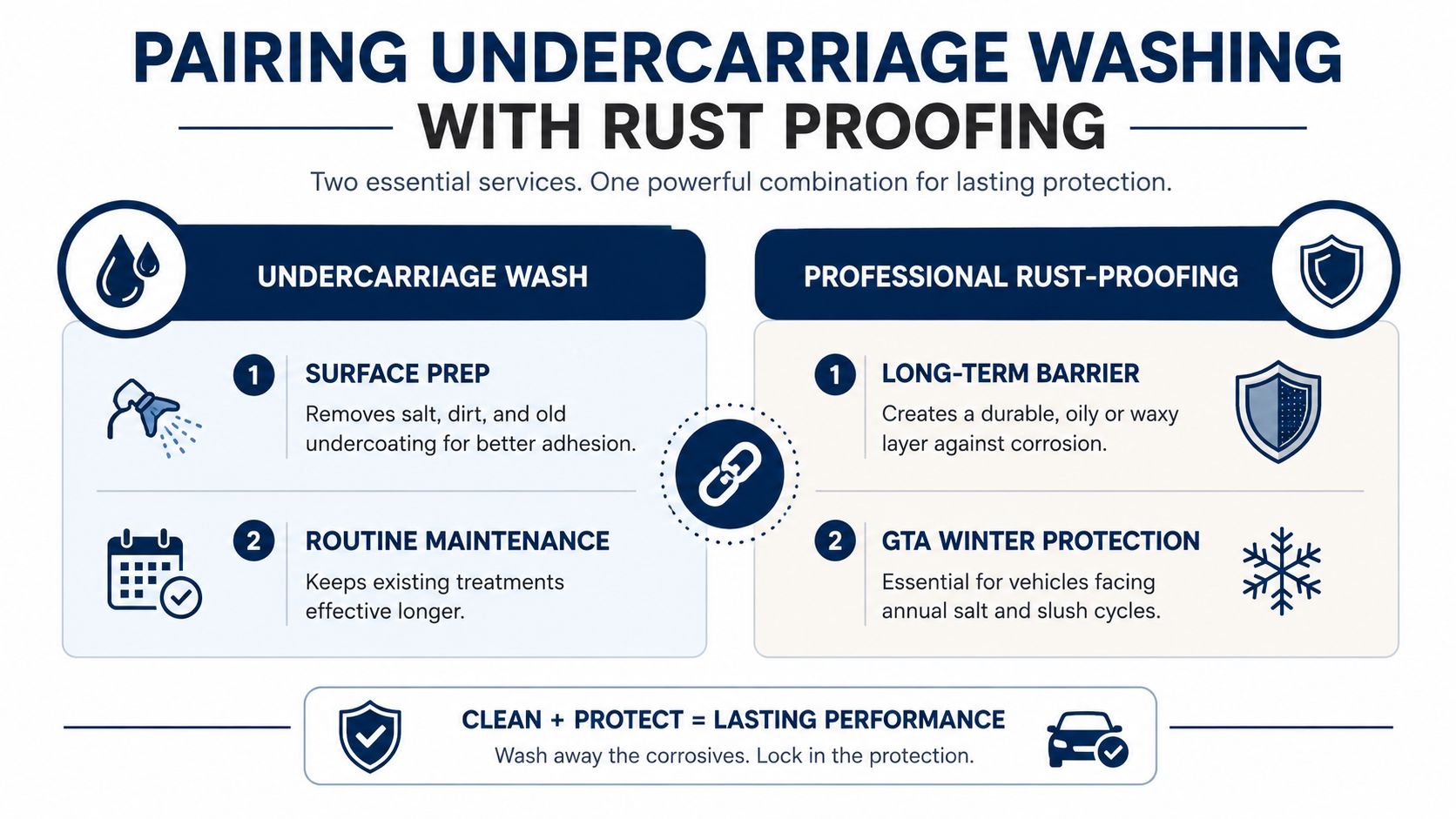
Washing and rust proofing solve different problems. The wash removes salt, grime, and brine already sitting on the underside. Rust proofing adds a protective film that helps shield vulnerable seams, spot welds, frame pockets, and exposed metal from the next round of winter contamination.
That makes the combination sensible for a high-exposure vehicle. A petroleum- or wax-based treatment can buy time when you miss a wash, while regular rinsing keeps corrosive residue from building up on top of the treatment. One service cleans. The other creates a barrier.
Pick the treatment that matches the vehicle
Annual spray-on rust proofing is different from a heavy underbody coating. A spray treatment can reach seams, cavities, and irregular surfaces. A thick coating may offer a more substantial physical layer in selected areas, but it also needs careful preparation and inspection. Applying a coating over trapped salt or existing corrosion isn't a substitute for cleaning the surface first.
Older trucks, high-mileage SUVs, work vans, and fleet units usually justify the combined approach. They spend more time exposed, carry ownership costs over a longer period, and often face more difficult resale or repair decisions. A lightly used, garaged vehicle with rust protection already applied doesn't need the same treatment intensity.
A leased car returned within 3 years can be a different calculation. If you drive limited winter kilometres, park indoors, and don't plan to keep the vehicle, paying for a complete protection package may be overkill. You should still wash off heavy salt, but you don't need to build a long-term preservation programme around a short ownership horizon.
For owners who want one appointment covering both tasks, Nanak's underbody wash and rust-proofing options provide a bundled route. Ask what preparation the treatment includes, what type of compound is used, and how future washing should be handled so you don't undermine the protection.
Which GTA Driver You Are and What That Means for You
The answer to “is undercarriage wash worth it” changes with exposure and ownership plans. A driver who commutes from Brampton to downtown Toronto every weekday isn't managing the same risk as someone who keeps a second vehicle under cover and drives it only on dry weekends.
The long-term commuter
If you drive daily between November and April and plan to keep the vehicle beyond 5 years, schedule an underbody rinse about every two weeks during active salt conditions. Highway speed throws brine into the wheel wells and underside, while repeated commutes give residue plenty of chances to settle.
A basic underbody rinse is usually the right service tier. Add rust proofing if the vehicle is already exposed year after year, particularly if it's an older SUV, pickup, or work vehicle.
The rideshare or delivery driver
Rideshare and delivery vehicles face constant stop-and-go exposure, frequent parking outdoors, and repeated contact with wet, treated roads. For this profile, use a weekly undercarriage wash during the salt season, with an extra rinse after a major thaw or visibly slushy run.
Don't treat this as cosmetic upkeep. The vehicle is a revenue tool, and keeping the underside accessible for inspections can help a mechanic identify developing issues before they disrupt work. A combined wash and rust-proofing programme makes sense when you plan to operate the vehicle for several winters.
The weekend driver
A second car that barely sees winter roads doesn't need commuter frequency. Wash after a salt-heavy outing or thaw exposure, then inspect the underside before spring storage or extended parking. Monthly cleaning during occasional winter use is a reasonable ceiling, not a target you must force.
Rust proofing may be unnecessary if the car stays indoors and sees little brine. Focus on a thorough rinse when exposure does happen.
The small fleet owner
Fleet managers should standardise the process instead of leaving each driver to choose. Use a regular underbody rinse for vehicles working daily routes, and reserve more targeted shop-bay attention for older units, trucks, vans, or vehicles showing early corrosion.
| Driver Type | Wash Frequency | Service Tier | Rust-Proofing? |
|---|---|---|---|
| Long-term GTA commuter | Every two weeks in salt season | Basic underbody rinse | Worth considering |
| Rideshare or delivery driver | Weekly, plus after heavy thaw exposure | Regular underbody wash, combined option for long-term vehicles | Usually worthwhile |
| Garaged weekend driver | Monthly during winter use, or after salted-road trips | Basic rinse | Often overkill |
| Small fleet owner | Weekly or biweekly by route exposure | Standardised fleet wash, targeted inspection for older units | Prioritise high-mileage units |
| Driver Type | Wash Frequency | Service Tier | Rust-Proofing? |
|---|---|---|---|
| Long-term GTA commuter | Every two weeks in salt season | Basic underbody rinse | Worth considering |
| Rideshare or delivery driver | Weekly, plus after heavy thaw exposure | Regular underbody wash, combined option for long-term vehicles | Usually worthwhile |
| Garaged weekend driver | Monthly during winter use, or after salted-road trips | Basic rinse | Often overkill |
| Small fleet owner | Weekly or biweekly by route exposure | Standardised fleet wash, targeted inspection for older units | Prioritise high-mileage units |
The quick rule is simple. Daily GTA driving through the salt season plus long-term ownership makes the wash essential. Limited winter mileage and indoor storage let you dial it back without guilt.
A Simple Year-Round Schedule for Maximum Protection
A useful schedule follows weather triggers, not a rigid calendar. GTA roads can look clean while salt remains lodged in cavities, and the highest-value rinse often arrives after a thaw rather than immediately after a snowstorm.
Winter is the maintenance season
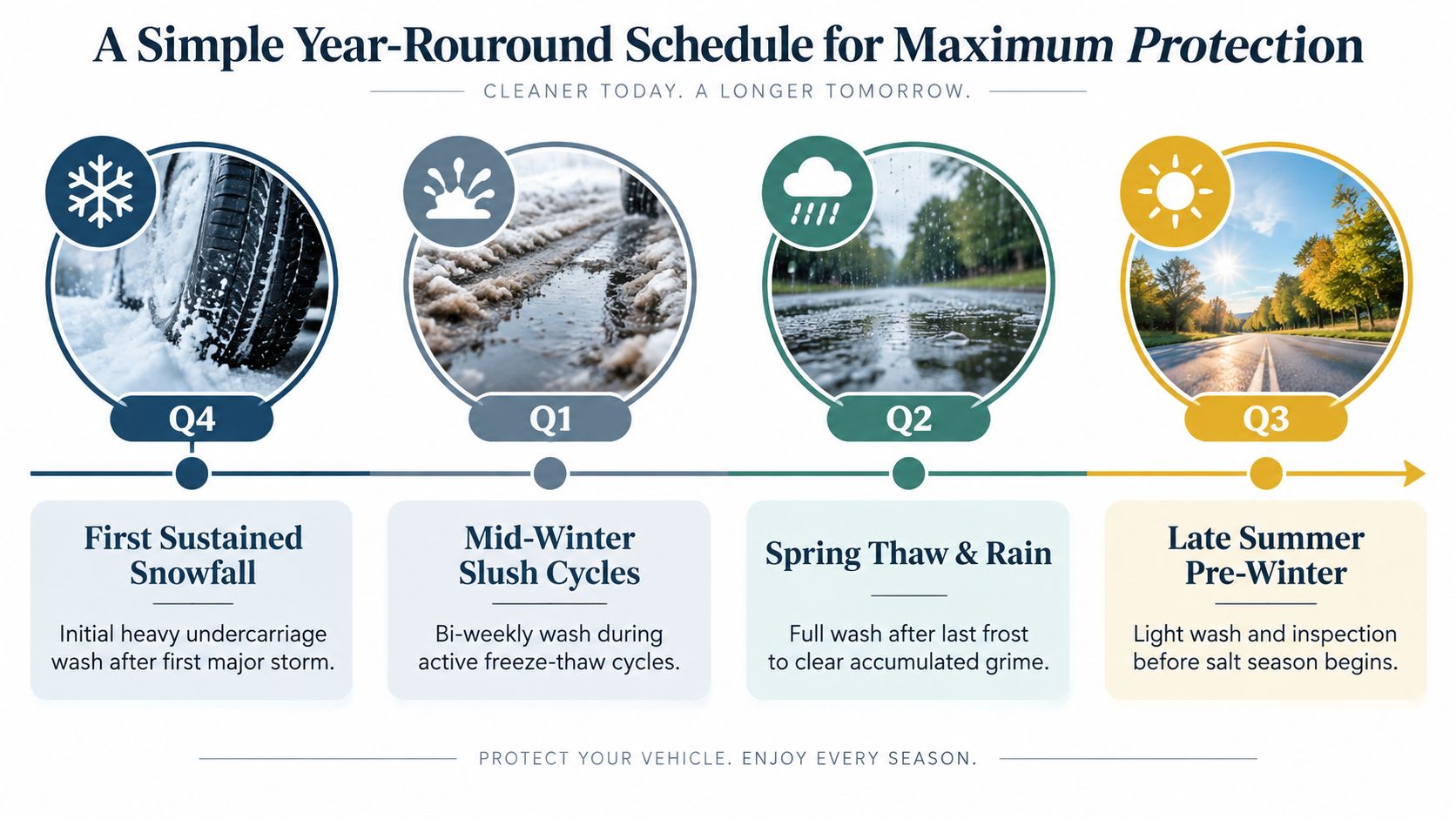
- First sustained snowfall: Run a thorough underbody wash after the first major salting event. This clears the initial layer before it gets compacted by later slush.
- Mid-winter slush cycles: Typical commuters should wash about every two weeks. High-exposure drivers should do it weekly, particularly after repeated wet-road travel.
- After a thaw: Make this a priority wash. As temperatures cross freezing, trapped salt dissolves into mobile brine and can spread through seams, pockets, and around fasteners. Ontario corrosion guidance recommends regular underbody rinses and an extra wash after thaw events because the brine remains chemically active even when roads appear cleaner.
Spring deserves the final serious rinse
In March or April, wash the underside after the last meaningful salt and slush period. The purpose is to remove accumulated winter residue before warmer, wetter conditions keep it active. Once roads are clean and dry, you can stop winter-level frequency.
Summer doesn't require the same corrosion routine, but mud, bugs, construction dust, and gravel can still collect underneath. Give the vehicle a normal rinse after messy travel, then use late summer or early autumn for a light wash and underside inspection before the next salting season.
Keep this checklist in the glove box
- Salt exposure: Did I drive through treated slush or wet roads?
- Weather trigger: Has a thaw followed a snow or freezing period?
- Access: Does the selected wash include a real underbody cycle?
- Ownership horizon: Am I keeping this vehicle for several more winters?
- Treatment status: Do I have rust proofing or an aftermarket coating that needs special care?
- Inspection: Did the rinse reveal damaged lines, shields, mounts, or structural rust?
For a typical GTA commuter, every two weeks through winter is a practical baseline. For a rideshare driver or fleet vehicle, weekly makes more sense. For a garaged weekend car, monthly or post-exposure washing is enough. The point isn't to wash blindly. It's to remove salt when it has the greatest opportunity to stay active against the underside.
Nanak Car Wash offers express exterior washes with an underbody wash upgrade, plus detailing and rust-proofing services for GTA vehicles facing regular salt exposure. Visit Nanak Car Wash to choose a wash option that matches your driving pattern, then make the undercarriage rinse part of your winter routine.

 6600 Finch Ave W, Etobicoke, ON M9V 3Z6
 647-703-8515
 MON – SUN 8 AM to 7 PM