
You leave the GTA in the morning with a clean car. By the time you reach work, the lower doors are wearing a grey moustache of slush, and a fine mist of salty brine has reached places you can't see. The car looks fine in the driveway. Then spring arrives, and a small orange bubble appears beside a rocker panel.
That bubble didn't appear overnight. Ontario's winter road environment gives corrosion plenty of opportunity to start underneath the vehicle, where salt, water, gravel, and trapped slush meet exposed steel. The province spreads roughly 1.5 to 3 million tonnes of road salt each winter, while the freeze-thaw season lasts about five to six months, according to this Ontario-focused explanation of winter rust.
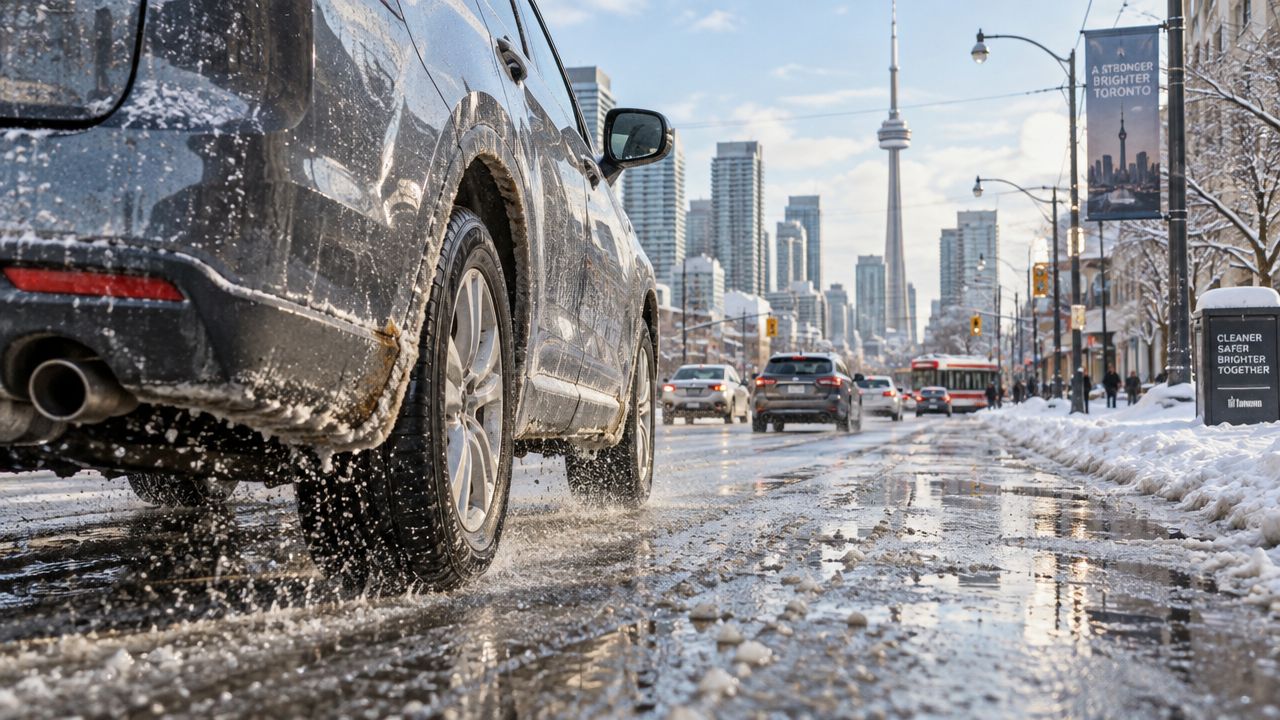
Table of Contents
- Introduction Why Winter Undercoating Matters in Ontario
- How Road Salt and Freeze Thaw Attack Your Underbody
- Types of Winter Undercoating and How Each Protects
- When to Apply Winter Undercoating and What It Costs in the GTA
- Winter Undercoating Versus Washing and Inspection Routines
- What to Expect From Rust Proofing at Nanak Car Wash
- Keeping Protection Working All Winter Long
Introduction Why Winter Undercoating Matters in Ontario
Winter undercoating isn't a shine-up service for the showroom. It's one possible part of a salt-season maintenance system designed to reduce how often chloride-laden moisture sits against rocker panels, brake lines, subframes, brackets, and other exposed steel.
That distinction matters because a coating can't solve every rust problem. A clean, properly prepared vehicle may benefit from a protective layer, while an older vehicle with existing corrosion may need penetrating rustproofing, repairs, washing, and inspection instead of a hard shell sprayed over the top.
This guide will help you make that call without treating undercoating as a magic winter shield. You'll learn how Ontario salt attacks metal, how oil-based, rubberized, and wax-based options differ, when to apply them, what affects GTA pricing, and why frequent underbody rinsing still matters after treatment.
The practical question isn't “Should I undercoat my car?” It's, “What combination of coating, rinsing, and inspection makes sense for how I drive and where my vehicle is in its life?”
The useful mindset: undercoating is protection, not permission to ignore the underside.
A new vehicle driven occasionally has a different risk profile from an older daily commuter parked outdoors beside wet roads. A lakefront driver, a delivery driver, and someone who works from home may all need different routines, even if they live in the same neighbourhood.
The first step is understanding why the underside takes such a beating. Once you see how salt and repeated temperature changes keep metal wet, the coating choices become much easier to judge.
How Road Salt and Freeze Thaw Attack Your Underbody
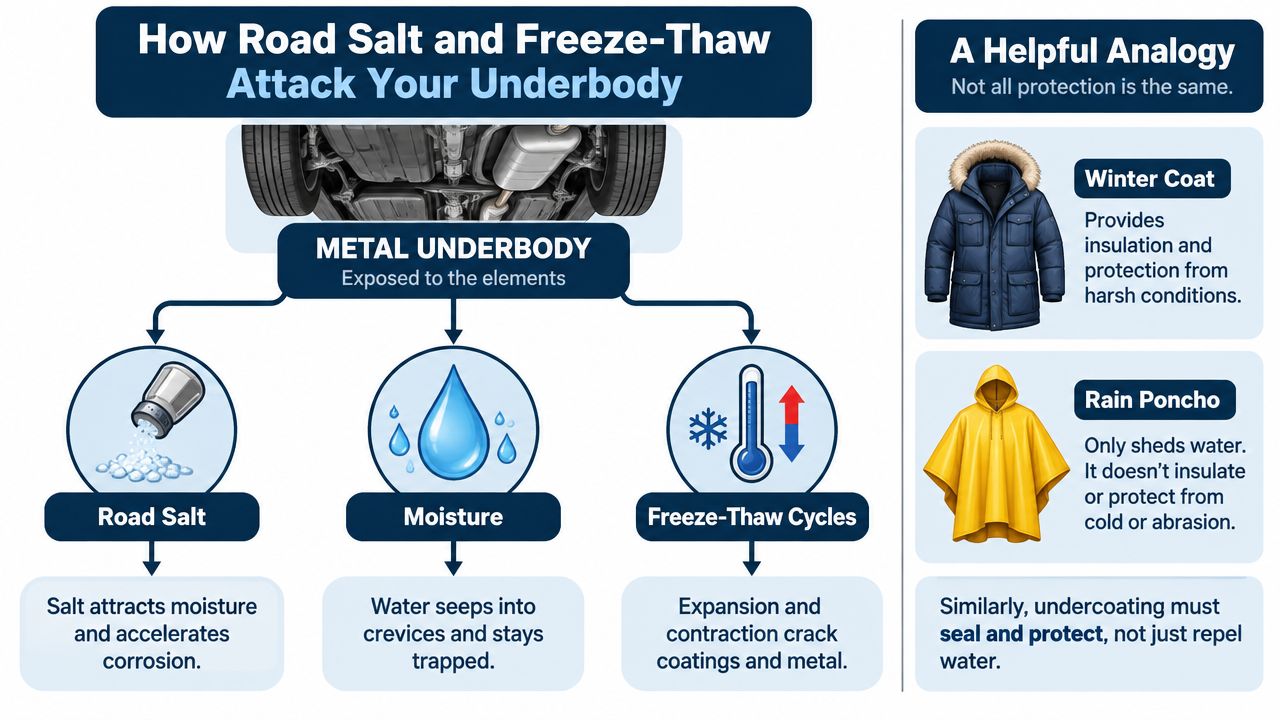
A GTA commute through slush can leave the underside wet long after the road looks clear. Salt mixes with that moisture to form brine, which stays active against steel instead of drying away quickly. Repeated freezing and thawing then turns one splash into a cycle of wetting, freezing, and thawing that keeps testing exposed metal.
Ontario's salt season lasts about five to six months. During that period, road spray, moisture, and temperature changes work together against the underbody, as described in this Ontario rust protection overview.
Why the underside gets the worst exposure
Tyres throw salty spray directly at seams, brackets, wheel-well edges, and narrow crevices. Those areas receive contamination before the cleaner upper body panels, while shields and folded metal can slow drying.
Common trouble spots include:
- Rocker panels, where seams and folded sections hold damp residue.
- Brake lines, where salt can remain around exposed metal.
- Subframes and crossmembers, which sit in the path of road spray.
- Fasteners and brackets, where a small rust spot can spread into nearby parts.
A visible puddle is not required. A thin salty film inside a seam or behind a shield can attract more moisture during the next drive. If temperatures drop, trapped water freezes, expands, and thaws again, putting stress on metal and any protection already covering it.
Frequent underbody rinsing interrupts this cycle by removing brine before it remains in place. A coating can reduce direct contact, but it cannot clean salt from a hidden pocket or correct poor surface preparation. For an occasional driver, rinsing after messy road conditions may carry more weight than coating immediately. A daily commuter who parks outdoors faces more repeated exposure, so coating, rinsing, and inspection work better as one routine.
What corrosion looks like before it looks serious
Rust often starts without warning. A dusty orange mark, rough seam, or flaky area around a mounting point can appear well before damage becomes obvious from outside. In the GTA, visible undercarriage rust is commonly reported within three to five years for year-round drivers, while a well-undercoated new vehicle may delay visible corrosion to about four to six years, according to the Ontario vehicle corrosion reference.
Undercoating is one part of the response. Its value depends on preparation, coverage, product choice, and the condition of the steel beneath it. An older vehicle may need cleaning, inspection, penetrating protection, or repairs before any coating makes sense.
Types of Winter Undercoating and How Each Protects
Drivers usually encounter three broad approaches: oil-based penetrating rustproofing, rubberized undercoating, and wax-based cavity protection. They don't behave the same way, so choosing by colour or thickness alone can lead you in the wrong direction.
Oil-based products are designed to creep into seams and displace moisture. They're generally more forgiving on older vehicles because they can coat around light existing corrosion rather than forming a rigid shell over it. The trade-off is that they're part of a continuing maintenance routine and may need refreshing.
Rubberized undercoating creates a thick physical barrier. That sounds attractive, especially for a newer vehicle with clean metal, but the preparation rule is critical. A technical explanation of undercoating in Ontario conditions warns that rubberized material works best on clean, new metal, while applying it over existing rust can trap moisture against the substrate and worsen corrosion.
Wax-based products sit between a penetrating film and a hard rubber shell. They can creep into cavities before leaving a protective waxy layer, making them useful where you want coverage in seams without the permanence of a thick rigid coating.
Winter Undercoating Types Compared for Ontario Drivers
| Protection Type | How It Works | Best For | Watch Out For |
|---|---|---|---|
| Oil-based penetrating rustproofing | Flows into seams and exposed areas, helping displace water and separate metal from salty moisture | Older vehicles, daily drivers, and surfaces with light existing rust | Requires inspection and periodic renewal; may remain oily |
| Rubberized undercoating | Forms a thick, physical barrier over prepared metal | Clean, newer underbodies and areas exposed to road debris | Can trap moisture if sprayed over rust; makes later inspection and repair more difficult |
| Wax-based cavity protection | Creeps into seams, then leaves a wax-like protective film | Cavities, seams, and vehicles needing a middle-ground approach | Coverage still needs checking, and touch-ups may be necessary |
The inspection rule that prevents a bad application
A technician should inspect the underside before choosing a product. Loose scale, active corrosion, dampness, damaged factory coating, and areas needing repair should be identified first.
A dark, smooth underside isn't automatically a healthy underside. Surface condition matters more than appearance.
For a newer, clean vehicle, a barrier-style product may make sense. For an older vehicle showing corrosion, a penetrating strategy plus targeted repair is usually safer than sealing the problem beneath a hard layer.
When to Apply Winter Undercoating and What It Costs in the GTA
A vehicle can leave the shop protected and still face salt, slush, and wet brine for months. Winter undercoating is one part of an Ontario salt-season system, not a substitute for rinsing or inspection. The treatment works best when its timing matches the vehicle's age, condition, and driving pattern.
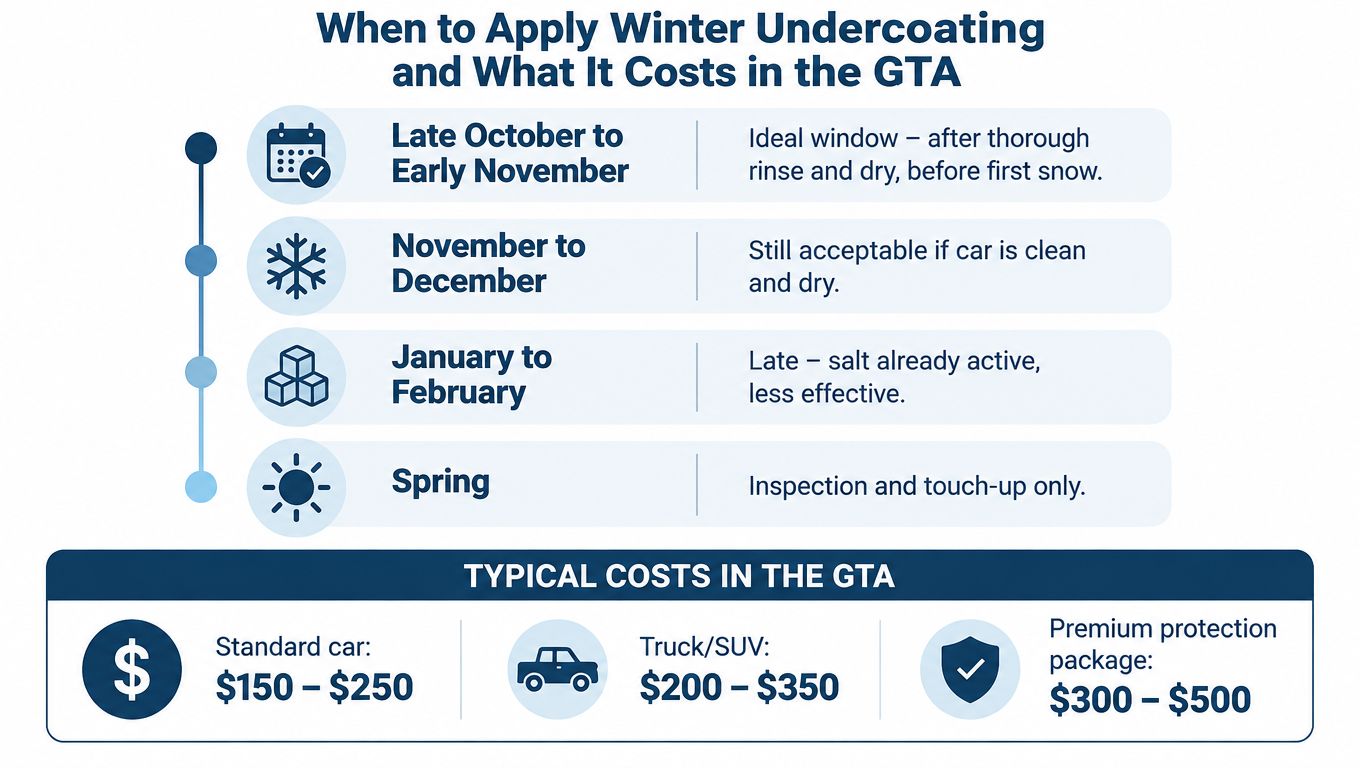
The usual Ontario window is late October to early November, after a thorough underbody rinse and complete drying, before heavy salt exposure begins. Nanak Car Wash on Ontario rust-proofing timing describes rust-proofing as part of a fall-to-spring cycle rather than a one-time appointment.
The seasonal calendar
Late October and early November give a technician a clean, dry surface. November and December can still work if the vehicle is rinsed and dried first, although salt already stuck underneath makes preparation more demanding.
From January through March, underbody rinses remove the residue that continues to arrive with each wet or salty drive. Spring brings the inspection stage, when a technician can check for damage and decide whether a touch-up makes sense, especially on an older or heavily driven vehicle.
A simple rule prevents a poor application: never put treatment over wet grime. Salt trapped beneath a coating leaves the metal facing the same problem under a new layer.
What shapes GTA pricing
The final price depends on vehicle size, condition, preparation, product, and whether the service is repeated as maintenance. Published Nanak Car Wash information lists rust-proofing by vehicle size at approximately $119.95 to $149.95 plus tax, according to its rust-proofing service information.
That range is a reference, not a universal quote. A larger SUV, van, or pickup may need more product and application time than a compact car. Existing corrosion can also lead to recommended cleaning, inspection, or repair before protection is applied.
Why the service has stayed relevant
Winter rust protection has a long history in Ontario. The first Rust Check Centre opened in Hepworth in 1973, after development work began in 1970, an early Canadian commercial milestone linked to winter road conditions. A Canadian rust-proofing research summary cited by Nanak Car Wash's undercarriage protection guide reported that untreated vehicles showed 6.8 times more visible body rust and 3.6 times more underbody corrosion than treated vehicles.
The practical decision is vehicle-specific. A newer car used occasionally may need careful preparation and periodic rinsing. An older daily commuter may benefit from rust-proofing as one layer of protection, paired with regular underbody washing and spring inspection. Prevention matters because corrosion discovered later can affect components and create greater repair inconvenience.
Winter Undercoating Versus Washing and Inspection Routines
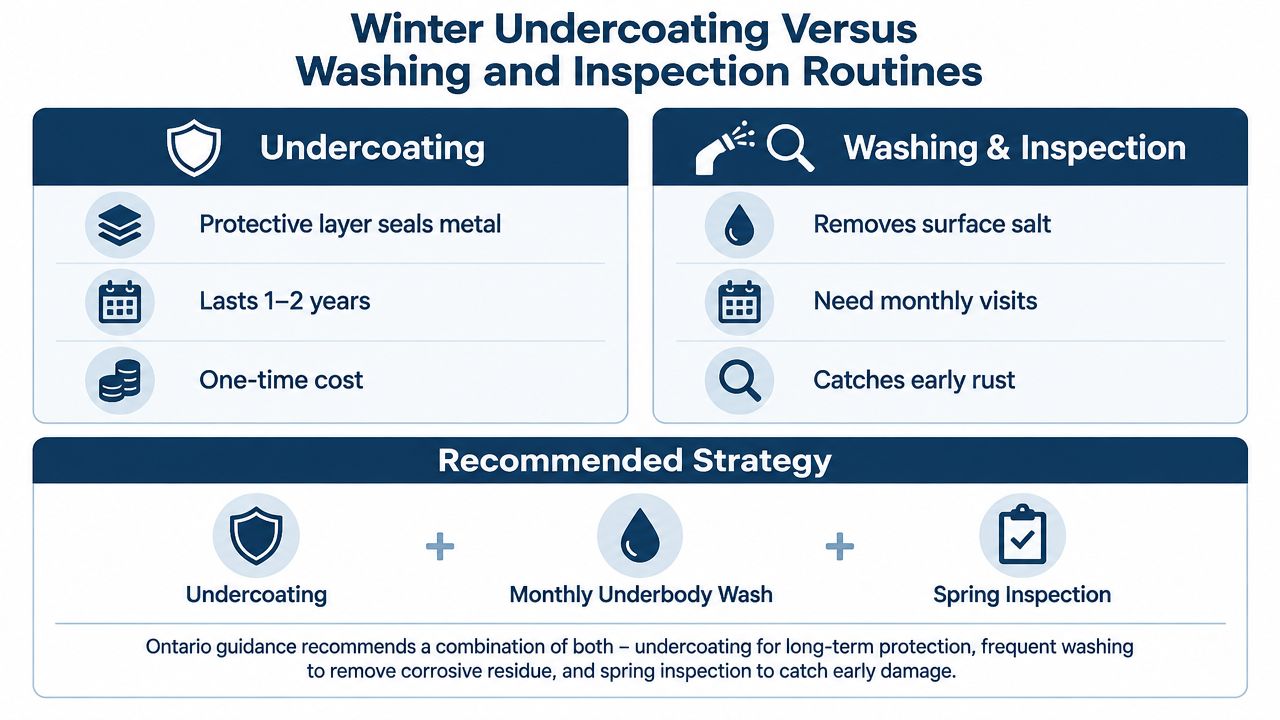
Undercoating and washing don't compete as neatly as many drivers assume. One places a protective layer between steel and contaminants. The other removes the contaminants that still reach the vehicle during winter. Spring inspection identifies damage neither method can prevent completely.
Ontario guidance recommends an underbody wash every two to three weeks during salt season, followed by a spring corrosion inspection, according to this Ontario road-salt maintenance guide. The same source reports 1,679,395 tonnes of road salt used in the cited reporting year, which helps explain why rinsing remains relevant even after treatment.
Match the routine to the driver
A new vehicle driven a few times each week may place more emphasis on a clean pre-treatment and periodic rinses. A daily commuter travelling through wet brine needs consistent underbody washing because every trip adds another layer of residue.
An older vehicle deserves a closer inspection before any hard coating. If rust is already visible, penetrating rustproofing and repair may offer a more responsible path than covering the surface.
| Driving pattern | Sensible priority |
|---|---|
| Occasional use and indoor parking | Clean, dry pre-season inspection, then rinse when exposed to heavy salt |
| Daily GTA commute | Regular underbody rinsing plus a suitable protective treatment |
| High-mileage delivery or ride-hailing use | Frequent washing, pre-season protection, and spring inspection |
| Older vehicle with visible corrosion | Condition assessment, penetrating protection, and repair planning |
| Lakefront or outdoor parking exposure | Pre-season treatment, winter rinsing, and spring inspection |
Why rinsing still matters
A coating reduces contact, but it doesn't make the underside waterproof forever. Road spray can reach exposed edges, damaged areas, and surfaces the application didn't fully cover. Washing also lets you notice changes, such as new flaking, damaged shields, or fluid leaks.
Practical rule: use undercoating to reduce exposure, washing to remove residue, and inspection to find problems early.
For many GTA drivers, the strongest routine combines all three. A driver with low exposure might reasonably prioritise washing and inspection, while a year-round commuter with an older vehicle may choose penetrating protection alongside those habits.
What to Expect From Rust Proofing at Nanak Car Wash
A GTA winter visit starts before the spray gun. Salt packed onto a damp, dirty underside is like grit trapped under a bandage. It can block coverage and hide the metal underneath, so the vehicle should first receive an underbody rinse, thorough drying, and a visual condition check.
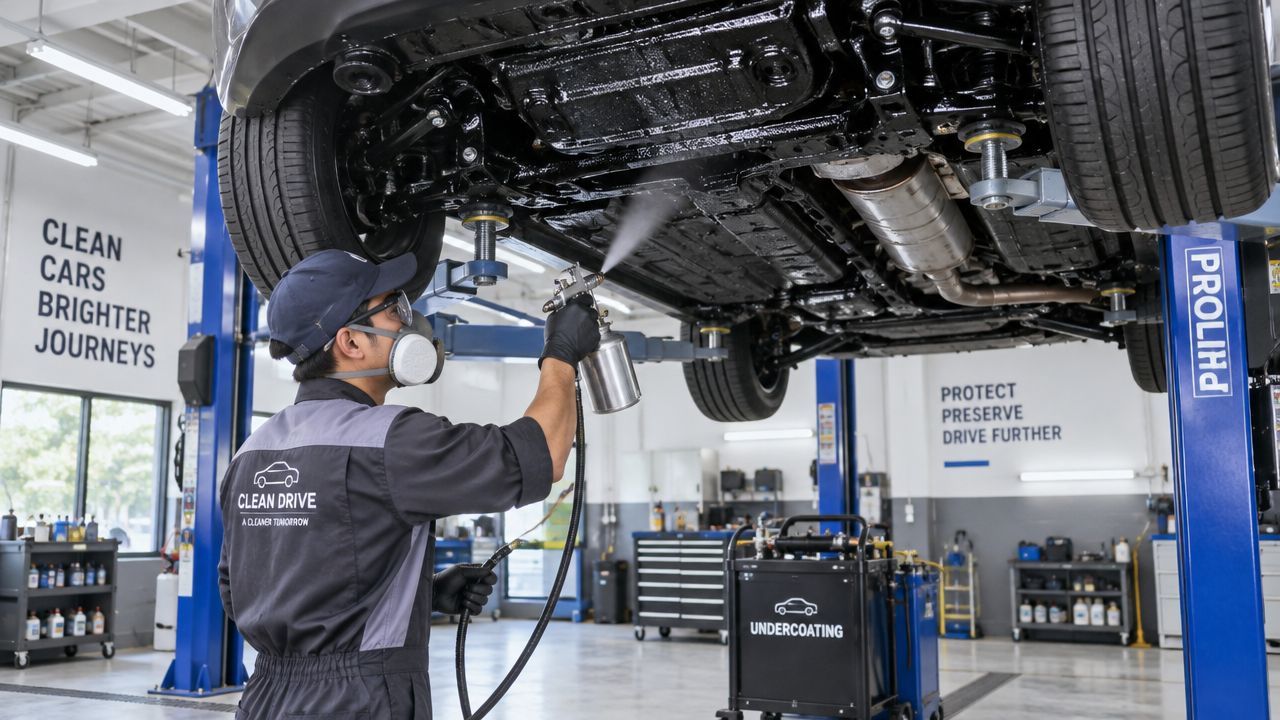
Nanak Car Wash provides rust-proofing applications using a dedicated chemical compound, with pricing arranged by vehicle size. Its services also include exterior washing, interior cleaning, detailing, and rust protection. That makes it possible to pair underbody care with a regular cleaning visit. The treatment is one local option alongside the oil-based and barrier-style methods described earlier.
How to prepare your appointment
Allow enough time for staff to examine the vehicle rather than treating the appointment as a quick spray. Mention fresh repairs, loose rust, damaged plastic shields, or known leaks before application. Those details can change where product is suitable and whether repair should come first.
A sound appointment follows five basic steps:
- Rinse first. Remove salt, mud, and loose road debris.
- Dry thoroughly. Product should not be applied over trapped moisture.
- Inspect exposed areas. Rocker panels, lines, subframes, seams, and brackets need a close look.
- Apply the compound. Coverage should match the underside while avoiding components that should remain clean.
- Set a maintenance plan. Continue underbody rinsing during salt season and arrange a spring inspection.
The aim is not to cover every surface automatically. A newer vehicle with clean metal may suit barrier-style protection, while an older daily driver with existing corrosion may need penetrating treatment and repair assessment. A driver who uses the car occasionally might place more value on rinsing and inspection than on treating the whole underside.
Nanak Car Wash has operated since 2004, uses fresh water for its washes, and lists multiple GTA-area locations. Prepaid wash options and monthly memberships are also available for drivers who already wash frequently, although suitability depends on visit frequency.
Rust proofing does not repair weakened metal. If corrosion affects a brake line, mounting point, or structural area, ask what must be repaired before protection proceeds. Coating can help preserve sound metal, but it cannot restore strength that rust has already removed.
Keeping Protection Working All Winter Long
A winter coating works like a rain jacket, not a sealed garage. It adds a layer of protection, while salt, slush, and moisture still need regular removal. Your vehicle needs the same combination of preparation, rinsing, and inspection.
Use a routine that matches the season and the way you drive:
- October: Arrange an underside rinse, let the vehicle dry, inspect the metal, and apply suitable protection before heavy salt use.
- Mid-winter: Rinse the underbody every two to three weeks during salt season, following the Ontario guidance cited earlier. Rinse more promptly after repeated slush or brine exposure.
- Spring: Check rocker panels, brake lines, subframes, seams, and brackets for new corrosion or damaged protection. Older, daily-driven, or lakefront-exposed vehicles may need a touch-up.
- Any time: Do not cover active rust, wet debris, leaks, or damaged components before discussing their condition with a technician.
A newer vehicle with clean metal may suit barrier-style protection if preparation is thorough. An older daily driver with visible corrosion may need a penetrating product and repair assessment first. A low-mileage vehicle may gain more from regular underbody rinsing and inspection than from coating every surface.
The right plan depends on use. Frequent highway driving through salted slush calls for more rinsing than occasional local trips, while an older vehicle deserves closer checks before product is applied.
Ontario salt remains a seasonal threat, but the response can stay practical. Match protection to the metal's condition, washing to your driving pattern, and spring inspection to the areas most exposed. That combination helps prevent a small rust bubble from becoming an expensive winter souvenir.
Nanak Car Wash offers GTA rust-proofing applications, underbody washing, detailing, prepaid wash options, and membership choices for drivers building a regular winter maintenance routine. Visit Nanak Car Wash to review available services and choose a location before salt use becomes heavy.

 6600 Finch Ave W, Etobicoke, ON M9V 3Z6
 647-703-8515
 MON – SUN 8 AM to 7 PM