
Triple foam is worth it mainly for drivers who wash less than weekly in winter, want better gloss between washes, and care about paint appearance. Frequent wash members and rust-proofed vehicles will see little extra value.
The popular advice says triple foam is an obvious upgrade because the coloured foam looks impressive and leaves a glossy finish. That advice is incomplete. In Ontario, the question isn't whether your car shines when it leaves the tunnel. It's whether the extra treatment earns its place against road salt, winter driving, wash frequency, and the protection you already have.
A driver who washes every few days is already removing salt regularly. A driver who leaves a vehicle outside through a GTA winter and washes only occasionally has a different problem. For that owner, triple foam can be a sensible finishing layer. It still won't replace an underbody rinse or rust proofing, but it can make the paint easier to maintain between visits.
| Driver pattern | Triple foam verdict | Better priority |
|---|---|---|
| Washes less than weekly in winter | Worth considering | Foam protection plus underbody rinse |
| Washes frequently through a membership | Usually limited extra value | Consistent salt removal |
| Vehicle has dedicated rust proofing | Mostly a gloss upgrade | Keep washing the underbody |
| Rideshare or client-facing vehicle | Often worthwhile | Finish appearance and quick maintenance |
| Neglected or heavily oxidised paint | Skip it initially | Decontamination and machine polishing |
Table of Contents
- Why Triple Foam Is a Salt Belt Question, Not a Shine Question
- What Triple Foam Actually Does Inside a Wash
- Triple Foam vs Standard Wax and Sealer Options
- Breaking Down the Cost Per Wash
- Which GTA Drivers Actually Benefit From the Upgrade
- Where Triple Foam Fits in a Full Winter Protection Plan
- When Triple Foam Is Worth It and When to Skip It
- Practical Questions Members Ask Before Upgrading
Why Triple Foam Is a Salt Belt Question, Not a Shine Question
Triple foam is marketed as a colourful shine upgrade. Ontario drivers should judge it by a harder standard: whether the added protection helps manage salt exposure between washes. Salt-laced slush reaches rocker panels, wheel wells, seams, brake components, and underbody surfaces before paint damage becomes obvious.
Regional corrosion research cited by Nanak's Ontario car-care guidance recorded 5,108 mg/dm² of atmospheric corrosion in Toronto over a 19-month exposure period, one of the highest readings in that study. It also reported that deicing salt in the Toronto area doubled corrosion compared with conditions without salt. A mirror-like finish at the tunnel exit cannot measure that risk.
Salt changes the buying decision
A commuter travelling daily through Scarborough, Mississauga, or Brampton collects more slush, grit, and salt residue than an occasional Sunday driver. The residue can keep working after the road dries, while a clean bonnet gives no proof that the underbody is clean.
Ontario-specific summaries note that untreated vehicles can show visible undercarriage rust within 2 to 3 winters, as described in the same Ontario winter detailing resource. Triple foam alone will not prevent that outcome. It can support paint maintenance, but salt removal remains the priority.
Operator's rule: If you have not paid for regular salt removal, do not start by paying for the prettiest foam.
Triple foam leaves a temporary conditioning or wax-like film on exterior paint. Its value is practical when that film helps water and grime rinse away more easily between visits. It does nothing for corrosion hidden underneath the vehicle, so pair it with an underbody rinse rather than treating it as rust protection.
Frequent wash members may gain little by adding it every visit because regular washing already limits how long salt sits on the vehicle. Occasional winter washers, outdoor parkers, rideshare operators, and drivers who need a presentable vehicle between washes have a stronger case. For these GTA drivers, the upgrade earns its place when it improves maintenance between visits, not merely when the foam looks impressive.
What Triple Foam Actually Does Inside a Wash
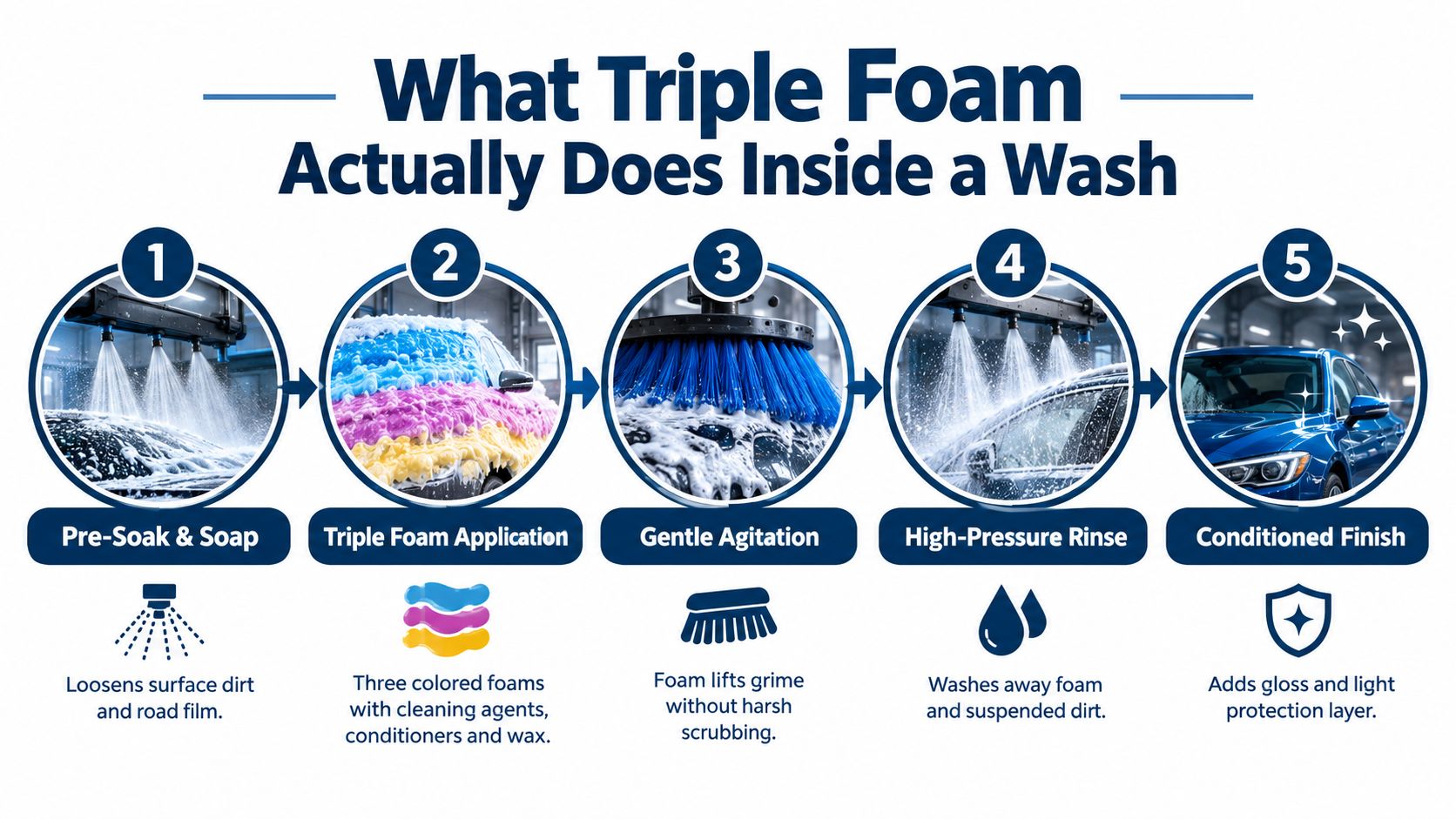
A tunnel wash doesn't treat triple foam as a magical replacement for cleaning. It usually arrives after the initial cleaning chemistry has loosened the worst contamination and before the finishing products complete the cycle.
The wash sequence
Pre-soak and soap loosen the surface film. Detergents and surfactants start breaking the bond between road grime and the paint. This is the cleaning stage, not the protection stage.
The three foams apply different functions. Formulas vary by operator, but the package commonly combines cleaning agents, conditioners, and a wax or polymer component. Ontario wash menus position triple foam wax alongside presoak soap, foam bath, rinse, drying agent, hot wax, and sealer wax, as shown by Express Auto Wash's package descriptions.
The foam clings while the car moves through the tunnel. That dwell time lets the lubricating solution surround loosened dirt. It reduces the chance that wash material drags dry grit across the clear coat.
Agitation and rinsing remove suspended contamination. The foam doesn't carry away every contaminant by itself. Mechanical wash materials and high-pressure water finish the removal process.
Drying agents and sealers shape the final result. A drying aid helps water sheet or blow away. A sealer wax can add a more deliberate protective step after the triple foam treatment.
Triple foam is therefore best understood as an incremental conditioning and polish step. A Canadian wash describes triple foam polish or sealer wax as an optional add-on layered after the base wash cycle. The value comes from added gloss and hydrophobic behaviour on top of a detergent-driven wash, not from pretending the foam is a complete detailing service.
What it won't do
It won't repair stone chips, remove oxidation, fill deep scratches, or create the durable film of a professionally applied ceramic coating. It also won't wash salt out of hidden areas unless the package includes the right underbody and wheel-well treatment.
If you want a basic clean, buy the base wash. If you want the finish to look sharper and shed water better for a short period, triple foam has a job. Those are different purchases.
Triple Foam vs Standard Wax and Sealer Options
There isn't one winner for every vehicle. A standard wash handles routine contamination. Hot wax adds a visible finish boost. Triple foam sits in the middle, while a proper polymer sealer or hand-applied product makes more sense when the owner wants a longer maintenance window.
The key distinction is temporary tunnel protection versus deliberate surface protection. Tunnel products are fast and convenient. Hand-applied products usually offer more film thickness and finish control, but they demand more time and a cleaner, better-prepared surface.
| Wash Option | Protection Duration | Gloss Level | Added Cost Per Wash |
|---|---|---|---|
| Standard wash, no wax | Cleaning only | Basic clean finish | Lowest |
| Triple foam | Short-term conditioning | Noticeably brighter finish | Low to moderate |
| Hot wax | Short-term wax effect | Strong gloss and beading | Moderate |
| Polymer sealer | Longer-lasting surface protection | Gloss with stronger water behaviour | Moderate to high |
| Hand-applied wax or spray sealant | Longest of these maintenance options | Deepest gloss and thicker film | Highest, often a separate service |
Where triple foam earns its place
Triple foam is more useful than a plain wash when your vehicle sits outside, encounters road film, or needs to look presentable without a full detailing appointment. The foam can leave the paint feeling slicker and make water move differently across the panels. That's a worthwhile result for an owner who doesn't wash often enough to keep the finish consistently fresh.
Hot wax is the more obvious choice when the goal is a warmer, more reflective finish during a single visit. A polymer sealer is the better choice when protection matters more than the visual drama of coloured foam. If a wash menu offers triple foam and sealer wax together, check whether you're paying for two distinct finishing steps or two names for overlapping chemistry.
Don't compare unlike services
A hand wax still wins for depth of gloss and film thickness when the paint has been properly washed and prepared. It loses on convenience, speed, and the ability to fit into a regular commuter routine. A neglected vehicle may need clay treatment, salt removal, polishing, and paint correction before any wax upgrade can show its full benefit.
For most GTA owners, the ladder is simple:
- Choose the standard wash for routine salt and dirt removal.
- Add triple foam for a quick appearance and conditioning boost.
- Choose a sealer when you want protection to carry more of the decision.
- Book hand-applied wax or polishing when the finish itself needs professional correction.
Breaking Down the Cost Per Wash
The accurate cost calculation starts with the price you can verify. Nanak lists express exterior wash packages starting from $9.99 plus tax, with upgrades for underbody washing, drying agents, triple foam wax, hot wax, and sealer wax, as outlined in its official service lineup. The site does not publish a universal triple-foam surcharge in the information available here, so any article that invents one is guessing.
Use your own receipt
Ask the attendant or check the menu for the exact triple-foam increment. Then do the math with your own wash habit, not somebody else's.
Added cost per week = triple-foam surcharge × number of triple-foam visits ÷ the number of weeks you consider the protection useful.
That keeps the decision honest. If you wash every week, a small surcharge adds up fast. If you only wash after the car looks bad, the upgrade may be wasted money because the vehicle is already carrying too much salt and grime between visits.
Do not assume a monthly membership is automatically cheaper. Value depends on how often you wash and whether triple foam is included, discounted, or charged as an extra. Nanak's Unlimited Wash Club pages describe triple foam wax within member wash packages, alongside foam bath, rinse, underbody wash, and sealer wax, but package details can change, so check the current tier before you sign up.
| Wash Option | Added Cost | Protection Window | Cost Per Week |
|---|---|---|---|
| Standard wash | $0 upgrade | Cleaning only | $0 protection add-on |
| Triple foam | Check current menu | Short-term conditioning | Surcharge divided by chosen weeks |
| Hot wax | Check current menu | Short-term wax effect | Surcharge divided by chosen weeks |
| Sealer wax | Check current menu | Longer maintenance window | Surcharge divided by chosen weeks |
| Hand wax appointment | Quoted service price | Longest maintenance option | Appointment price divided by chosen weeks |
The expensive mistake
The hidden cost is not the shine you missed. It is paying for surface gloss while ignoring what stays under the car. Salt does its worst work below the panels, where drivers do not see the damage until it is already there.
A University of Windsor engineering study summarized in Nanak's winter car protection guidance found treated vehicles had 6.8 times less visible body rust and 3.6 times less underbody corrosion than untreated vehicles.
That does not mean triple foam equals a rust-control treatment. It means the protection plan matters, and the plan has to reach the spots where corrosion starts. A triple-foam surcharge makes sense after you have chosen proper washing and rust control, not in place of them.
Which GTA Drivers Actually Benefit From the Upgrade
The answer changes with the driver's routine. Four vehicles can use the same tunnel, face the same weather, and get four different verdicts.
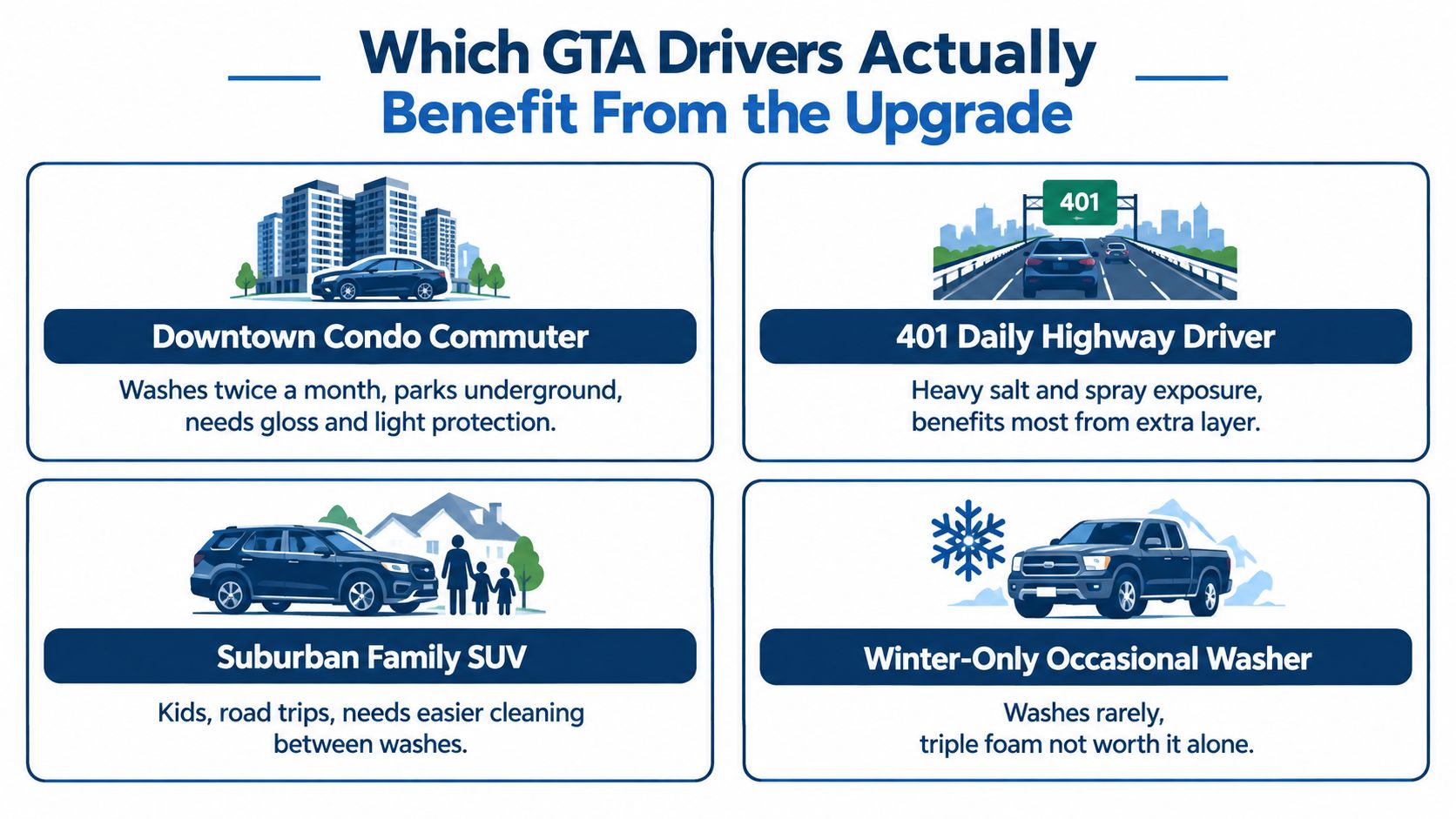
The downtown condo commuter
This driver washes twice a month, parks underground, and spends less time exposed to overnight freezing than someone with an outdoor parking spot. Triple foam earns a moderate yes, especially on dark paint where dull road film shows quickly. It improves the finish between visits, but the driver shouldn't confuse an underground parking space with full winter protection.
The priority is a thorough wash when salt is visible, with triple foam used selectively for appearance. If the car already has rust proofing, the upgrade is mainly cosmetic.
The Mississauga family SUV
A daily-driven SUV sees more spray, more wheel-well contamination, and more exposed lower bodywork than a lightly used city car. This driver gets a clear yes, provided the wash includes an underbody option. Triple foam helps the exterior stay easier to rinse and keeps the family vehicle looking cared for between busy errands.
The wrong purchase would be premium foam without underbody cleaning. Larger vehicles need the wash process to reach the salt-heavy areas, not just the bonnet and doors.
The rideshare driver
A rideshare driver spends long hours in the vehicle and uses appearance as part of the working environment. The verdict is yes, but selectively. A glossy, clean exterior supports a professional presentation, while regular washing removes the road film that accumulates during constant use.
Don't buy it blindly every visit. Use the upgrade when the vehicle needs to look sharp for a busy run of shifts, then prioritise efficient routine washing at other times.
The small-business fleet
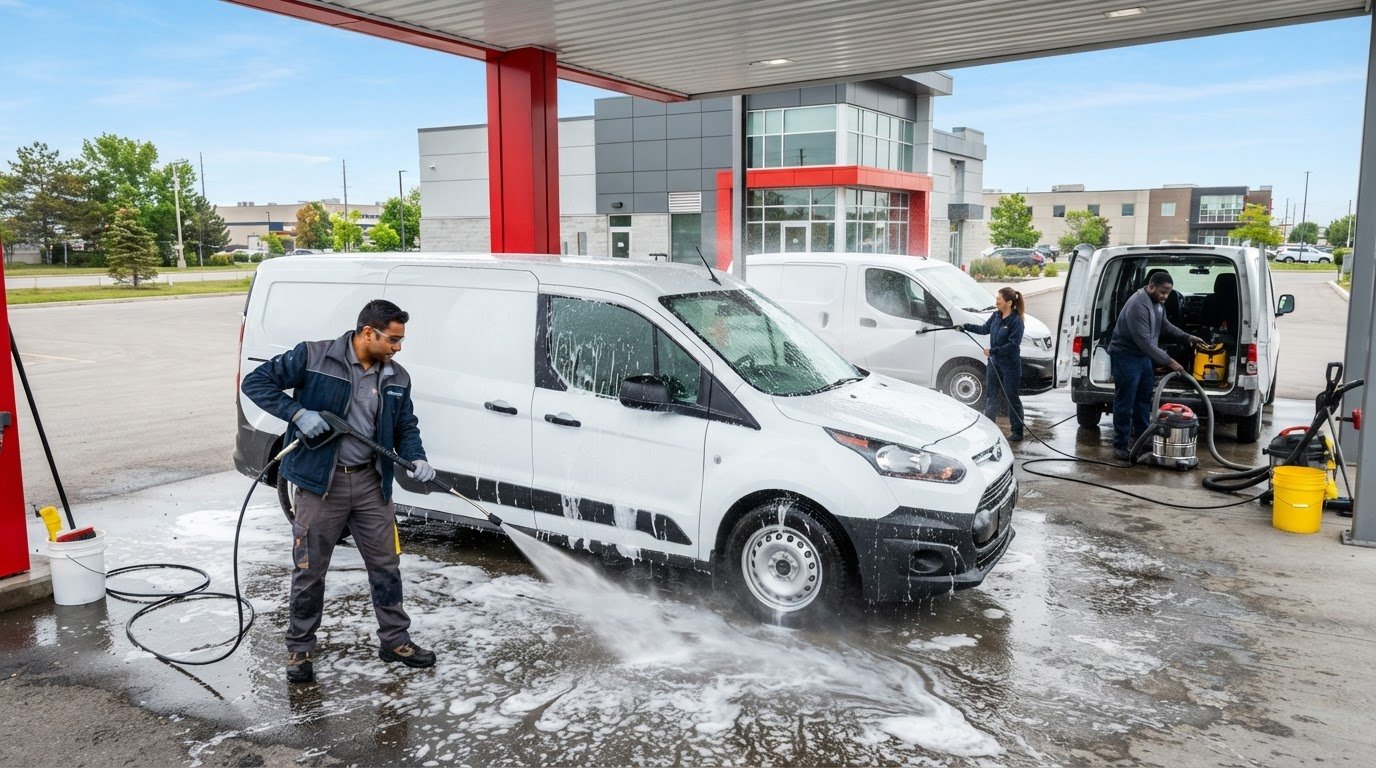
Two or three branded vans arriving at client sites need consistent presentation, but fleet managers must control recurring spend. The verdict is conditional yes. Triple foam can help maintain visible finish and brand presentation, yet underbody rinses and rust proofing generally deserve budget priority for vehicles working through every weather cycle.
A fleet manager should standardise the decision by vehicle condition, route exposure, and inspection needs. A clean logo on a corroded van doesn't signal quality.
Where Triple Foam Fits in a Full Winter Protection Plan
Triple foam earns its place after the salt has been removed from the parts that matter most. Ontario brine collects around the underbody, frame areas, wheel wells, and brake components, while foam mainly treats exposed painted panels. Schedule the underbody flush before the foam step, and confirm the package includes wheel-well coverage rather than only a side spray.
Build protection from underneath
Begin with a pre-rinse to soften salt and road film. Follow with a touchless underbody blast that reaches wheel wells and exposed lower surfaces. The exterior foam bath comes next, loosening remaining contamination before the final rinse and drying stages.
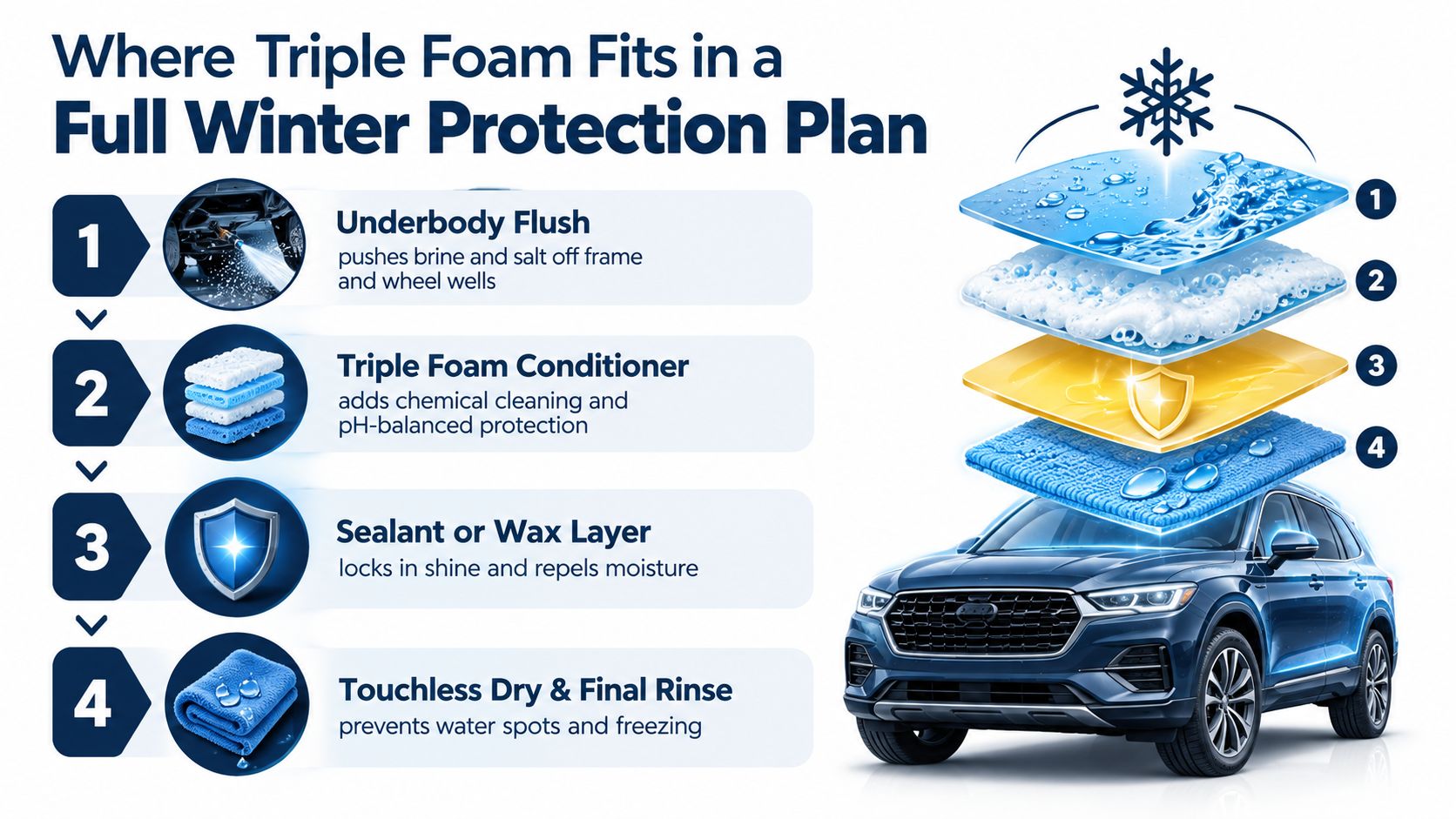
A practical tunnel sequence is:
- Underbody flush: remove brine and grit from hidden surfaces.
- Foam bath: loosen remaining road film with lubrication.
- Triple foam conditioner: add gloss and a light protective layer.
- Drying agent and final rinse: limit retained water and spotting.
Rust proofing belongs in the same winter plan, but it serves a different purpose. Cleaning removes fresh salt, while rust-control products protect vulnerable surfaces over time. As noted in the cost analysis, the University of Windsor research found a clear corrosion advantage for treated vehicles, which is why underbody service comes first in this sequence. The findings are summarized in Nanak's rust-proofing information.
For a GTA driver, rideshare operator, or fleet manager, the order matters more than the upgrade label. A premium exterior finish has limited value if salt remains packed into wheel wells and underneath the vehicle.
Drivers with ceramic coatings or durable polymer sealers should use triple foam for maintenance, not as a replacement. Confirm compatibility with the detailer or wash operator. Foam can refresh slickness and appearance, but it does not recreate the original coating application.
When Triple Foam Is Worth It and When to Skip It
My recommendation is straightforward. Add triple foam when you wash every 10 to 14 days or less, drive through Ontario winters without rust proofing, operate a rideshare vehicle, or care about keeping gloss between full details. The wash frequency and the vehicle's exposure matter more than the colour of the foam.
Skip it when you already wash weekly through an unlimited plan, keep the vehicle rust-proofed and garaged, maintain it with regular hand wax, or drive a beater where the finish has no practical value. In those cases, put the money toward salt removal, underbody washing, or the next meaningful maintenance job.
| Driver Scenario | Membership Type | Add Triple Foam? | Why |
|---|---|---|---|
| Washes less than weekly in winter | Pay per wash or prepaid bundle | Yes | A light protective finish helps between visits |
| Washes weekly or more | Unlimited plan | Usually no | Regular washing already handles recurring surface buildup |
| Rust-proofed and garage-kept | Any plan | Usually no | Existing protection and limited exposure reduce the upgrade's role |
| Rideshare or delivery vehicle | Unlimited or prepaid | Selectively | Presentation matters, but not every wash needs the upgrade |
| Paint needs correction | Any plan | No | Polishing and preparation come before temporary gloss |
| Vehicle will be hand-clayed or waxed that week | Any plan | No | The temporary layer will be removed during preparation |
Nanak's wash packages and membership options can place triple foam wax alongside foam bath, underbody wash, and sealer wax. Check the current package terms rather than assuming every tier includes every upgrade. If you're paying for unlimited washes, use the plan for consistent salt removal and add triple foam only when the finish benefit has a clear purpose.
Heavily oxidised paint is another poor candidate. A tunnel upgrade can't polish away oxidation. The one-line rule is simple: if you wash irregularly and want the finish to stay sharp, add it; if you already wash often, buy coverage underneath instead.
Practical Questions Members Ask Before Upgrading
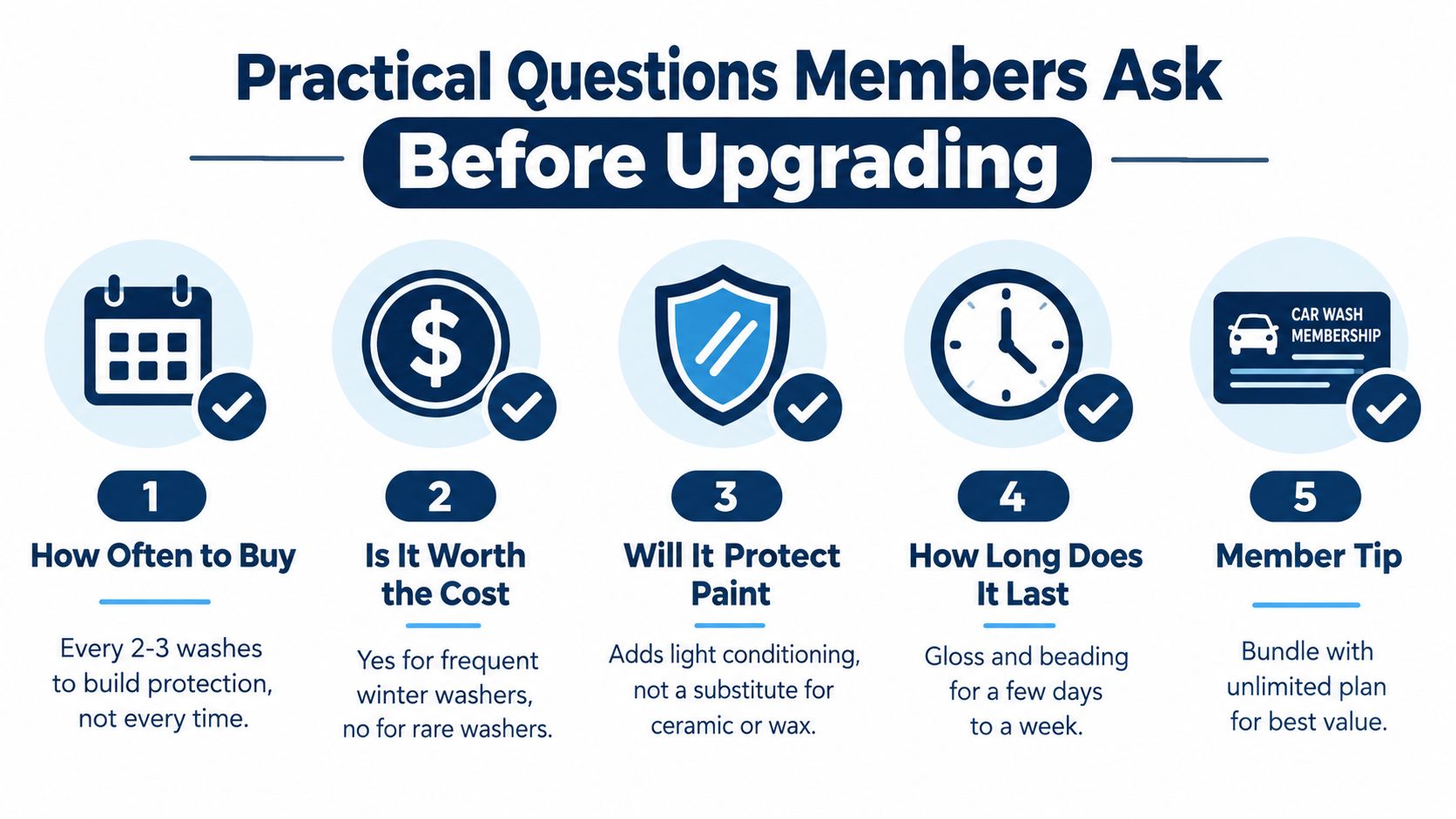
How often should I buy triple foam?
Don't purchase it on autopilot. For an occasional washer, it makes sense when the vehicle needs a visible finish boost. For a frequent member, repeated use can become diminishing returns because the car is already being cleaned before the previous appearance benefit has disappeared.
Ask what the wash package applies. A triple foam option may be paired with a drying agent or sealer wax, so the label alone doesn't tell you how much protection you're receiving.
Can I stack it with other upgrades?
Usually, triple foam can sit within the same wash as an underbody flush, drying agent, hot wax, or sealer. The products don't cancel one another by default, but overlapping add-ons may offer less extra value than the menu suggests. Choose the underbody rinse first in salt season, then select the exterior finish that matches your maintenance plan.
Rain-repellent glass treatment is a separate function. It belongs on windows, while triple foam is aimed primarily at the painted exterior. Ceramic-infused sealers, if offered, should be treated as a separate product category and confirmed with the operator.
When should I start?
Use the first premium wash when winter road film begins to build, not after the paint has been neglected for months. A thorough salt-removal wash is the proper starting point. Triple foam then makes sense as the finish once the surface is clean.
At the end of winter, clean the underbody and lower panels before storing the vehicle or switching to a lighter maintenance routine. Outdoor vehicles need more frequent attention than garaged cars because contamination remains on the surface between drives.
Does triple foam affect rust-proofing?
It shouldn't be treated as a substitute for rust proofing or as proof that a rust-control warranty applies. Ask the rust-proofing provider about maintenance requirements and exclusions. A wash removes contamination, while rust proofing is a dedicated corrosion-control treatment.
How can I tell if a sealer was already applied?
Look for the package receipt or ask the operator to identify the finishing steps. Water behaviour alone isn't a reliable product record because surface condition, rain, dirt, and drying all change what you see. If the car is scheduled for claying, polishing, or hand waxing, tell the detailer which wash products were used.
The practical member formula is: clean salt regularly, flush underneath, and buy triple foam when appearance between washes matters.
Nanak Car Wash offers express exterior washes with triple foam wax, underbody wash, drying agents, and sealer options, plus detailing and rust proofing for vehicles that need more than a routine clean. Visit Nanak Car Wash to check the current wash packages and choose the protection combination that fits your GTA winter driving routine.

 6600 Finch Ave W, Etobicoke, ON M9V 3Z6
 647-703-8515
 MON – SUN 8 AM to 7 PM