
You know the feeling. The snow finally melts, the roads clear, and you walk up to your car expecting a little winter grime. Then you notice the brown streaks, the chalky film on the lower doors, the dirty spray packed into the wheel wells, and a rough edge to the underbody that wasn't there in November. That's not just a bad-looking car. That's winter driving leaving its calling card.
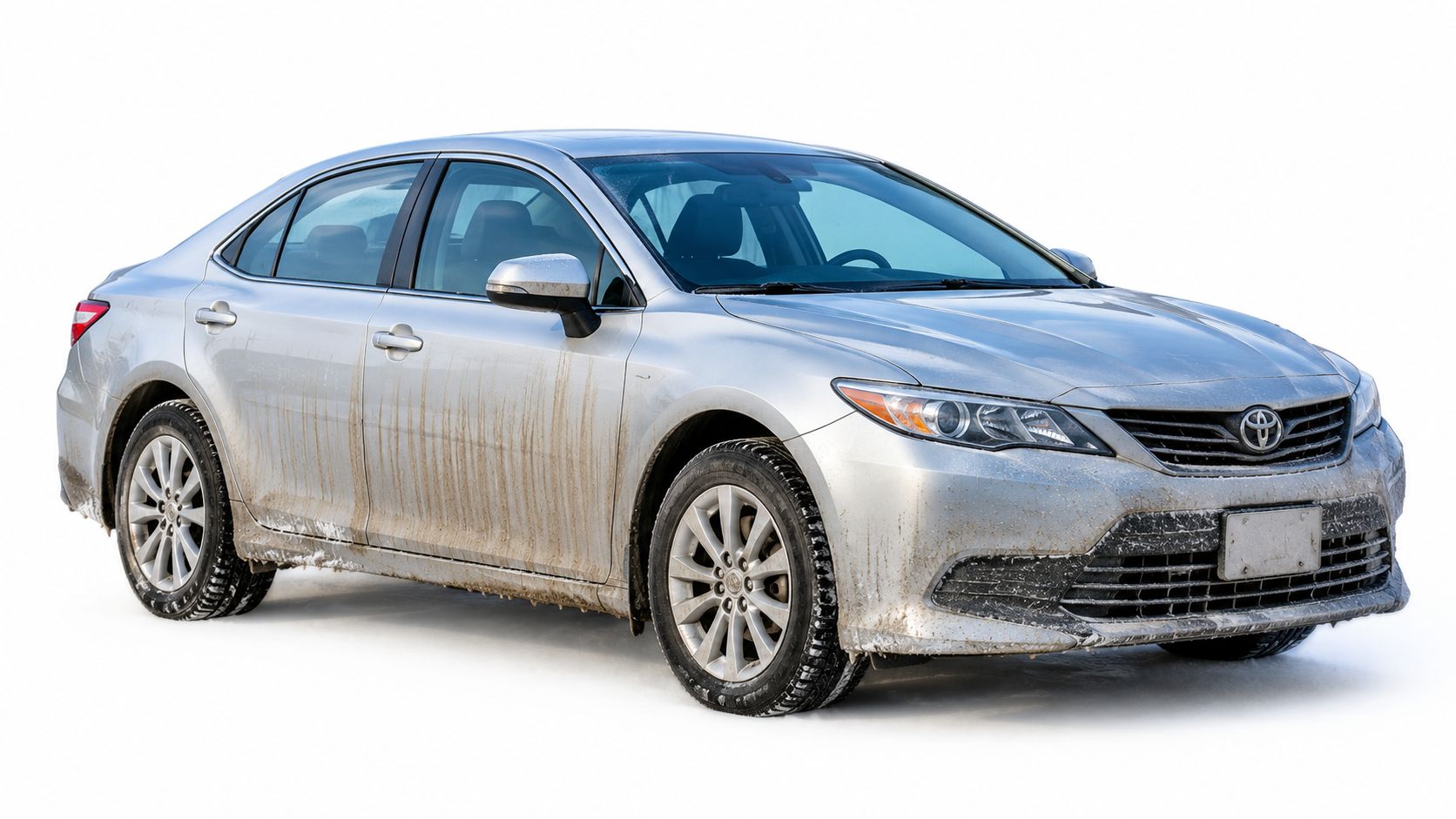
Table of Contents
- The Hidden Cost of a Dirty Winter Car
- Why Ontario Winter Driving Destroys Paint and Metal
- The Science of Salt and Electrolytic Corrosion
- The 48-Hour Rule for Salt Removal
- Garage Storage and the Winter Wash Paradox
- Choosing Professional Wash Options for Protection
The Hidden Cost of a Dirty Winter Car
Spring is when a lot of drivers in the GTA get their first honest look at what winter did. The paint still seems fine from a distance, but up close the lower panels look tired, the wheels are crusted, and the seams around doors and rocker panels hold on to a gritty film that doesn't belong there. That's the part that catches people off guard, because the car looked “fine enough” all season.
The problem is that a dirty winter car isn't just dirty. It's carrying residue that keeps working after the drive is over. Salt, slush, and meltwater hang around in the places you don't notice first, and those spots are exactly where damage starts.
Practical rule: if winter grime stays on the car, it keeps doing damage long after the storm is over.
That's why winter car washing in Ontario shouldn't be treated like a vanity habit. It's maintenance, plain and simple. The driver who skips a few washes often doesn't see the cost until later, when the finish looks dull, the underside needs attention, and the car feels older than it should.
Why Ontario Winter Driving Destroys Paint and Metal
A car can leave a clean driveway in the morning and return coated in wet salt by evening. Park it outside overnight, and that residue may stay damp through the freeze. Park it in a warm garage, and the same salt can turn into a corrosive brine that reaches seams and hidden metal. The timing after exposure, and the place where the car sits, often matter more than how far you drove.
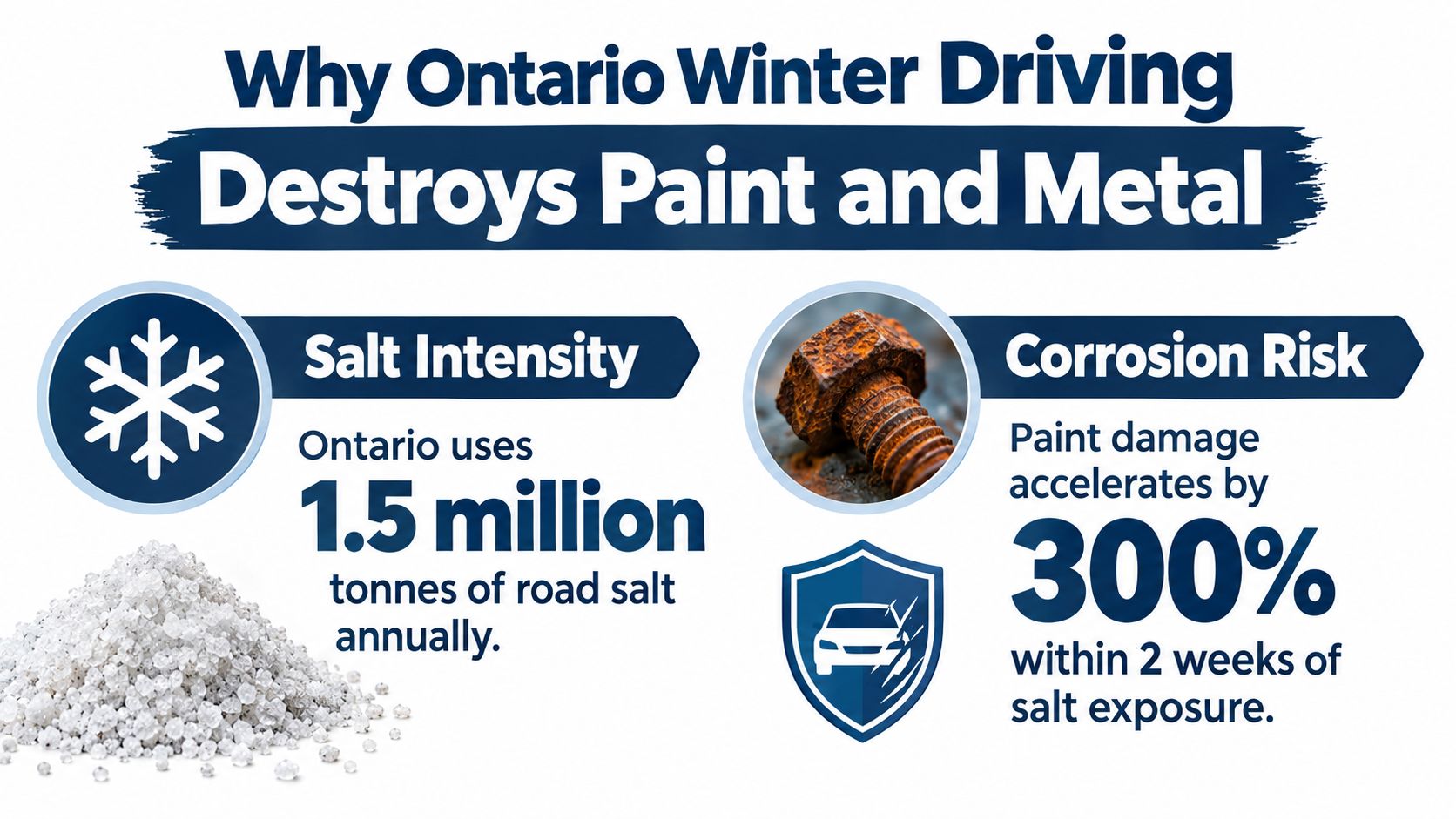
Ontario applies a large amount of road salt each winter, commonly estimated at 1.5 to 3 million tonnes province-wide, with Toronto using roughly 130,000 to 150,000 tonnes annually (Nanak Car Wash winter car cleaning). Every passing vehicle can pick up that residue, especially on wet roads.
Salt is not just grime
Salt dissolves in slush and meltwater, then clings to the lower body, wheel wells, seams, and underbody. Those surfaces stay wet longer than the hood or roof. A short drive can therefore create a longer corrosion problem if the vehicle sits before the residue is rinsed away.
The exposure lasts through much of Ontario's winter season, as repeated snow, spray, and freeze-thaw cycles return moisture to the same areas. A vehicle driven briefly but parked outdoors beside a salted road may remain contaminated longer than one driven farther and washed promptly.
Why the GTA is so punishing
GTA traffic spreads wet salt across busy routes, while packed slush presses it into gaps and joints. Cold weather slows drying, and a heated garage can briefly melt residue before it refreezes or spreads deeper when the vehicle cools.
The practical lesson is straightforward: schedule a rinse soon after heavy salt exposure, then consider where the car will sit. A wash after the drive helps. A wash followed by damp storage gives salt more time to work.
Salt on the road is one thing. Salt trapped in seams and wheel wells gives corrosion a foothold.
The Science of Salt and Electrolytic Corrosion
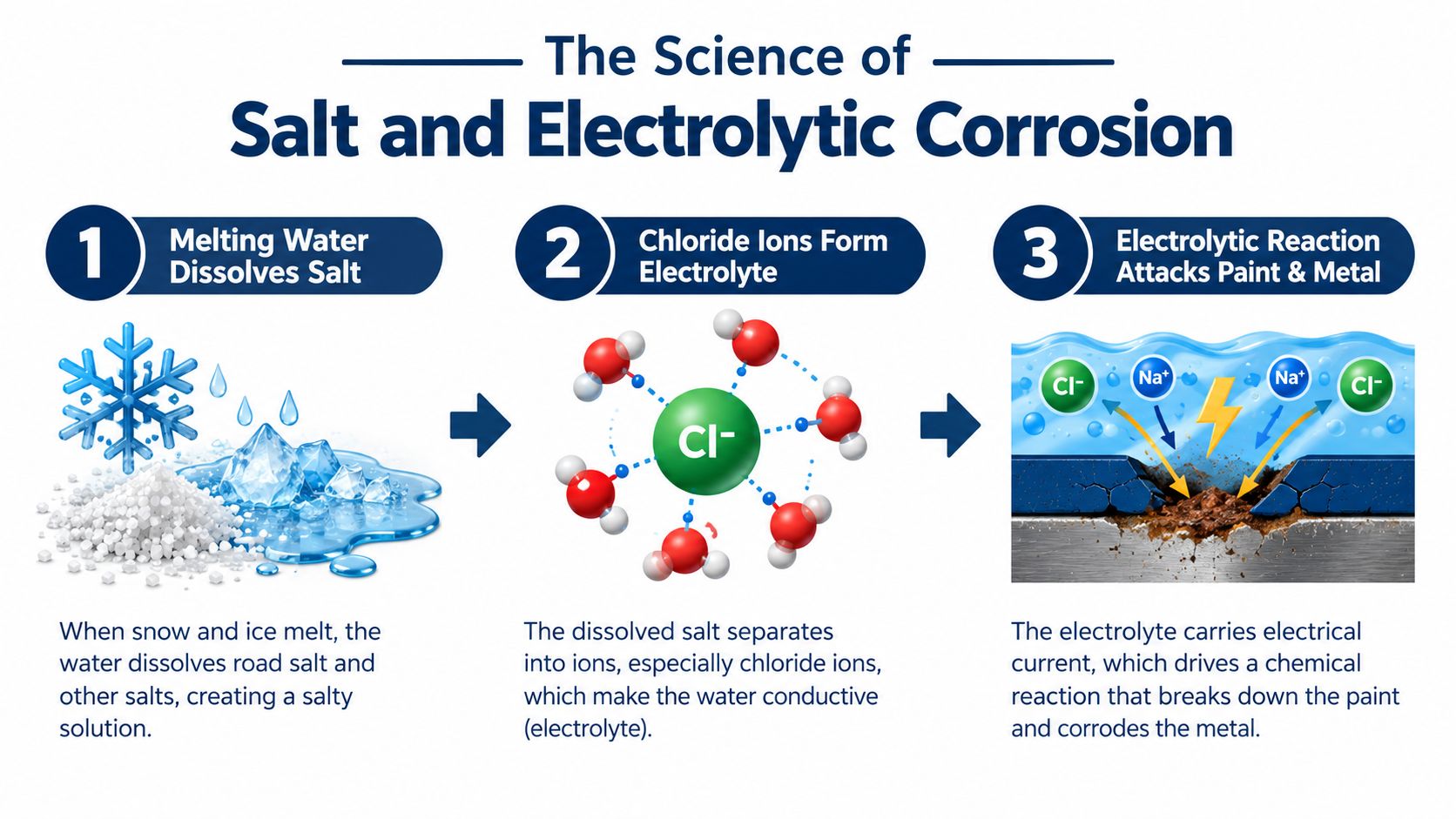
A car can look clean above the beltline while corrosion is already developing underneath. Chloride salts dissolve in meltwater and form an electrolytic film. That film carries electrical current between areas of the metal, speeding up the electrochemical reaction that produces rust (Scrap Car Buyer Toronto).
What the moisture is doing
Salty water works like a wet electrical bridge. Once it reaches seams, wheel wells, brake-line mounts, and boxed frame sections, it can keep the corrosion process active even after the road looks dry. Freeze-thaw cycles make those hiding places worse. Water enters narrow gaps, freezes and expands, then melts and leaves conductive salt behind.
The parking spot often matters more than the length of the drive. A short trip followed by hours outside beside a salted road gives brine time to remain wet and settle into seams. The same trip followed by a prompt rinse and dry storage leaves the metal exposed for less time. A heated garage can also melt residue, allowing it to run deeper before the vehicle cools and the moisture freezes again.
Why an underbody rinse matters
A surface wash removes the dirt you can see. An underbody rinse reaches the film doing the quieter work underneath, particularly around suspension mounts, wheel wells, and lower panels. Corrosion may take years to become visible, but the process begins long before rust spots announce it.
Focus on the time between salt exposure and rinsing, then consider where the vehicle will sit. Washing soon after a salty drive helps. Leaving the car damp and contaminated gives the salt a longer working window.
Salt on the road is temporary. Salt trapped in seams can keep attacking metal after the drive ends.
The 48-Hour Rule for Salt Removal
A salty commute ends, but the corrosion clock does not. If the car sits outside with wet brine on its panels and underbody, the residue can settle into seams, wheel wells, and drain points before you wash it away. The calendar matters less than the hours after exposure.
Washing weekly or biweekly may sound responsible, yet a fixed schedule can leave salt working for several days. Ontario-focused guidance recommends removing road salt within 48 to 72 hours to reduce the chance of corrosion beginning (Nanak Car Wash underbody rust protection). A short drive followed by immediate cleaning can be safer for the metal than a longer interval between washes, even if the vehicle is driven less often.
Why timing beats good intentions
Suppose you drive through salted slush on Monday and wait until the weekend. By then, the residue has had time to dry, re-wet, and migrate into tight gaps. Where the car sits after the drive also matters. Parking beside a wet, salted roadway or in a place where meltwater stays on the vehicle gives brine more time to remain active.
Pressure washing works better than wetting the vehicle. A rinse that fails to remove mud and brine leaves contamination behind, allowing the corrosion cycle to continue, so a light splash is not a salt removal strategy (CAANEO winter rust tips).
DIY versus professional cleaning
A driveway rinse can help when it reaches the lower body and underside, but home washes often miss the areas that collect brine. Professional washing can provide controlled pressure and an underbody rinse, which is especially useful after a messy commute, slushy highway drive, or day of wet roads.
- DIY wash: useful for quick clean-ups, but easy to miss wheel wells, seams, and the underbody.
- Professional wash: more likely to reach lower areas where salt collects.
- Bad habit to avoid: waiting until the car looks filthy before removing residue.
The spring thaw exposes the cost of delay. Warm, moisture-rich salt residue encourages rust, and months of exposure may already have started damage beneath an apparently clean surface.
Garage Storage and the Winter Wash Paradox
A heated garage feels safe. In practice, it can be the place that keeps salt active longer. Corrosion research cited in recent coverage says exposure time matters more than mileage, with warm garage storage potentially making corrosion worse because salt stays active longer (Nanak Car Wash winter car protection).
Why parking indoors can backfire
Here's the part many drivers miss. A car that's driven briefly on salted roads and then parked in a warm garage can corrode faster than a car that sees more road time but gets rinsed sooner. The issue is not distance travelled. It's how long salty moisture remains wet on the metal.
That changes the usual advice. It's not enough to ask, “How often do I drive in winter?” The better question is, “How quickly do I remove salt after the last salted drive?” For GTA drivers, that matters after snow events, slush days, and mixed rain-snow commutes where the car comes home coated and damp.
The practical takeaway
Indoor parking helps with comfort and convenience, but it doesn't cancel contamination. If anything, it can preserve the conditions salt needs to keep working. That's why a car washed promptly and then parked dry is in a better position than one that sits in a warm garage with salty residue still on it.
The garage doesn't clean the car. It just changes how long the salt gets to stay active.
Winter routines need to get sharper. Wash after exposure, not just on a calendar date. That's the nuance most winter care articles skip, and it's the one that matters most in Ontario.
Choosing Professional Wash Options for Protection
A professional winter wash should remove salt from the places a quick rinse misses. The goal is not just a glossy finish. It is the residue trapped around metal seams, suspension components, wheel wells, and the underbody, where corrosion can continue out of sight.
Ontario corrosion research has found substantially more visible corrosion on untreated body panels and underbody parts than on vehicles receiving rust-control treatment. The practical lesson is straightforward: washing protects what you can see, while underbody care protects the expensive metal and hardware beneath the cabin.
Match the wash to the exposure
A short drive on treated roads can leave a heavy salt film, especially if the car is parked somewhere warm afterward. A vehicle kept outdoors may dry sooner, while one placed in a heated garage can stay damp beneath the residue. Your parking location therefore helps determine how quickly you need an underbody rinse. Choose the service based on the last salty drive and where the car will sit, not only on how often you drive.
- Express exterior wash, starting from $9.99 plus tax, includes presoak soap, foam bath, rinse, and drying agent. It suits light, routine contamination.
- Full-service wash, starting from $29.99 plus tax, combines exterior cleaning with interior vacuuming for drivers who want both jobs handled in one stop.
- Rust proofing, roughly $119.95 to $149.95 plus tax depending on vehicle size, adds a chemical barrier for longer-term winter protection.
For salt-heavy conditions, select a package that includes an underbody rinse. Rust proofing can add another layer, but it does not replace washing. A barrier cannot do its job well when fresh salt keeps sitting on top of it.
Nanak Car Wash offers express and full-service washes, interior detailing, underbody wash options, and rust proofing across GTA locations. These services give drivers practical ways to remove contamination soon after exposure, before a warm garage extends the time salt remains active.
For a broader look at maintenance habits, the regular hand car wash benefits guide from Prime Shine Hand Car Wash is a useful companion read, particularly when comparing quick automated cleaning with more detailed upkeep.

 6600 Finch Ave W, Etobicoke, ON M9V 3Z6
 647-703-8515
 MON – SUN 8 AM to 7 PM