
A Friday evening in Scarborough, and your Civic is wearing a grey coat of slush. You rinse the visible salt from the doors, wipe the glass, and call it clean. Underneath, brine is sitting in the rocker seams, suspension mounts, brake-line clips, and subframe corners where a quick exterior wash never reaches.
That's why the best undercarriage protection for Ontario drivers isn't one miracle coating. It's a schedule built around how often the vehicle meets salt, how quickly you remove the residue, and whether the underside is clean enough for a protective product to do its job.
| Protection approach | What it does well | Main weakness | Best use |
|---|---|---|---|
| Underbody washing | Removes salt film and wet contamination | Doesn't leave a lasting barrier | Every GTA vehicle during salt season |
| Annual oil or lanolin spray | Creeps into seams and cavities | Needs regular renewal and can attract grime | Daily drivers and older vehicles |
| Hard undercoating | Resists gravel and direct abrasion | Can conceal or trap corrosion if preparation is poor | Clean, newer underbodies and high-impact areas |
| Dripless or vapour-phase system | Clean, low-mess protection | Less convincing for heavily exposed daily drivers | Garage-kept cars and selected EV applications |
Table of Contents
- What Salt Actually Does to Your Car's Underside
- Why Ontario Winters Are a Special Case
- The Four Core Approaches Compared
- How Often to Wash Based on How You Drive
- Matching Protection to Vehicle Type
- What It Actually Costs in the GTA
- The Case for a Layered Routine
- Your Starting Move This Week
What Salt Actually Does to Your Car's Underside
The Scarborough commuter gets home, scrapes the slush from the wheel arches, and parks the car. Two days later, the underside looks dry. That doesn't mean the corrosion process stopped.
Salt residue stays behind in seams and recesses. When moisture returns through rain, melting snow, or condensation, the residue helps create a conductive film across exposed metal. The result is electrochemical corrosion, first as tiny pits, then as flaking edges, swollen seams, and weakened mounting areas. Canadian rustproofing guidance on salt exposure and corrosion timing notes that exposed metal can start corroding within 48 to 72 hours after salt contact.
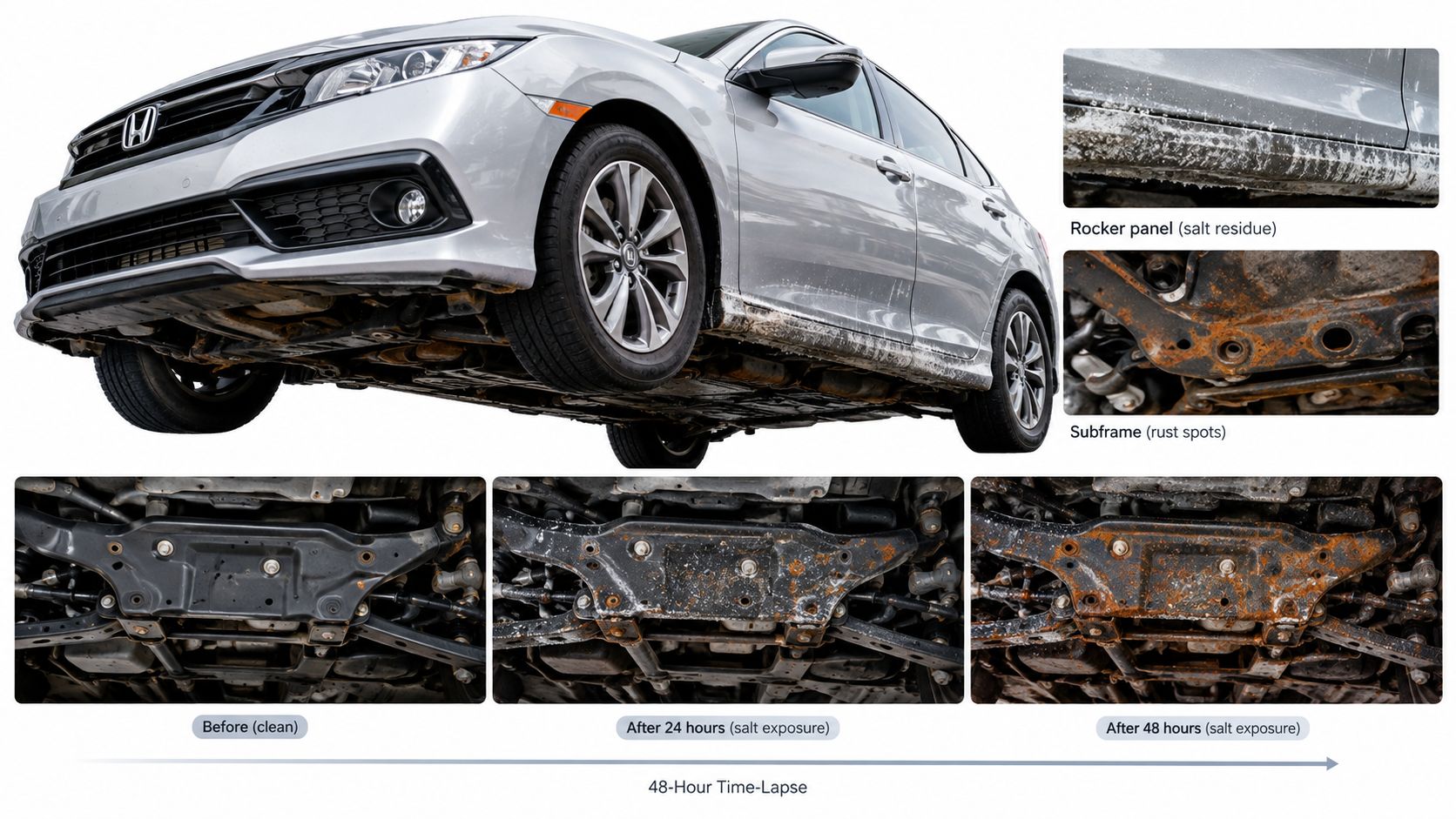
Where GTA vehicles usually start failing
The first trouble spots aren't always the large, obvious frame sections. They're the areas that collect spray and rarely receive a proper inspection.
- Rear wheel arches and lower door skins catch salty road mist and hold moisture behind folded metal.
- Fuel and brake lines sit low, collect deposits, and can corrode where clips hold them against the body.
- Suspension mounting points receive direct spray while remaining difficult to see without a lift.
- Rocker panels and pinch welds often hide damage behind plastic trim or accumulated road film.
- Exhaust hangers and subframes can look serviceable from the side while rust advances around welds and brackets.
A clean-looking surface can hide a serious problem. Drivers often discover it only when a wheel is removed, a technician performs a safety inspection, or bubbling paint finally appears on an exterior panel.
Practical rule: If you can see rust from the driveway, assume the underside needs an inspection, not just another wash.
A wash-only mindset fails because washing removes the current salt film but doesn't repair existing corrosion. A hard coating applied over damp, dirty, or rusty metal can make inspection harder and may seal moisture against the surface. The right order is inspection, cleaning, drying, then protection.
Why Ontario Winters Are a Special Case
Ontario gives road salt too many chances to do its work. Provincial sources commonly put winter salt use at about 1.5 to 3 million tonnes, and Toronto is tied to roughly 130,000 to 150,000 tonnes annually. That volume matters because salt does not need a dramatic event to start corrosion. It just needs repeated contact, moisture, and time.
The calendar makes it worse. In the GTA, salted slush can keep attacking exposed metal for five to six months each year, and freeze-thaw cycles keep re-wetting surfaces that looked dry earlier in the day. Snowbanks linger, drainage around parked cars is poor, and one short drive through slush can push brine into wheel wells and underbody channels.
Toronto's corrosion environment
Toronto-area corrosion studies make the local exposure hard to dismiss. A Transportation Research Board and Transportation Association of Canada study recorded atmospheric corrosion in Toronto at 5,108 mg/dm² over 19 months, among the highest values in its sampled locations. The same research found that de-icing salt in the Toronto area doubled corrosion compared with no-salt conditions, as summarised by Toronto detailing and corrosion guidance.
Parking indoors, driving distance, vehicle design, previous repairs, and wash habits all change the pace. A commuter who parks outside every night faces a different risk than a garage-kept weekend car, and a rideshare or fleet vehicle sees far more salt cycles than either. That is why undercarriage protection in Ontario is a timing problem, not just a product choice. Commuters need regular rinses and season-long follow-through. Rideshare drivers need tighter wash intervals because they keep re-entering slush. Fleet vehicles need a set schedule, because waiting for visible rust means you are already late.
Untreated vehicles can show visible undercarriage rust within three to five years, while structural rust can become a serious concern in roughly eight to twelve years, according to This Ontario corrosion summary. The practical move is simple. Protect the underside before corrosion shows up, then keep removing salt through the season.
The Four Core Approaches Compared
There are four realistic choices, and they solve different problems. The mistake I see most often is buying the product with the strongest marketing instead of matching the treatment to the failure mode.
| Approach | Seam Penetration | Abrasion Resistance | Salt Removal | Reapplication | Best Fit |
|---|---|---|---|---|---|
| Regular underbody washing | None after the rinse | None | Excellent while washing | Frequent during salt season | Every GTA vehicle |
| Annual oil-spray rustproofing | Excellent | Fair | Does not remove salt | Annual renewal | Daily drivers and older cars |
| Hard rubberized or polyurea undercoating | Poor after curing | Excellent | Does not remove salt | Periodic inspection and touch-ups | Clean underbodies facing gravel |
| Dripless electronic or vapour-phase systems | Limited physical penetration | Limited impact protection | Does not remove salt | System-dependent maintenance | Garage-kept weekend cars and selected EVs |
Washing is the foundation
Underbody washing is the only approach in this group that physically removes the salt film. It won't seal a seam or stop corrosion already embedded in a panel, but it prevents fresh brine from sitting there through the next moisture cycle.
That makes frequent rinsing more important than a thick layer of product. Rust-proofing guidance for winter vehicles describes frequent underside rinsing as especially important because salt exposure can start corrosion quickly.
Oil sprays win on access
Oil-based and lanolin-style sprays reach seams, overlaps, brackets, and cavities that a rigid coating can't follow. They remain flexible, creep into narrow spaces, and can provide useful coverage on vehicles that already have light surface rust. Their trade-off is maintenance. They collect grime, may drip after application, and need renewal rather than being treated as a permanent solution.
Hard coatings need clean metal
Rubberized and polyurea coatings are strongest where gravel and direct road spray create abrasion. They make sense on a properly prepared, relatively clean underside, especially around wheel wells, rocker areas, and exposed frame sections.
They're a poor rescue treatment for an already rusty vehicle. If the installer covers loose rust, dampness, or salt contamination, the coating can hide the damage and make later inspection difficult. A hard coat should protect prepared metal, not conceal a problem.
Dripless electronic and vapour-phase systems have a narrower role. I'd consider them for a garage-kept weekend car where low mess matters, or for an EV owner who wants a non-sprayed option after checking manufacturer guidance. For a commuter that lives on salted roads, I'd spend the money on washing and a penetrative treatment first.
How Often to Wash Based on How You Drive
Your odometer is a better maintenance guide than the calendar. A car that travels daily on salted arterials needs a different routine from one that leaves the garage only on dry weekends.
Use this schedule
- Daily commuter: Wash the underside regularly throughout the salt season, especially after repeated slushy drives or storms. Set a phone reminder instead of relying on memory.
- Rideshare or taxi vehicle: Use a tighter weekly rhythm. Long hours on wet roads mean the vehicle repeatedly receives fresh brine before the previous film has been removed.
- Fleet van or delivery vehicle: Schedule a weekly winter flush and inspect the underside more often around wheel wells, steps, door tracks, and frame sections.
- Weekend-only vehicle: A monthly wash can work if the vehicle is kept indoors and driven mainly in dry conditions. Shorten the interval as soon as it spends repeated weekends outside.
Let conditions trigger the visit
Don't wait for a convenient Saturday. Book an underbody rinse after a major salt event, a series of slushy commutes, or any drive that leaves a visible white film on the garage floor. The underside can look clean from standing height while salt remains packed behind liners and around suspension hardware.
Schedule rustproofing before the season becomes busy, then keep washing after the application. A spray isn't permission to stop rinsing. It's a barrier that works better when the surface isn't continuously coated in conductive brine.
Matching Protection to Vehicle Type
The body shape changes where salt lands. A product that suits a low sedan can be the wrong answer for a pickup with exposed frame rails and open wheel wells.
| Vehicle Type | Primary Failure Zone | Recommended Stack |
|---|---|---|
| Sedan | Rockers, pinch welds, brake and fuel lines | Frequent washing plus a penetrative oil or lanolin spray |
| SUV or crossover | Rear suspension, trailing arms, wheel wells | Regular washing plus annual spray protection |
| Pickup | Frame, box supports, cab corners, open wheel wells | Frame and box protection, abrasion-resistant coating where appropriate, frequent flushing |
| Delivery van | Steps, wheel wells, door areas, frame and suspension | Layered protection with a strict commercial wash schedule |
Sedans need seam penetration
Low sedans take direct spray along the rocker panels and pinch welds. Their vulnerable areas are often folded seams and clips rather than broad, exposed frame surfaces. A flexible oil or lanolin spray is usually more useful than a thick hard coat that can crack where panels flex or where inspection access is limited.
Pickups need abrasion control
Pickups throw salt and gravel through open wheel wells and around bed supports. Protect the frame, inspect cab corners, and treat the inside of the box if it regularly carries wet equipment, salt, or debris. A hard coating earns its place in high-impact areas, but it still needs a clean base and regular visual checks.
SUVs and commercial vans need consistency
SUVs generally have more clearance, but that doesn't make the rear suspension or trailing arms immune. An annual penetrative treatment paired with frequent washing is a sensible default.
Delivery vans and crossovers used commercially need the most disciplined routine. Their exposure is relentless, and door steps, wheel wells, brackets, and underbody channels receive constant spray. Use layered protection, then make the wash schedule part of the vehicle's operating plan rather than an optional cosmetic service.
What It Actually Costs in the GTA
Price should be judged against exposure, not against the cheapest appointment on a search page. A low-mileage car kept indoors doesn't need the same spending pattern as a vehicle that crosses the GTA every day.
Current Canadian pricing guidance places annual oil-spray rustproofing in the roughly $130 to $190 range, while one-time hard undercoating is reported closer to $600 to $900, depending on the vehicle and preparation required. A Canadian comparison of rustproofing options and pricing makes the important point that these products target different problems, oil sprays for penetration and hard coatings for abrasion resistance.
| Approach | Typical Cost Position | Frequency | Best For |
|---|---|---|---|
| Underbody wash | Low per visit | Repeated during salt season | Every vehicle exposed to brine |
| Annual oil spray | Moderate recurring cost | Seasonal renewal | Commuters and older vehicles |
| Hard undercoating | Higher upfront cost | Inspection and occasional repair | Clean underbodies and high-abrasion use |
| Dripless system | Varies by vehicle and system | Manufacturer or installer schedule | Special-use vehicles |
Spend first on the habit
If your budget is limited, buy the wash routine before buying the expensive coating. Removing salt repeatedly protects every vehicle, regardless of its age or existing treatment. A penetrative spray becomes a sensible second layer when the vehicle sees regular winter exposure or already has vulnerable seams.
Hard coating makes financial sense only after a proper underside inspection. Preparation, drying, access, and coverage matter more than a black finish. Ask whether the shop can show you the metal before application and whether it will leave drain holes, fasteners, brakes, exhaust components, and moving parts clear.
The cheapest appointment can become the most expensive choice if it covers active corrosion and prevents you from seeing what happens underneath. Pay for preparation when the vehicle needs it, and keep the wash budget protected after the coating is applied.
The Case for a Layered Routine
One product can't remove salt, penetrate every cavity, resist every stone, and remain easy to inspect. The rational GTA routine uses each method for the job it can perform.
The default stack
First layer, wash. Underbody rinsing removes the contaminant that keeps the corrosion process active. It belongs in the routine throughout salt season, not only at the beginning and end of winter.
Second layer, penetrative rustproofing. Apply an oil or lanolin-style treatment before sustained winter exposure. It reaches seams and cavities that water alone can't protect, and it remains more forgiving than a rigid coating when the vehicle already has light surface corrosion.
Third layer, targeted abrasion protection. Add a hard coating only where the vehicle needs resistance against gravel and direct impact, and only after proper preparation. It shouldn't cover active rust or interfere with inspection and drainage.
A new vehicle that remains within its factory corrosion coverage usually needs disciplined washing first. Don't let a dealer turn a generic undercoating upsell into a substitute for regular salt removal. A single hard layer can't clean the underside, and it can make future corrosion harder to see if the preparation is careless.
A rideshare or fleet vehicle that spends long hours on salted roads needs a compressed washing schedule, not merely a thicker coating. High exposure increases the value of frequent flushing because the vehicle keeps receiving fresh brine between treatments.
Salt removal beats product coverage every time. Protection should support the wash routine, never replace it.
Your Starting Move This Week
Don't begin by comparing brands. Begin with the vehicle's exposure, then check whether the underside is clean and sound enough for treatment.
Follow the decision path
- Weekend-only vehicle: If it's garage-kept and the underside has no visible salt film, book an inspection or a preventative wash. If it sits outside through repeated wet weather, move it into a more frequent wash routine.
- Daily commuter: If the last underbody wash was more than two weeks ago, schedule one this week. If the vehicle has never had penetrative rustproofing and will spend the season on salted roads, arrange an application before sustained snowfall.
- Rideshare, delivery, or fleet vehicle: Treat washing as operating maintenance. Set a recurring appointment, choose a membership or prepaid arrangement if that makes the schedule easier to follow, and inspect the wheel wells and frame areas before applying any hard coating.
Then check the vehicle's age and condition
- Newer vehicle: Prioritise washing and an inspection. Don't cover a clean factory finish without a clear reason.
- Mid-life vehicle: Look for bubbling seams, flaking brackets, and corrosion around lines and mounting points. A penetrative treatment is usually the sensible next step if the metal remains sound.
- Older vehicle: Pay for inspection and preparation before choosing a product. Existing structural corrosion needs repair, not cosmetic sealing.
The right move this week is concrete. If the underside is dirty, wash it. If it's clean but untreated and regularly exposed, book rustproofing. If it's already rusty, inspect it before anyone sprays over the evidence.
Remember this sentence: wash the underside before the next storm, not after the next one.
Nanak Car Wash offers underbody wash upgrades that rinse the chassis, suspension areas, wheel wells, and other salt-trapping zones, along with vehicle-size-based rustproofing applications. Choose a recurring wash plan or book a service at Nanak Car Wash before the next GTA salt cycle settles underneath your vehicle.

 6600 Finch Ave W, Etobicoke, ON M9V 3Z6
 647-703-8515
 MON – SUN 8 AM to 7 PM