
A “blueberry car wash” isn't a widely recognised product category or local business in the GTA, and it most likely refers to a scented wash concept or a search mix-up rather than a specific service offered by Nanak Car Wash. Ontario drivers have a more practical concern: the province applies roughly 1.5 to 3 million tonnes of road salt each winter, while Toronto alone uses about 130,000 to 150,000 tonnes annually. Ontario road-salt guidance explains why corrosion protection deserves more attention than a fruity foam name.
You may have typed the phrase after spotting a purple foam photo, a novelty wash promotion, or a business listing that sounded more memorable than “express exterior wash.” Maybe you're trying to find a GTA location with a blueberry scent. Maybe you want a better wash for a car that has collected Toronto slush, Brampton salt spray, or Oshawa road film.
The useful answer is simple: treat blueberry as a possible fragrance or branding term, not as proof of a specialised cleaning method. Then judge the service by what it does for your vehicle, especially underneath it.
Table of Contents
- Understanding the Search Intent Behind Blueberry Car Wash
- What Blueberry Car Wash Usually Means in Practice
- What a Blueberry Scented Car Wash Would Actually Involve
- Comparing Realistic Car Care Options in the GTA
- Why Rust Protection Matters More Than Novelty Scents
- Choosing a Local Car Wash That Delivers Real Value
- Frequently Asked Questions About Blueberry Car Wash and Local Service
Understanding the Search Intent Behind Blueberry Car Wash
You're sitting in the driver's seat, the windshield is streaked, and your search history now contains “blueberry car wash.” The phrase sounds specific enough to name a product, but vague enough to create several possible explanations.
The local business search
You might be looking for a GTA business with Blueberry in its name. Search engines often combine nearby car washes, service pages, images, and business directories when a phrase has no clear local match. That can make a scented wash, a farm-related result, and an ordinary wash package appear side by side.
A genuine local-business search usually includes a location, such as “blueberry car wash Brampton” or “blueberry car wash Toronto.” Without that detail, the results may not tell you whether the phrase identifies a facility, a package, or only a visual theme.
The fragrance search
Some drivers use fruit names to describe the experience they want. A blueberry-scented foam sounds cheerful, distinctive, and easy to remember. In practice, the scent may be an optional soap additive or a branded foam step rather than the name of the whole service.
The fragrance can make the visit more pleasant, but it doesn't tell you whether the wash includes an underbody rinse, hand drying, wax, or corrosion protection.
The product-name mix-up
You may also have seen a purple foam or a social-media post and remembered the colour as “blueberry.” Car-care products commonly use bright colours and food-inspired scents, so the label can blur with the service itself.
Practical rule: Before booking, ask whether “blueberry” describes the business, the soap, or only the marketing image.
That question turns a curious keyword into a useful buying decision. If you want a nearby wash, verify the location and inclusions. If you want a scent, ask whether it's available. If your real concern is winter damage, prioritise underbody cleaning and rust control.
What Blueberry Car Wash Usually Means in Practice
The phrase sounds like a named service, but blueberry car wash usually behaves more like an ambiguous search term. A dedicated facility would normally explain its address, wash process, vehicle-size rules, and package inclusions clearly. A scent-themed page may focus instead on colour, foam, or the sensory experience.
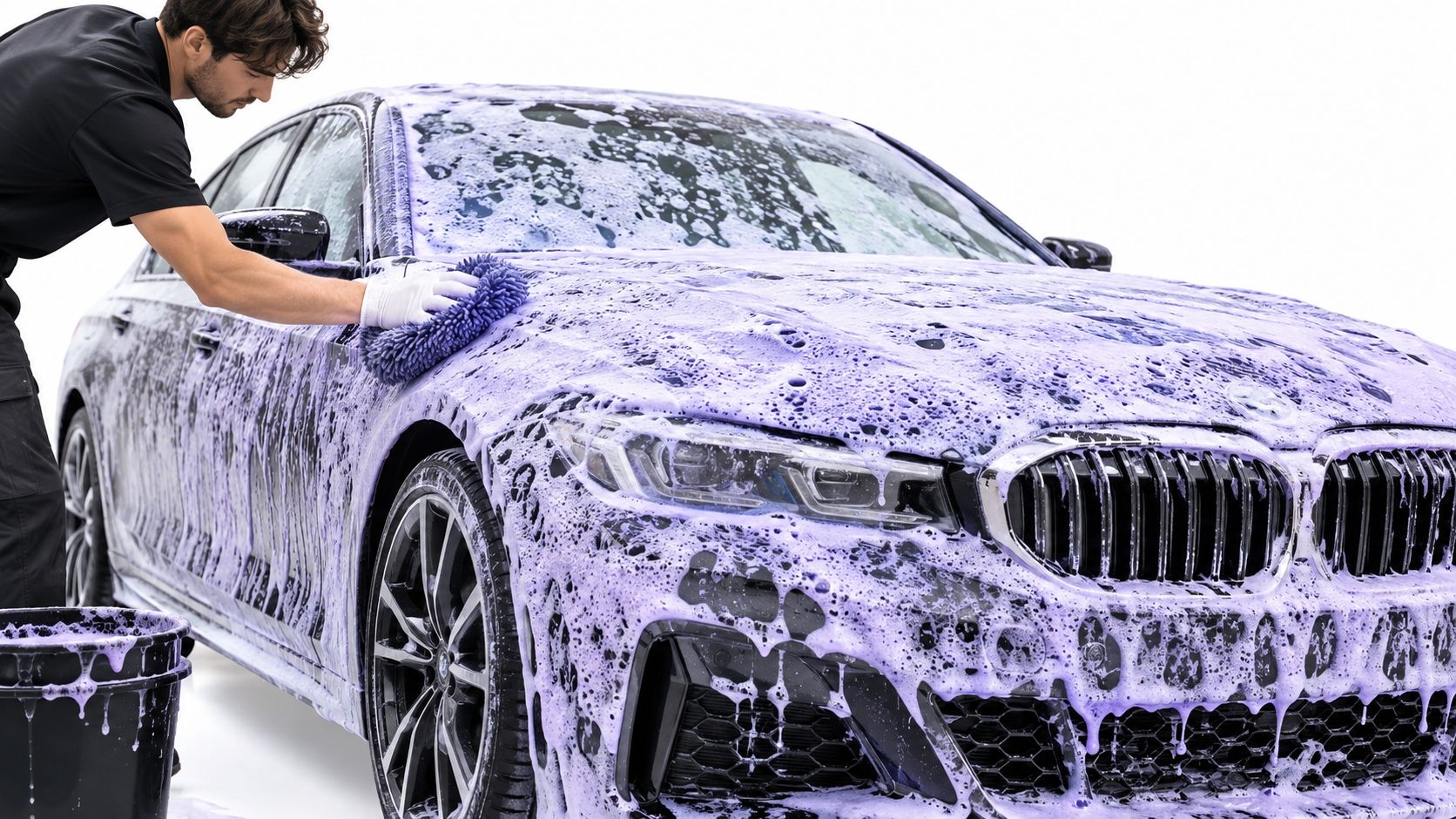
That distinction matters because a purple wash mitt and blue foam don't prove that blueberries are in the soap. Colourants, fragrances, and product names can all create a berry association without changing the basic cleaning process.
Three plausible interpretations
A scented wash additive is the most straightforward explanation. A shop might offer a berry fragrance as part of a foam bath, wax stage, or seasonal promotion. The scent is an experience feature, not necessarily a separate wash category.
A branded package name is another possibility. A business may give a standard exterior wash a memorable name to separate it from other tiers. In that case, the name could describe the aroma, colour, or a combination of add-ons.
A loose search match can produce the most confusing results. Search engines may connect “blueberry” with nearby farms, cafés, novelty events, or unrelated local pages because the word appears in a business name or description. Those results don't establish that a commercial car wash offers a blueberry service.
How to inspect a result
Look for a process description, not just a colourful headline. A credible listing should identify whether it includes presoak, foam, rinse, drying, underbody cleaning, interior work, wax, or detailing. It should also show a real location and a way to confirm availability.
If the page only shows berries, purple suds, or a catchy phrase, you're probably looking at a marketing theme rather than a defined treatment. Ask for the exact steps before assuming the scent changes the cleaning outcome.
What a Blueberry Scented Car Wash Would Actually Involve
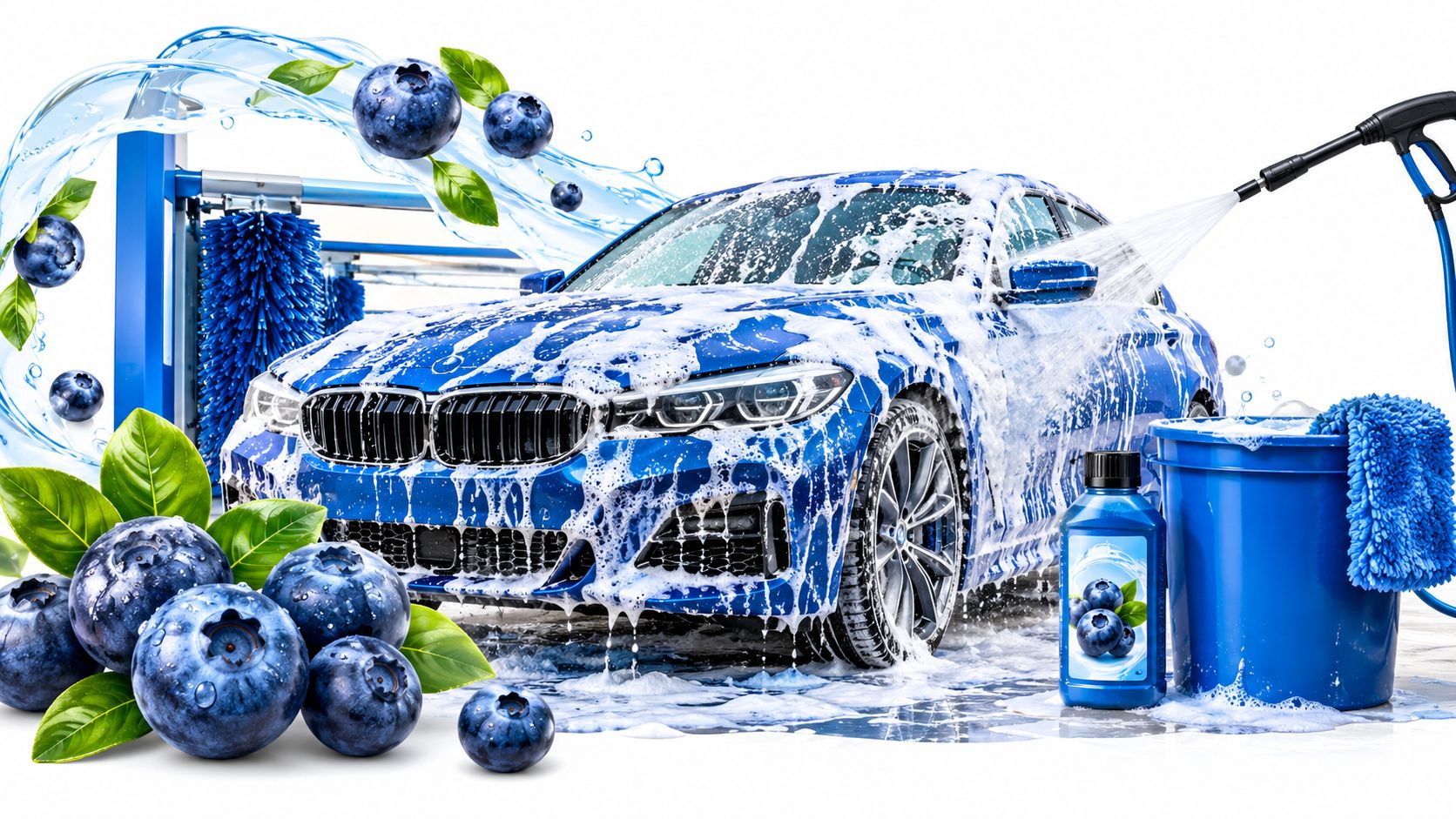
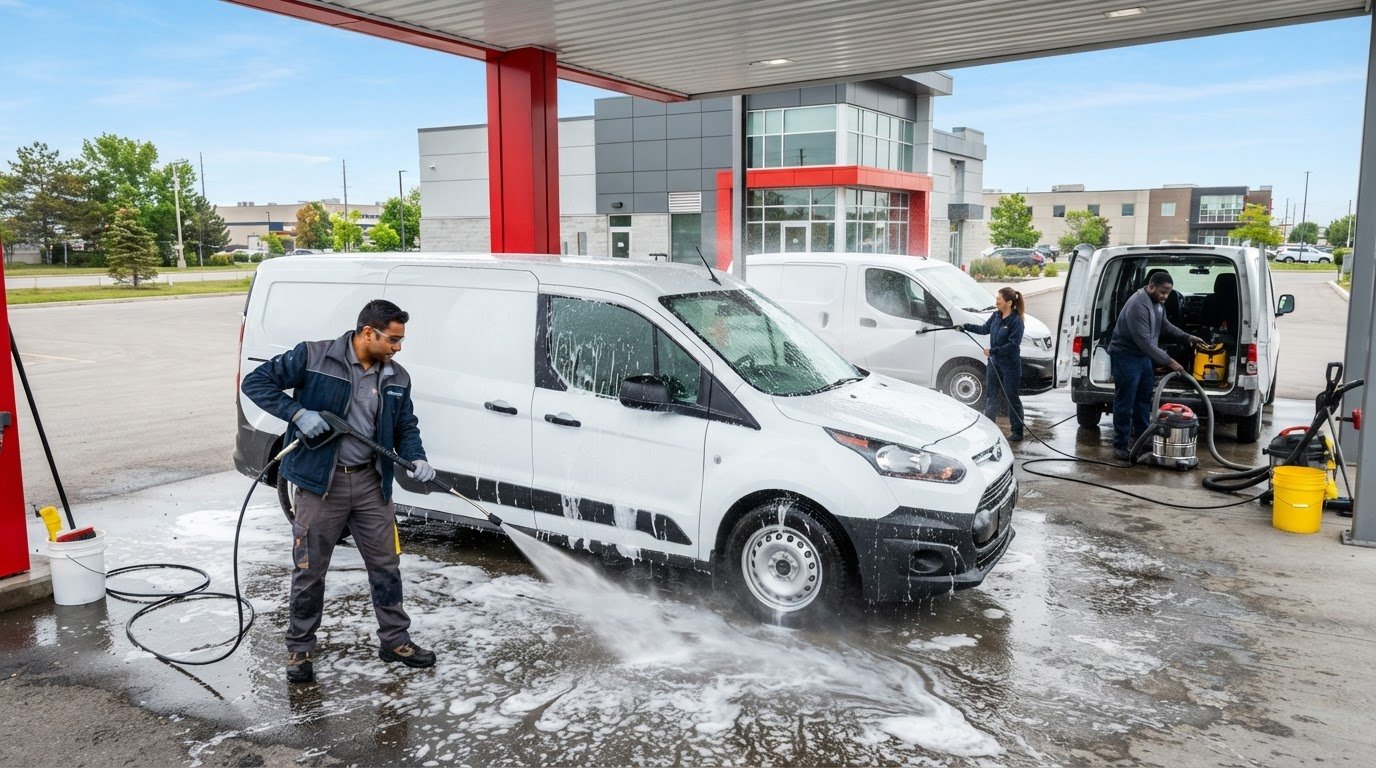
If a GTA shop offered a genuine blueberry-themed wash, the experience would probably look familiar. You'd drive through an exterior wash sequence, receive a scented presoak or foam bath, rinse away loosened grime, and finish with a drying or protection step.
What the process might include
Presoak and foam. A cleaning solution loosens road film before the main wash. The blueberry note would come from fragrance, not from the fruit itself.
Mechanical cleaning. Brushes, mitts, or cloth components remove contamination that chemistry alone leaves behind. This stage matters more to visible cleanliness than the aroma.
Rinse and dry. A thorough rinse removes detergent and loosened grit. Drying reduces water spots and leaves the paint looking sharper.
Optional protection. A wax, sealant, or similar finishing product may add gloss and help water bead. The presence of a scent doesn't confirm that a protective layer was applied.
What the fragrance doesn't prove
A fruity smell doesn't automatically mean the product is gentler, more biodegradable, or safer for every surface. It also doesn't show that the wash has reached the rocker panels, wheel wells, frame rails, or other areas where winter brine collects.
A pleasant scent is the finishing impression. The cleaning result comes from the chemistry, contact method, rinse quality, and drying process.
Ask three useful questions before paying for an upgrade: What product creates the scent? Which surfaces does the process reach? What protection, if any, is included? A clear answer helps you separate a real service improvement from a clever label.
For a lightly dusty vehicle, a scented exterior wash may be a fun choice. For a car carrying dried salt, greasy road film, or muddy underbody deposits, choose the package based on coverage and rinsing rather than fragrance.
Comparing Realistic Car Care Options in the GTA
A GTA driver arriving after a salty commute has several sensible choices. The right service depends on the problem in front of you, whether that means light road film, a dirty cabin, embedded stains, or longer-term corrosion control. The word “blueberry” does not need to determine the decision.
An express exterior wash fits a vehicle that needs regular removal of dust, salt, and road film. Full-service washing adds hand drying and interior attention, useful when winter grit has reached the cabin. Detailing suits neglected or stained surfaces, while rust proofing addresses a separate protection need rather than adding fragrance to a basic wash.
The following comparison uses published starting prices from Nanak Car Wash service information. Confirm current pricing, tax, vehicle-size rules, and location availability before visiting.
Car Care Service Comparison in the GTA
| Service | Starting Price | Best For | Maintenance Fit |
|---|---|---|---|
| Express exterior wash | $9.99 plus tax | Quick exterior cleaning, foam, rinse, and drying | Frequent upkeep between deeper services |
| Full-service car wash | $29.99 plus tax | Exterior wash, hand dry, vacuuming, dashboard and window cleaning | Drivers who want the cabin refreshed with the exterior |
| Interior and exterior detailing | Appointment-based | Salt and stain removal, shampooing, crevice cleaning, leather care, polishing | Vehicles needing restorative attention |
| Rust proofing | Approximately $119.95 to $149.95 plus tax, based on vehicle size | Preventive corrosion control | Seasonal or planned long-term protection |
Match the service to the problem
A weekly commuter with clean upholstery probably does not need a full detail at every visit. An express wash, especially with an underbody option, can handle routine upkeep after salty roads or a thaw.
A family SUV with stained mats, pet hair, and dried salt needs more targeted work. Interior shampooing, vent and crevice blowout, and surface cleaning address problems an exterior tunnel wash cannot reach.
A useful analogy is choosing the right tool from a mechanic's toolbox. An exterior wash is the quick brush for surface dirt. Detailing is the careful cleanup for stubborn contamination. Rust proofing serves a different purpose, helping address exposure to Ontario's corrosive winter conditions rather than making paint look glossy for a few hours.
Read the package details carefully
Check for underbody wash, hand dry, salt removal, wax, and rust proofing in the package description. A premium name does not confirm that every item is included. Match the service to the vehicle's visible condition and the areas hidden underneath, then treat any blueberry scent as a preference, not proof of better care.
Why Rust Protection Matters More Than Novelty Scents
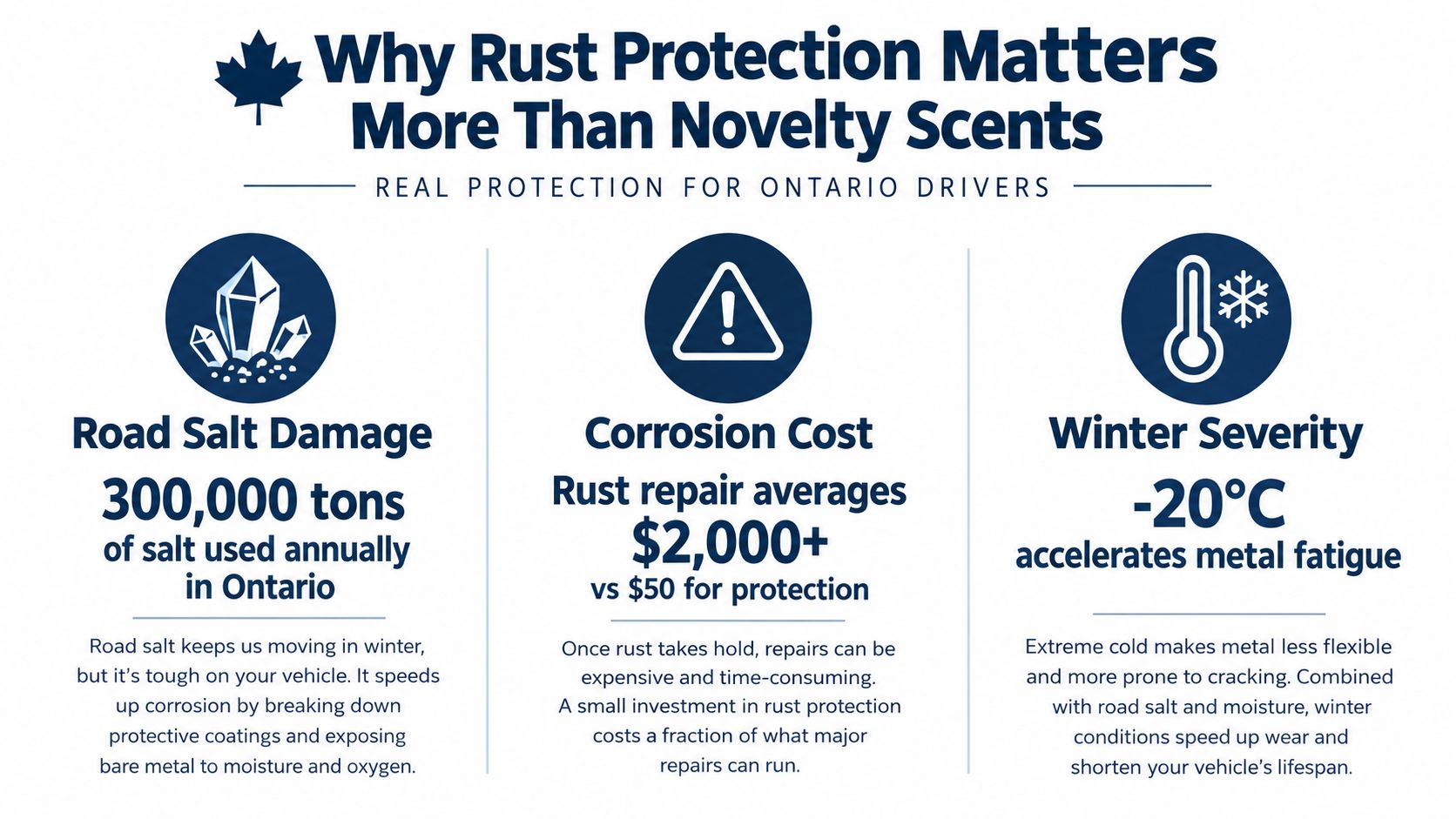
A blueberry fragrance may make a wash memorable, but it cannot protect a vehicle from Ontario's winter roads. Salt and brine reach seams, fasteners, wheel wells, and underbody surfaces, where corrosion can continue even when the paint still looks clean.
A regional corrosion overview reports that visible surface rust can appear within 2 to 3 winters on vehicles without strong rustproofing, while structural rust can develop in 8 to 12 years of year-round winter driving. The Ontario-focused corrosion guide connects those timelines with daily exposure for drivers in Toronto, Brampton, Oshawa, and nearby municipalities.
Toronto's atmospheric corrosion measured 5,108 mg/dm² over a 19-month exposure period, ranking it among the highest-corrosion locations in that research. A separate rust-proofing summary reports that treated vehicles had 6.8 times less visible body rust than untreated vehicles, while untreated underbodies showed 3.6 times more corrosion than treated underbodies. The Ontario rust-proofing summary presents treatment and regular cleaning as ways to reduce visible and underside corrosion.
Build a salt-season routine
Rinse the underbody every 1–2 weeks during salt season and after thaw events. Active brine can dry inside seams and around fasteners, so a clean bonnet does not show what is happening underneath. This undercarriage-wash guidance explains why underside cleaning belongs in a GTA winter routine.
- After heavy salt exposure: Choose an underbody rinse, not only a top-side wash.
- After a thaw: Remove wet brine before it dries and concentrates.
- Before long-term neglect: Consider rust proofing if the vehicle's condition and use justify it.
- During inspections: Ask a technician to check hidden underside areas, not just visible paint.
Wash-water handling also matters. Ontario and municipal guidance warns against letting runoff enter catch basins, roads, ponds, rivers, or creeks. Toronto recommends commercial facilities that treat wastewater before discharge to the sanitary sewer, and Brampton gives similar advice. Ontario's vehicle-washing regulation guidance supports checking where wastewater goes instead of washing a salty vehicle on the driveway. A scent can improve the experience. Underbody cleaning and rust protection address the problem.
Choosing a Local Car Wash That Delivers Real Value
A good GTA car wash should answer practical questions before you pay. Check what the package includes, whether it reaches the underbody, how interior cleaning is handled, and whether membership terms are easy to understand. A blueberry label may catch your eye, but the process determines the value.
Use a practical checklist
Service transparency comes first. Look for clear details about presoak, foam, rinsing, drying, underbody options, and hand-applied work. A named scent tells you little about how effectively the wash removes salt and road film.
Equipment and human work serve different purposes. Automated systems provide a consistent wash sequence. Staff can improve the result by drying by hand, cleaning interior surfaces, and checking areas the machinery may miss.
For frequent customers, membership flexibility matters. Confirm activation and cancellation terms, included services, and any differences based on vehicle size or location. A low monthly commitment is useful only when the conditions fit your driving routine.
Seasonal capability deserves priority in the GTA. Ask whether the facility offers underbody cleaning and rust-proofing options alongside paint cleaning and scent upgrades. Those services address Ontario's winter road salt more directly than a novel fragrance.
You can also explore a local artisan soap business to see how scent and soap-making work outside a commercial wash. The comparison helps separate the sensory appeal of blueberry soap from the mechanical job of removing salt and contamination.
Ask about wastewater
A professional facility should explain how it collects wash water and where the discharge goes. Vehicle-wash wastewater can contain oils, grease, metals, and pH extremes. The Capital Regional District vehicle-washing guidance shows why treatment and discharge controls are part of responsible operations, not optional decoration.
Choose the provider that gives a clear answer. Properly managed commercial washing can reduce the chance of dirty, salty runoff crossing a driveway and entering a catch basin. That practical care, along with effective cleaning, is the true value behind a local wash.
Frequently Asked Questions About Blueberry Car Wash and Local Service
Are blueberry car washes common in the GTA?
No. “Blueberry car wash” is not a widely established service category. It may refer to scented foam, a package nickname, or an unclear search result. Check the business name, location, included services, and vehicle-care steps before booking.
Does a blueberry scent protect car paint?
A scent changes the smell, not the level of protection. Paint care depends on the wash process and whether the package includes wax, sealant, or another named protective product.
How often should I clean underneath my vehicle in Ontario?
During salt season, regional maintenance guidance recommends an underbody rinse every 1–2 weeks and after thaw events. The GTA undercarriage guidance explains that rinsing helps remove active brine before it dries in concealed areas.
Why use a commercial wash instead of washing at home?
Toronto and Brampton advise keeping wash wastewater out of catch basins and natural waterways. Commercial facilities can direct wastewater for treatment before discharge, supporting better runoff control. See the Toronto and Ontario vehicle-washing guidance for the local context.
What should GTA drivers prioritise?
Choose salt removal, underbody coverage, clear wastewater practices, and rust protection when appropriate. Blueberry fragrance can make a wash more pleasant, but corrosion prevention protects the vehicle's long-term condition.
Nanak Car Wash provides express and full-service washes, detailing, underbody options, and automotive rust proofing. Visit Nanak Car Wash to compare current services.

 6600 Finch Ave W, Etobicoke, ON M9V 3Z6
 647-703-8515
 MON – SUN 8 AM to 7 PM