

If you've just driven through Ontario slush, wash the car within 24 to 48 hours, especially the underbody, before salt dries into seams and keeps working on the metal. In a winter like this, that's not a vanity wash, it's basic corrosion control.
GTA winter driving leaves a very specific mess. The car rolls home looking grey, the wheel arches are packed, and the lower doors are speckled with brine that looks harmless until it sits there overnight and starts creeping into the places you never see. Ontario's road network got 1,679,395 tonnes of road salt across 104,187 kilometres of roadway in the 2023 to 2024 winter season, along with 36,198,084 litres of liquid de-icing material and 791,365 tonnes of abrasives, so the contamination on a daily commuter isn't a small issue, it's baked into the season itself. Environment and Climate Change Canada's road salt reporting is a blunt reminder that cleaning car in winter is preventive maintenance, not a once-in-a-while tidy-up.

Table of Contents
- Why Winter Demands a Different Washing Strategy
- Understanding Toronto's Unique Winter Threat
- The Exposure-Based Washing Process
- Underbody Cleaning and Rust Prevention
- Professional Solutions for Busy Drivers
Why Winter Demands a Different Washing Strategy
A winter drive through Toronto doesn't end when you park. The car is still carrying slush, salt brine, and grit on the lower body, and those contaminants don't care that the paint looks fine from the driveway. The visible grime is only part of the problem, because the damage starts below the line of sight.
Winter washing has to be mechanical, not cosmetic. Road salt sits in wheel wells, along rocker panels, on suspension pockets, and underneath the car where road spray keeps it wet. A simple body rinse might make the panels look better, but it doesn't reliably clear the hidden areas where corrosion starts. If you want a practical cold-weather routine, a good outside reference on safely washing your car in cold can help frame the safety side, but the point is this, winter cleaning is about removing active contamination before it settles in.
Practical rule: if the lower half of the vehicle is dirty, assume the underside is dirtier.
That's why waiting until spring is a mistake. The car doesn't pause corrosion because the road looks dry for an hour. Every freeze, thaw, and re-freeze cycle keeps old residue alive in crevices, and that residue is exactly what you're trying to flush out. Cleaning car in winter works when the wash targets the parts that salt attacks, not just the panels people can see.
Understanding Toronto's Unique Winter Threat
Toronto's winter is hard on vehicles because it keeps changing shape. Snow turns to slush, slush turns to wet spray, wet spray turns to icy film, and all of that keeps contaminants moving across the car instead of letting them stay harmlessly dry. Climate summaries based on Environment and Climate Change Canada normals for 1991 to 2020 report average annual precipitation of about 831 millimetres, with average seasonal snowfall of about 121.5 centimetres downtown and 108.5 centimetres at Toronto Pearson International Airport Toronto climate summary.
That matters because salt is most troublesome when it becomes brine. Once it's wet, it clings to paint, glass, wheel wells, and the underside instead of just sitting as loose crystals you can brush away. Warm intervals activate the residue, then the next freeze traps it again in seams and corners.
The result is a repeating contamination loop, not a one-time storm problem. A road can look clear enough for a clean car, but the lower surfaces can still be carrying wet salt film from the last commute. For drivers who use the car every day, especially commuters and delivery operators, winter cleaning has to track exposure, not the calendar.
When roads thaw and refreeze, the car keeps getting reloaded with salt even if snowfall stops.
That's the reason exterior washing alone falls short. If the season keeps feeding new contamination onto the car, the wash has to keep targeting the places where that contamination collects and lingers.
The Exposure-Based Washing Process
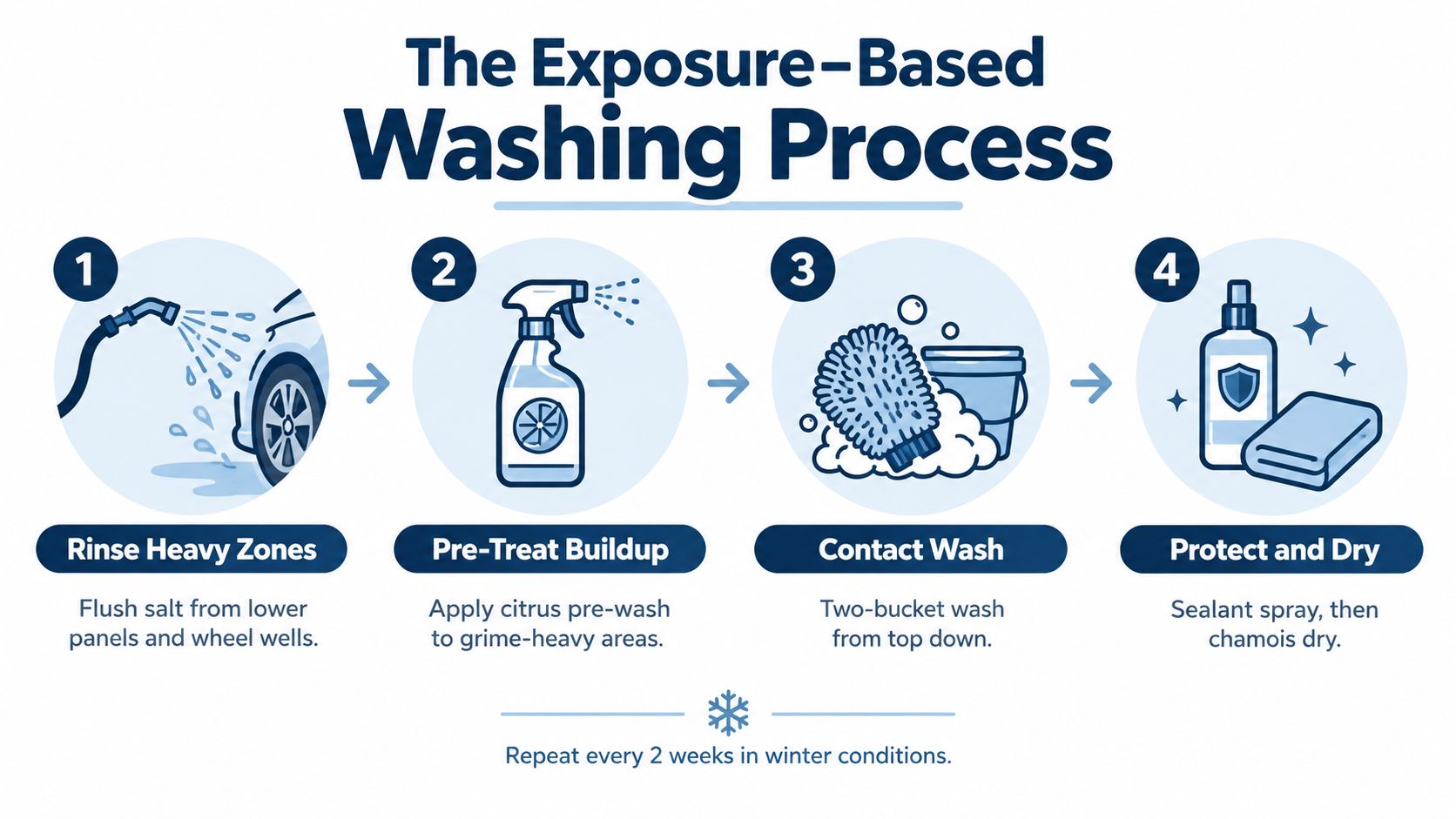
A fixed Saturday wash sounds tidy, but winter does not care about your calendar. Salt load, slush, thaw cycles, and highway spray decide when the car needs attention. After heavy salt or brine exposure, the smart move is to pre-rinse within 24 to 48 hours, with the first pass aimed at rocker panels, lower doors, rear bumpers, wheel wells, and the underbody winter washing process guidance.
Start with loose grit
Rinse before touching the paint. In winter, that matters more than in summer because salt-laced grit behaves like fine sandpaper once it gets rubbed around. A strong pre-rinse clears loose film from the lower body and leaves the detergent to handle bonded grime instead of abrasive debris.
Wash top-down
Use a clean mitt and pH-balanced soap, then work from the roof downward. That order keeps the dirtiest lower material from being dragged across cleaner panels. Winter wash problems usually start when someone scrubs the side skirts first and grinds grit into the finish.
Dry the pinch points
Door edges, seals, handles, mirrors, and the fuel-door area need attention before the car sits outside again. Those spots freeze first, and frozen seams turn a wash into a nuisance. If you cannot dry the whole vehicle well, dry the high-contact areas and then drive long enough for air movement to clear the rest.
Repeat with the season, not the weather app
A practical baseline during active salt season is washing every 7 to 14 days, with an extra underbody rinse after major storms or thaws recommended winter wash intervals. That does not mean chasing every flurry. It means responding to the trips that load the car with salt.
Rule of thumb: if the car has been sprayed hard by slush, do not wait for the next convenient weekend.
The biggest mistake is contact-washing before the pre-rinse. Winter grime is too abrasive for that shortcut, and the result is dull paint with winter swirl marks.
Underbody Cleaning and Rust Prevention
If you only clean one part of the car in winter, make it the underside. Ontario corrosion data makes that brutally clear, with Toronto atmospheric corrosion measured at 5,108 mg/dm² over 19 months, and Canadian summaries attributing about 50% of vehicle corrosion to road salt winter corrosion coverage. The underside is where salt stays wet, and wet salt is what keeps eating.
The logic is simple. Painted panels show the mess, but the underbody takes the damage. Wheel wells, suspension pockets, pinch welds, drain holes, and frame cavities trap slush that ordinary exterior spray often misses. That's why a good wash starts with flushing those hidden zones before detergent contact, not after the soap has already been dragged over a layer of gritty contamination.
A clean-looking car can still be rotting underneath. That's the part too many owners learn too late, usually after the fasteners, brackets, or seams start showing early rust. A winter wash that skips the underside is half a service.
Practical rule: wax helps appearance, but it doesn't replace a rinse that removes active salt.
For drivers who want a deeper technical view of rust-control routines, prevent rust on your truck is a useful reminder that surface protection only works after contamination is gone. Apply protection to clean, dry surfaces, not to salt residue that's still hiding in seams. And don't blast damaged connectors or deteriorated seals, because aggressive spray can create a different repair bill while you're trying to avoid rust.
The strongest winter habit is boring but effective. Inspect the drain paths, flush the underside, dry the lower edges, then repeat after sustained exposure. That's how you buy years, not just shine.
Professional Solutions for Busy Drivers
Not every driver wants to wrestle with a hose in freezing weather, and not every driveway setup makes winter washing realistic. That's where professional facilities earn their keep, especially if they can combine exterior cleaning, underbody rinsing, drying, and corrosion-focused services in one stop. For a commuter, rideshare driver, or small fleet operator, that beats trying to piece together a cold-weather routine at home after a long workday.
The useful filter is not “Is the wash fancy?” It's “Does it remove salt from the places salt hides?” A facility with an underbody wash, drying equipment, and rust proofing can handle the parts that DIY routines often skip. Nanak Car Wash offers that kind of combined setup, with wash packages, detailing, and rust proofing available at GTA locations, which makes it relevant for drivers who need winter contamination removed without turning every wash into a weekend project.
For vehicles that see heavy highway exposure, convenience matters because delayed cleaning usually means more baked-on residue. The car doesn't care that you were busy. The salt stays active until somebody gets it off the metal and out of the seams.
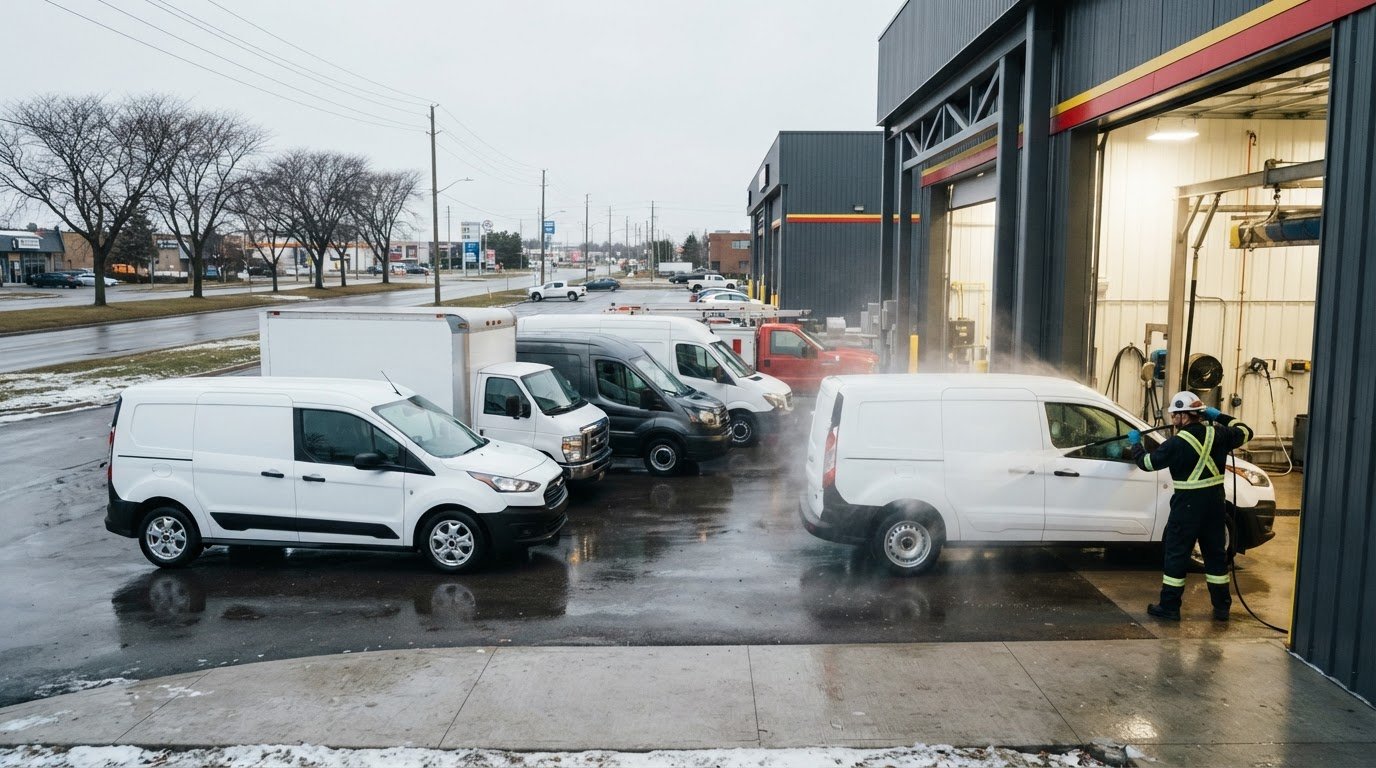
You can also think in terms of vehicle use. A personal sedan that sits in a garage has different needs than a delivery van that gets sprayed every shift. A service that can match the wash to the exposure level, rather than selling the same routine to everyone, is the more sensible winter choice.
For owners who move vehicles long distances or want to reduce extra exposure during transport, find enclosed vehicle transport can be part of a broader protection strategy. It's a different problem from winter washing, but the logic is similar, limit contact with road contaminants where you can, then clean what does get through.
If you want a winter routine that deals with salt instead of just hiding it, Nanak Car Wash offers exterior washes, underbody rinsing, detailing, and rust proofing in the GTA. Use it after heavy exposure, then keep the cycle going through the season so the underside doesn't carry all the damage alone.


 6600 Finch Ave W, Etobicoke, ON M9V 3Z6

 647-703-8515
 MON – SUN 8 AM to 7 PM