
You leave home with a clean car, drive through one GTA snow squall, and arrive with grey slush up the doors, gritty mirrors, and a salty stripe behind every wheel. By the time the temperature rises, that harmless-looking film has turned into wet brine in the wheel wells and underbody. The answer isn't washing every day. It's matching your routine to how much salt your route puts on the car.
Ontario is one of Canada's most salt-intensive winter-driving environments. Public roads receive an estimated 1.5 to 3 million tonnes of road salt each winter, while Toronto alone uses about 130,000 to 150,000 tonnes annually (Ontario road-salt and corrosion guidance). A sensible winter routine removes that residue before it settles into rocker panels, wheel wells, brake areas, pinch welds, and suspension components.
The practical system is simple: rinse the places that collect salt, protect the exterior so grime releases more easily, keep slush out of the cabin, and schedule washes around exposure rather than a rigid calendar.
Table of Contents
- Why Winter Grime Is Tougher on GTA Cars
- Exterior Wash Routine That Actually Removes Salt
- Wax Sealer and Rust Proofing That Earn Their Keep
- Interior Defence Against Slush Salt and Fog
- Smart Scheduling and Ways to Pay Less Per Wash
- Your Winter Clean Car Game Plan
Why Winter Grime Is Tougher on GTA Cars
A short GTA commute can leave a clean car coated before the coffee cools. Slush from a treated highway reaches the lower doors, brine settles in the wheel arches, and fine grit clings to the rear bumper. Ride-hail drivers and highway commuters build that exposure quickly, while a garage-kept car may stay cleaner between trips. The right wash timing depends on the route, not just the month.
Salt does more than dull paint. Dissolved in moisture, it helps corrosion spread across exposed metal and undercarriage parts. Historical testing recorded 5,108 mg/dm² of atmospheric corrosion in Toronto over a 19-month exposure period, among the highest readings in that study (Toronto winter corrosion context).

The parts that take the beating
The lower half of the car carries most of the exposure. Wheel wells trap slush, rocker panels catch spray, and underbody cavities hold damp salt after the pavement looks dry. Brake areas, fasteners, suspension parts, and frame pockets are easy to miss with a quick body rinse.
Canadian research summaries attribute about 50% of vehicle corrosion to road salts. They also describe a University of Windsor engineering study where untreated vehicles showed 6.8 times more visible body rust than treated vehicles, while untreated underbodies showed 3.6 times more corrosion than treated underbodies (Canadian rust-proofing research summary).
For a daily commuter or ride-hail vehicle, repeated salt exposure calls for earlier rinsing and more attention to the underside. A lightly used car parked indoors can go longer between washes, provided its last drive did not leave heavy brine packed underneath.
Why a heated garage can complicate things
A warm garage protects a vehicle from snow and freezing temperatures, but heat can keep salt wet. Parking a heavily salted car indoors without rinsing lets brine remain active against seams and metal surfaces for longer (Ontario road-salt damage guidance).
Rinse obvious buildup, clear the underbody, and dry the door edges before parking. Shelter works best after salt removal. A wet, salted vehicle can turn a heated garage into a warm corrosion workshop.
Practical rule: Set winter wash timing by salt exposure. Clean the underside before brine gets a chance to sit there.
Exterior Wash Routine That Actually Removes Salt
A good winter wash starts with removal, not rubbing. Contacting a paint surface covered in gritty salt and sand can drag contaminants across the finish, so begin by loosening the film with water. This sequence works at a touchless bay, an express wash, or home with a hose and suitable soap.
Start low and rinse heavily
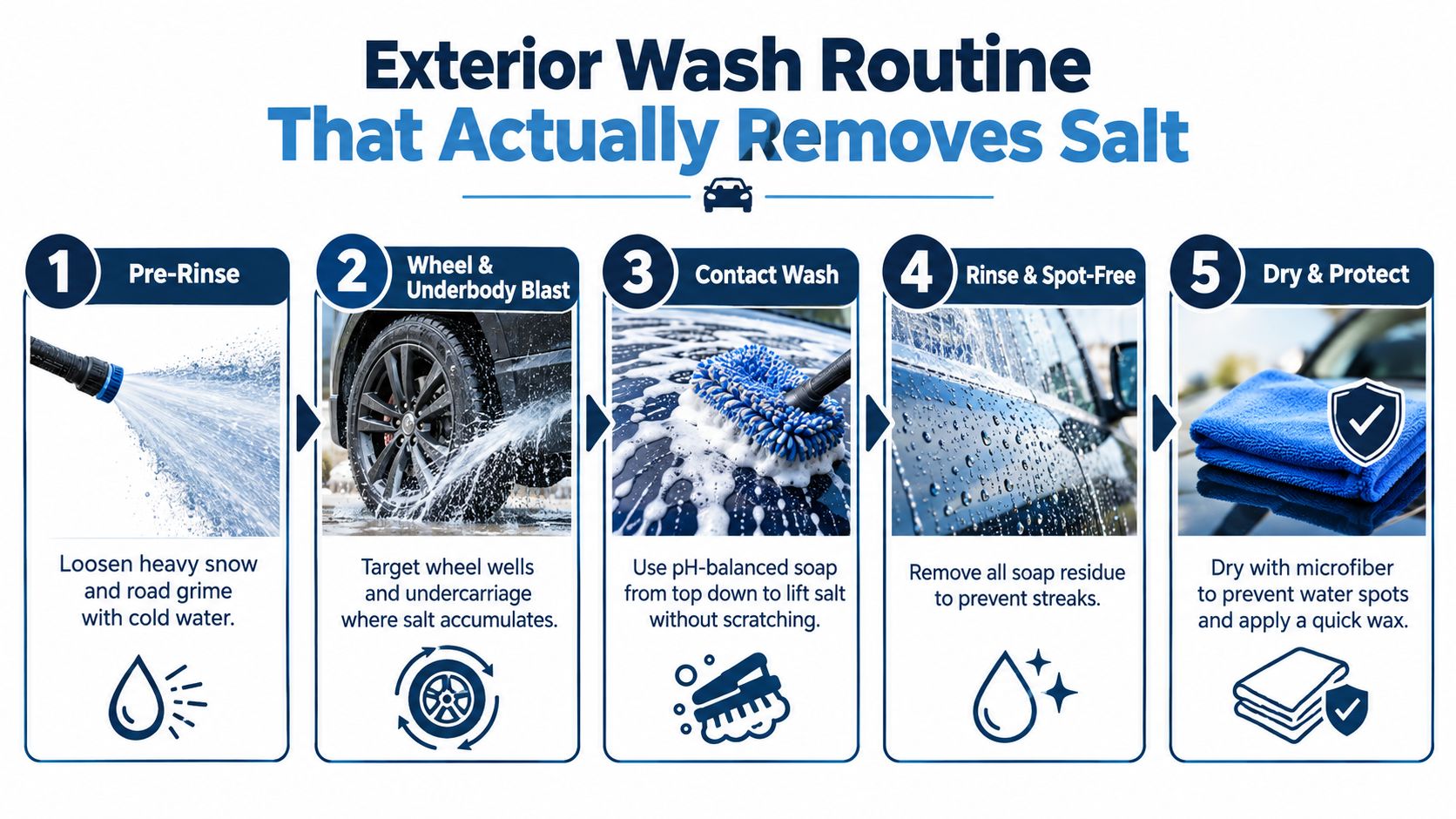
Pre-rinse the slush. Use cold water to loosen packed snow, salt film, and road grit. Spend extra time on the lower doors, rocker panels, rear bumper, and wheel openings. Don't attack stubborn grime with a brush while it's still bonded to the paint.
Blast the wheels and underbody. Direct the spray into each wheel well, behind the tyres where accessible, and along the underside. The underbody rinse has the highest practical value because suspension areas, pinch welds, and frame pockets collect residue that ordinary body spray may miss.
Wash from the top down. If you're using a contact method, choose a pH-balanced car soap and a clean mitt. Start with the roof and glass, then work down to the bonnet, doors, and finally the dirtiest lower panels. Keep wheel tools separate from paint tools.
Don't forget the drains
Salt and slush often hide in door jambs, rocker-panel edges, and drainage points. Open the doors after washing and rinse or wipe the jambs, then check that rocker drains aren't blocked by packed debris. Water left in these areas can freeze and create an annoying morning surprise, especially after an overnight cold snap.
The same principle applies to boot and hatch seals. Wipe the rubber and surrounding channels, rather than forcing a frozen door open the next morning. A small amount of attention here saves broken clips, torn seals, and a lot of unnecessary tugging.
Finish with a controlled dry
Dry the mirrors, door edges, handles, hatch seams, and fuel-door area. A clean microfiber towel is useful at home, while air blowers at an express wash can clear water from crevices before it freezes.
Avoid parking a salted vehicle wet in a heated garage. If the wash can't be followed by a thorough dry, prioritise a strong underbody rinse and wipe the areas you'll touch first. The objective isn't a concours finish. It's removing chloride residue before it settles back into the same cavities.
Wax Sealer and Rust Proofing That Earn Their Keep
Protection products solve different problems, so don't treat every upgrade as interchangeable. A wax layer helps winter grime release from painted surfaces. A sealer adds a more durable barrier. Rust proofing targets vulnerable metal and underbody areas, where paint protection alone can't do the whole job.
For a daily highway commuter, a protection upgrade can make repeat washes quicker because salt film and road grime have less opportunity to bond tightly to the paint. An occasional city driver may prefer a basic wash with an underbody rinse and add protection before a stretch of heavy winter driving.
Compare the layers before choosing
| Protection Type | What It Does | Best For |
|---|---|---|
| Triple foam wax | Adds a temporary surface layer that improves slickness and helps grime release during later washing | Drivers who want a quick protection boost during regular express washes |
| Hot wax | Provides another exterior protection layer over clean painted surfaces | Vehicles exposed to frequent slush, spray, and repeated road film |
| Sealer wax | Adds a more durable protective barrier intended to help the finish resist winter contamination | Highway commuters and vehicles that can't be washed after every dirty trip |
| Rust proofing | Applies a dedicated chemical compound to help protect vulnerable metal and underbody areas from salt-related corrosion | Older vehicles, daily winter drivers, and cars kept for many seasons |
A wax or sealer won't replace rinsing. Salt still needs to leave the vehicle, especially from wheel wells and the underside. Think of protection as a way to make cleaning easier, not permission to postpone it indefinitely.
Match protection to the vehicle
A newer car with sound paint and limited winter mileage may need a sensible express wash, underbody spray, and periodic wax or sealer. An older car with exposed fasteners, existing surface rust, or extensive highway use deserves a more serious conversation about rust proofing. Vehicle size also matters for service planning, since rust-proofing pricing is tiered by size and SUVs, vans, and trucks can require different treatment considerations.
At Nanak Car Wash, the available service mix includes express exterior washes, underbody wash options, wax upgrades, full-service cleaning, detailing, and automotive rust proofing. That makes it possible to choose a quick maintenance visit or combine exterior cleaning with a more involved protection service, depending on the vehicle's condition.
Protection works best as a stack. Rinse away salt first, add a surface barrier second, and use rust proofing when the metal underneath needs dedicated attention.
Interior Defence Against Slush Salt and Fog
Winter dirt doesn't stop at the door sill. Boots carry salt, grit, and melting snow onto mats, while damp clothing and wet footwear add moisture to the cabin. Leave that mix alone and you'll eventually see pale salt marks, musty odours, fogged glass, and damp carpet edges.
Start with the mats because they take the daily punishment. Rubber mats are easy to remove, shake, rinse, and dry. Carpet mats need more care, especially if salt has dried into the fibres.
Use a short reset routine
- Before entry: Tap snow and loose grit from your boots before getting in. It sounds minor, but it keeps less contamination on the mat.
- After a messy trip: Remove the mats, shake or vacuum them, and wipe the sill area. Don't let wet saltwater sit against carpet or trim.
- For salt marks: Use a suitable interior cleaner and a clean cloth, applying enough to lift the residue without soaking the carpet. Follow the product directions and dry the area properly.
- For trapped moisture: Leave removable mats somewhere ventilated to dry overnight when practical. Avoid sealing damp mats in the vehicle.
- For fogging: Keep the glass clean inside and use the ventilation system to remove cabin moisture. Wipe the windscreen with a glass-specific product rather than a greasy household cleaner.
A quick vacuum between deep cleans is often more useful than waiting until the entire cabin needs restoration. Focus on the driver's footwell, seat tracks, door pockets, and the area beneath the pedals, where grit accumulates quickly.
Know when DIY stops making sense
A full-service wash can save time when the exterior needs attention and the cabin only needs vacuuming, dashboard cleaning, and window care. A deeper appointment makes more sense when salt stains have spread into carpet, vents and crevices hold debris, or leather needs cleaning and conditioning.
Professional interior and exterior detailing can include carpet and seat shampooing, salt and stain removal, vent and crevice blowout, leather deep cleaning, and machine buffing or polishing. These appointments typically take 1 to 4 hours, depending on the work required and vehicle condition, with additional considerations for SUVs, vans, trucks, and pet hair.
Smart Scheduling and Ways to Pay Less Per Wash
Salt exposure should set your wash schedule, not the calendar alone. A car commuting on salted highways receives far more brine than a garage-kept vehicle used for short city errands. Ride-hail and delivery vehicles need an even tighter routine because they stay on treated roads throughout the day.
Ontario winter guidance generally places active-season washing at 1 to 2 weeks, with an extra rinse after thaws. Another practical rule is to wash within 24 to 48 hours after a major salt event, or within a week to 10 days during active winter conditions (Ontario winter washing recommendations). Use those intervals as a starting point, then shorten them when your route leaves visible brine on the lower body.
Sort yourself by salt exposure
Highway commuters should check the lower doors, mirrors, wheel wells, and underbody after long slushy drives. A wash every 1 to 2 weeks is a practical baseline during active salt season, with an earlier underbody rinse after a major storm or thaw (route-based winter car-care guidance).
Ride-hail, delivery, and fleet drivers build salt exposure quickly because the vehicle remains in service while roads are treated repeatedly. A wash every 2 to 4 days may suit heavily used vehicles, especially when brine is collecting around the wheels and rocker panels. The aim is to remove recurring deposits before they remain on the underbody and in seams.
Occasional city drivers can often wait 2 to 4 weeks when mileage is low and salted highways are avoided. Move the wash forward as soon as a visible salt film or post-thaw brine appears.
Make repeat visits easier to afford
Frequent washing rewards simple budgeting. Compare individual visits with a monthly Unlimited Wash Club pass or prepaid multi-wash tickets. Nanak Car Wash lists monthly passes, first-month-free promotions shown on its site, prepaid wash options, combo deals, and free vacuums at participating locations. Divide the package price by the visits you realistically expect, not the visits you hope to make.
A deep freeze is not a reason to ignore a heavy salt load. If a complete hand dry is difficult, prioritise the underbody rinse, wheel wells, door jambs, and rocker drains. Dry accessible edges before parking, particularly around handles and hatch seams.
Route check: After a highway run, thaw, or major salt event, inspect the lower half of the vehicle. The paint shows what is visible. Wheel wells show what the road left behind.
Your Winter Clean Car Game Plan
A clean winter car comes from a repeatable loop, not a heroic Saturday detail. Set the routine around the way you drive, then keep the visit focused on the areas that carry salt. You'll spend less time correcting neglected buildup and more time maintaining a presentable vehicle.
The weekly loop
At the start of the week, inspect exposure. Look at the rocker panels, wheel openings, lower doors, mirrors, and rear bumper. A light dusty film can wait for the planned visit. Wet, thick brine after a highway commute deserves earlier attention.
During the wash, spend effort underneath. Pre-rinse the lower body, target wheel wells, choose the underbody option, and clear door-jamb and rocker drains. The paint may look clean while the underside still carries the most consequential residue.
After the wash, dry the trouble spots. Wipe handles, mirrors, hatch seams, fuel-door edges, and door jambs. Use air blowers where available, then avoid trapping a salted, wet vehicle in a heated garage.
Inside the cabin, reset the mats. Tap off boots before entry, vacuum the driver's footwell, remove wet mats when possible, and clean salt marks before they spread. Save shampooing, leather care, vent blowout, and stain removal for a deeper detailing appointment when a quick reset no longer restores the interior.
Adjust for working vehicles
A ride-hail car, delivery vehicle, service van, or small fleet needs a service rhythm based on use, not the owner's personal schedule. Keep prepaid washes or a monthly plan available if frequent visits are part of normal operations. Dealerships and rental operators can also benefit from separating routine exterior rinses from occasional full-service interior work, rather than treating every dirty vehicle as a full detail.
Vehicle size affects both time and service planning. SUVs, vans, and pickup trucks may involve size-based pricing or surcharges for certain detailing work, so confirm the service scope before booking.
The winning winter habit is boring in the best possible way: inspect, rinse the salt-heavy areas, dry the edges, reset the mats, and repeat before buildup becomes a project.
Nanak Car Wash offers express exterior washes with underbody options, full-service interior cleaning, detailing, rust proofing, prepaid wash bundles, and monthly wash plans for GTA drivers who need a practical winter routine. Visit Nanak Car Wash before your next major salt event, choose the service that matches your driving exposure, and get the grime off before it settles in.


 6600 Finch Ave W, Etobicoke, ON M9V 3Z6
 647-703-8515
 MON – SUN 8 AM to 7 PM