
Rust proofing without drilling holes can protect accessible metal surfaces, while Ontario-treated vehicles showed 6.8 times more visible body rust and 3.6 times more underbody corrosion when left untreated. The limitation is just as important: a no-drill method can't reach every hidden cavity on every vehicle design.
You notice the problem before you see it. A Toronto snowstorm passes, the salt trucks keep moving, and your vehicle comes home wearing a grey paste of slush, brine, grit, and road film. You rinse the wheel wells, wipe the doors, and hope the undercarriage looks better than it did last winter.
That hope isn't a corrosion-control strategy. In the GTA, rust protection has to account for repeated salt exposure, wet seams, freeze-thaw cycles, and the places a wash wand can't reach. The question isn't whether rust proofing matters. It's whether you can add protection without drilling new holes into the body, disturbing factory seals, or creating access points that later trap moisture.
Table of Contents
- Why Ontario Winters Make Rust Proofing Essential
- How No-Drill Rust Proofing Actually Works
- The Ontario Corrosion Data Behind the Need
- No-Drill Versus Traditional Drilled Approaches
- What No-Drill Rust Proofing Cannot Reach
- When No-Drill Is the Right Choice
- Maintenance Intervals and Long-Term Protection
Why Ontario Winters Make Rust Proofing Essential
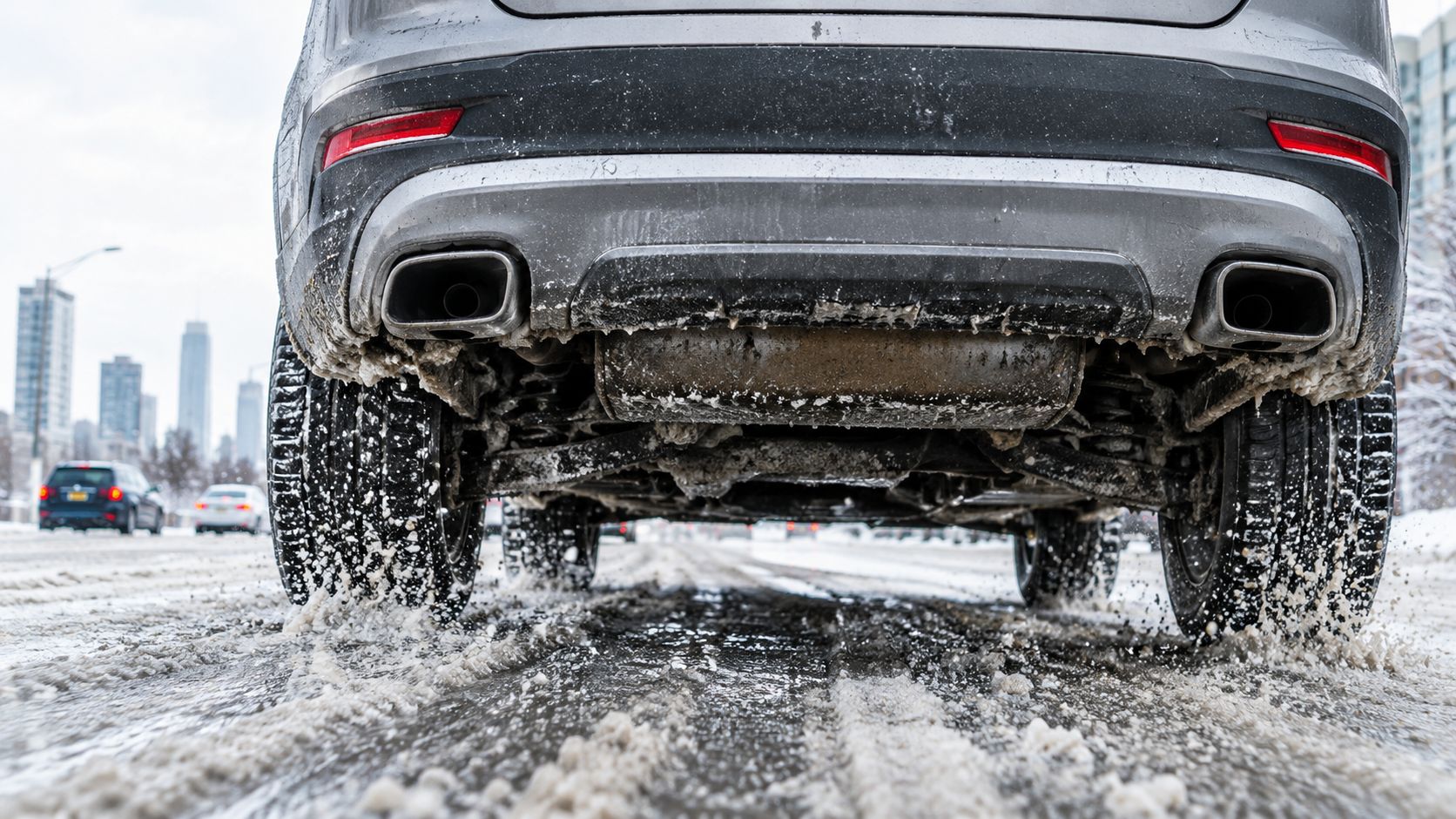
A GTA winter puts the underside of a vehicle through a rough cycle. Salt-laden slush hits behind the front wheels, works into rocker panels, and stays on underbody seams as cars move between freezing roads and heated parking garages. Even after the pavement dries, residue can stay trapped in joints and pockets that do not dry out well.
Ontario spreads roughly 3 to 5 million tonnes of road salt each winter, while Toronto alone uses about 130,000 to 150,000 tonnes annually, according to Ontario winter rust-proofing information on road-salt exposure. That is not just surface grime. Salt leaves a conductive moisture film on exposed steel, and that keeps corrosion active.
The damage starts where owners rarely look
The first trouble spots are usually seams, spot welds, rocker panels, wheel wells, brake-line mounting points, and boxed frame sections where salty water collects. By the time bubbling paint or orange staining shows up, corrosion may already be active on the back side of a panel.
A no-drill treatment gives technicians a way to coat exposed underbody metal and reachable joints without adding new openings to the vehicle. That makes it useful for owners who want preventative protection while keeping the original body structure intact. Clear explanations of what a no-drill application does and does not cover also help automotive businesses boost your car business through better customer education and local visibility.
Practical rule: Washing removes corrosive residue. Rust proofing helps protect the metal that stays exposed between washes. You need both.
The best results start before visible rust takes hold. A technician should inspect the underside, remove loose contamination, confirm that drain paths are open, and apply the product only after the metal is clean and dry. Spraying over wet salt does not isolate the problem, and it can trap contamination against the surface.
How No-Drill Rust Proofing Actually Works
Think of no-drill rust proofing as sealing the outside of a house rather than cutting holes through its walls. The technician works with surfaces that are already accessible, using a spray wand, extension nozzle, brush, or existing factory opening where the vehicle design permits it.
The first step is preparation. Dirt, loose scale, salt residue, and trapped debris need to be removed from the underbody, wheel wells, rocker areas, seams, and other target zones. A careful shop also checks drain holes and factory plugs before applying anything, because a blocked drain can leave water trapped inside a cavity.
The compound then forms a protective film over suitable metal. Depending on the product, that film may remain more fluid so it can creep along seams, or it may leave a heavier wax-like barrier. In either case, the purpose is to reduce direct contact between steel, oxygen, and salt-rich moisture.
What gets coated
A competent application focuses on the surfaces that receive the worst road spray:
- Underbody panels: Accessible steel around the floor, crossmembers, and exposed frame surfaces receives a protective coating.
- Rocker panels and seams: These areas collect slush and need close attention rather than a quick pass from a distance.
- Wheel wells: The front and rear wheel areas take direct impact from water, salt, and gravel.
- Mounting points and joints: Exposed brackets, fastener areas, and brake-line mounting points can benefit when the product is compatible with nearby components.
The method doesn't magically turn a sealed cavity into an open one. It can use factory access points, but coverage still depends on the vehicle's construction and the technician's reach. That distinction matters more than the phrase “no-drill,” because a surface coating is only effective where it lands.
The Ontario Corrosion Data Behind the Need
Toronto winters are hard on metal. A vehicle can look fine above the beltline while salt keeps working underneath, especially at seams, lower panels, and any spot that holds damp grit after a drive.
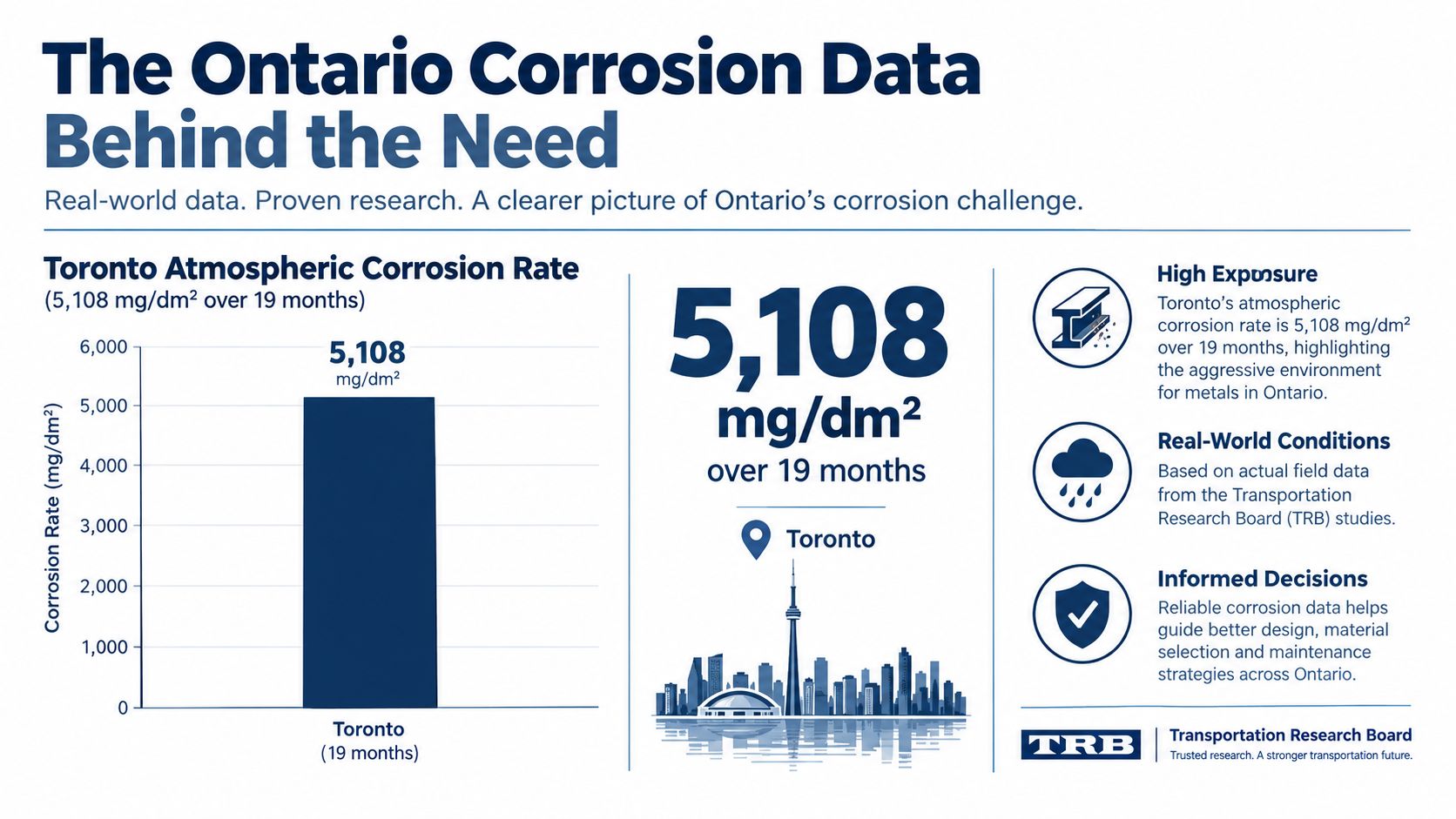
A Transportation Research Board corrosion study recorded 5,108 mg/dm² of Toronto atmospheric corrosion over 19 months, placing the region among the harsher corrosion environments in that survey, as documented in the Ontario vehicle corrosion study summary. For GTA drivers, that matters because the risk is not abstract. The road salt, slush, and wet spray keep coming back all season.
Treated and untreated vehicles tell different stories
An Ontario-based corrosion study looked at 228 aftermarket-treated vehicles and 141 untreated vehicles at three Ontario facilities. The untreated vehicles showed dramatically more visible body rust, much more corrosion on underbody parts, and far more corrosion across the combined areas than the treated vehicles, according to the Ontario vehicle corrosion study summary.
The exact multipliers matter less than the pattern. The treated vehicles held up better, the untreated ones did not, and the gap showed up across body panels and underneath the vehicle. That is the takeaway for anyone driving in the GTA. Protection has to reach the areas that take salt spray, and it has to be in place before corrosion gets established.
The lesson is simple. A coating does not make a vehicle rust-proof. It lowers the amount of metal that stays exposed to salt, moisture, and oxygen.
For a GTA owner, that points to early treatment instead of waiting for bubbling paint or orange streaks. It also means checking the work, asking which surfaces were treated, which cavities could not be reached, whether drain paths were left open, and what maintenance the product needs after application.
No-Drill Versus Traditional Drilled Approaches
Both methods have a legitimate place. No-drill rust proofing avoids creating new access points in sheet metal and can protect a vehicle's exposed underbody without modifying panels. A drilled approach may provide a path into cavities that factory openings don't expose, but it creates an additional responsibility: every new hole must be placed correctly, protected from corrosion, and sealed with a suitable plug.
The technique alone doesn't guarantee complete coverage. The Automobile Protection Association reports that a CAA study found 85% of dealer-applied rustproofing left one or more high-risk areas unprotected, and notes that drilling may sometimes be necessary to reach seams, cracks, and crevices, as explained in the APA's rustproofing guidance.
| Factor | No-Drill Approach | Traditional Drilled Approach |
|---|---|---|
| Coverage areas | Protects accessible underbody metal, seams, wheel wells, rocker surfaces, and areas reached through factory openings | Can extend into selected enclosed cavities when new access holes are created |
| Installation | Uses existing openings and external access, with no new body penetrations | Requires careful drilling, product application, and sealing of every access point |
| Cost implications | Avoids the additional work associated with drilling and plugging, though price still depends on vehicle size, preparation, and product | May involve more labour because access holes must be planned, drilled, treated, and sealed |
| Risk factors | May leave boxed sections, inner panels, and hidden joints untouched if factory access is limited | Poorly positioned or poorly sealed holes can create new vulnerability points |
| Best fit | Newer vehicles, vehicles with good factory access, and owners who prioritise non-invasive work | Vehicles where critical cavities cannot be reached through existing openings and maximum access is justified |
Work quality matters more than the sales label
I've seen rushed applications where a technician sprays the easy lower edges and calls the job complete. I've also seen careful work where the technician removes shields where appropriate, cleans the underside, protects vulnerable exposed surfaces, and documents areas that couldn't be reached.
No-drill isn't automatically superior, and drilling isn't automatically reckless. The right choice depends on the body design, the condition of the vehicle, the product chemistry, and whether the shop can explain its coverage clearly.
What No-Drill Rust Proofing Cannot Reach
The phrase “without drilling holes” sounds complete until you inspect a modern vehicle. Inner rocker cavities, boxed frame sections, overlapping seams, and spot-weld clusters can sit behind layers of metal with no direct line of sight from the outside. If the only route is a narrow factory opening, a spray may coat the entrance while leaving deeper surfaces untouched.
Factory access is helpful, but it isn't universal
Many vehicles have plugs, drains, service openings, or existing passages that allow a flexible nozzle to reach more than a simple exterior spray. That access varies by model, trim, age, previous repairs, and the condition of the openings. A technician who knows the vehicle can often make better use of those routes than a general-purpose application.
The limitation remains. A no-drill process may not coat every inner seam, crack, or enclosed joint, particularly when the design provides little factory access. The APA's warning about missed high-risk areas is why consumers should treat coverage claims carefully rather than assuming “no holes” means “every cavity protected.”
Ask before authorising the work: Which cavities can you reach through factory openings, and which ones will remain untreated?
Trapped moisture creates another problem. If a boxed section already contains wet debris, blocked drains, or active corrosion, adding a coating over the top won't reverse the damage. The shop should identify that condition first and explain whether cleaning, drainage repair, corrosion treatment, or a different access method is required.
The honest result may be partial protection. That isn't a failure if the technician identifies the boundary and treats the reachable high-exposure surfaces properly. It becomes a failure when a limited application is sold as complete cavity coverage.
When No-Drill Is the Right Choice
No-drill rust proofing makes practical sense when the vehicle is relatively new, its factory drainage is intact, and the owner wants protection without modifying body panels. It also suits drivers who prefer a clean installation process and fleets that need predictable turnaround without adding drilling and plugging to every appointment.
The method is less attractive when the underside already holds moisture, when drain passages are blocked, or when the vehicle has known corrosion in enclosed structures. An older vehicle with established scale needs an inspection before any coating. Rust can continue underneath a film if the technician treats the surface without dealing with loose corrosion or trapped contamination.
Build the decision around the vehicle
Use these checks before booking:
- Inspect the structure: Look for existing scale, damaged factory plugs, blocked drains, and previous repairs around rocker panels and frame sections.
- Match access to expectations: If you want protection for reachable exposed metal, no-drill can be a sensible choice. If you expect every enclosed cavity to be coated, ask whether the vehicle's factory openings can support that claim.
- Consider your driving pattern: A commuter exposed to salted roads every day needs more maintenance attention than a vehicle stored indoors and driven occasionally.
- Plan the wash routine: During active salt season, underbody rinsing on a weekly to biweekly basis is commonly recommended for GTA and southwestern Ontario conditions, as outlined in Toyota Canada's winter-road protection advice.
The wash matters because it removes chloride residue before it can keep the metal surface wet. Use an underbody setting or a controlled rinse, then allow the vehicle to dry before applying a treatment. A coating applied over salt and moisture can preserve the contamination instead of separating it from the steel.
Maintenance Intervals and Long-Term Protection
There isn't one honest renewal interval for every no-drill product. The Ontario market includes conflicting claims, with one provider describing a wax and oil blend that can last 2 to 3 years, while another describes certain no-drill solutions as annual applications using existing holes and entrances, as documented in this comparison of rust-proofing prices and reapplication claims.
That difference comes down to more than advertising. Product chemistry, film thickness, road exposure, washing frequency, mileage, parking conditions, and the areas treated all affect how long protection remains useful. A vehicle that spends every winter day on salted GTA roads should not follow the same schedule as a lightly driven car that rarely sees slush.
A workable renewal framework
Choose the interval by inspecting the vehicle rather than blindly following a calendar:
- High exposure: Drivers with heavy winter mileage, frequent highway travel, or regular salt and slush exposure should consider an annual inspection and use the product manufacturer's renewal guidance.
- Moderate exposure: A vehicle driven less often may justify a longer interval if the film remains intact and the technician confirms that high-impact areas are still covered.
- After repairs: Reinspect and repair the treatment around replaced rocker panels, frame components, brake-line mounts, and other disturbed areas.
- Every season: Keep washing the underside. No rust-proofing product replaces the removal of accumulated salt.
The safest recommendation for many high-mileage GTA vehicles is simple: have the underside inspected before the salt season, use a treatment suited to the vehicle's access and condition, and renew it when the film has thinned or the product requires it. No-drill rust proofing is valuable because it protects accessible metal without creating new holes, but long-term results depend on honest coverage, clean preparation, and consistent maintenance.
Nanak Car Wash offers rust proofing alongside exterior washing and detailing at its GTA-area locations, giving drivers an option to combine underbody cleaning with a protective application. Visit Nanak Car Wash to review the service and arrange an inspection before the next stretch of salted roads.

 6600 Finch Ave W, Etobicoke, ON M9V 3Z6
 647-703-8515
 MON – SUN 8 AM to 7 PM