
Your car probably looks “winter clean” right now by GTA standards. That means a grey film on the doors, white crust behind the wheels, and a rear hatch that's one slush blast away from becoming abstract art.
Most drivers focus on the obvious mess. A deeper problem sits underneath. In a Toronto winter, a proper winter car wash isn't about vanity. It's about getting corrosive salt and brine off the parts you can't see before they start chewing through the metal that is vital.
The usual advice is “wash it every week or two.” That's a decent baseline. But it misses the trigger that catches people out every year. The most dangerous day often isn't the coldest one. It's the mild one, when the roads turn wet, the white crust turns liquid again, and that salty slurry gets thrown into every seam, bracket, and wheel well.
Table of Contents
- The Real Enemy Why Winter Washes Matter More Than You Think
- Your Winter Wash Schedule How Often Is Really Enough
- The Ultimate Winter Wash Playbook Pro vs DIY
- Beyond the Wash Essential Winter Armour for Your Car
- The Smart Way to Wash for High-Frequency Drivers
- GTA Winter Car Wash FAQs
The Real Enemy Why Winter Washes Matter More Than You Think
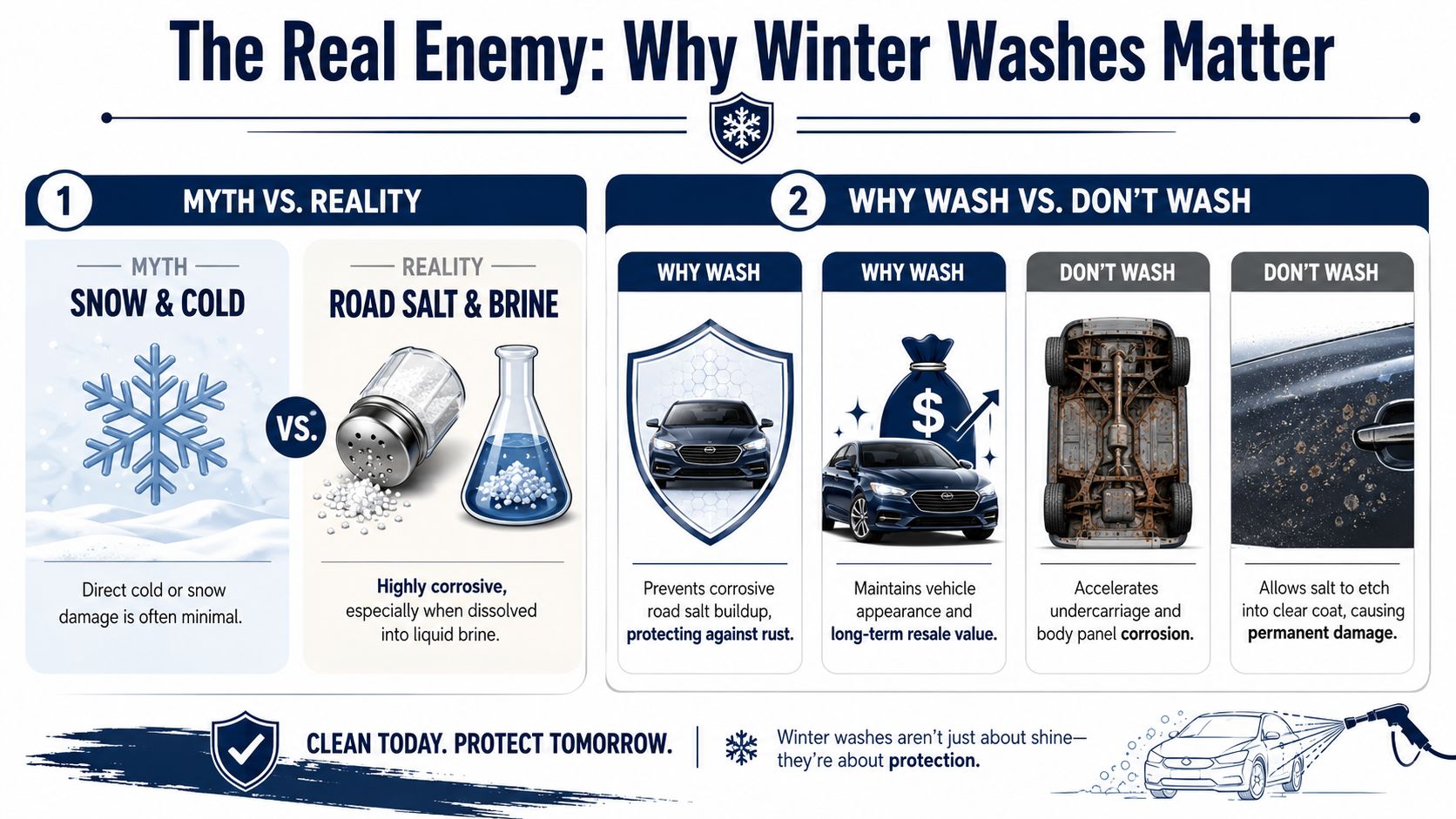
A lot of people blame snow. Snow isn't innocent, but it isn't the main villain. Road salt and liquid brine are what shorten a car's life in the GTA, especially once that residue starts moving around as wet spray instead of sitting there as dry crust.
On a typical commute, the 401, 410, and every sloppy on-ramp fling salt mist into your wheel wells, underbody, brake lines, suspension bits, and door sills. The white stripe you see on the body is only the part waving hello. The main attack is underneath, where salt builds up on the undercarriage, which local winter washing guidance identifies as the primary cause of rust and more critical to protect than the exterior panels in Ontario conditions, as outlined in Nanak's Ontario winter wash guide.
Frozen salt looks bad Liquid brine does more damage
Cold, dry days can fool people. They see frozen grime and assume the danger is parked until the next storm. Not quite. The sharper corrosion risk shows up during thaw cycles, when temperatures climb above freezing and the salt turns active again.
That's the part many generic winter car wash schedules gloss over. Guidance for Toronto drivers notes that the usual “wash weekly” advice misses the bigger trigger. Washing within 24 hours of a warm-day melt matters more than sticking blindly to the calendar because salt becomes highly corrosive when the thaw turns it liquid again, as noted in this Toronto winter washing discussion.
The wash trigger most drivers miss
A fixed schedule still helps. But smart winter washing in the GTA is event-driven.
Watch for these moments:
- A warm spell after deep cold: Salt wakes up and spreads as brine.
- A major storm treatment: Roads get hit hard with de-icing material.
- A long slushy highway run: High-speed spray coats places your garden hose won't reach well.
- Roads that look white: That chalky surface is a giant hint that your car is collecting more than dirt.
Practical rule: If the weather or road conditions changed sharply, your wash timing probably changed too.
A winter car wash is maintenance, not cosmetics. Once you think of it as rust prevention instead of a beauty treatment, the logic gets simple. Wash after the events that load your car with salt, and pay special attention to the underside every single time.
Your Winter Wash Schedule How Often Is Really Enough
Monday morning on the 401, the car looks fine from ten feet away. Then you open the door, glance at the sill, and see the gray crust building up. That usually answers "how often" for GTA winter washing. It depends less on a neat calendar and more on how your car gets used.
The schedule should match the abuse.
A short-trip car that sticks to local roads in milder conditions can go longer between washes than a daily commuter that lives in highway spray. A garage-kept second vehicle also has different needs than a workhorse that sees slush, packed snow, and salted ramps every day. The trick is setting a baseline you can stick to, then tightening it up fast after rough driving weeks.
For Southern Ontario, a practical baseline is every 10 days during winter, while daily highway commuters should usually be closer to every 7 days. That general approach lines up with guidance in this Ontario winter washing reference.
GTA Winter Wash Frequency Guide
| Driver Profile | Driving Habits | Recommended Wash Frequency |
|---|---|---|
| 401 Warrior | Daily highway commuting in slush, salt spray, and wet winter traffic | Every 5 to 7 days |
| Salt-Belt Commuter | Regular GTA driving with frequent use of salted main roads | Every 7 to 10 days |
| Standard GTA Driver | Mixed local and arterial-road use in normal winter conditions | Every 10 to 14 days |
| Local Navigator | Mostly short local trips in clearer areas, less exposure to heavy salt | Up to every 14 days if conditions stay mostly clear |
| Garage-Kept Light User | Infrequent winter use, mostly parked indoors | Every 2 to 3 weeks |
Those ranges work well as a starting point, not a permission slip to wait.
Highway drivers need the shortest interval because the car gets blasted underneath and behind the wheels, not just splashed on the doors. Local drivers can usually stretch things a bit, but only if the roads have stayed fairly clean. Light-use cars often fool their owners. They look clean because they are parked more, while salt sits in the wheel wells and lower seams.
If you want the short version, match your wash frequency to where the car spends its time. Highway use means weekly. Mixed GTA driving usually lands around every week and a half. Low-use vehicles can go longer, but they still need attention once grime starts collecting in the lower body and undercarriage.
The pecking order matters too. Put your effort into the underbody, wheel wells, rocker panels, and door edges first. The hood and roof can wait an extra day. Rust usually starts where slush gets trapped, stays wet, and gets ignored.
That is the part many drivers learn the expensive way.
The Ultimate Winter Wash Playbook Pro vs DIY
Some drivers want speed and consistency. Others would rather wash at home if they can do it properly. Both routes can work. What doesn't work is a quick splash on the body panels while the underside keeps marinating in salt.
What a professional wash gets right
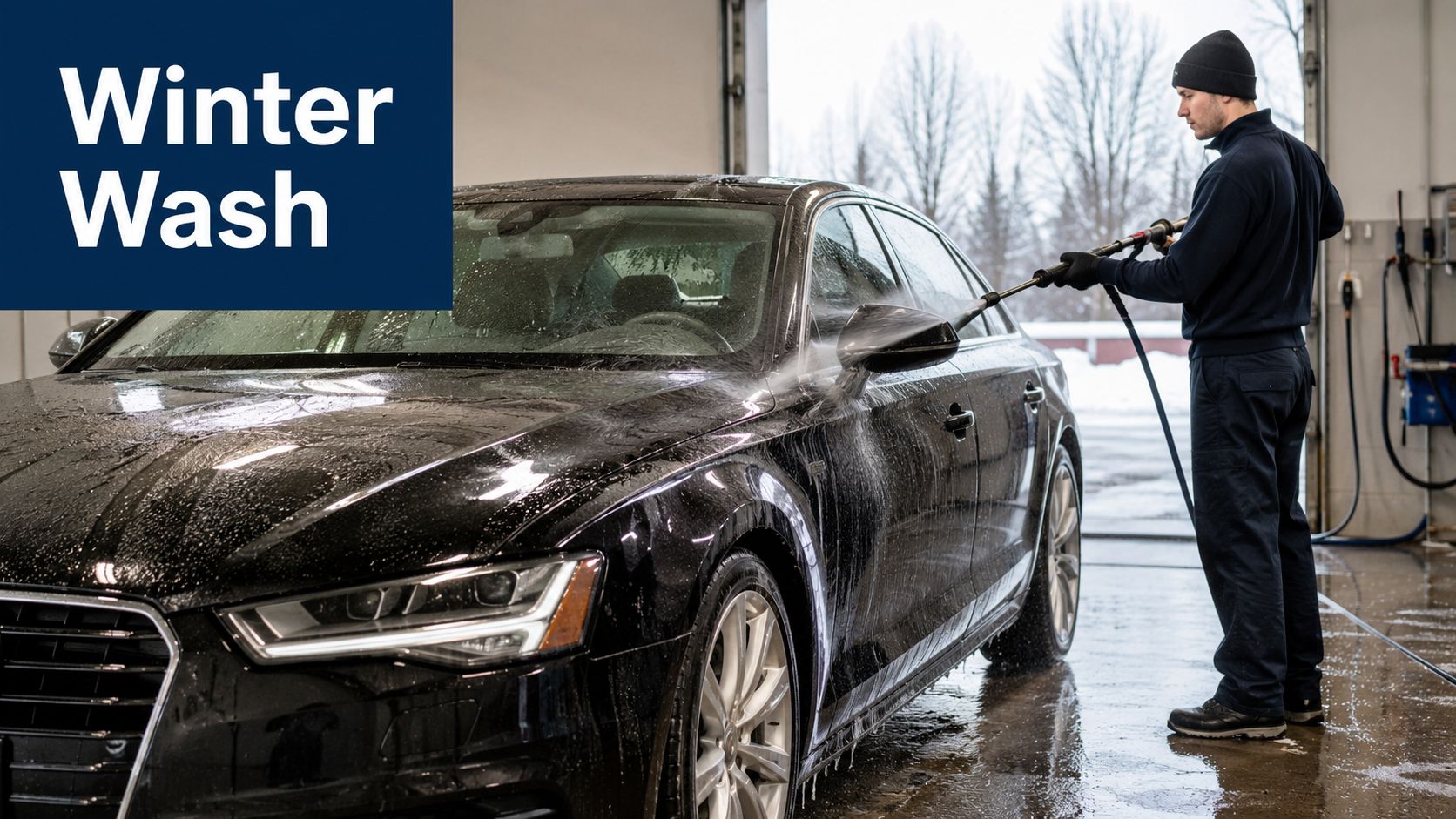
Professional winter washing has one major advantage. It handles the parts often missed or difficult to reach well enough at home.
The technical method recommended for a winter car wash in the GTA starts with a high-pressure pre-rinse focused on the undercarriage and wheel wells to break up salt crust before soap touches the vehicle. After that, pH-balanced soap is used because it chemically neutralises the alkalinity of road salt, according to this GTA winter wash methodology.
That sequence matters more than people think.
- Pre-rinse first: If salt crust stays in place, you're just dragging grime around with your wash media.
- Undercarriage focus: This is the rust zone. Missing it defeats the point.
- Wheel wells and door sills: These are salt traps. They don't look dramatic until they do.
- Thorough drying: Air dryers or microfiber towels help prevent frozen handles, mirrors, and door jambs.
A proper facility also removes a lot of winter hassle. No icy driveway. No hose turning into a rigid stick. No guessing whether you flushed the underbody well enough.
How to do it yourself without making a mess of it
DIY can still be a solid option if you're careful and realistic. The key is to wash for decontamination, not perfection. Winter isn't the season to chase flawless paint correction in your driveway.
A safe DIY winter car wash looks like this:
- Start with the dirtiest problem, not the prettiest panel. Pre-rinse the underbody, wheel wells, lower rocker panels, and behind the wheels first.
- Move to a gentle hand wash. Use pH-balanced soap and clean wash media. Dirty winter grit scratches easily.
- Keep your rinse water fresh. A two-bucket setup helps if you're washing by hand.
- Rinse thoroughly. Leftover soap and loosened salt aren't protection.
- Dry the trouble spots immediately. Door jambs, handles, mirrors, fuel flap area, and trunk seams deserve attention.
Don't start by polishing the hood while the wheel arches are still packed with salt. That's doing the easy part and skipping the important part.
A few trade-offs matter here:
- Best for DIY: Mild days, access to a garage, enough room to dry properly.
- Poor DIY conditions: Windy sub-zero weather, no drainage, no way to dry door seals and jambs.
- Common mistake: Using household soap. It cleans, but not in a way that respects automotive surfaces.
If you wash at home in winter, keep your ambition modest. Remove contamination. Dry thoroughly. Don't let the car sit wet in the cold with water tucked into every seam.
Beyond the Wash Essential Winter Armour for Your Car
You pull into the driveway after a sloppy February thaw, and the car looks less like paint and more like a salt block with headlights. That is the moment protection matters most. In GTA winters, the ugly days are not always the coldest ones. They are the wet thaw days when brine wakes up again, creeps into seams, and gets busy chewing at metal.
A wash removes contamination. Protection buys you time before the next round sticks as hard.
Drivers often treat winter care like one job. It works better as a stack. Clean the vehicle properly, then protect the surfaces that take the worst beating, especially the lower doors, rocker panels, wheel arches, and underbody. Those areas catch the constant spray, and during thaw cycles that spray stays active longer.
Protection that helps in winter
Winter protection works best in layers, with realistic expectations.
- Wax on paint: A basic wax still has value in winter because it helps grime release more easily at the next wash. It is not magic, and it will not survive months of slush abuse untouched, but it gives the paint a sacrificial layer.
- Paint sealants or coatings: These last longer than wax when they are applied in the right conditions. The catch is temperature. Put them on cold, damp panels and you can pay for protection that never bonds properly.
- Rust proofing for the underbody and cavities: This is the heavy hitter for vehicles that see salted roads every day. Paint gets the attention. The underside usually pays the price.
Driving habits matter too. Highway spray from transport trucks, pooled slush in ruts, and repeated short trips all increase how much salt stays on the vehicle. For commercial drivers or anyone piling on winter kilometres, these trucker winter driving tips are worth a read. Better spacing and smarter storm timing do more than reduce stress. They can cut down how often your car gets sandblasted with salty spray.

When winter detailing makes sense and when it does not
This is the part plenty of shops gloss over. Winter washing and winter detailing are different jobs with different limits.
A normal wash is often practical on a workable cold day if the vehicle can be rinsed and dried properly. Protective products are fussier. Sealants and coatings need the surface and air temperature to cooperate, or curing suffers. Ontario detailers at Diamond Detail point out that colder conditions can make those services a poor bet unless the work is done indoors.
Here is the practical version:
- Cold-day wash with proper drying: Usually fine.
- Outdoor sealant or coating job in bitter weather: Usually poor timing.
- Interior detailing in mid-winter: Often the smartest booking when exterior conditions are lousy.
- Heated garage application: A different story. Controlled temperature changes what products can do.
At the shop, I tell people to match the service to the weather, not the package menu. If the car is filthy after a thaw, get the salt off first. If you want long-term protection, apply it when the product can cure the way it was designed to. Fancy chemistry on freezing panels is a good way to spend money for a weak result.
The Smart Way to Wash for High-Frequency Drivers
Monday morning in the GTA, the roads look merely wet. By lunch, that grey mist kicked up by the 401 has coated the rocker panels, wheel wells, and rear hatch with salty sludge. If you drive for work, that buildup is not cosmetic. It is part of the operating cost of the vehicle, same as fuel, tires, and oil changes.
High-frequency drivers need a different wash mindset. Calendar-based advice helps casual drivers, but it misses the key trigger for heavy-use vehicles. Thaw days are the danger zone. Once temperatures rise and that packed-on salt turns wet again, it creeps into seams, sits in wheel arches, and starts working on metal fast. If your week included highway spray, slush, or a dirty thaw, wash for the event, not for the date on the calendar.
Who should think beyond pay-per-wash
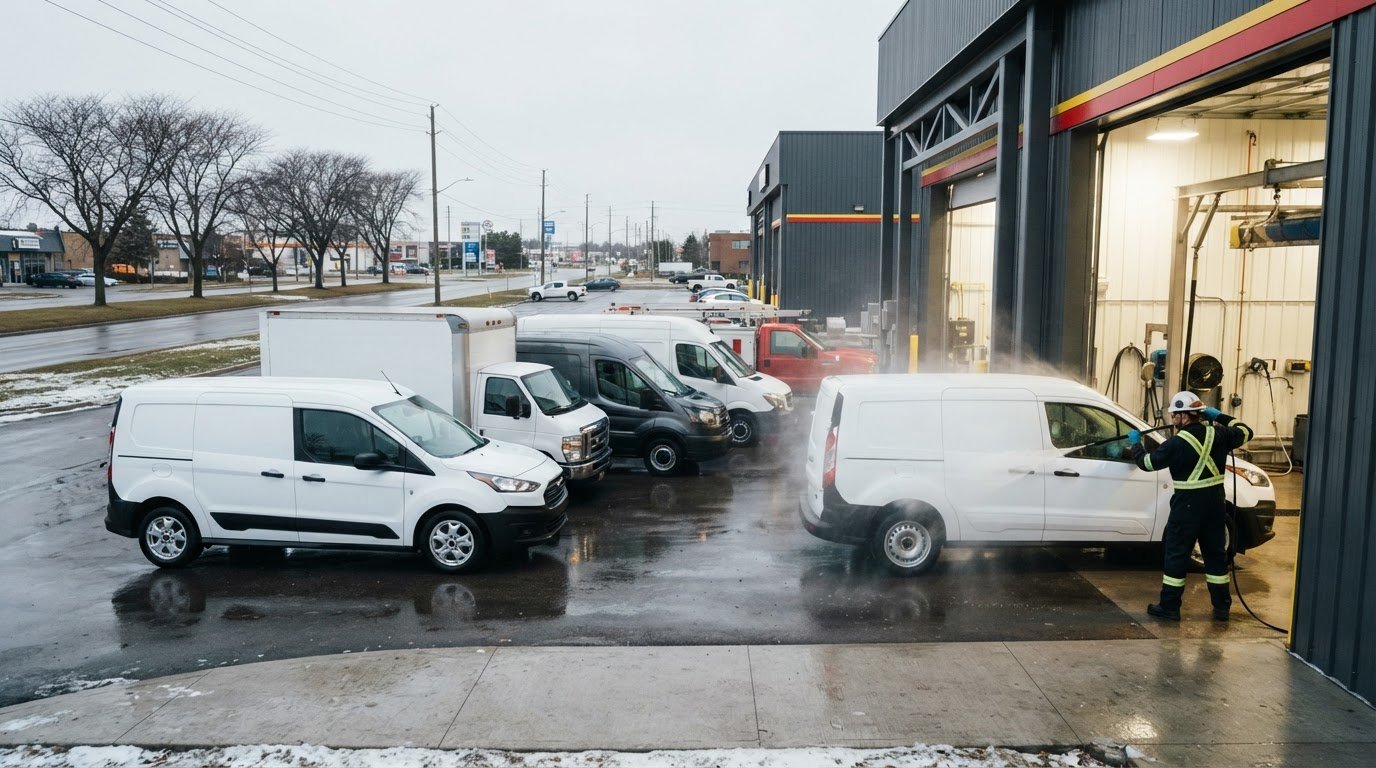
Ride-hail drivers, couriers, contractors, home service techs, and long-distance commuters all land in the same bucket. Their vehicles see more road film, more salt spray, and more stop-start winter driving than the average family car. They also have a practical image problem. Clients and passengers notice a filthy vehicle long before they notice how hard winter roads were on it.
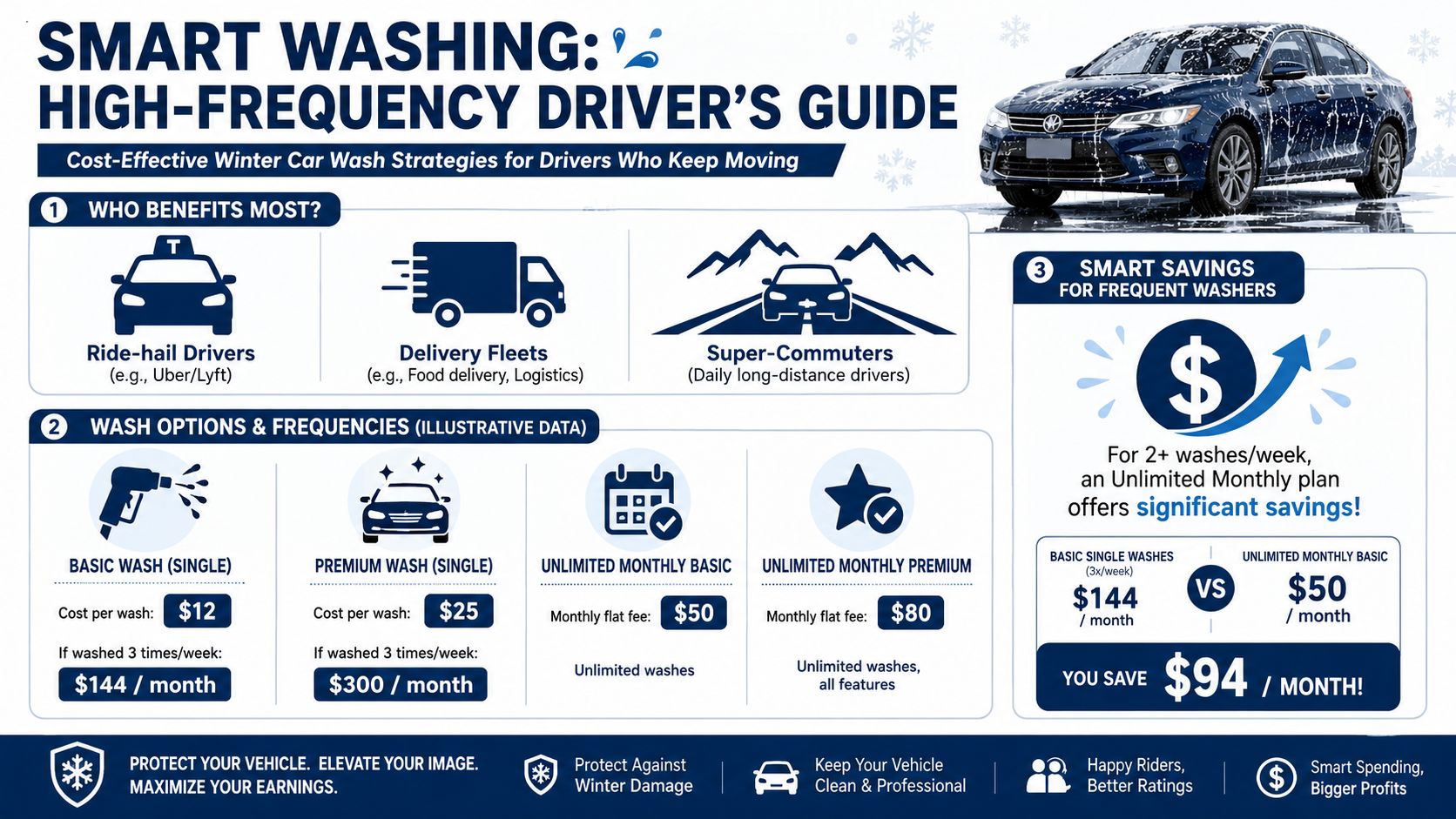
The trap with pay-per-wash is not only the price. It is the delay. A driver finishes a long shift, looks at the lineup, and decides to push the wash to tomorrow. Then tomorrow turns into three more salted commutes. That is how corrosion gets extra time in all the places you cannot see from the driver's seat.
Convenience matters because winter habits are fragile
For heavy-use drivers, the best wash setup is the one you will keep using in February when it is dark, cold, and you are already behind schedule.
- A fixed routine cuts indecision: no weekly debate about whether the car is dirty enough.
- A cleaner work vehicle protects first impressions: useful for passenger trips, estimates, service calls, and deliveries.
- Faster access means fewer skipped washes: that matters more than good intentions after a storm.
At the shop, I tell drivers who rack up serious winter mileage to treat washes like fuel stops. Build them around exposure. If you spent two days on salted highways, wash. If a thaw turned the roads into brown soup, wash. If the underbody got blasted with slush during a delivery run to Mississauga, Brampton, and back across Toronto, wash.
That is the part many drivers miss. The worst time is not always after fresh snowfall. It is after the thaw, when the salt stays wet and active. High-frequency drivers do not need a fancy routine. They need a repeatable one that reacts to winter conditions before the rust bill shows up.
GTA Winter Car Wash FAQs
Are touchless washes enough in winter
They can be, if the wash includes a serious undercarriage rinse and a strong pre-rinse phase. In winter, touching the paint less can be a good thing because salt grit scratches easily. The weak point isn't “touchless” as a concept. It's whether the wash flushes the underbody, wheel wells, and lower panels properly.
What if my doors freeze after a wash
Drying is the fix. Wipe door jambs, rubber seals, handles, mirrors, and the fuel door area right after washing. If something does freeze, don't yank on it like you're starting a lawnmower in 1987. Warm the vehicle gently and let the ice release.
Can I wash my car when it is below freezing
You can, but conditions matter. If water is freezing on contact and you can't dry the vehicle properly, skip it. If the temperature is workable and you have a way to dry the trouble spots, a winter wash can still make sense.
Is the undercarriage really more important than the paint
Yes. In Ontario winter conditions, rust usually starts where salt collects underneath. Paint contamination looks ugly. Underbody corrosion gets expensive.
Should I wash right after a snowstorm or wait
If the roads were heavily treated or you spent time driving through slush, earlier is better. A fast rinse after the storm can do more good than waiting for the car to become visibly filthy.
Can I do a full detail in the middle of winter
Sometimes, but not always. Washing is one thing. Exterior sealants and coatings need the right temperature to cure, so timing and environment matter more than the word “detail” on the booking form.
If your car is battling another GTA winter, Nanak Car Wash makes it easy to stay ahead of salt with express washes, full-service options, detailing, and rust proofing across multiple locations. If you drive daily, commute on the highway, or just want the underbody cleaned properly before the next thaw cycle, it's a practical place to keep your winter wash routine consistent.



 6600 Finch Ave W, Etobicoke, ON M9V 3Z6
 647-703-8515
 MON – SUN 8 AM to 7 PM